
[Applause]
so what a mess we have
south-of-the-border how many of you are
deeply concerned about what’s going on
in American politics and really wants
some answers well I count myself in the
same boat and in days what I’m not
turtled up in a corner desperately
trying to avoid the news it motivates my
research in political science what I’m
particularly concerned about is the
increasing rejection of policy expertise
and science in some segments of the
public and in the rise of misinformation
how many of you think a big part of the
problem is well to put it bluntly
conservatives or people on the political
right and if you think that there’s
reason to believe it
after all conservatives are more likely
to reject climate science and despite a
professed belief in markets they’re most
often at odds with the advice of
economists on the social benefits of
carbon taxes and immigration and we’ve
seen the rise of fake news on the right
websites have popped up some of them
designed to look legitimate like the
Boston Tribune or fake ABC News on the
screen and they spread misinformation
and lies and that’s to say nothing of
the impact of Donald Trump and American
politics but it may surprise you to know
as it did to me when I was doing my
research that the rejection of expertise
and the embrace of misinformation isn’t
solely a conservative phenomenon we all
do it at times for example some liberals
are often at odds with the expert
consensus on a number of issues where it
conflicts with their worldviews for
example the scientific consensus that
genetically modified foods are as safe
as conventional alternatives or the
consensus among conservative and liberal
economists that free trade is good not
just for us but for our trading partners
as well by lowering the cost of goods
and services
and expanding market access for
developing countries we’ve also seen the
rise of fake news on the Left which is
preying on people’s anxiety deep-seated
anxiety they feel about the Trump
presidency Twitter feeds have popped up
by people claiming to be Rohit staffers
in the Trump administration Snopes and
others can find no evidence that they
are real and viral articles have spread
some with shocking headlines that seem
reasonable for progressives that read
them but are fake nonetheless so what on
earth is going on here well the point I
want to make to you tonight is that note
neither side of the political divide has
a monopoly on truth or fact that we all
selectively engage with information in
our political environment to serve the
social interests of the groups that we
identify with and our own social
identities the root of this is in human
evolution people that were able to
cooperate socially in group settings how
did it Heritage vantage over those that
could not and part of ensuring that
effective cooperation is preventing free
ridership or the betrayal of the group
for personal gain those that were able
to put the group first even at their own
expense had an advantage in surviving in
the long run so over time our impressive
cognitive abilities have become
hardwired not to seek out truth or fact
but to serve the goals and interests of
the groups that we deeply identify with
so we often reflexively accept
information that serves their interests
and will reject information on a
hair-trigger
or counter argue it away if it
undermines their interests our intuition
guides our reason we don’t do this
consciously and this is not just about
politics it affects us in all facets of
our daily lives when when our groups are
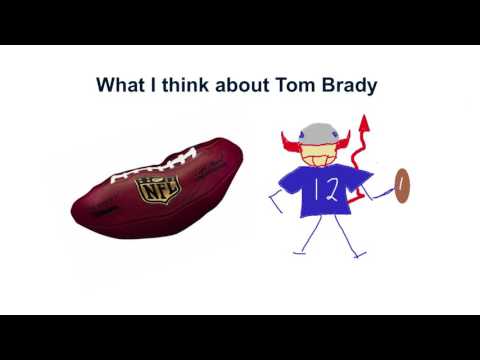
at risk even in sports I’m a long
suffering Buffalo Bills fan
there’s young me on the left there’s
current me on the right sad the Buffalo
Bills have the misfortune of being in
the same division as Tom Brady and the
New England Patriots so I really really
really don’t like Tom Brady when people
say oh well he’s the greatest
quarterback of all time I have trouble
accepting that five Super Bowls records
oh he’s clutch and I’ll come up with all
sorts of different justifications for
why that’s not the case well he had
great defenses he had excellent coaching
you can’t compare him to other
quarterbacks or the reason you’re
probably most familiar with well he
cheated by deflating footballs spying on
other teams who knows what else is going
on there and these are reasonable
justifications on the face but I don’t
come to them with a with a desire to
really know who the best quarterback is
they’re merely rationalizations for
something I will believe regardless of
the evidence so what does this mean in
the practice of politics well it means
that often the case that information
isn’t enough whether its climate science
or economic research on free trade or
fact checks why because information is
rarely neutral it has implications for
the social groups that we deeply value
and often is that times we are just
simply not motivated to accept
information seriously that undermines
those interests the second thing that it
means is that this is hardly an American
phenomenon that as any society becomes
more deeply polarized ideologically the
incentive for this motivation increases
and this is happening in Canada scholars
have shown like Chris Cochrane at U of T
that Canada’s political parties have
polarized over the last few decades
conservative parties have moved to the
right the Liberal Party has moved to the
left and the center has become vacant
and this has trickled down at a public
opinion I’m going to show you some data
from the Canadian election study the
graph I’m about to show you
plots how negatively people feel about
the party that they are ideologically
opposed to on a zero to 50 scale of 50
being neutral and what the data shows is
that over time liberal supporters and
NDP supporters have increasingly come to
dislike the Conservative Party and its
legacy parties not just the Harper years
and conservative supporters have
increasingly come to dislike the
Liberals and while they’ve never really
liked the NDP unsurprisingly so over
time
Canadians used to really like their own
party but there are more or less
ambivalent towards the parties that they
opposed but that’s no longer the case
now they really really don’t like them
and it’s getting worse and this is an
awful lot like what we see in the United
States where Democratic and Republican
supporters increasingly have come to
dislike the opposing party not just the
party itself but its supporters as well
so Canadians just like Americans are now
motivated more than ever to see the
world through a partisan or ideological
lens some of the research I’m working on
at UBC looks at exactly this question
the degree to which Canadians are biased
in our perceptions of politics I
surveyed UBC undergraduate political
science students broadly anti
conservative sample I asked them to give
me their evaluation of the state of
Canadian Canadian economy and I gave
them either a piece of positive or
negative information about the economy
that contradicted their beliefs they
were then given the ability to change
their mind about the economy students
were sorted into two groups one in which
the implications of that economic
information benefited or hurt the
current Liberal government and another
were reflected on the record of the
previous Harper government if Canadians
are biased in our perceptions of
politics we expect the only change their
minds about the economy if it benefits
their team in this case the Liberal
Party of
nada and that’s exactly what we find
when given a piece of positive
information about the economy they
change their minds overwhelmingly when
it benefits the Liberals and hardly at
all if it benefits the Conservatives and
the mirror opposite is true
when given negative information they’re
more willing to think the economy’s
doing poorly if it reflected badly on
the legacy of the Harper government but
didn’t change their minds at all on
average when it hurt the current Liberal
government so Canadians just like
Americans are biased in our perceptions
of politics what can happen down there
can happen up here as well so what can
we do the story have told you is rather
bleak we’re all hardwired to reject
information or at least not engage with
it seriously if it goes against the
interests of our social groups and these
identities have never been more salient
than they are nowadays there aren’t any
easy answers but there are three things
I think we can do to make our politics a
little bit more productive first when
you become more skeptical consumers a
political news that’s shared
especially on social media fake news
isn’t going away it preys on our
instinctual reaction to accept
information that benefits our partisan
or ideological identities and we don’t
even recognize fake news when we see it
a collaborator of mine at UBC Dominic’s
Tet Silla surveyed UBC students who are
really politically engaged he asked them
to rate the legitimacy of various fake
and real media sources on a scale of
zero to a hundred where a hundred is
very legitimate what he found was that
students could scarcely distinguish
between highly credible news sources
like The Globe and Mail and
well-designed fake news sites like fake
ABC that I showed you earlier he also
found that students tended to perceive
fake news sites as more legitimate than
new sources they ideologically disagree
with
so a fake news comes to Canada were
vulnerable to its effects we
instinctively accept information that
benefits our social groups and we don’t
even recognize fake news and we see it
so we need to do a better job to be
skeptical of news stories that are
clearly designed to manipulate our
intuitions and our emotions we need to
be more curious and more skeptical
we need to bolster our inner fact
checkers because fake news isn’t going
away it also wouldn’t hurt to break out
of our ideological silos by exposing us
to a greater number of viewpoints well
better able to pick up on stories of
dubious validity in a sense we outsource
our fact checker to more motivated
others the second big thing we need to
do is become more aware of our own
ideological biases I used to be a
dyed-in-the-wool partisan I worked
volunteered for federal and provincial
conservative parties for a number of
years and then afterwards I became a
deeply ideological libertarian I lived
in an echo chamber don’t be like old me
in the course of my research I gained to
gain a greater appreciation of my own
cognitive bias and I was able to break
out of that silo and update some of my
more questionable beliefs like denying
the reality of climate change this
information the awareness of our own
bias is a crucial tool for an effective
Democratic citizen this information
needs to be exposed to young people at
an early age just like civics without it
we delude ourselves into thinking that
facts are only in the domain of our own
ideological group and that as the
implication of us tending to talk down
to those that disagree with us and that
creates a toxic environment that makes
cross partisan persuasion impossible
which brings me to my third point we
really need more cross partisan
persuasion with a little bit more
humility it’s possible and it’s the only
way we can effectively tackle
the pressing challenges of our time like
dealing with climate change that require
societal consensus we might be surprised
by the world of opportunities that are
out there that go unexplored there are
solid conservative arguments for dealing
with climate change great free market
economists like Milton Friedman were in
favor of taxes on pollution and that
logic easily extends to dealing with
greenhouse gas emissions and there are
conservatives prominent ones right now
that support this view like former
Reform Party Party leader Preston
Manning and current conservative
leadership candidate Michael Chong but
instead climate change activists tend to
preach to the choir they heighten the
ideological divisions that exist on this
issue
labeling lots of people as anti science
or ignorant and that’s a mistake
we don’t overcome motivated reasoning we
don’t overcome our bias by putting
people on the ideological defensive we
have to allow themselves to reconcile
their values and beliefs with the advice
of policy experts and scientists and
that can only happen when we depolarize
an issue we need to do a better job in
improving our political discourse we
can’t be complacent the politics that’s
infecting the United States can come
here if it hasn’t already with a little
bit more humility we won’t be able to
overcome our cognitive biases entirely
but we can make our politics maybe a
little bit more productive a little bit
more civil and hopefully a little bit
more factual
you
[Applause]
Please follow and like us: