
about available ISM and I thought yeah I
got something for that an antidote it’s
called quitting that’s what I’m gonna
talk about quitting has a bad rap it
feels like failure like giving up we’re
supposed to go for our goals until we
get them and blast through obstacles to
never quit it’s easy to agree with that
idea because you can’t make stuff happen
if you don’t stick with it and yet
throughout our lives we will all come up
against goals we would be better off
without every one of you probably has
right now something that you would love
to quit and as you think about that
thing a team or a project or a job you
might be getting a gnarly feeling in the
pit of your stomach a mixture of desire
with fear and guilt because we’re not
supposed to quit but what if we are
what if quitting is actually a positive
Act we put perseverance on this pedestal
and we relegate quitting to the looser
category we believe that perseverance is
going to win us the prize and that
quitting is gonna lead us to loss the
truth is that both those avenues can
take you to defeat or to victory and
both of them require courage quitting is
not the coward’s way out
General MacArthur is famous for saying
Americans never quit but he also said
we’re not retreating we’re advancing in
another direction Bill Gates Steve Jobs
they advanced in another direction when
they quit school in order to found their
computer empires they understood that
quitting well is an important part of
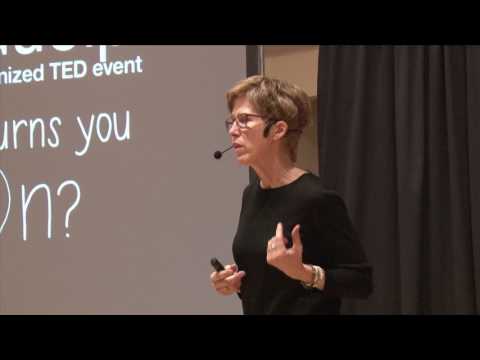
creating a life that turns you on
it’s an act of supreme understanding as
to what is important
to us without it we exist on a kind of
goal attainment autopilot we become
hoarders of goals and commitments until
we’re just Freddy to burst quitting is a
way of decluttering the hoard of getting
rid of the crap so that you can focus on
and be good at the things that really
matter
my first big quit was when I was a
little kid and I was taking piano
lessons and I was pounding on the
keyboard in frustration and my mother
exasperated called out from the kitchen
you don’t have to take those lessons you
know I don’t I got up from the piano and
that was that but that wasn’t really
good quitting that was giving up in a
rage my next bit quit was when I was
working for my father and he ran an
engineering company full of men and
suits and I had just moved in with my
bearded biker boyfriend so dad called me
into his office and said that as his
daughter working in his company shacking
up with his dude did not uphold the
moral standards that I was expected to
keep really so I quit on the spot kind
of surprised him sorry dad but that
wasn’t really great quitting either
because I had no other income set up or
anything like that but it was a little
further along the spectrum because I was
quitting for something I actually
believed in which was my personal
freedom in this case against parental
tyranny I’m sure you can all relate the
first time I really staged a good quit
was when I was 33 and I was a VP and a
thriving 200 million dollar high-tech
company I had worked my ass off to get
that job I was making great money and
every Friday on the way home from work I
would burst into sobs from the stress
that had built up over the course of the
week but it was worth it right I was
making that great I kept up that routine
for about a year and a half until it
finally dawn
and on me maybe sobbing every week was
not a price I should be paying for my
success that situation it’s incredibly
common Emma so pala of Stanford
University studies burn out in
corporations more than half of the
practitioners in certain fields suffer
from it she studies what it does to
their mental and physical health how
it’s literally killing them and not just
in corporations but in universities too
we’ve all heard these kinds of stats
we’ve all felt how perseverance when you
apply it to the wrong thing turns into
an evil twin and it ruins our health and
our relationship and sucks up our energy
without giving anything back when I quit
that VP job people thought I was nuts
but I had in mind
a better way to spend my energy on
something that meant more to me I quit
it in order to start up my landscape
design company which I’d already begun
on the side I staged a slow exit which
was good for both of us and eventually I
balanced summers in design with winters
in freelance marketing and there were no
more weekly sobbing Fitz
that was quitting well I’ve done more of
it since not jobs but other situations
and I don’t regret any of it I’m
certainly not alone in discovering that
quitting saved my sanity fed my
creativity and it opened up
possibilities that I hadn’t even
imagined people discover this every day
so if quitting can be so darn good for
us
why don’t we avoid it like the plague
one reason is a weird human behavior
called the sunk cost fallacy
simply put we’d love to keep investing
in things long after they’ve stopped
giving us a return it feels wasteful to
pull the plug now smart investors know
to get out as soon as they see that the
tide is turning but the rest of us we
stay in until we’ve lost everything
or we fear that
quitting will make our devotion to the
old goal look like an error in judgment
god forbid dani reali of duke university
studies how the longer we stick with
something the more we will convince
ourselves well i must love that thing
this is especially true if it makes us
suffer that’s how much we hate being
wrong
then there’s the fear of failure who
wants to be that person who couldn’t
stay that course failure carries with it
a lot of social and personal stigma and
yet trial and failure those are the
foundation of invention last but not
least we just don’t like change we have
this super clear vision of our current
situation regardless of how awful it
might be but a super murky one of what
could be and so we stick with the devil
we know all of these behaviors they are
the result of looking backwards instead
of forwards of trying to minimize risk
as opposed to going for reward so how
can we overcome this perversity of our
brains how can we know when to stick
with something and when to give it the
heave-ho I want you to think for a
minute about the goals and commitments
that you have servicing those things
determines the structure of your lives
where and how you live how you spend
your time your money your energy those
things are finite resources so you
better be spending them on something
that matters that requires regular
decluttering of your goals and
commitments your brain is kind of like a
dorm room if you never touched any of
the stuff you put in that room it would
soon be filled with old pizza boxes and
somebody else’s sweater and a dead plant
you forgot to water all that stuff is
obscuring what’s really important like
tomorrow’s term paper and just as we
have to clean up
our rooms once in a while to get at the
stuff we really need we have to clean up
our goals regularly toss out the old and
moldy stuff so that you can get out
what’s important you can think of it as
good emotional housekeeping it would
make your mother proud in assessing what
should stay and what should go one of
the first things you have to ask
yourself is which of my goals are
attainable and which are not decades of
psychology studies by Karsten Raj and
others have confirmed what we already
sense that our well-being is best served
when we ditch unattainable goals those
are things like winning the heart of
somebody who’s not into you or trying to
become an accountant when you suck at
math now sometimes a goal will feel
unattainable because of the mountain of
effort that’s between you and the
promised land
but most of the time we understand what
is just really challenging and what is
truly beyond our grasp
maybe you’ve been spinning your wheels
for a long time and you’re just not
getting any traction you’ve made all the
adjustments you can think of and still
nada
that sucker has flatlined as soon as you
know something is flatlined you want to
get out of there
stop wasting your precious resources on
something that is going nowhere so you
can redirect them to something that
could now attainable goals they’re a
little trickier then the questions
become at what cost and for what reward
and is that reward worth the cost this
is the essential stay or go equation
you’ve probably all had an experience
where you jumped into something all keen
about what you were going to get and a
little fuzzy about what it was gonna
take and then as your enthusiasm more
off and you understood the true cost you
thought oh this is just not worth it to
me this happens a lot in dating it also
happens in bigger things like careers
and your whole way of life sometimes
can include money time energy emotional
energy occasionally the cost of pursuing
a goal is so great that its outright bad
for us to keep going
maybe it’s messing with your head
screwing up your sleep
give me a stomach cramps or some other
my body’s trying to tell me something
reaction in those situations
quitting becomes an act of
self-preservation on the reward side of
things ask yourself what is winning that
goal going to bring you not just the
goal itself not just the Olympic medal
or the CEO position or the doctorate but
everything that then goal comprises for
you maybe its power or wealth or
security or a sense of purpose or love
or a host of other goodies what do those
goodies mean to you and what are you
willing to do to get them there are no
right or wrong answers to this equation
there’s only your own judgment it’s a
little like taking a Cosmo love quiz how
hot are you for that goal you you’ve got
to be hot for it because if you lose
that fire that takes you to the through
the tough bits then each new obstacle is
going to feel that much more impossible
to overcome and possibly pointless now
once you’ve come eyeball to eyeball with
your goals and commitments in this way
you’re probably gonna quit some stuff
some things temporarily and some things
forever but regardless it’s a good thing
you will bring way more to the stuff
that you keep you might even take on
something new once you’ve declutter dinh
this way take that newly shrunk goal
list and stick it on your fridge so you
remain completely aware of what you’re
pursuing and why and so you remember to
clean it up again regularly just like
your room
now quitting it’s a hard decision I
won’t sugarcoat it as one courageous
quitter told me I felt simultaneously
liberated and terrified happy and sad
empowered and scared that is quite a
crazy ride but it’s not a ride on
autopilot when you allow yourself the
possibility of quitting you put yourself
in the driver’s seat of your life you
allow it to be different bigger full of
things that turn you on quitting is not
failure it’s a way of taking
responsibility for yourself of freeing
up misdirected energy so that you can
put it towards something that really
counts so I ask you what really counts
for you and what are you going to quit
to make it happen thank you [Applause]