
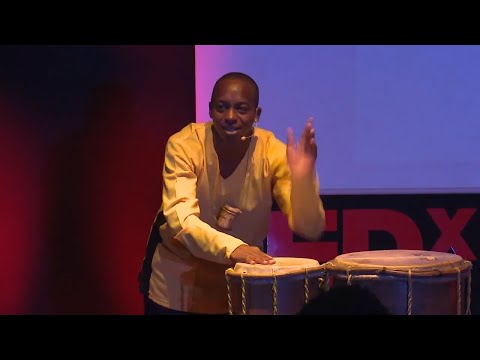
[Music]
[Applause]
[Music]
[Music]
I started playing drums at the tender
age of five years old I grew up in a
very cultural part of town known as baka
town everybody knows but I don’t write
drums were played so often that it was
so easy for me to pick up the rhythms I
played so much so that I got in trouble
many times you can ask my mom and my
teachers I played everywhere and on
everything this was practice for me by
the age of 13 I was recruited to a few
groups but only became a member of to
memory meaning light and illigal meaning
roots while I loved my drums and playing
I was ashamed of everything else
Garifuna Garifuna was not popular and I
wanted to be identified with what I like
to call the night culture night culture
being the American culture of the
eighties where latest design and vanity
was what every young person wanted to be
identified with it was what the
television was promoting and what family
members were sending back home for their
loved ones it was also the impression
given by the education system where
education is more from an outward view
rather than that of an inward view
everything out there
is better but is it really as such you
would never find me riding my bike or
walking around the streets of dong griga
where I grew up in my money money being
the mail girifna cultural where what we
refer now to us dashiki alright so this
mentality changed though when I started
high school and realized that there were
many people who were just like me people
whom I believed grew up in a more
cultural home than I did were also
ashamed of who they were
this was my week of call the no longer
be ashamed of Who I am or where I came
from I was proud to be Garifuna I
started to explore girl culture a bit
more under the guidance of mr. delete
greets brother Moses Royce’s braggin he
taught me the discipline of Garifuna
drumming and with this discipline I was
allowed to play for some of the top
bands around at that time
naming Lee forever band Punta Punta
rebels and a Groban oh girl
meaning hammock while I played with
these bands I was often asked about the
significance of Garifuna drumming but
outside of playing them I myself did not
know much about them this changed when I
started touring with the late great and
the Palacio I’m the Garifuna collective
and later on taught a class at Galen
University I was forced to learn to the
point at my drums became an extension of
Who I am
some people call me drummer
all right so with this now I started
looking at my drum and started exploring
a little bit this is what I came up with
I looked at my drums and look at its
different parts and found a way to
describe each part as it relates to the
wider context of the Garifuna culture
the shell is this part it represents the
core of who we are as a people our core
is the concept nagoya boo boo boo you
know the way a female would say I for
you and you for me Oh boom
a modern ooh the way a man would say I
for you and you for me we are a selfless
people at our core we live for each
other
this is who we are the vine represents
connectivity yes as a carniculture we
are here but we are connected to the
world in that wider circle of life the
skin represents communication whether is
verbal communication whether is
communication through painting
communication to music whatever form of
communication that might be the Rope is
the glue it takes all those different
parts brings it together to make it a
whole the pins are the tuners represents
the Garifuna and non Garifuna people
including those of you that are here and
those listening online and those that
will be listening to this talk later on
and non grata organizations
that does work to ensure the revival and
the survival of the Garifuna culture and
then we come to the snares the snares
gives resonance when I play my drum and
it is that resounding voice to tell the
world that we are here as a Garifuna
people we are here to stay
additionally I looked at my drum and I
said I stopped calling this drum bass
drum or Segundo Saguna big drum
depending on which word comes out first
this drum is a segunda drum and this is
my explanation if the foundation of our
culture are our mothers and the
foundation of every rhythm that we play
in our culture is set by this drum does
it make sense then to give it a female
gender this is the heartbeat or the
pulse of every rhythm even though in the
Garifuna culture drums are masculine
this drum plays a more feminine role who
goes to sleep thinking about what will
take place for the following day our
mothers who ensures breakfast who
ensures that there’s clean clothes who
ensures that homework is being done our
mothers you guys are the heartbeat or
the pulse of every family this drum is
the heartbeat or the pulse of every
rhythm the smaller drum plays a more
masculine role this drum is the primero
and this drum plays like I said a more
masculine role when we play our rhythms
there is a whole beat that this drum
plays for example I’ll give you a
piranha
this is a home beam but this beat is
dictated by the piece of the Saguna okay
so when your fathers are at home they
play a certain role dictated by the job
by the foundation set by the mothers so
this is the Parana this Trump also
improvises so because our fathers go out
and do different chores when he goes the
farm he would improvise if he goes
fishing the improvisation will be
differently because of the tools that he
will use if he goes to hang out with
friends the improvisation will be
different but every time he gets back
home
[Music]
[Applause]
again that beat is dictated by the
mother drum
[Music]
[Applause]
the foundation set by our mothers is
embedded in every facet of the girifna
culture for example when we speak of
Google as our ritual Yabba Yabba there
are no Primera’s there’s no father Jean
it doesn’t set foundation only second
ders the Saguna drum on the left hand
side of the middle drummer in this
picture that would be me it represents
those that have gone before us our
ancestors the segunda drum on the right
represents those that have not yet been
born and the drum in the is us Lonnie G
is the heart drum this drum speed all
tree drum together represents all life
and there’s a mutual obligation among
the three where we look to our unser for
guidance and knowledge they expect that
we will never forget them through our
rituals they also expected that we will
nurture the culture passed on we will
leave it as pristine as possible in some
cases even built upon before passing it
on to the future generation our future
generation will be expected to do the
same and also look up to us for guidance
throughout time and space we are but one
again the foundation set by our mothers
in the w bar again when somebody alway
huh
this is when the spirit of an ancestor
takes over the body of a living there is
a specific song that continues to make
reference to grandmother even if the
spirit that takes over that body is a
male goes like this not good to family
who yeah not good to family whoo yeah
whoo yeah whoo yeah yeah yeah
[Music]
my grandmother you’re being appeased my
grandmother
you’re being appeased again even if it
is a meal spirit that takes over the
body of the living each a whole world a
good team it’s a long word right each a
whole word it means to give in our
culture there were no songwriters or
composers songs were passed on by the
ancestors and our women were the mediums
for most of these songs cassava bread
baking processing as you can see in the
picture is a job taken over by our women
and it’s a 2d process to make cassava
bread a pima honey which is a female
dance done without musical accompaniment
is alive and well while our uma honey
the male version is quickly failing when
we speak of anything huge in the girifna
culture it is always the grandmother of
the Pacific Ocean for example being the
world’s largest ocean is the mother of
our oceans even though water in the
Garifuna culture is masculine the
specific ocean being the largest body of
water is the grandmother of all oceans
when a man feels in his obligation to
his family the woman has no problem of
compensating when we speak of the earth
we never say father earth we say
we say mother earth in my view only
those with a with the instinct of
nurturing has duty to set Felicia only
tools with the instinct of nurturing has
the ability to set foundation I say all
this to echo the words of Chi Minh and
Chimamanda Ngozi Adichie I am feminist I
will leave you with this the concept of
God in the Garifuna culture is not
masculine its feminine it is important
for our women to understand their role
take your place within your homes in
your culture within your society lay
that solid foundation upon which the
family and the society depends there
nothing can stand without a solid
foundation that is who you are you are
that foundation Cagayan by aha
we are they they are here Hagana i aha
where are they they are here our women
are here our women are here
[Music]
hey buddy neva gr is Karina Pacquiao
my my my my
[Music]
Karina buggy yeah
[Music]
thank you
[Applause]
[Music]
[Applause]
[Music]
[Music]
I started playing drums at the tender
age of five years old I grew up in a
very cultural part of town known as baka
town everybody knows but I don’t write
drums were played so often that it was
so easy for me to pick up the rhythms I
played so much so that I got in trouble
many times you can ask my mom and my
teachers I played everywhere and on
everything this was practice for me by
the age of 13 I was recruited to a few
groups but only became a member of to
memory meaning light and illigal meaning
roots while I loved my drums and playing
I was ashamed of everything else
Garifuna Garifuna was not popular and I
wanted to be identified with what I like
to call the night culture night culture
being the American culture of the
eighties where latest design and vanity
was what every young person wanted to be
identified with it was what the
television was promoting and what family
members were sending back home for their
loved ones it was also the impression
given by the education system where
education is more from an outward view
rather than that of an inward view
everything out there
is better but is it really as such you
would never find me riding my bike or
walking around the streets of dong griga
where I grew up in my money money being
the mail girifna cultural where what we
refer now to us dashiki alright so this
mentality changed though when I started
high school and realized that there were
many people who were just like me people
whom I believed grew up in a more
cultural home than I did were also
ashamed of who they were
this was my week of call the no longer
be ashamed of Who I am or where I came
from I was proud to be Garifuna I
started to explore girl culture a bit
more under the guidance of mr. delete
greets brother Moses Royce’s braggin he
taught me the discipline of Garifuna
drumming and with this discipline I was
allowed to play for some of the top
bands around at that time
naming Lee forever band Punta Punta
rebels and a Groban oh girl
meaning hammock while I played with
these bands I was often asked about the
significance of Garifuna drumming but
outside of playing them I myself did not
know much about them this changed when I
started touring with the late great and
the Palacio I’m the Garifuna collective
and later on taught a class at Galen
University I was forced to learn to the
point at my drums became an extension of
Who I am
some people call me drummer
all right so with this now I started
looking at my drum and started exploring
a little bit this is what I came up with
I looked at my drums and look at its
different parts and found a way to
describe each part as it relates to the
wider context of the Garifuna culture
the shell is this part it represents the
core of who we are as a people our core
is the concept nagoya boo boo boo you
know the way a female would say I for
you and you for me Oh boom
a modern ooh the way a man would say I
for you and you for me we are a selfless
people at our core we live for each
other
this is who we are the vine represents
connectivity yes as a carniculture we
are here but we are connected to the
world in that wider circle of life the
skin represents communication whether is
verbal communication whether is
communication through painting
communication to music whatever form of
communication that might be the Rope is
the glue it takes all those different
parts brings it together to make it a
whole the pins are the tuners represents
the Garifuna and non Garifuna people
including those of you that are here and
those listening online and those that
will be listening to this talk later on
and non grata organizations
that does work to ensure the revival and
the survival of the Garifuna culture and
then we come to the snares the snares
gives resonance when I play my drum and
it is that resounding voice to tell the
world that we are here as a Garifuna
people we are here to stay
additionally I looked at my drum and I
said I stopped calling this drum bass
drum or Segundo Saguna big drum
depending on which word comes out first
this drum is a segunda drum and this is
my explanation if the foundation of our
culture are our mothers and the
foundation of every rhythm that we play
in our culture is set by this drum does
it make sense then to give it a female
gender this is the heartbeat or the
pulse of every rhythm even though in the
Garifuna culture drums are masculine
this drum plays a more feminine role who
goes to sleep thinking about what will
take place for the following day our
mothers who ensures breakfast who
ensures that there’s clean clothes who
ensures that homework is being done our
mothers you guys are the heartbeat or
the pulse of every family this drum is
the heartbeat or the pulse of every
rhythm the smaller drum plays a more
masculine role this drum is the primero
and this drum plays like I said a more
masculine role when we play our rhythms
there is a whole beat that this drum
plays for example I’ll give you a
piranha
this is a home beam but this beat is
dictated by the piece of the Saguna okay
so when your fathers are at home they
play a certain role dictated by the job
by the foundation set by the mothers so
this is the Parana this Trump also
improvises so because our fathers go out
and do different chores when he goes the
farm he would improvise if he goes
fishing the improvisation will be
differently because of the tools that he
will use if he goes to hang out with
friends the improvisation will be
different but every time he gets back
home
[Music]
[Applause]
again that beat is dictated by the
mother drum
[Music]
[Applause]
the foundation set by our mothers is
embedded in every facet of the girifna
culture for example when we speak of
Google as our ritual Yabba Yabba there
are no Primera’s there’s no father Jean
it doesn’t set foundation only second
ders the Saguna drum on the left hand
side of the middle drummer in this
picture that would be me it represents
those that have gone before us our
ancestors the segunda drum on the right
represents those that have not yet been
born and the drum in the is us Lonnie G
is the heart drum this drum speed all
tree drum together represents all life
and there’s a mutual obligation among
the three where we look to our unser for
guidance and knowledge they expect that
we will never forget them through our
rituals they also expected that we will
nurture the culture passed on we will
leave it as pristine as possible in some
cases even built upon before passing it
on to the future generation our future
generation will be expected to do the
same and also look up to us for guidance
throughout time and space we are but one
again the foundation set by our mothers
in the w bar again when somebody alway
huh
this is when the spirit of an ancestor
takes over the body of a living there is
a specific song that continues to make
reference to grandmother even if the
spirit that takes over that body is a
male goes like this not good to family
who yeah not good to family whoo yeah
whoo yeah whoo yeah yeah yeah
[Music]
my grandmother you’re being appeased my
grandmother
you’re being appeased again even if it
is a meal spirit that takes over the
body of the living each a whole world a
good team it’s a long word right each a
whole word it means to give in our
culture there were no songwriters or
composers songs were passed on by the
ancestors and our women were the mediums
for most of these songs cassava bread
baking processing as you can see in the
picture is a job taken over by our women
and it’s a 2d process to make cassava
bread a pima honey which is a female
dance done without musical accompaniment
is alive and well while our uma honey
the male version is quickly failing when
we speak of anything huge in the girifna
culture it is always the grandmother of
the Pacific Ocean for example being the
world’s largest ocean is the mother of
our oceans even though water in the
Garifuna culture is masculine the
specific ocean being the largest body of
water is the grandmother of all oceans
when a man feels in his obligation to
his family the woman has no problem of
compensating when we speak of the earth
we never say father earth we say
we say mother earth in my view only
those with a with the instinct of
nurturing has duty to set Felicia only
tools with the instinct of nurturing has
the ability to set foundation I say all
this to echo the words of Chi Minh and
Chimamanda Ngozi Adichie I am feminist I
will leave you with this the concept of
God in the Garifuna culture is not
masculine its feminine it is important
for our women to understand their role
take your place within your homes in
your culture within your society lay
that solid foundation upon which the
family and the society depends there
nothing can stand without a solid
foundation that is who you are you are
that foundation Cagayan by aha
we are they they are here Hagana i aha
where are they they are here our women
are here our women are here
[Music]
hey buddy neva gr is Karina Pacquiao
my my my my
[Music]
Karina buggy yeah
[Music]
thank you
[Applause]
[Music]
Please follow and like us: