
archaeologist by training anthropology
is an unusual
it is the scientific study of human
variation across time and space
so all that makes makes up human biology
all that makes up human culture across
the past present and future
it’s an incredibly encompassing field
it’s a field that intersects the Natural
Sciences Social Sciences humanities in
the art it is a science that requires a
creative innovative approach to bringing
different points of data together to
interpret human behavior in the past
present and future in my talk this
evening is about the importance of
creativity our economy today in our
future economy is a college president I
travel around the Midwest and around
Michigan am now on a board planning the
future economy for the delivering a
report to the governor for Michigan for
the next 20 years it without a doubt the
number one skill you hear from employers
is that they want talent they want
people to work with them who are
creative innovative and who can connect
different points of data well how do you
become creative how did it I would say
all creative people are lifelong
learners but what is the source of
creativity and there’s really two ways
you can become a creative person an
innovative person creativity if you talk
to people who study creativity is the
product of the exposure to diversity
that means diversity of people diversity
of ideas diversity of experiences and
places it’s the combination of those
things that allow people to see a
perspective from different points of
view and to link different disciplines
and different experiences together right
how do you get that and how do you
create an educational pathway that
promotes creativity and Janet’s creative
innovative people there’s two ways you
can get that experience one you could
travel around the world you can read the
great start the great works of
literature you could study human history
and prehistory you could study math and
science and you could potentially gain
the skill set that you would get from a
liberal education base before your
degree potentially the other way
people get it is through their college
experience of studying abroad curriculum
in abroad series of perspectives
regardless of the major to link and
develop skills between different points
of view that’s really what abroad
becoming an educated person is about so
the purpose of higher education is great
greatly debated today more than ever
there are many people who believe higher
education its primary focus is to
develop talent and develop people for a
job that is a relatively new thought
right the traditional perspective of
higher education particularly
baccalaureate education is to develop a
well-rounded person who can adapt to
different careers who can take a major
and apply them to a variety of jobs and
an educated person has a series of
skills that are designed to develop
their human potential to the foot to the
first when I am people ask me what do
you do what do you produce at the
University want for this opportunity
that’s what a public university does we
don’t produce widgets we don’t produce
things we produce opportunity for the
public good
through vesting and individuals to make
them creative innovative broadly
educated and their skills are more
important than ever in a knowledge
economy in a changing economy the
industry and jobs and careers are
changing rapidly at a pace that we’ve
never seen before you need these skills
so this is a broad sort of set of the
purpose of higher education I would
argue there is a dramatic difference
between education and training training
is learning a series of skill sets for
tasks education is learning how to think
not what to think but how to think in
one byproduct of that if you have a true
college education is creativity and
innovation through exposure to a wide
range of courses and experiences should
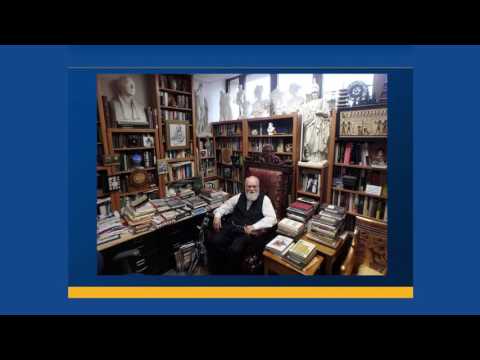
know who this person is professor moody
our most senior historian on campus you
walk into his office and this is one of
the first photos I took when I came to
Lake State
and you see your lifelong learning and a
thirst for knowledge and an interest in
connecting different cultures on this
planet across time and space to produce
an educated person you cannot walk into
that office and not be inspired and that
be a curious person and ask questions
about what are these artifacts
what are these pieces of history what do
they need if I take your course how are
you gonna be relevant to if I’m going to
be an engineer or if I’m going to be a
theater major whatever it is I’m going
to do right and I tell people I work at
a university those folks aren’t familiar
with a modern university they think the
sort of ivory tower concept of higher ed
and this image really I think portrays
that I love this image I took this and
it is it’s amazing how many people have
shared this image it’s one of the best
portraits I’ve ever taken and all the
most interesting conversations I’ve ever
had was that day when I walked into his
office
so I argue that the most important
education today and also by what by way
the most expensive luxurious education
that was at one time reserved online for
the elite throughout the world is a
liberal arts based education an
education that exposes individuals to
the humanities to the Natural Sciences
to the social sciences to math the
analytical thinking to the Fine Arts all
of these things at one time in the
United States the only place you could
get this was at a private university and
particularly an Ivy League university
that you had to pay or come from a
privileged family the idea of the first
public universities in the country were
to take this concept and expose it to
everyone because it produced the gross
print it produced the most educated
citizens well the greatest opportunity
regardless of the major I’ll tell you so
the lights is actually people get this
confused all the time they think it is
the humanities in the fine arts may be
the social sciences all of science in
all of mathematics as part of the
liberal arts is part of the core
curriculum or a core liberal arts major
that now
I am NOT arguing that anyone should be
able by its major one of those fields if
you’re a science major you’re a liberal
arts major it’s hard for people
understand that’s true or math or if
you’re in history while I’m arguing is
that the most important education today
is when regardless of if you’re an
engineer regardless of whether you’re
going to be a nurse regardless of
whether you’re going to be a professor
regardless are going to be a
businessperson is that you have a
liberal education base which means
you’ve taken courses in all the liberal
arts fields that develop these broad
skill sets that apply to the major okay
and the magic is really the technical
component the training component of your
education I majored in anthropology and
archaeology I tell people I’m trained as
an archaeologist I’m broadly Riblet
educated and not the political
definition of liberal liberal means
bright lower educated people have strong
communication skills written and oil
have analytical skills an understanding
of science and math empathy one of the
most important qualities to navigate the
modern world to connect with people
different people in appreciation of the
human condition of the Arts the ability
connections must experience produces
highly creative people and innovative
people and it produces a series of
skills that can transcend any job as you
move forward throughout your career in
your life experience and generally
produce lifelong learners of people who
are thirsty for knowledge in experience
it’s a critical with this experience to
see the connection between disciplines
between for example science and the
humanities the humanities guide the
application of science what is its
impact on the human condition what are
the ethics of applying science what is
the value of applying science absolutely
critical if your scientist the
humanities plays a tremendous role in
sources of information in my field in
archaeology and anthropology and I can
tell you having worked with all kinds of
Engineers in my career as an
archaeologist I could I could instantly
tell working with an engineer where they
went to school in my state because there
were schools the best engineering
programs that had a liberal education
base
the engineer working in the field could
understand the aesthetic importance of
their project they could understand the
social dimensions of what it is they’re
building they could understand the
environmental dimensions those engineers
that didn’t have that broad base could
not they could only understand the
practicality of their project so the
best engineers had this experience and
they were tremendous creative we’re
tremendously creative in the way they
approached their problems say what
business people say and that’s why
businesses today seek these skills out
they often don’t use these terms but
that’s what they’re looking for so what
I am arguing for creativity in the best
type of education produces individuals
who are having a flowing thirst for
knowledge and curiosity and who can
understand the natural world the social
world around them can understand how to
apply science and technology to a
problem can appreciate the aesthetic
qualities of what it is they are engaged
in in the pure value of aesthetics and
can also have an appreciation for what
they are doing and how it connects with
other peoples and different cultures on
the planet that is the source for
creativity that is a source in what we
aspire at a university produce an
educated person regardless of what their major is thank