
children have infinite potential but if
we all have it then how do we recognize
it
I mean potential for what it’s such a
broad concept so broad and difficult to
define that I often think that as adults
we wonder around hoping that our
potential will be revealed by some
magical talent that we suddenly discover
but what happens when all that potential
all that latent ability is inside a body
that is described as disabled something
full of limitations rather than
potential how do you release that
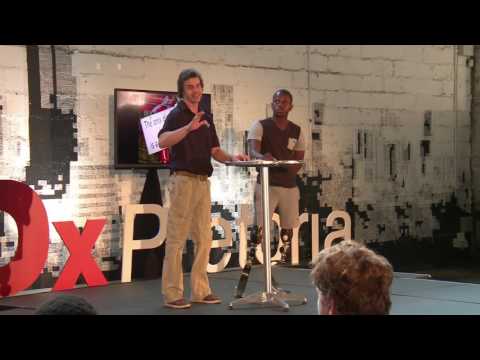
potential so instead of showing videos
we’re talking about it today I decided
to bend some Ted rules and bring a
second speaker with me so that he can
tell his story and show you how he
revealed his potential we all have
dreams in order to make dreams come into
reality it takes a lot of determination
dedication self-discipline and effort
my name is nt a and do mah LAN GU the
big guy
Donna Machado now my story is very
simple I was born in a rural area in
from Alana cheerful 10 B word and life
life from 1 to 10 life as being I found
it very difficult it’s a life has been
challenging for me and I spent my the
rest of the time on a wheelchair I’m
going to a disabled school you know in
2012 September and that’s where I wear
this when I got my first legs and it’s
that’s where I learned how to fly and
that’s where I learned how to walk this
way I lent
be a person and that’s way I learned how
to do many things how to play how to do
a lot of things and I think from that
day I appreciate why I was born from
from that’s that’s last year I’m just
going to tell you a little a little bit
about Bob about 2016 2016 has been a
very successful year for me and 2016 has
been very very has been very exciting
for me real silver medalist at the
Paralympics at 14 years old and it’s a
for me it’s an honor
and what didn’t you told me it taught me
that we don’t want to tell our dreams
but we want to show our dreams and
that’s what I want to say today that’s
what I want to say today without
prostheses I don’t think my life would
have been like this prosthesis have made
my life better and better and one of the
things that I like to say on my
interviews I’m just going to share with
you guys what is the most thing that you
like to to do you know we were the most
nice
I mean Africans it was a lacquer then
that which I like to do is is waking up
and doing mama mama grandma a cup of
coffee because I remember ten years back
or from one to ten I couldn’t do it
because I was on a wheelchair and now
I’m tall enough to get on the kettle and
to do things like that and and yeah
that’s that’s that’s the that’s the
that’s the thing that I like to do you
know to be with my family and doing
those those things and before I just go
off I just want to say this you know I’m
going to succeed because I’m crazy
enough to think I care now if I if I can
after hearing and tundle speak it’s
tempting to feel like this and it’s
something that’s often shown on social
media you know it’s done when people are
pushing their limitations and it gives
us the fields and makes us all want to
share it but ladies and gentlemen this
inspirational quote is a lie and it’s
something that needs to be questioned
because although attitude is important
critical even in the long term it’s not
enough and I know this because I am or
was the child that I’m trying to help
today so in 1992 I was involved in an
accident I was electrocuted by high
tension wires whilst being a
twelve-year-old kid at the ball damn I
suffered third-degree burns to 70% of my
body and I was rushed to the nearest
hospital they immediately said that I
was too injured for them and I should
move somewhere else suggesting the only
place capable was spare iguana’s where
an amazing burns unit had been built the
years earlier so that’s where I went and
that was 24 years ago so I clearly made
it and survived but I left there after a
year a very broken kid the type of
broken that you only really see in war
zones I mean I had significant scarring
lost extensive muscle my left leg was
amputated just two below the hip my
right just below the knee and to
everybody but myself and my closest
people my future looked lost and limited
but this talk isn’t about my details or
my journey I mean I’ve got great stories
don’t get me wrong but I don’t have the
time I’m hoping and trusting that the
fact that we’re here on the tedtalk
stage gives credibility to the fact that
my life hasn’t been dominated by my
disability and I’ve been able to do a
lot more at the same time I don’t
believe that my disability should or my
achievements and much should be
exceptional eyes because of my
disability Eddie and dope were the
disabled advocates and confirmed Oxford
scholar describes it as I am exceptional
eyes because the overwhelming majority
loyalty of young people with
disabilities are denied the opportunity
to live their best lives people want me
to be the benchmark for what is possible
for people with disabilities without
addressing the socio-economic issues
that make it difficult for there to be
more people like me ladies and gentlemen
my attitude has always been positive
it’s always been very driven but my
attitude would not fix my disability it
would be crucial as I said but the thing
the critical thing that allowed a broken
child to become a contributing member of
society was access access to the basics
that allowed me to compete Department of
Education report says that there are
600,000 disabled children not in school
at all in South Africa that’s 600,000
kids who are lost to the system lost to
society forever with very little hope of
recovery then there are those that form
part of the disabled schooling
environment and when I had my accident
that’s where I was told to go because I
wouldn’t be able to cope in a mainstream
environment and my friends would find it
difficult to deal with somebody with a
disability disappointingly these are
actually the same issues we faced when
we were getting in tonto into a
mainstream school 22 years later it is
still a massive issue these are the
pillars of jumping kids a Nintendo story
is a fast-forward of what is possible
when you are able to influence each of
these pillars they both off each other
they feed off each other and we believe
allow for the development of a fully
complete highly capable person the first
thing that I had access to was education
although I was in that wheelchair
covered in scars and very broken I
wanted to go back to my original school
and everybody that needed to buy in to
make that happen did and I didn’t know
at the time how rare that actually is I
had access because they knew me and they
thought that I deserved a chance and
access to education meant that I’m one
of the few people who’s gone to a
mainstream school and on to university
and post
who has a severe disability it let me
push myself physically and mentally and
compete against anyone the best and
although I still had that disability I
was no longer disabled because education
frees the mind but for years I sport the
physical constraints of that wheelchair
there are many barriers to getting
prosthetics and like most amputees I was
reliant on the state to supply them to
me for the first three years I was
trying to get them in those three years
I got one set of legs one and they were
uncomfortable ineffective and I didn’t
want to wear them so they ended up in a
cupboard and that’s unfortunately is
still a very common story for amputees
today getting access to effective
prosthetics changed my life completely
at age 16 so much so that by 99 solar
backpacked around the world each
milestone in my life can be attributed
to an improvement in my prosthetics and
to get that equipment was always a
challenge my solution for the longest
time was to go to Germany to a
prosthetic manufacturer there and have
them do it because sadly the cost was
just about the same and they had the
credibility that they could actually
deliver what I wanted but that’s not a
long-lasting solution and it wasn’t for
me so I then decided to go on a journey
to find other and better solutions so
over the last four years I’ve used the
modular socket system that in tundle
users and other jumping kids as well
and this system changes the time frames
required for socket manufacturing and
what that does is it changes the
possibilities for mass fitment and the
ability to fit a lot more people quicker
it also changes the way you think about
the whole process giving more time to
rehabilitation and learning how to use
the equipment effectively so that it
doesn’t end up in a covered through my
life I’ve experienced the difference
that using these quality components
makes I mean a below–and knee
amputation from my
perspective is actually a really easy
fix with the right prosthetic equipment
and support around it I don’t see
anything that isn’t achievable
I mean to below-knee amputees have
climbed Everest a place where you go to
lose limbs not test alternative ones
above knees are much more challenging
much more challenging but as in Tondo
has shown us there’s new ways of
thinking about it that can allow for so
much more but we need to be willing to
think about function rather than form
and it’s important because there is a
tiny window of time to be a child if you
can fix amputee kids with equipment
early they will meet all their
developmental goals they like all
children have that potential to be
educated contributing active members of
society if they are just given the
chance access creates opportunities and
when access is given and opportunities
are taken then those same kids that we
all thought were too broken to make it
in this world
well they may just surprise you ladies
and gentlemen the prosthetic delivery
system the thing that tries to solve
this issue for people like and tanda and
myself the world over it’s broken and in
South Africa even if you have the funds
and the medical aid you are going to
struggle to get effective equipment I
have a plan to turn jumping kids into a
social enterprise that challenges all of
those issues
the majority of equipment required for
my plan it already exists some of it is
as old as 15 years so I asked them why
can’t we find ways of getting the
pricing on that equipment that 15 year
old equipment down and the volumes all
the way up to try and solve the issue
if socket technology has evolved to the
point where we can fit somebody in 45
minutes or an hour why are we not
embracing it if new materials and
technology for our African markets
can be developed and manufactured in
South Africa then why aren’t we doing it
if prosthetic graduates can be up
skilled to my technology and sockets
thinking and if we can train assistants
technical assistants to work with them
then why in a country that needs
transformation is aching for jobs once a
manufacturing sector can we not create
those solutions but at the same time
solve social issues I believe we can do
it we have a plan we will do it because
we must because although there is only
one in tundle he proves that with the
jumping kids three pillars in place that
your attitude does make a difference as
you blaze a path for others like these
the around 70 other jumping kids
revealing their own indefinite potential
living their best lives and inspiring us
all but there are thousands more and
each of them deserves that chance too
because it all begins with access
you
[Music] [Applause]