
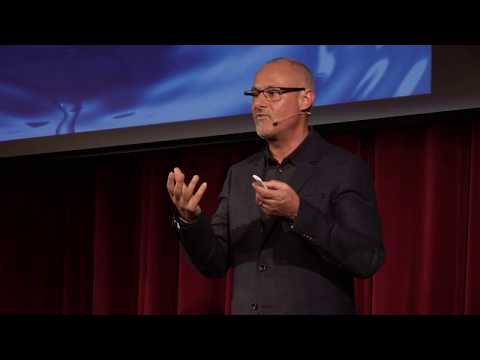
I think you guys have shown a lot of
resilience of the last hour in sitting
nice and still so let’s just all get up
for a couple of seconds just stand up
I’d like you to take a really deep
breath and I want to make sure the
person next to you can hear you take a
deep breath
once again please sit down it’s two
purposes
number one I’m you save Europe is I’m
sure your legs were hurting by now and
secondly it helped me to connect with
you breathing is important it makes us
feel good so the next couple of minutes
I’d like to take you on a journey and I
want to talk about disruption and
Happiness I can see some faces we’ll
look it means that what is this guy
gonna say about disruption happens how’s
it going to connect those together but
please bear with me
as I get you through this little journey
or maybe rather a short flight but I
gonna start with a little story it’s a
similar story you heard earlier because
you don’t have to be worried I did not
end up in a hospital and I did not end
up in a hospital gown but a couple of
years ago I was heading an HR
organization that went across about 30
countries and one morning I got up as
usual got my phone look at my messages
55 messages sort of overwhelming just
looked through them went over to my
agenda looked at what I had to do today
what was of my agenda tomorrow next week
moved over to my to-do list what did I
forget to do yesterday
what jumped in to today what I had to do
in the afternoon had to do next week
it’s all little overwhelming I got up as
usual on autopilot I showered and shaved
at a coffee say goodbye to my wife went
to work get to the office sat down and
just all of a certain felt this this
emptiness and I was sitting there and I
just didn’t know anymore what I had to
do it was just empty do you know what to
focus on didn’t know where to start and
I was experiencing the physiological
effects of an emotion an emotion of
being over well
maybe an certain anxiety to a degree and
I just didn’t know anymore what to do
and I’m sure I’m not the only one who
feels like this many people feel like
there’s often some people feel like this
every day so if we’re talking about
disruption how could we possibly welcome
disruption within such a mindset we’re
living in a busy world and the American
military has actually coined a word for
that they call it the VUCA world stands
for volatile uncertain complex ambiguous
and that’s the kind of world we’re
living in these days it’s a world that
is characterized by globalization by an
accelerated pace of change increased
competition technological advances it’s
a very very busy world and you sort of
ask yourself but how do organizations
survive in that environment can they
adapt and survive and what do leaders do
how do they show up when they work for
those organizations and all of us as
individuals how do we live in this VUCA
world I’m sure many of you have heard of
those organizations who missed the signs
of time organizations they were still
producing books while digital readers
were on the market organizations they
were still producing photo cameras when
photography was going digital these
organizations that are characterized
often by either a lack of strategy or
maybe strong hierarchies bureaucracies
lack of interdepartmental collaboration
that’s called it the non learning
organizations it’s not a particularly
nice term but that truly organizations
they don’t learn well let me say they
used to be organizations that didn’t
learn because most of them do not exist
anymore on the other hand the VUCA world
also resulted in a new concept of
organizations there are ones we call the
learning organizations
your organization’s that Peter sang at
the time with his book the fifth
discipline made popular or some of the
older writers like peddler at all and
these organizations that are
characterized by strong leadership by
flatter organizational structures and by
a drive to bring more flexible working
practices into the workplace and
innovation now we’re in a hotel school
here I’m a hotel
believe it or not do we have learning
organizations in our industry an
industry is still very traditional and
is definitely characterized by fairly
traditional working practices a knock on
answer this question here I think that
book is enough material for an entire
TEDx afternoon but again learning
organizations or the organization’s of
the future so what does that mean for
leaders what are the kind of skills and
abilities or knowledge that leaders need
these days how do they show up when they
work for those organizations a lot of
leaders can be very successful in
learning organizations but many leaders
might actually inhibit learning in an
organization so what is it that makes
them successful in my current role I
still travel a lot spend a lot of time
in the air and the other day I was at
Zurich Airport for those of you who
travel a lot as well as you go over to
terminal II you have to go down the
escalator you go to passport control and
as I’m on the escalator I look up and
there’s this huge post to there and on
the poster it said skill set or mind set
how does amazing question because that’s
really what we’re have to ask ourselves
these days so in my own research on
leadership in learning organizations my
findings were very consistent with that
because what made leaders successful in
learning organizations wasn’t really the
skills they possessed or the leadership
styles they applied but it was about
their mindsets what were the mindsets
they brought to work every day and when
I say mindsets mindsets is all about how
do they experience change how did I
create an environment where their
colleagues can actually try out in
things where colleagues can feel safe
there’s trust they can try out new
things they can speak up that can
challenge the status quo for the past
years many organizations try to bring in
more innovation into the processes into
their organization and one of those
process which you may know is design
thinking design thinking is really a
creative problem-solving process that
start with empathy
make sure we listen to people we don’t
always do this in our industry then
define the problem
make sure your brainstorm to come up
with solutions so they very quickly go
and prototype those ideas before you go
and test them this kind of innovation
processes they need a very different
mindset from leaders already starting
with empathy yet we need to actually
listen to other people feel with them
and then define what the problem is and
then brainstorm having a team that
actually really thrives on speaking out
throwing out ideas without fear of being
judged and then most importantly take
all those great ideas and start
prototyping them and prototyping means
not being afraid of failure
prototype as many ideas as you want low
resolution point five version whatever
you want to call them but we have to
have the ability to go and prototype
them and make sure employees can fail
safely and fail early for those of you
know me I used to work in hotels for
many many years so when I was younger I
remember working in a hotel where when I
was coming from the back of the house to
the front of the house there was a door
into the lobby and it was a big sign on
top of the door and he said attention
with flashing lights no no flashing
lights
it was a retention you are now entering
guests contact areas Wow they may as
well have written AE from here onwards
no more mistakes so you put that mindset
towards what we need to do today
let our colleagues to try out new ideas
let them fail
let them do things differently so how
can we foster those mindsets we all live
in a very busy world we live in a VOCA
world remember volatile and in this Luca
world sometimes it’s difficult to adjust
we are connected 24/7
we constantly on and is very very
difficult to find emotional balance it’s
a world where there’s data everywhere
there’s much more distraction around
there which makes it very very difficult
to focus it’s stressing it’s
overwhelming in addition we spend a
large amount of time where we literally
disconnected we are on autopilot we’re
not in the present and these during
times we should be engaging with other
people research has shown that we spend
47% of our time on autopilot not being
present when I say 47% of our time I
mean awake time this is not when we’re
sleeping
so half of our day we are autopilot and
it’s during that time we’re seriously
compromising our ability to be our best
when I say our best that also means the
ability to embrace change and to welcome
disruption so what can we do our kind of
techniques can be put into place to
actually get out of this VUCA world
people get sucked into this VUCA world
people don’t know how to keep their
heads above water they’re constantly on
and they don’t know how to get out of it
they don’t know how to create distance
between em
oceans and what they have to do an
emotion you can’t stop it an emotion is
physiological but an emotion only lasts
a couple of minutes everything else is
our mind feeding the emotion so how can
we create that distance professor
Richard Davidson from the University of
Wisconsin Center for healthy mind argued
that well-being is a skill and it’s a
skill that can be taught but it can be
learned the same way you can learn how
to play an instrument or we can learn
how to play a sport he bases his
research on a concept of neuroplasticity
something you heard earlier on from
Alexandra as well a neuroplasticity in
easy words from a non-academic like me
means that our brains are malleable our
brains can actually change physically
structurally through exercise so his
framework of well-being he talks about
focused attention positive outlook
generosity and compassion and resilience
and if you put us in a context of
disruption and change resilience is an
amazing skill to have remember we talked
about the design thinking process fail
early fail often that’s a hard thing
you’re telling somebody I want you to go
and fail we all want to achieve
something the people of resilience they
actually get it they can go they can try
it out they fall on the floor they get
up again and that’s what resilience does
so Richard Davidson says you can train
those skills and he says those skills
should really become part of what you do
every day interesting he also said a
hundred years ago nobody was brushing
their teeth right as if we would all
know but we all gained the inside over
the years that you know what brushing
teeth is actually good for me so I’m
going to teach my kids to do this every
morning and I gonna start doing it every
morning but the argument of Richard
Davidson is one day people will also
gain the insight
that mental training or mindfulness
training is important and is good for
you and that is mental hygiene how she
calls it is going to become part of your
day-to-day life I’d like to do a very
small practice with you
it’s my little gift to you you can stay
seated it doesn’t hurt it will only take
you 15 seconds and his practice is
called the three breath and yes it’s as
simple as three breath and I’d like you
to do is when you’re breathing for the
first time try to feel your breath as
you breathe in breathe in through your
nostrils as the air goes down your lungs
into your stomach feel how you’re
breathing for some of you might be the
first time you literally feel your
breath on the second breath I’d like you
to relax and on the third breath I’d
like you to ask yourself the question
what is important right now okay
everybody with me so first breath feel
your breath second breath relax
and your third breath what is important
right now did you feel the shift this is
a very small micro practice that at any
given time you feel overwhelmed or you
feel a conk it out of an emotion within
15 seconds it gets you right into the
place where you need to be you’ve had
known that a couple of years ago I would
have done that in the morning when I
came to the office
it still is a great practice to do in
the morning it’s a great practice if you
have a busy day and somebody comes to
meet you and if you truly want to spend
quality time with the person take three
breath gets you right into the moment
spend time with that person well if you
have a difficult conversation with
somebody well when you go home in
evening when you go home in evening
three breath what is important right now
it’s important to spend time with the
family it’s a three breath it’s a great
way to get you out of wherever you are
at any given time so the inside I gained
over the past year so what we all live
in a VUCA world and he’s won’t change we
will always live in a VUCA world he will
always be volatile you will always be
uncertain he will always be complex and
ambiguous organizations have to learn
how to operate under those circumstances
they have to become learning
organizations they have to be able to
adapt leaders have to start showing up
differently at work they have to adopt
the kind of mindsets you need these days
to foster organizational learning every
day
and individuals to survive in the VUCA
world have to adopt practices that help
them in managing their minds in moving
forward so mindfulness practices they
help you to create that awareness that
clarity and help you foster real skills
that help you with life mindfulness
practices create that clarity
and mindfulness practices also help you
to foster emotional intelligence in the
areas of self-awareness self-management
empathy compassion social skills
leadership and those kind of skills
don’t only give you the ability to
embrace change and actually welcome
disruption but they also make you a
better leader they also make you a
better person
and as much Eureka would say they also
create the condition for your own
happiness I’m very grateful to be here
I’d like to thank you for giving me the
gift of time and listen to me merci
beaucoup thank you feeling
Please follow and like us: