
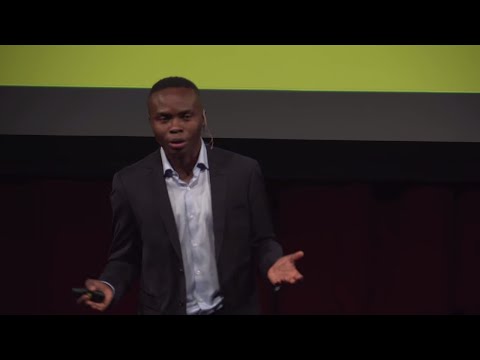
hello everyone my name is Jeremiah today
we will be talking about diagnostic
images and global health diagnostic
images are important tools in diagnosing
and treating pathology in the healthcare
industry
it is currently lacking globally in a
large amount because many facilities and
patient across the club does not have
access to these images I’m going to show
you a couple of example what a
diagnostic images actually look like for
some of you that are not quite familiar
with it that’s a chase x-ray
it’s a CT of the abdomen CT the acronym
stands for computed tomography that’s an
MRI of the brain which is the magnetic
resonance imaging medical provision
across the club that have access to that
imagery are able to properly diagnose
and plan a treatment process for a
patient that are under the Akay there
are about three factors that I want to
focus on when I’m talking about with the
electrical services across the club
today
one is the fatality as a result of lack
of this images the problem that is
associated with radiological services
and what we can do in terms of solution
to improve this factor of the healthcare
services that’s a picture of my daughter
but I will come back to her in a minute
first I want to talk to you guys about a
few other instances that are related to
fatality in radiology one of that
situation had to do with my brother he
died and the reported prognosis was that
he had a heart problem the only small
problem with there was that there was no
diagnostic imagery at any point to show
that he has some kind of heart disease
that would have been or would have
pumped
or area of a physician to be able to
when it comes to heart problem in many
clinical settings I chase x-ray or chase
CT or MRI of the changes always obtained
by clinical facility to show what
exactly is wrong this is specific exam
known as the CT of CT of the chest which
is considered an angiogram it pretty
much shows the functionality and and the
impact of how your heart works when it’s
functioning properly this images was not
available for the physician that was
treating my brother and he died
eventually after a long haul of pain and
causes associated with that another
instance I want to bring to your
attention is my mother my mother
recently had a fall a common fall and
she sustained an injury on the right leg
you’d be surprised that there was so
much difficulty being able to diagnose
how bad the injury was on a lake because
there was no imagery a clinical imagery
at any time that was obtained to show
how deep the injury she sustained was in
fact her leg got worse by the day to the
point that we were worried that she
might develop gangrene which might lead
to our leg being amputated you know in
this in some part of the world people
would have the tendency to to substitute
scientifical tools or clinical
experience for superstition and and
other factors that are related to that
because of the lack of knowledge and
tools and expertise to properly treat
the patient I am a great believer in
religion and and and why is that even a
factor in this topic one people people
pray a lot most of the time and they
pray for God to perform a miracle but
I’m also a believer in signs which mean
that you should use the proper
tools to treat a problem when you have
one in this case for my mom eventually
for she did get better partly how would
I make they probably was because she
prayed a lot because the the clinical
treatment that she actually needed was
not sufficient enough to treat her
properly I said I will come back to my
daughter in a minute so my daughter was
born at 12 pounds so write a wish when
she was born she should some evidence
some science evidence of our breathing
problem and the doctor speculated that
is possible that she might have what
they call CCHD which is congenital
critical congenital heart defect this is
a critical diagnosis and this happened
in rural America so this is not
something that is diagnostic imaging
problem is not something that is
isolated to some third-world country or
some remote part of the world this is
everywhere unfortunately the hospital
that we were ad I did not have enough
staff to be able to provide these
services for her they only had one
machine that is able to perform the exam
that was needed which was echocardiogram
and they had one tick that was
supporting the entire Hospital at that
point and on top of that not only will
it be that when the exam was finally
obtained whenever that would be that
exam will be sent to a remote location
to be read why because the entire
Hospital does not have a pediatric
cardiology that is capable of
interpreting and echo echo cardiogram
so from this scenario you can see we
spent a few hours for critical exam that
was order the stat a status determined
using the medical industry to me right
away but we were talking about hours
before before echocardiogram was
performing are luckily for us she was
okay and she’s doing much better today
but not everybody is that lucky I’ll
give you a couple of example one there
was a there was a patient in Kenya and
and the radiology attending physician
that was taking care of the patient
wanted to obtain a CT of the brain the
problem was that the hospital did not
have a CT machine to be able to obtain
that scan so the patient has to be
transported to a location that can
perform the exam the problem with that
is that by the time the exam was
performed and the founder that the
patient had of bleeding around the brain
and before they can rush him back to the
hospital for surgery
patient the radiologist suspected that
the patient has a lesion of the brain
but needed a CT scan to confirm that
that is the case and you we don’t need
to know what the fit of that patient was
but you know if you ever see a lesion in
your brain it’s not fine and needs to be
treated properly and for you to properly
treat it you need a diagnostic images to
see where the lesion is and to carry out
the surgery that is related to that that
is not the case in many places in the
war and people die because of lack of
diagnostic images to properly treat a
patient picture is worth a thousand
words they say it’s true the people that
coin the phrase pictures what a thousand
would really understand that it is not
only integral to explaining difficult
concept it shows you exactly what you’re
looking at and this might not be an
obvious fact in the radiological
services even though it might be
implicitly reference but picture does
tell us a lot of story both internally
and externally
take for instance that’s an x-ray of the
arm if you look closely you can see for
those of you that can tell there is a
broken bone on the right arm radius is
what they call it medically and that’s
it you’ve seen the picture you know
exactly where the problem is you don’t
have to spend money you don’t have to
spend time you know to run around to
look for what is wrong with the patient
why is the patient on this so much pain
of course here people can be X on a
scale of one to ten what is your level
of pain but that doesn’t tell you where
the the fracture is that doesn’t help an
orthopaedic to tell where the problem is
but with a picture it’s easy so now the
question is we’ve been talking about
radiology for a few minutes now how does
it really work does anybody really know
well I’ll tell you how it works
a patient either admitted into a
hospital or being referred to a hospital
or being brought into a hospital to e d
which is the emergency department may be
sustained a trauma
accidental road accident anything of
that nature and the attending physician
or the family physician request that are
that a diagnostic image like you know
what I’ve shown you previously be
obtained so that they can tell what is
wrong with the patient depending on what
the the prognosis the thinking is so the
patient images is obtained stored
transferred to radiologist and it’s rate
that’s it sorry works
many of you probably know somebody that
have done one of these or two of these
or you just say if I’ve done it
personally
so now problem in radiology if this is a
file tool that we need to have why is it
a problem why is it not available
everywhere one of the reason is that is
expensive it is when it comes to
location wise it is poorly located some
places are highly utilized they have
this equipment some places on they
utilize another essential problem that
you really need to know when it comes to
radiological services is that the
patient today does not really know why
they getting a specific exam yes
sometimes they tell you okay this is
what you have to do you have to prep the
day before and we get in this example
you guys say a a K you have in demonium
we want to see your chest but does the
patient really know why they’re getting
an MRI compared to a CT do they really
know why they’re getting an ultrasound
compared to an x-ray and you might ask
why does that matter
well this is why it matters a patient
that is given a CT exam compared to an
MRI is more exposed to radiation than
somebody that se is taking an MRI exam
different frequencies but radiation is
highly possible with the city because
one either you inject the video
radiation dose or or you can swallow it
same thing applies to with your
graphical images which is x-ray
ultrasound you don’t have to worry about
that and this is important because
radiation do they’ve been some work and
development to try to reduce the
radiation or low dose that you you get
exposed to when you get
exam like a CT or an x-ray it’s still a
problem
and enough radiation is capable of
altering your DNA and this is where it
gets really scary
anything that is capable of altering
that’s why patient needs to know why
they’re getting a specific exam compared
to not having a different modality
modality is determined used to
differentiate the different type of exam
that you’re getting and on top of that
patient does not have the opportunity to
have a appear refute a second opinion
because it’s almost impossible today for
an insurance company to pay for second
opinion if you don’t have a really good
that hospital is located in South South
Nigeria is in West Africa mentioned
earlier that poorly located equipment
can contribute to the problem of access
to the patient the hospital has one CT
scanner it’s probably this three times
the population of that area is probably
but compared to more dense populations
in and say Lagos Abuja Shanghai New York
and stuff this dense populated area can
probably really make a good use of a CT
scanner but in that hospital in the
remote part of the country it’s probably
almost a few hands of people that will
ever use their CT scanner so poorly
located equipment doesn’t help that
hospital is located here in the state
yes to CT scanners and you’d be
surprised this is thousands to tens of
thousands of patient a year highly
highly utilized equipment in that
hospital the next problem we’re going to
talk about is the technical and
professional know-how there’s a lack of
knowledge in the world today when it
comes to radiological services in fact
there are many more radiologists in in
in Boston in an Avenue in Boston
Massachusetts
than they are in the whole of West
Africa they are about 124 radiologists
in one Hospital alone in Boston and
there is only two in the whole country
the World Health Organization estimated
that 2/3 of the world population does
not have access to radiological services
to – it currently I looked it up so the
world population is a 7.5 billion and I
did the math on this that’s about 5
billion people that does not have access
to radiological services that is
solutions we have to we don’t have a
choice we have to think outside the box
that’s what we have to do the
traditional way is not going to work
there is a lot of reason for why you
would not work it’s too expensive some
of the location is they not up to
standing it they can acquire equipment
of this size we don’t have the technical
know-how we have the professional
know-how I’ve stated facts for that and
and that’s true so that’s why we cannot
so thinking outside the box is what we
need to do and that’s why I’m proposing
this solution a distributed radiological
Network call it clout radiology if you
want computers is going to be the thing
to solve the world most difficult
problem
it is supercomputers that are going to
and we are currently at the position to
be able to solve this problem we have to
develop better algorithm to be able to
one for instance put hospital in the
proper location or put an equipment in a
proper location so that a patient from
all over the globe can get to it sooner
and quicker for some of you that doesn’t
know what distributed network would look
like it’s a bunch of computers clustered
together and with a expert system we
will use the expert system to help with
the diagnosis we will use radiologists
across the club with variety of
experience we will no longer we restrict
it to a specific region people that are
exposed to different kind of sickness
patient will be able to get access to
these video letí’s in real-time and now
we’re going to do that other than the
fact that we’re going to have a bunch of
computers available of course you know
don’t forget the fact that it’s a
patient information so we have to secure
it so that is part of a plan it would be
highly secured I know and I know how to
do it every patient or if a potential
patient will have access to an A and app
on your phone that they can get it they
can use to work in conjunction with your
local physician or Hospital or scanning
Center to request images when one is
needed in real-time and they’ll be able
to send these images to a distributed
network to be stored rate and reported
back to the ordering physician so we
don’t have to go through the same thing
my daughter go to or my mom go to or my
brother goes already kidding or the
so application on your phone everybody
almost most part of the world has a
phone today say there’s an interesting
thing about having a phone and if you
still remember a line line line line was
was something that people used to use
what’s the edits to use it today but the
key thing about that is that if
everybody has waited for every country
in the world to have access to an
infrastructure to support a landline the
world today as we know we still be in
communication deafness but cell phone as
make communication across the clock
possible so we’re going to tap into that
power that’s what we’re going to use
you’re going to give people power to use
your phone to acquire images to be
we will also provide a portable device
we have forward differences now in
medical imagery from ultrasound that can
be used to obtain images in this remote
locations and any way as a matter of
fact we will send portable mobile
vehicles that will go to this location
to assist patient acquire these images
if they have an acquired one yet we will
do work ‘über d2 personal
transportation will come to you if you
can come to us and totally this is the
award a phrase that I coined myself if
you’re in a place that we can get to you
through work no road transportation oh
it’s an emergency you need a vo track we
will use a chopper when you son l
équipe de is probably more expensive
but that time will come is the plan what
we say what we call a miracle drawing
and this is the key thing about a
medical drawing a medical drone will be
able to scan you in real time and send
the image to the global network to be
rate and reported to you in real time so
you don’t have any time to waste and at
the end of this all the key thing is to
provide quality health care to everyone
make it assessable silver so that nobody
has to die for simple pathology or
sickness like a broken leg returning to
a possibility of having a cane green or
a heart defect that wasn’t caught on
time to be treated nobody has to die
from things that we can solve today we
just don’t properly optimize the the
resources that we currently have quality
health care that’s what everybody wants
and we can do that
so I hope you join me today hopefully in
this effort to at least try to save a
life even if we can save one life one
leg it is worth the effort thank you [Applause]
Please follow and like us: