
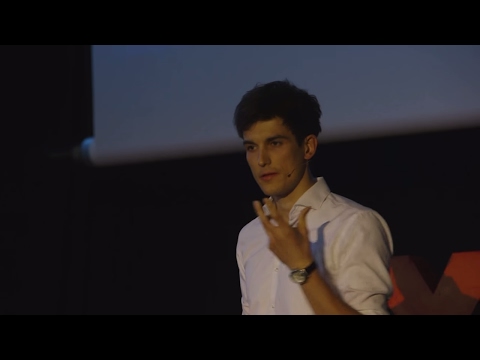
hi everybody it’s so nice to be here and
it’s such an honor to be part of a
wonderful panel of speakers so really
appreciate that I want to talk about my
favorite subject one of my fate most
favorite subjects and that’s Europe I’m
here today as a pro-european I believe
in Europe and there’s a pro-european I’m
also worried right now and I constantly
find myself asking this question how can
we save the European idea now the
European idea is the notion that our
continent is better off if we cooperate
and work together in unity and peace
rather than to work against each other
this notion this idea of a Europe United
is under attack it’s under tactics and
phobia and attacked by nationalism under
attack but people who start losing trust
in the institutions of the European
Union and maybe of course we all know
brexit – just for another key term out
there so clearly something needs to
happen so what can we do how can we save
this idea whatever we try to do and
whatever attempt we tried to find at
finding solution we have to keep in mind
the very core of Europe and the European
idea and that’s European people as
individuals but these citizens of the
European Union that’s you and me all of
us so what about those people how are
they doing
some people say Europe is like a family
the European family and a family you
have different family members they you
know some of them better than you know
others you relate better with some than
with others you have disagreements you
agree sometimes but at the end of the
day your family you have a you’v bond
you have a connection you have common
ground you understand each other you
support each other and most importantly
at least that for me you trust each
other
Trust is the component of an ideal
family without trust nothing nothing
really works within within relationships
to each other
when I look at trust and I’ll think
again about Europe I’m not sure anymore
if the concept of family is so
applicable to Europe that we see today
in Europe SU cooperation as you
countries working together because they
have common interests but I’m not sure
if they really trust each other
do all the member states of the European
Union trust each other I don’t think so
so maybe it model that is more
applicable toward Europe looks like
today is not so much a family but rather
a neighborhood in the neighborhood you
have individual members living in close
proximity with each other and all of
these people in this neighborhood have a
common interest they want to keep their
streets clean they want to make sure
it’s safe there is no crime they want to
make sure that kids can go to a good
school but by and large most members of
a neighborhood don’t really know each
other that well they don’t really
support and understand each other well
you know some neighbors but you don’t
know all of them and there isn’t that
much trust between most members of this
community so we have the family and with
the neighborhood two different models or
two different concepts which one would
we rather have for Europe to be would we
rather have Europe be like a family full
of trust and understanding or do we say
maybe Europe is better as a neighborhood
little disconnectors less trust less
support I for one know what I would
choose I would choose the family
hands-down no question so how can we get
from something that feels like a
neighborhood today to something more of
a family I believe the key component and
that development that process is a sense
of personal connection personal
connections is when you talk with
somebody it’s when you listen to
somebody when you share ideas and when
you start to get with the other person’s
coming from a personal connection is not
theory it’s experience it’s what you
have with somebody else you need to
develop this and I believe this is the
first key component we need to turning
Europe from something of a neighborhood
into something of the family we need to
make sure that Europeans get to have
these personal connect
these personal interactions with
individuals of a different cultural or
national background how are we doing in
this regard
how are your pians doing in terms of
connecting with other Europeans we can
look at a few statistics too to get an
answer the first one per year only one
out of three EU citizens is able or is
enabled to travel to a country that is
not his or her country of residence that
means only one and three gets to spend
at least one night in a country that is
not their home so that leaves two
Europeans or you citizens who do not get
to go abroad each year when you ask
those two why they don’t go abroad they
will tell you it’s for financial reasons
they cannot afford it
another statistic less than one out of
twenty young youth citizens gets to
participate in Erasmus or Erasmus plus
Erasmus is a wonderful program this is
the big exchange Network of the European
Union and arguably one of its biggest
integrative successes yet less than one
out of 20 young people actually gets to
participate in it last statistic only
about one in 500 EU citizens moves to a
different country every year
I was surprised when I read that
statistic because we have heard so much
about the freedom of travel and the
freedom of movement you can work and
live in any EU country as an EU citizen
yet only one in 500 people per you
actually do this clearly there’s some
room for improvement these numbers show
us that the sense of a family in Europe
that is built on connections that needs
to have this personal interaction is
only open right now to select few a
minority of youth citizens the majority
does not get to explore Europe to
experience it and to make these personal
connections that are so vital in
interconnecting a society
interconnecting a continent when I see
those numbers I also realize one thing I
am privileged privileged comes in many
forms for me I’m
I’m white I’m straight I’m German I come
from a family where almost all my close
family relatives have university degrees
none of this is my credit I have done
absolutely nothing for any of this yet
this privilege enables me to have
opportunities and to do things that
other people do not have as a result I
have traveled to 26 European countries
EU non-eu countries I have lived for
years in a country that is not my home
country
I’ve lived I have worked in other
countries these opportunities a lot of
people do not get one of the biggest
privileges I had or one of the biggest
opportunities that came with my
privilege was a pan-european
research trip I did three years ago here
you see you see a map together with a
colleague I was tasked in travelling to
14 European EU non EU countries and
interviewing young people on the ground
about their perspectives on life their
hopes and fears their dreams their ideas
on Europe we conducted this trip where
we traveled mostly by using int arrow
int ArrayList ticket that you can bind
that allows you to use most trains in
most European countries for up to 30
days so we weren’t on the road and as
you can imagine such a trip is mostly
and first and foremost coined by
personal experiences and personal
encounters let me tell you about some of
those encounters in Italy we met a young
law student you see her in the middle
here this was Naples and she studied law
and she was so excited to study but she
was even more excited to finish her two
degree and to get to work she wanted to
work as a lawyer to help bridge her city
Naples of corruption nepotism
it was wonderful talking with her seeing
the fire she had for the subject and
doing something for her city in for her
country another experience in France we
were invited by young people who had met
that very same day
we had connected on the street they said
please come by let’s have dinner
together went to their place we had
dinner when we talked for most of the
night about politics about Europe about
life we connected we also went to Kiev
this was just a few weeks after the
European of the pro European revolution
in Kiev in Ukraine we were welcomed
there by local activists very young
people in their early 20s they took us
to Euro Maidan it’s a big square with a
revolution against the Yanukovich Eugene
happened and they showed us around and
they showed us what they personally
stood when the revolution happened where
they stood when the government forces
killed protesters these protesters just
to keep that in mind mostly went there
because they wanted to be strong a part
of Europe last experience I want to
share here I’m in the harbour of Athens
that I’m talking to young carpenters and
young car mechanics about half of them
were unemployed and they told me how
afraid they were that they would never
find a good job again and that this
would mean they couldn’t participate in
Europe because the economic situation
would be so dire all of these meetings
these encounters ahead were meaningful
for me because they were personal they
were not fury this was not something I
heard from somebody else this was
something I encountered I talked with
them I had a connection and all of these
connections together really reshaped how
I viewed Europe it helped me to better
understand Europe I had always been a
pro-european but only this trip really
showed me what Europe could be like that
it’s about the people and that we all
have something in common during one of
the last stops of our trip um we came
for Vienna and we had dinner with
another friend the three of us were
sitting down and we talked about the
power of travelling we talked about how
this trip had changed my life how it
turned me from a European theory to
European out of experience how it turned
something from a neighborhood into
something of a family with connection
and trust and a very simple question
came up
why couldn’t all young people get to
have this experience that I just did
because of my privilege I did but I can
couldn’t all do that why couldn’t all
young Europeans take an interracial trip
to travel Europe to explore it to
experience it and to make personal
connections with others why couldn’t the
European Commission give out these inter
LT codes for every EU citizen when they
turn 18 it was just a simple question
that’s the beginning of what we call
free interior this idea really seeks to
do one thing do you remember the number
we had earlier the one and three
traveling abroad each year it seeks to
raise that number to three and three at
least once for every person in their
lives so that every person gets a shot
in exploring Europe in making personal
connections with people they were
otherwise never meet and that will help
all of us to build a sense of a family
where we have understanding because we
have this connection we know each other
the idea how this could work is simple
when it’s your 18th birthday you receive
a letter from the European Commission
this letter contains a congratulatory
note and it also contains a voucher for
an interval pass and you don’t have to
go right away because a lot of people
don’t want to go maybe one day tea no
they still want to save up money or they
want to find friends who don’t want to
travel with so they have six years time
to validate this voucher once they
decide it’s my time now I will discover
Europe they go to train station they go
online and they exchange this voucher
for an actual Interrail pass that will
allow them to travel the continent for
up to 30 days go with me in a slight
little journey here imagine what a
Europe could look like where this was
implemented imagine Europe in which free
interval is part of daily lives of
people in this kind of Europe it would
be perfectly expected and totally normal
for all EU citizens to receive this
letter and thus out when they turn 18
this of course means that our already
young EU citizens at the age of thirteen
or fourteen they’re already excited for
their letter when they turn 18 they
already start planning they think about
what countries they want to go to
because they’ve heard all these great
stories from the older siblings from
there
and maybe from online so they can’t wait
to go and of course an interval to get
is not all you need to travel there are
other expenses we know that that’s why
luckily civil societies on board with us
foundations youth organizations social
workers NGOs they are supporting this
effort they give out scholarships or
stipends to young people who have less
financial means they provide information
networks in European cities to help
young in Tyler’s find find those their
way around in their city couchsurfing
has boomed and it enables all EU
citizens no matter what their parents
make no matter where they come from what
language they speak or which school that
I’ve gone to to travel Europe in this
kind of Europe youth mobility will have
increased 10 times to what it was before
frontier was introduced as a result of
this strongly increased mobility we have
increased tourism this is helping to
stabilize faltering European economies
it brings and fresh finances it
stabilizes economies and helps to combat
unemployment and youth unemployment in
Europe most importantly free interior or
the internal network has been expanded
at this point to also include buses and
ferries to even reach the most remote
corners of our continent and all of that
of course is a much greener way of
travelling than flying and because now
so many young people do rail bus and
ferry our overall co2 emissions in
Europe have to have decreased making
this continent more green and more
beautiful the most important component
however is that in this kind of Europe
everybody gets to have these personal
experiences in these personal encounters
and it pays off when millions of people
every year travel to other countries
make person make make friends connect
with others it will have an effect on
society at large within the country but
also in European society people will
grow together and as a result in this
kind of Europe nationalism extendo
phobia stereotypes have declined their
power is less strong now that people
actually know each other
in this kind of Europe a sense of a
family is starting to emerge because
people have connections with each other
and you can ask anybody on the street
where did you go for Interrail and they
will tell you a wonderful story full of
adventure and experiences that has
changed their lives to come back to an
opening question how can we save the
European idea a very simple proposal
send all youth traveling this is not
even that difficult we just have to do
it the interior network exists we can
just do it it works it’s there’s not
much work involved we just have to
convince policymakers that this is
something our continent needs that’s why
I want to invite all of you to join the
free internal movement and to do this
convincing because our continent needs
it and if we do this together we can
grow a continent into a more United
family for all thank you so much
[Music]
[Applause]
Please follow and like us: