
[Music]
[Applause]
[Music]
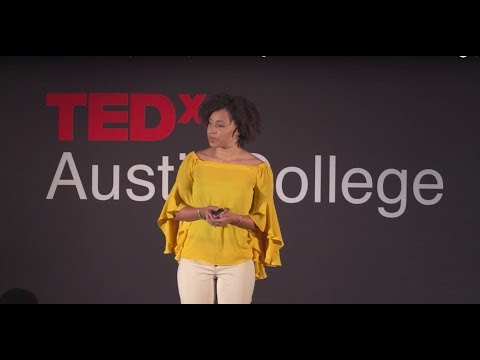
at first glance when you look at me what
do you see you see my skin the color of
sand you see my full lips small nose and
my sandy red and brown coarse hair when
people encounter me most of the time
it’s with the statement you look exotic
or you’re pretty and then after the soft
introduction of compliments comes the
hard-hitting question out of burning
curiosity what are you where are you
from no like where are you really from
what are your parents where are they
from
is that a tan no but your hair is kinky
so you must be black oh you’re mixed and
out of all of these questions asking my
name seems not to be the first and
sometimes not even one of them this
makes me curious curious as to why the
what are you question lingers in the
mind for those that we cannot categorize
those who seem to be ethnically
ambiguous categorization is a part of
human nature we do this with shapes and
colors for instance and then we do this
with people we want to be able to
understand those that are different than
us
but without speaking to them as a
multiracial woman I get the what are you
question quite often ironically however
getting asked this annoying question at
least gives me the opportunity to have
an open conversation about race that
would not occur otherwise the
my sisters and I they also get the what
are you question a lot we are each very
different people
and interestingly enough in the past we
have all identified with black or
african-american it hasn’t been but
within the past few years that we have
changed our identification to
multiracial but this is upon the
realization that we could in fact be
both black and white two of the most
predominant identifications that we
associate ourselves with this is because
of our parents to different people on
two ends of the racial spectrum that
instilled a set of values that taught us
to embrace both of our culture’s that we
are very much part of I remember that
very awkward conversation with my dad
when I expressed to him that I only
associated with black you should have
seen his face
one of disappointment as if I have been
neglecting a piece of me by only
associating with one ethnicity one
culture
why can’t you be both he asked and
honestly I wouldn’t be able to answer
nor understand why I couldn’t in fact be
both until a few years later after I’d
been educated formally and informally
about race and identity I have also had
conversations similarly with my mother
when BET’s annual black girls rock award
show came on television one year I asked
her mama do I count like do I get to
celebrate being a black woman even
though I’m not fully black and what she
said I will never forget Sierra you are
a woman of color you came from me a
black woman and without me you would not
be here
you are no better or any less than black
because you are half white or have light
skin you are indeed both and you have
the right to embrace both of those parts
separately as well as together this
journey and finding my identity and who
I am
persisted with these conversations with
my parents questions about my identity
actually stemmed from surveys like this
the more formally explicit version of
the what are you question the version
that gets to dodge the conversation
about Who I am which cannot be expressed
simply by checking black or in my case
what is most commonly expressed as bi or
multiracial the problem with this survey
is the perpetuation of the one-drop rule
it is not written on the survey but ever
since I entered the school system it had
been an unspoken rule that I must check
black and to avoid checking the white or
Caucasian box one of the biggest factors
as to why I had trouble associating
myself with the white racial identity it
was like a forbidden Pandora’s box that
I was shunned from opening because then
people became confused like my teacher
in the third grade when I asked her if
it was okay to check white I have also
been guilty of asking the what are you
question in fact a few years ago after
watching one of my sisters middle school
basketball games I was speaking to one
of the referees that had happened to be
working her game and in the middle of
glorious basketball conversation I
nervously asked excuse me sir but what
are you he smiled and looked at me I am
an American he said and thinking this
was some sort of game I responded with
okay so what is your race
he responded with homo sapien a human I
asked one question after another until I
ran out of questions that I thought were
valid I gave up and I asked myself was
it really that important to know the
ethnic identity of this man I thought
that what are you question was an
appropriate approach in asking another
ethnically ambiguous looking person
what are you because the same question
had been asked of me my entire life I
didn’t understand until later that what
he was trying to tell me was that it was
not about his skin colour it was more
about who he is and not what he appears
to be after this encounter I realized
that it wasn’t so much that his skin
colour and combination of stereotypical
racial features is what intrigued me the
most but it was the person that he
showed me that was more intriguing than
any race category could have been I have
been blessed with the ability to
witnessed firsthand both sides of a
black and white world
I see the differences between a white
man in today’s society and a black woman
in today’s society and I’ve experienced
the cultures associated with each of
those groups essentially both of my
parents are American however the
difference comes with the perception of
what it means to be black compared to
white in America as a multiracial woman
I feel as if I have been tasked and
acting as a bridge between the two races
but that task has less to do with race
and more to do with how we are to
approach and interact with one another
in spite of it now with all of the
stereotypical racial stereotypes
associated with each race fest there is
a threshold of fear that one must cross
in order to escape the initial tyrants
of subconscious prejudice now how do we
get past these and I’m not
anyone a racist however because we live
in a world whose history involves a lot
of racial discrimination I don’t think
it’s any question that even if we don’t
mean to sometimes our thoughts can be
influenced by racial ethnic and cultural
stereotypes but then again how do we get
past these how do we look further than
skin-deep and surpass even the slightest
fears of our differences well given that
I have lived with two different racial
families I can give some advice as to
how I know that I am a particularly
light woman and I have noticed that this
gives me a sort of advantage and
instances that are highly dominated by
white people living with my father’s
family and growing up in that
environment I have become aware of
things such as music food table manners
and even conversations which are
appropriate in this environment and in
then and being half black I am given a
certain social acceptance that allows me
to be relatable to the black community
and the minority identity as a whole I
can it relate to one black experience
one and this allows me a relatability
that to all other black people but then
I also experience a sort of hostility
from both groups on one hand I am too
dark and out of place or my hair isn’t
straight enough to fit in with white
peers I am shunned from having
conversations which make colorblind
white people uncomfortable and on the
other hand I am too light not black
enough a house slave a pet to the white
man someone show that shows up in rap
music videos and on mainstream
commercials because I am NOT dark which
is something that is deemed not
beautiful in the world that we live in
today I hear things like that’s that
light-skinned stuff or you talk white
and the one that hits the hardest you’re
not black something which is expressed
by both black and
my people but I do not let this
discourage me from embracing the
cultures in which I was raised in I am
both and my advice to all of you is not
to assume do not assume that someone has
lived one lifestyle or one life
experience based on their skin go forth
and ask their name have a conversation
ask those uncomfortable questions and
for those answering those uncomfortable
questions answer with your truth each of
our experiences are unique to the self
and not one of them should reflect on an
entire group of people it is okay to be
intrigued by someone’s racial identity
someone’s racial differences but it is
not okay to approach them as if they
were only these things our identity is
deeper than our skin and when we
acknowledge the exterior as well as the
person on the interior we are
encouraging inclusivity and then when we
encourage inclusivity we are making
reality I diverse reality for all people
and opening up an abundance of
opportunity for everyone I want you to
see my hair to see the coils I want you
to see my gap the combination of beige
and brown that my skin takes on and my
freckles but then I want you to hear me
listen and learn instead of assuming my
ethnicity is very much a part of my
identity but it is not the only part
some that think that my racial identity
is interesting thinks that this makes my
character is such but this is not true
it is Who I am that will intrigue you
far more than my skin ever could because
in learning about Who I am you will
realize that I do not fit the stereotype
you will realize that as a multiracial
woman despite stereotypical popular
belief I am NOT
used I know exactly who I am I am Sierra
born and raised in Arlington Texas an
American I am a multiracial woman I am a
sister and a daughter a student and an
athlete my my spirit is as free as the
coils in my hair
I am empathetic and I am very dramatic
both of my exterior and my interior
characteristics make up my identity and
all are inclusive not one of them can
stand alone and define me all of these
pieces make up Who I am so when you meet
someone when you see someone different
than you think not about what they are
and instead ask who are you thank you
[Applause]
[Applause]
[Music]
at first glance when you look at me what
do you see you see my skin the color of
sand you see my full lips small nose and
my sandy red and brown coarse hair when
people encounter me most of the time
it’s with the statement you look exotic
or you’re pretty and then after the soft
introduction of compliments comes the
hard-hitting question out of burning
curiosity what are you where are you
from no like where are you really from
what are your parents where are they
from
is that a tan no but your hair is kinky
so you must be black oh you’re mixed and
out of all of these questions asking my
name seems not to be the first and
sometimes not even one of them this
makes me curious curious as to why the
what are you question lingers in the
mind for those that we cannot categorize
those who seem to be ethnically
ambiguous categorization is a part of
human nature we do this with shapes and
colors for instance and then we do this
with people we want to be able to
understand those that are different than
us
but without speaking to them as a
multiracial woman I get the what are you
question quite often ironically however
getting asked this annoying question at
least gives me the opportunity to have
an open conversation about race that
would not occur otherwise the
my sisters and I they also get the what
are you question a lot we are each very
different people
and interestingly enough in the past we
have all identified with black or
african-american it hasn’t been but
within the past few years that we have
changed our identification to
multiracial but this is upon the
realization that we could in fact be
both black and white two of the most
predominant identifications that we
associate ourselves with this is because
of our parents to different people on
two ends of the racial spectrum that
instilled a set of values that taught us
to embrace both of our culture’s that we
are very much part of I remember that
very awkward conversation with my dad
when I expressed to him that I only
associated with black you should have
seen his face
one of disappointment as if I have been
neglecting a piece of me by only
associating with one ethnicity one
culture
why can’t you be both he asked and
honestly I wouldn’t be able to answer
nor understand why I couldn’t in fact be
both until a few years later after I’d
been educated formally and informally
about race and identity I have also had
conversations similarly with my mother
when BET’s annual black girls rock award
show came on television one year I asked
her mama do I count like do I get to
celebrate being a black woman even
though I’m not fully black and what she
said I will never forget Sierra you are
a woman of color you came from me a
black woman and without me you would not
be here
you are no better or any less than black
because you are half white or have light
skin you are indeed both and you have
the right to embrace both of those parts
separately as well as together this
journey and finding my identity and who
I am
persisted with these conversations with
my parents questions about my identity
actually stemmed from surveys like this
the more formally explicit version of
the what are you question the version
that gets to dodge the conversation
about Who I am which cannot be expressed
simply by checking black or in my case
what is most commonly expressed as bi or
multiracial the problem with this survey
is the perpetuation of the one-drop rule
it is not written on the survey but ever
since I entered the school system it had
been an unspoken rule that I must check
black and to avoid checking the white or
Caucasian box one of the biggest factors
as to why I had trouble associating
myself with the white racial identity it
was like a forbidden Pandora’s box that
I was shunned from opening because then
people became confused like my teacher
in the third grade when I asked her if
it was okay to check white I have also
been guilty of asking the what are you
question in fact a few years ago after
watching one of my sisters middle school
basketball games I was speaking to one
of the referees that had happened to be
working her game and in the middle of
glorious basketball conversation I
nervously asked excuse me sir but what
are you he smiled and looked at me I am
an American he said and thinking this
was some sort of game I responded with
okay so what is your race
he responded with homo sapien a human I
asked one question after another until I
ran out of questions that I thought were
valid I gave up and I asked myself was
it really that important to know the
ethnic identity of this man I thought
that what are you question was an
appropriate approach in asking another
ethnically ambiguous looking person
what are you because the same question
had been asked of me my entire life I
didn’t understand until later that what
he was trying to tell me was that it was
not about his skin colour it was more
about who he is and not what he appears
to be after this encounter I realized
that it wasn’t so much that his skin
colour and combination of stereotypical
racial features is what intrigued me the
most but it was the person that he
showed me that was more intriguing than
any race category could have been I have
been blessed with the ability to
witnessed firsthand both sides of a
black and white world
I see the differences between a white
man in today’s society and a black woman
in today’s society and I’ve experienced
the cultures associated with each of
those groups essentially both of my
parents are American however the
difference comes with the perception of
what it means to be black compared to
white in America as a multiracial woman
I feel as if I have been tasked and
acting as a bridge between the two races
but that task has less to do with race
and more to do with how we are to
approach and interact with one another
in spite of it now with all of the
stereotypical racial stereotypes
associated with each race fest there is
a threshold of fear that one must cross
in order to escape the initial tyrants
of subconscious prejudice now how do we
get past these and I’m not
anyone a racist however because we live
in a world whose history involves a lot
of racial discrimination I don’t think
it’s any question that even if we don’t
mean to sometimes our thoughts can be
influenced by racial ethnic and cultural
stereotypes but then again how do we get
past these how do we look further than
skin-deep and surpass even the slightest
fears of our differences well given that
I have lived with two different racial
families I can give some advice as to
how I know that I am a particularly
light woman and I have noticed that this
gives me a sort of advantage and
instances that are highly dominated by
white people living with my father’s
family and growing up in that
environment I have become aware of
things such as music food table manners
and even conversations which are
appropriate in this environment and in
then and being half black I am given a
certain social acceptance that allows me
to be relatable to the black community
and the minority identity as a whole I
can it relate to one black experience
one and this allows me a relatability
that to all other black people but then
I also experience a sort of hostility
from both groups on one hand I am too
dark and out of place or my hair isn’t
straight enough to fit in with white
peers I am shunned from having
conversations which make colorblind
white people uncomfortable and on the
other hand I am too light not black
enough a house slave a pet to the white
man someone show that shows up in rap
music videos and on mainstream
commercials because I am NOT dark which
is something that is deemed not
beautiful in the world that we live in
today I hear things like that’s that
light-skinned stuff or you talk white
and the one that hits the hardest you’re
not black something which is expressed
by both black and
my people but I do not let this
discourage me from embracing the
cultures in which I was raised in I am
both and my advice to all of you is not
to assume do not assume that someone has
lived one lifestyle or one life
experience based on their skin go forth
and ask their name have a conversation
ask those uncomfortable questions and
for those answering those uncomfortable
questions answer with your truth each of
our experiences are unique to the self
and not one of them should reflect on an
entire group of people it is okay to be
intrigued by someone’s racial identity
someone’s racial differences but it is
not okay to approach them as if they
were only these things our identity is
deeper than our skin and when we
acknowledge the exterior as well as the
person on the interior we are
encouraging inclusivity and then when we
encourage inclusivity we are making
reality I diverse reality for all people
and opening up an abundance of
opportunity for everyone I want you to
see my hair to see the coils I want you
to see my gap the combination of beige
and brown that my skin takes on and my
freckles but then I want you to hear me
listen and learn instead of assuming my
ethnicity is very much a part of my
identity but it is not the only part
some that think that my racial identity
is interesting thinks that this makes my
character is such but this is not true
it is Who I am that will intrigue you
far more than my skin ever could because
in learning about Who I am you will
realize that I do not fit the stereotype
you will realize that as a multiracial
woman despite stereotypical popular
belief I am NOT
used I know exactly who I am I am Sierra
born and raised in Arlington Texas an
American I am a multiracial woman I am a
sister and a daughter a student and an
athlete my my spirit is as free as the
coils in my hair
I am empathetic and I am very dramatic
both of my exterior and my interior
characteristics make up my identity and
all are inclusive not one of them can
stand alone and define me all of these
pieces make up Who I am so when you meet
someone when you see someone different
than you think not about what they are
and instead ask who are you thank you
[Applause]
Please follow and like us: