
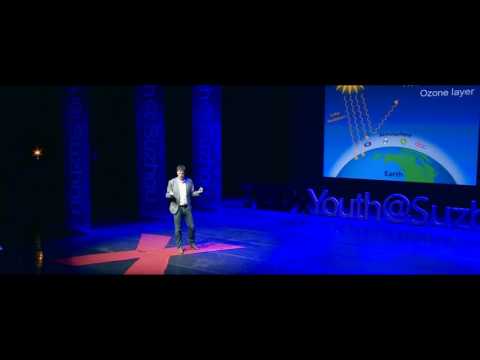
oven what do I mean to her once I and I
work here in Sioux Joe as an
astrophysicist my work is to study the
universe and in particular my research
is about trying to understand how the
stars that you see tonight how they
formed whether they have planets and
what happens to those planets over time
are they habitable do they look like
planet Earth so when I was a young boy I
grew up in the Netherlands not very far
from where this photo was taken and I
regularly looked up in the sky and I
wondered like all these stars and
planets where did they come from and can
i travel there when I grow up can I go
there in a spaceship and also could
there be life out there and with so many
stars out there billions and billions of
stars out there there should be a planet
that looked like planet Earth right and
could there be aliens could they travel
to planet earth could they visit us I
didn’t know at that time and now 30
years later I still don’t know here you
see a picture of a galaxy a galaxies
consisting of more than a hundred
billion stars and we live in a galaxy
that looks a bit similar like this one
our galaxy is called Milky Way also with
hundreds of billions of stars and many
of those stars they have planets
actually in our Milky Way galaxy there’s
one little star and the outside of that
galaxy and that star we call Sun our Sun
is a star all the other stars are also
sons so our son has eight planets so
maybe the other stars they might also
have planets right and our son has one
planet which is habit
one planet where humans can live where
life can exist and so far planet Earth
is the only space in the only place in
the universe where as far as we know
life exists actually with such an
incredibly large universe the universe
is used billions and trillions of stars
and planets it should be many places
that look a little bit like this right
should be many planets that look like
Earth with life on it but so far we’ve
been looking around we haven’t found any
evidence for life why is that well to
understand that question we can split it
up in two parts the first part is how
common are actually planets like this
and the second question is well if
planets like this exists how common is
is life on such planets are we a special
place in the universe or are these kind
of place is very common let’s take a
look at these questions so the first one
is well how common are these planets in
the universe so here you see a picture
of the constellation of Orion you can
see it tonight if you go outside if it’s
not cloudy you can recognize it and by
the three stars in the middle very
easily you can recognize it so when you
look at Orion you will see a couple of
stars and a big black background and
looks like empty space but when you look
with an infrared camera that detects
heat radiation you will actually see
much more you will see that there is
actually a lot of stuff between these
stars and as astronomers we call that
gas and dust gas and dust in space and
it is actually a lot of stuff there and
that stuff has gravity these big gas
clouds in space they attract each other
they become smaller they merge they
clump together and they form stars and
you can actually see at the yellow spots
there that’s where new stars are forming
and that’s where new planets are forming
so if you come back here take a picture
2 million years later you will see some
planets maybe some of them look like
earth so schematically this is what
happens you start out with a very big
gas cloud in space have a lot of gravity
it becomes smaller takes takes maybe a
million years or two million years or so
and then it comes together in the center
99% of the material goes to the center
and forms a star and the other one
percent of the material forms a disk
around that star and it keeps orbiting
that material keeps orbiting that star
for maybe 10 million years but in the
meantime it is making planets such as
planet Earth so this is how we think
planet Earth form so you have a star a
newly formed star with it gasps discs
around it in that gas disk you have
atoms molecules they stick together they
form dust particles that also stick
together and ultimately grow and grow
and grow two stones big stones of a
meter of a kilometer and some of them
that are big enough start due to their
gravity attracting even more of this
material and this crowd they grow very
fast so in our solar system we had eight
of these very big ones that happen to
accrete all the leftover material and
form planets so you see those stones
they’re actually not all of them are
gone some of them are still flying
around the solar system today and if one
of them collides with the earth tonight
you will see a falling star if it’s a
small one if it’s a big one then we have
a problem right so that’s what happened
to the dinosaurs they were killed by an
impact of one of these asteroids in the
meantime the Sun starts shining and the
Sun already due to its intense radiation
it blows away the very light
materials that hydrogen helium the
materials that make up the atmosphere
and the heavy ones like rock and metal
they stay near this done they say stay
near the Sun so what you get if you do
that we do a computer simulation for
example and include all of this you’ll
get a star and you get a couple of small
planets made of stone and rock like our
planet Earth with a very tiny atmosphere
but almost entirely made of rock and
stone and four huge planets or three or
five depends a bit this is what we
expect from the theory of planet
formation it works for our solar system
but does it also work for other solar
systems and that was a big question up
to about 20 years ago 20 years ago
telescopes became strong enough to
detect planets orbiting the stars that
you see at night of course it’s very
difficult because they’re so far away at
the moment we already know more than
3,500 planets outside our solar system
and of course a more interesting
question is which one of these planets
is actually suitable for life life as we
know it that needs liquid water to some
degree and this is well quantified in
this this plot and the horizontal axis
you see the distance between a planet
and a star and then the vertical axis
you see well how hot is the star how big
how luminous is a star so for stars like
our Sun if we want a planet like Earth
to be habitable it shouldn’t be too cold
it shouldn’t be too far away it
shouldn’t be too close to the star and
it should be at the right spot in the
Green Zone and we call this the
habitable zone so if you are outside
that habitable zone you can’t live on
that planet if you’re in the habitable
zone it’s theoretically possible but for
those of you that look carefully
actually our neighbor planets
Venus and Mars are also well on the edge
of this habitable zone in theory there
may be life there but it turns out for
some reason it went wrong venus is too
hot Mars is too cold and actually our
moon is exactly at the right spot the
perfect place but our moon is also dead
why is our moon did it doesn’t have any
atmosphere so one requirement for life
is temperature but another one is
atmosphere and it’s actually a very
important one the air which we breathe
so an atmosphere and a planet determines
what what happens on the surface of a
planet so and our planet Earth the
atmosphere transports heat through winds
our atmosphere is responsible for the
greenhouse effect the greenhouse effect
you always hear many bad stories about
it but actually it’s good because
without that greenhouse effect it would
be minus 40 degrees in this room the
atmosphere also provides nutrients
oxygen for me and carbon dioxide for the
plants and finally we have an ozone
layer that protects us from dangerous
radiation from space so if life wants to
develop it on a planet and developing
over long periods of time into an
advanced civilization you need a stable
atmosphere or at least one that changes
very slowly and sometimes it goes wrong
so in our earth that went wrong a couple
of times actually quite a couple of
times we had asteroids impacting the
earth comets colliding with the earth
wiping off the dinosaurs of this planet
we had super volcanoes we had stars
exploding not so far away from the Sun
sterilizing most of the earth so so far
our earth has survived all these natural
disasters life has survived these
natural disasters although with big pain
every now and then
so to sustain life for long periods of
time you need a good temperature and a
good atmosphere even if you can avoid
this on some planets in the universe you
will have additional problems you will
have an advanced technology and advanced
civilization that messes up the planets
for example if you have a star with a
planet and on that planet they discover
nuclear energy and start making war with
each other that cannot end good
fortunately we survived that so far and
our planet right we didn’t have a
nuclear war air pollution can be
tremendous well it’s a bit of problem
now right but not so big that it is a
problem for life and finally the
greenhouse effect can go crazy you may
have seen that in the news this is an
example Venus where it went wrong with
the greenhouse effect it’s incredibly
hot now it used to have oceans but not
anymore it became too hot too much co2
in the atmosphere that was not done by
humans by the way this was just because
the volcanoes happen to be a bit
overactive so what about planet Earth
what are we doing now to our atmosphere
so you see here a picture of co2 levels
over time measured by astronomers on a
mountain in Hawaii the red curve shows
the amount of co2 in the atmosphere
since I was born which is well I’m not
too young but about a bit less than 40
years is it’s a very short time on
astronomical geological timescales since
I was born co2 levels went up by twenty
percent an incredible amount so whether
this trend come from where did it start
fortunately by studying the bubbles in
the ice and Antarctica and Greenland we
can find out what the atmosphere looked
like in the past and dig a hole analyze
the ice bubbles
and this is what you can find for the
last 2,000 years was rather constant for
2,000 years until about 1850 1900 what
happened then what happened at that time
it was the start of the Industrial
Revolution that was James Watt and his
steam engine that’s when we started
using coal and oil on a massive scale
and you see co2 levels have gone up by
forty percent this is not the stock
market of China this is not the American
dollar this is the atmosphere of an
entire planet sounds very dangerous to
me if you go back even further and you
can do that this picture shows a million
years of history measurements of co2
levels and temperatures then coupled to
it you see some variations we have ice
ages every now and then these ice ages
are natural and actually there is they
are a result of astronomy they are a
result of the orbit of the earth around
the Sun changing sometimes it’s a bit
more circular sometimes a bit more
elliptical sometimes a bit closer
sometimes a bit further that’s part of
my research of astronomers like me we
try to figure out what the planets are
doing and we can predict this and
geologists they measure this and thurs
out pretty well except for the last
point you see 1 million years of history
of co2 levels and interest 100 years
which is absolutely nothing in
geological astronomical time skills we
are changing the earth we are changing
the earth sounds quite dangerous so now
to go back to my original question the
question that I asked when I was still a
young boy so why are there so many stars
and why haven’t I Lien’s come to visit
us yet that may relate to this at least
in my opinion
so so far we have extremely good
telescopes we went into space we’ve been
to Mars we sent out messages radio
signals light signals into space we’ve
been listening space seems empty at
least nobody is there to say hello to us
why is that and the famous physicists
and Rico Fermi he actually brought that
up one time in the academic community
during a coffee time at the University
so he reasoned as follows and I’ve shown
you in the first part first of all the
universe has an incredible number of
stars incredible number of planets and
therefore also even if the chance may be
very small an enormous number of planets
that look like Earth planets that can
potentially host life and some of these
planets will be forming today some of us
some of them formed maybe a million
years ago or a billion years ago so
civilizations there should be a billion
years ahead in technology can you
imagine what it looked like there’s some
civilization there that is a hundred
years ahead in technology or a thousand
years or a million years incredible they
should be able to send messages to us
come say hello but they don’t it seems
quiet where are they and that is called
the Fermi paradox and of course many
people have thought about what the
solutions of this could be why the
universe so big full should be full of
earth-like planets and still we don’t
see anybody maybe we’re the only ones in
the universe right or maybe we are just
the first one or maybe we should be
lucky nobody has found us yet or maybe
they’re hiding right maybe they don’t
care about us actually what I think is
the picture on the right so every now
and then a civilization is wiped out by
an asteroid impact or an exploding star
that chance is relatively small what I
think is that
civilizations what they do they build up
their technology and at some point they
make an end to their own lives they mess
up their planet so much either through a
nuclear war or through changing the
climate do you think an intelligent
civilization would be so stupid to mess
up their own planets I don’t know the
answer we don’t know much about what
happens in space the only thing I know
is what happens on planet Earth that’s
the only one I know and what we’re doing
right now with planet Earth we we are
changing planet Earth we are changing
the atmosphere right now at a tremendous
rate so when I was a young boy and I
looked up to the stars and I wondered
where are these aliens why are we alone
then I look at Planet Earth what we are
doing right now and I think this may be
a reason and it’s good to realize that
we’re changing the atmosphere it’s a
human it’s not natural humans do it and
therefore we may also be able to do
something about it so this talk was
about the universe actually it’s also
about you this is your future this
planet let’s take good care of it thank
you [Applause]