
[Music]
[Applause]
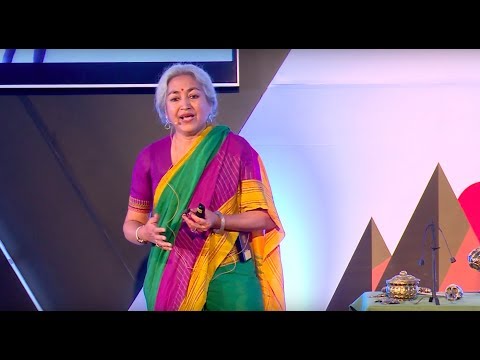
hello everybody
today I’ll be actually sharing with you
a story that started 5000 years ago yes
it is the story of metal casting in
India this little figurine this little
figurine that you’re seeing in my hand
this is a copy of the dancing girl the
bronze figurine which was found in the
excavations of mohenjo-daro and that
goes back 3,000 years BCE so this was as
cited as the first example of metal
casting using the lost wax technique
lost-wax technique to tell you simply is
you know first you create the thing in
wax then you cover it with two layers of
clay you allow it to dry then you fire
it so the wax melts hence the name the
lost wax technique then you pour molten
brass into it within minutes it
solidifies and you break open the mold
so by definition each piece is unique
because you have broken open the mold
what is amazing is that this ancient
technique is still practiced today in
many parts of our country and not much
has changed today what I’m going to talk
to you about is how we have evolved this
now when you talk of evolving tradition
it seems a bit contradictory because
tradition is something that continues
from the past something that we cherish
almost against the onslaught of the
modern so it seems like an oxymoron when
I say that you know what is evolving
today
but I realized that ours is a living
tradition and if you you cannot preserve
it like a museum piece
you cannot preserve it like a fossil
like a mummy from Egypt more than
preserving it has to be nurtured and
this is what then you know if I were to
join now my story to this five thousand
years of tradition it begins only 20
years back when we came from Mumbai to
punch Guinea lock stock and barrel
with the two kids I mean has been
talking about they were very tiny then
and it was in fact I started my work
with a diverse ee artists only ten years
back and it was under this tree under
this tree that the work started when I
met Suresh Bugatti and I reversed the
artists teacher in one of the schools
here and soon we started growing and
next picture I’d show you this is our
first group of apprentices in fact who
are now master craftsmen who are living
here in Panch Guinea in fact two of them
have also got married and now we are
actually growing like the community you
know one day what happened I noticed a
lot of whispers and some secretive thing
going on between the craftsmen the
apprentices and when I asked them they
showed me this they were making it as a
birthday present for Teresa another
irony you know I tell the story of the
riot village with this because the irony
is that that if this boy hadn’t
commander you know hadn’t come to us he
could have been recruited by the
Naxalites and could have been using a
real gun
so one realize that if you’re thinking
of sustaining art you have to think of
the artist cut bit in the crossfire
between the Naxalites and the police the
state without any marketing facilities
yes very little choice left this is how
we began and so then one had to think
about how to make it into a living for
them so can you see this gun now this is
stone and this is brass now this fusion
of stone and brass this technique was
never tried in the five
thousand-year-old history of this art
form which is now known as doe Kragh so
it’d be kinda the very simple desire in
my mind I had seen statues made in metal
and satyrs made and stone could we put
it together and integrate it into one
hole
so with two years of experimentation and
a lot of hard work we finally cracked it
so this was a first piece nature goddess
once this was a success then of course
we started flying as if so just to
compare it with traditional Tokra craft
I’ll show you now this is traditional
Tokra craft and so here there is a basic
core of clay and they do it but it’s so
sad to think that today in Chattisgarh
often I hear when these craftsmen come
there art pieces are sold by the kilo so
this is the condition why because it has
lost its vitality if you keep on
repeating the same thing it loses its
energy and how many of the same thing
can you expect to sell so something had
to be done so that’s
what one thought of evolving tradition
when I talk of evolving tradition like
Beauty said that the constant is there
is you know you have to retain the
essential spirit yet it has to be
contemporary and appeal to a wider
audience
so now see what we have done to the same
thing this is the rock and brass fusion
once we started of course bigger pieces
using two stones chameleon pigs flying
peacock in our garden which is installed
there and now this was a very big thing
which we did last year this 12-foot
statue of the winged human taking off
from a pile of moose this was installed
in Delhi University Hindu college and
you can see the wing why I am showing
you this is that this wing was made with
about thousand feathers of Maidan wax
and lost-wax technique of metal casting
has this its inherent risks because when
you’re pouring brass into it molten
brass it need not reached the end so
when it was being broken open we had our
hearts in our hands is the brass reach
the end
luckily it had otherwise we would have
had to do the whole process and bigger
than this challenge was of course this
Nandi weighing 900 kilos now when you
scale it up casting or small thing is
easy but imagine 900 kilos of hot Nandi
the mold red-hot and pouring 300 kilos
of molten brass into it yeah and you
have to do it fast because it can
solidify after three failures finally
this is ready and this is also installed
in Delhi University I will show you a
little process video to give you an idea
how from stone till the end what goes
into it
[Music]
[Music]
[Music]
so tradition is really like a tree the
more deeper you go the more the branches
spread and you get fruits now we have
even started sculpting stone slightly
the stone has to be very hard so it’s
very difficult to sculpt basalt but now
this is added a different dimension and
you know after all this one it was Asif
one had tasted blood and we began with
other kinds of experimentation
terracotta so terracotta and brass
fusion I have a piece here too so this
is on terracotta we do the wax work like
this and then it is cast this flask I’d
got from Rajasthan it’s got transformed
into a lamp shade again broken pieces of
pottery they get transformed into
pendants we’ve even broken pieces of
cutlery this was the tea mug which is no
part of jewellery
so this is what I want to tell you what
evolving tradition it means for me now
look at this this is a very simple toy I
mean it’s made in Buster bitter not and
using the principle of balancing not not
much has changed now it does this really
do the same thing what we have done here
is actually look at this so this is what
evolving tradition is for me
[Applause]
again taking inspiration from nature
Bohemia branch we were almost the middle
botanical series so now you know the
traditional way of doing things is you
have a traditional motive of a tree year
or a bird we are actually copying actual
birds so I have other things with real
birds but of paradise with its long tail
and monkeys on the moon bottle openers
after this now we became more bold and
I’m going to start with something else
which we started doing can you see this
baby monkey skull this has got to by our
dog in fact and we just covered it with
clay and casted the original skull is
burnt out and now it is brass so this is
what you know what I’m going to be
talking about is organic casting what we
call now
so branches creepers turn into
door-handles antlers of the stag are
made with branches and that’s how it
looked later meat cheese leave that this
kind of texture no human hand can
possibly replicate one thing I realized
was that art is a powerful medium to
commune with nature and when we have
this is something which are actually the
modern world is losing out we are all
suffering from what they say nature
deficit disorder and I found an art of
Airy powerful medium of connecting the
youth and also sensitizing them to the
needs for conservation and so when we
have groups of children and youth and
architects and interns we first thing we
asked them to do is observe nature and
that’s where they get their ideas of
desire
all from and this is in fact made by
those who have come for the workshop to
learn and it’s not that you are living
tradition but you are taking it to a
different dimension so the fireball the
iron man I see children their eyes
lighting up with delight when they come
to when they see this so we are trying
to create become a bridge between
metropolitan cities and these far-flung
tribal areas between the indigenous and
the modern between mohenjo-daro and
Mumbai and that is what is required if
we want to keep the tradition alive so
to end it all it’s not just about art
that I’m talking it applies to
everything any living thing that has a
past whether it is a culture a community
a country a religion if we kind of just
be limited with our tradition and past
then there’s no growth you’re the past
tradition is nothing but a springboard I
would like to leave with this something
that I wrote because it resonates with
this the same thing what I’ve been
talking about the same meaning it’s
about the weight of time in the
hourglass of a lifetime the bottom seems
almost full yet to feel that one is
varying a mask of old age that could be
flung aside and become a child of five
discovering the earth and the sky I’m
heavy with experience it’s time to turn
the hourglass upside down
ladies and gentlemen thank you so much
for taking time out and coming and
listening to this story I’ll just like
to leave y’all with this thought how
many hourglasses of your life are you
willing to turn over thank you
[Applause]
[Music]
[Applause]
hello everybody
today I’ll be actually sharing with you
a story that started 5000 years ago yes
it is the story of metal casting in
India this little figurine this little
figurine that you’re seeing in my hand
this is a copy of the dancing girl the
bronze figurine which was found in the
excavations of mohenjo-daro and that
goes back 3,000 years BCE so this was as
cited as the first example of metal
casting using the lost wax technique
lost-wax technique to tell you simply is
you know first you create the thing in
wax then you cover it with two layers of
clay you allow it to dry then you fire
it so the wax melts hence the name the
lost wax technique then you pour molten
brass into it within minutes it
solidifies and you break open the mold
so by definition each piece is unique
because you have broken open the mold
what is amazing is that this ancient
technique is still practiced today in
many parts of our country and not much
has changed today what I’m going to talk
to you about is how we have evolved this
now when you talk of evolving tradition
it seems a bit contradictory because
tradition is something that continues
from the past something that we cherish
almost against the onslaught of the
modern so it seems like an oxymoron when
I say that you know what is evolving
today
but I realized that ours is a living
tradition and if you you cannot preserve
it like a museum piece
you cannot preserve it like a fossil
like a mummy from Egypt more than
preserving it has to be nurtured and
this is what then you know if I were to
join now my story to this five thousand
years of tradition it begins only 20
years back when we came from Mumbai to
punch Guinea lock stock and barrel
with the two kids I mean has been
talking about they were very tiny then
and it was in fact I started my work
with a diverse ee artists only ten years
back and it was under this tree under
this tree that the work started when I
met Suresh Bugatti and I reversed the
artists teacher in one of the schools
here and soon we started growing and
next picture I’d show you this is our
first group of apprentices in fact who
are now master craftsmen who are living
here in Panch Guinea in fact two of them
have also got married and now we are
actually growing like the community you
know one day what happened I noticed a
lot of whispers and some secretive thing
going on between the craftsmen the
apprentices and when I asked them they
showed me this they were making it as a
birthday present for Teresa another
irony you know I tell the story of the
riot village with this because the irony
is that that if this boy hadn’t
commander you know hadn’t come to us he
could have been recruited by the
Naxalites and could have been using a
real gun
so one realize that if you’re thinking
of sustaining art you have to think of
the artist cut bit in the crossfire
between the Naxalites and the police the
state without any marketing facilities
yes very little choice left this is how
we began and so then one had to think
about how to make it into a living for
them so can you see this gun now this is
stone and this is brass now this fusion
of stone and brass this technique was
never tried in the five
thousand-year-old history of this art
form which is now known as doe Kragh so
it’d be kinda the very simple desire in
my mind I had seen statues made in metal
and satyrs made and stone could we put
it together and integrate it into one
hole
so with two years of experimentation and
a lot of hard work we finally cracked it
so this was a first piece nature goddess
once this was a success then of course
we started flying as if so just to
compare it with traditional Tokra craft
I’ll show you now this is traditional
Tokra craft and so here there is a basic
core of clay and they do it but it’s so
sad to think that today in Chattisgarh
often I hear when these craftsmen come
there art pieces are sold by the kilo so
this is the condition why because it has
lost its vitality if you keep on
repeating the same thing it loses its
energy and how many of the same thing
can you expect to sell so something had
to be done so that’s
what one thought of evolving tradition
when I talk of evolving tradition like
Beauty said that the constant is there
is you know you have to retain the
essential spirit yet it has to be
contemporary and appeal to a wider
audience
so now see what we have done to the same
thing this is the rock and brass fusion
once we started of course bigger pieces
using two stones chameleon pigs flying
peacock in our garden which is installed
there and now this was a very big thing
which we did last year this 12-foot
statue of the winged human taking off
from a pile of moose this was installed
in Delhi University Hindu college and
you can see the wing why I am showing
you this is that this wing was made with
about thousand feathers of Maidan wax
and lost-wax technique of metal casting
has this its inherent risks because when
you’re pouring brass into it molten
brass it need not reached the end so
when it was being broken open we had our
hearts in our hands is the brass reach
the end
luckily it had otherwise we would have
had to do the whole process and bigger
than this challenge was of course this
Nandi weighing 900 kilos now when you
scale it up casting or small thing is
easy but imagine 900 kilos of hot Nandi
the mold red-hot and pouring 300 kilos
of molten brass into it yeah and you
have to do it fast because it can
solidify after three failures finally
this is ready and this is also installed
in Delhi University I will show you a
little process video to give you an idea
how from stone till the end what goes
into it
[Music]
[Music]
[Music]
so tradition is really like a tree the
more deeper you go the more the branches
spread and you get fruits now we have
even started sculpting stone slightly
the stone has to be very hard so it’s
very difficult to sculpt basalt but now
this is added a different dimension and
you know after all this one it was Asif
one had tasted blood and we began with
other kinds of experimentation
terracotta so terracotta and brass
fusion I have a piece here too so this
is on terracotta we do the wax work like
this and then it is cast this flask I’d
got from Rajasthan it’s got transformed
into a lamp shade again broken pieces of
pottery they get transformed into
pendants we’ve even broken pieces of
cutlery this was the tea mug which is no
part of jewellery
so this is what I want to tell you what
evolving tradition it means for me now
look at this this is a very simple toy I
mean it’s made in Buster bitter not and
using the principle of balancing not not
much has changed now it does this really
do the same thing what we have done here
is actually look at this so this is what
evolving tradition is for me
[Applause]
again taking inspiration from nature
Bohemia branch we were almost the middle
botanical series so now you know the
traditional way of doing things is you
have a traditional motive of a tree year
or a bird we are actually copying actual
birds so I have other things with real
birds but of paradise with its long tail
and monkeys on the moon bottle openers
after this now we became more bold and
I’m going to start with something else
which we started doing can you see this
baby monkey skull this has got to by our
dog in fact and we just covered it with
clay and casted the original skull is
burnt out and now it is brass so this is
what you know what I’m going to be
talking about is organic casting what we
call now
so branches creepers turn into
door-handles antlers of the stag are
made with branches and that’s how it
looked later meat cheese leave that this
kind of texture no human hand can
possibly replicate one thing I realized
was that art is a powerful medium to
commune with nature and when we have
this is something which are actually the
modern world is losing out we are all
suffering from what they say nature
deficit disorder and I found an art of
Airy powerful medium of connecting the
youth and also sensitizing them to the
needs for conservation and so when we
have groups of children and youth and
architects and interns we first thing we
asked them to do is observe nature and
that’s where they get their ideas of
desire
all from and this is in fact made by
those who have come for the workshop to
learn and it’s not that you are living
tradition but you are taking it to a
different dimension so the fireball the
iron man I see children their eyes
lighting up with delight when they come
to when they see this so we are trying
to create become a bridge between
metropolitan cities and these far-flung
tribal areas between the indigenous and
the modern between mohenjo-daro and
Mumbai and that is what is required if
we want to keep the tradition alive so
to end it all it’s not just about art
that I’m talking it applies to
everything any living thing that has a
past whether it is a culture a community
a country a religion if we kind of just
be limited with our tradition and past
then there’s no growth you’re the past
tradition is nothing but a springboard I
would like to leave with this something
that I wrote because it resonates with
this the same thing what I’ve been
talking about the same meaning it’s
about the weight of time in the
hourglass of a lifetime the bottom seems
almost full yet to feel that one is
varying a mask of old age that could be
flung aside and become a child of five
discovering the earth and the sky I’m
heavy with experience it’s time to turn
the hourglass upside down
ladies and gentlemen thank you so much
for taking time out and coming and
listening to this story I’ll just like
to leave y’all with this thought how
many hourglasses of your life are you
willing to turn over thank you
[Applause]
[Music]
Please follow and like us: