
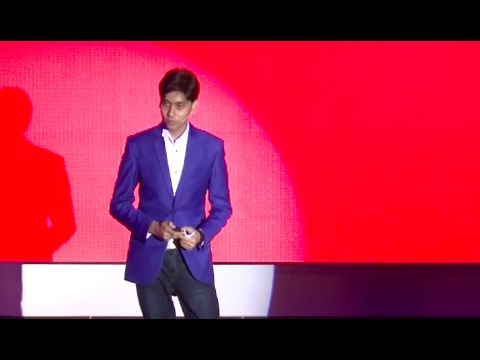
and girls present over here we are
Triton and today we are going to share
with you the story of a common man
amongst you mr. Schwaab Qureshi was a
common man he had a happy life he used
to be a police van driver and a
part-time electrician while once on a
routine patrol his van was fired upon on
that fateful night in March 2013 mr.
Schwaab Qureshi had a bullet into his
spinal cord
after the operation was done the doctor
had removed the bullet but they told him
that he had lost all control of his legs
and will not be able to move at all but
that was in the worst of it mr. Schwaab
Qureshi but that was in the worst of it
mr. Schwaab Qureshi then had to undergo
rehabilitation procedures which cost him
in the first year more than a million
Pakistani rupees he had to travel with
his ailing mother or his father to the
rehabilitation centre when he would be
told to do things that we take for
granted like going to the bathroom and
sleeping with one of his side turns so
that he does not develop pressure sores
on his legs what mr. Schwaab Qureshi
suffers from is called paraplegia it is
the loss of all activity in your lower
body and mr. Schwaab Qureshi is not the
only one there are over 150,000
paraplegics existing in Pakistan as we
speak there are over 250 thousand annual
cases appearing each year globally there
is no
proper cure for this disability and it
renders a person absolutely
psychologically damaged as well but how
do you think that we can solve this now
you might be thinking that this is a
talk about where we get to tell you how
we aim to solve this but this is rather
a talk in which we introduce to you the
idea where we help understand the person
we’re dealing with and help him
understand himself so that he is able to
voice his opinion on what can be done so
how do we fit into the story a little
over a year ago we were tasked with
making an exoskeleton for paraplegics as
our final year project we were very
excited to tell you the truth we wanted
to make iron man but then we decided to
just stick with the legs during our
research we had to understand properly
what entailed this disability and so our
journey took us from Karachi to as far
as the Peshawar paraplegic Center in
Hayat Abbas over there we consulted with
doctors and experts and medical
professionals in order to better gauge
the extent of this disability after we
had gathered all of the data we compiled
it and after numerous research papers
and countless hours of working we were
able to develop what we call EXO EXO was
an electromechanical variable robot for
people who can’t walk like mr. Schwaab
Qureshi so it allowed them mobility and
a little more freedom than they already
had we were able to make this in
one-fifth the cost of what its
international competitors cost the
international competitors available
the international competitors available
globally were available for between 40
thousand US dollars and a hundred and
twenty thousand US dollars we were able
to make this product in eight thousand
US dollars and we were very happy with
we had the constraints of affordability
and ease of use and we thought that we
had covered that very perfectly I mean
this would be the problem the cure to
the problem that the world has been
looking for right but we realized that
we were pretty wrong this exoskeleton
did gave them the ability that they had
not biologically but there were a lot of
factors that we were not looking out for
example the fact that not every
paraplegic available in our country can
actually afford an eight thousand US
dollar suit plus the training that
entailed its use once we had realized
that we knew we needed to change our
strategy in order to help the disabled
amongst us so we moved forward and came
up with an innovative replacement to the
conventional trikes you see for the
disabled people on the streets of
Karachi what we made
we called yellow yellow was a hundred
dollar solution to our eight thousand
dollar problem
yellow was ergonomic it was made with
the masses in mind and now literally
hundreds of thousands of disabled people
could use this to move around the city
what better could we do we were again
very happy with ourselves but as always
we were very wrong again we were missing
out a complete point that entails this
disability because we were limited by
the Box Starkey were and as engineers
and so after we we analyzed and
researched all of the disabilities we
found out that even though a yellow was
made on the design of a robot to become
a land vehicle for the disabled it did
not solve their problem of reintegrating
into the society how can we do that as
engineers we asked ourselves and then we
moved forward and realized that all of
the stories that we’ve read about
disabled people actually have the same
underlying theme and it is two major
factors the first factor is that even
though the biological implications of
this disability is a lot the
psychological implications are equally
damaging if not more and the second
implication was startling morbid as this
may sound to all of you sitting over
here this could happen to anybody
it could be your loved ones it could be
your parents it could be complete
strangers and we as society have no idea
frightening yes mr. Moussa used to be a
pain hole seller before he lost all his
ability to walk and control his lower
body ten years ago mr. Salman please
other was an accomplished musician
before he lost his ability to be mobile
around the city they had never imagined
that this was happened to them they had
never even prepared for this or thought
that this would be a real possibility in
their lives because Hey
how could that happen to me frightening
yes but it isn’t all that bleak because
even though these people might be
disabled in one way they do have a
greater insight into the human condition
their ability to look at things is so
different and the perspectives is so
changed that we have looked at Newman
success stories where disabled people
amongst us have done what we call the
impossible as normal where those people
both in the past and still in the
present are doing things that are
bringing them up on this state such as
ours so we asked ourselves what was it
that those people had but not every
disabled person did not and what was it
that we could do to find it out and what
was it that could be done of it after we
had found it so we looked back into
history and we recognized as sort of a
pattern and the pattern was that as
individuals our productivity depends
majorly on the number of tools that are
available to us like today we can see
that our factories and offices they’re
all equipped with tools and devices that
help us perform complex tasks and so the
first thing we thought about was enable
education sorry enable engineering what
it means is that if we increase the
number of devices available to the
people with disabilities we can empower
them to be more productive when we look
around us we may see we see many of the
technologies which were initially
developed for the disabled are now being
used by common people all of us watch
movies with subtitles right so but many
of us do not know that subtitles were
initially developed for people who had
hearing difficulties same goes for
touchscreens they’re everywhere in our
mobile phones computers and ATM machines
but they were initially designed for
people with dexterity issues we believe
that by creating products with
disability considerations we can make
products which are not only more
efficient and easier to use but they’re
also cheaper and more user-friendly and
these products will also have the added
added benefit of helping the disabled
live more productive lives but how do we
go about building better designs we
suggest hiring the experts and by
experts I mean the very people who we
are trying to help and isn’t that what
participation is all about
anyway we believe that as designers it
would actually help us make better
products if we make use of the
experiences and opinions of the disabled
during the design process but
something’s still missing merely
creating more devices for people with
disabilities is a step in the right
direction
sure but it won’t solve the problem
entirely research and what we realized
was that an equally large of that if we
ought to help rehabilitate people with
disabilities we must start at the basic
that is we must start with eradicating
the stigma that is disability we feel
that the feelings of helplessness and
the feelings of being dependent and the
fact that they feel that they’re being a
burden to their families does great
psychological damage to the disabled now
then we were designing xov once asked
mr. Delacroix shake that when we once
told him that the exoskeleton that we
were designing occurred in the future do
even more complex functions the
exoskeleton could help him perform his
physiotherapy exercises and could remind
him for his medicines and stuff what he
told us was that he did not want any of
that what he wanted majorly was the very
key to stein again
the conclusion we drew from this and
many other talks just like this was that
would they feel what they feel is that
their psychological disability is
equally as damaging as a physio of
physical disability and we believe that
we can solve this through education but
not only also disabled we are the
education of the masses as well but how
do we do that firstly let’s talk about
the disabled the disabled that we can
teach the disabled firstly to understand
their disability the fact that their
disability even if it does leave them
unable to do some things it does leave
them open to do a lot more things
there’s this South African astronomer
Vonda Merced I
she’s an astronomer but she’s blind but
she did was that after she was blinded
an accident she developed a technique
with the sonographer
to listen to radio telescope data and
she could recognize solar flares that
everybody else the supernovas and
everybody else had missed
the point is that if we educate them
about their disability they can
contribute more greatly to the society
secondly most of the disabled people in
Pakistan are people who depend on
vocational skills as a livelihood we
need to teach those people who have lost
their livelihood other vocational skills
as replacements for the skills that
they’ve lost unemployment and the
feeling of being dependent is what we
believe to be a primary contributor to
their psychological stress and that is
something that is curable but again this
is only a partial solution we need to
train our masses as well for example us
if most of us if we are ever faced with
a disability because it’s so
unimaginable of prospect we will never
be able to cope with ourselves or to
understand if the other person whose
relative or whatever is what are they
feeling and what are they behaving so
what we need to do is that what we feel
is necessary is to incorporate education
regarding the disability disabilities
major disabilities into our college and
university education at least so that we
don’t freak out where and we make this
world a less awkward place for them to
live in we need to become less
compassionate and more understanding of
their plight but again this is only a
partial solution now we believe that a
more far-reaching solution a more global
solution is needed to ensure
participation and it was something that
Sheryl Sandberg the CEO of Facebook said
in a dead woman’s talk that really
clicked with us it was some it was
something it was something that was
completely different but what but it
sort of made sense for the disabled
people as well it was something along
the line that if you don’t raise your
hand you will now be heard what we
trying to propose is that we want to
enable participation we want to
facilitate the raising of that hand in
countries such as ours
people with disabilities are
automatically branded as Mizzou and for
most jobs they are just completely
disregarded this discrimination is more
visible in rural areas where the people
are required to input manual hard labor
now what we need to do is to promote a
culture of inclusiveness well-being we
need to go beyond the mechanical
solutions that we as engineers can offer
we need everyone it is vital for us to
teach our leaders of tomorrow to not
discriminate against people simply
because of a physical disability we need
to create laws we need to create a
platform that ensures that those laws
are followed and that inclusiveness is
ensured now earlier we were talking
about earlier we were talking about the
technologies they were developed to for
the people with disabilities but the
mass is too reactive benefits from that
and that brings me to the future the
technology that we are working on today
will eventually help us surpass our
biological human limitations once
perfected the technology might have
applications in bionics available as
upgrades as add-ons for our biological
service what is friction will as always
become reality to the point that one day
we hope to replace our biological cells
entirely and say goodbye to the
previously held paradigms we hold so
daily about our lives what we realize is
simple it is not not one sphere of our
understanding can ever cure this problem
that we are faced with in this world and
to give you the gist of it our design
philosophy is to do three things in this
world to become a better facilitator for
the disabled amongst us it is to one
have more Design Thinking so that we
take an account all the disabled people
monsters it is to to educate the masses
and thirdly to include the participation
of the disabled amongst us into our
design thinking and everyday laws so
that they are facilitated at the end in
the immortal words of jehoiada body defy
the alumni bifida alumni Vacarro Romani
tawfiq they who dot o Yanna Murphy
roughly translated to English it goes
along the lines of God willing any
calamity that we are faced with can be
changed into a blessing all that we need
is the will to change it and a lot of
human perseverance thank you [Applause]