
thank you so much for the introduction
and the opportunity of being here today
so for the next 18 minutes I’m gonna
challenge you to work with us on really
engineering a future for the past and
that’s the title might give away I’m
engineer by day and as an engineer I
really like pie so that’s a edible
variant and my son was know five years
or just to remind of me today that he’d
really like to have a freshly baked pie
for his birthday next week but the one
I’m talking about is really the pie that
is that Universal mathematical constant
3.1415 right and you’ll see pie
throughout my entire talk and my
challenge to you is identify how many
times pie actually occurs it will be in
disguise right so that’s your challenge
right there so my talk will consist out
of three parts and then a little bit
more but pie will reemerge also later on
maybe actually trying to make a really
big point and I’m gonna challenge you to
find that one as well so let’s start at
the beginning so imagine you were born
and you grew up on an island just as I
did that should be easy right now so
imagine an island that’s in my case 161
kilometers offshore that is 9sy nine
times the size of Bermuda but has 30
times the population and having been in
Bermuda traffic yesterday rush-hour
traffic you you can imagine what that
means right so its capital was founded
in 1100 which means it’s culturally very
very rich and by very diverse but that
capital has grown over the years to
consume that entire island and it’s now
really a city state and as many islands
that actually has its own barrier right
but rather than being reef a sea wall or
the seashore itself that barrier
actually happens to be a wall which is
up to three point six meter tall sizable
and hundred fifty five kilometers long
but now imagine that the island itself
is not surrounded by an ocean but by
another country one singer other country
and that the walls that we have sir it’s
not just any wall it’s a wall that’s
actually weaponized
and has a kill strip in front of it and
the peculiar thing is that war wasn’t
built by that Island State but it was to
keep people out but it was built by that
as a country to prevent its own citizens
from running away now that Island State
that city I was living in was West
Berlin and was surrounded by East
Germany in the era of the Cold War right
and it felt to me as a six year old as
if I was really in that eye on the
hurric of a hurricane right it’s very
uneasy feeling there are two things that
I learnt from this and it turns out that
Berlin actually has more bridges than
Venice the first one that I really
learned took two hardest bridges are
really good saying right bridges connect
places but most of all bridges connect
people and suit us our cultural heritage
so regardless of where you go where
you’re born what your economic interests
are but your societal interests are what
your political interests might be or
what your religion might be there’s
something in your past that you’re going
to be proud of
once that is this we get to talk right
we get to communicate we can build
empathy and once that is in place we can
actually move our entire planet forward
so the first item for my bucket list was
really back then what I want to build
bridges when I grew up the second one
was well I want to really preserve and
work with world cultural heritage so
that was six years old when I was nine I
really had we honored oriented slightly
was looking outward and I really wanted
to be near Neil Armstrong and go to the
moon and explore Mars and really then
travel the galaxies right bucket list
item number three and then when I was 12
incidentally this happened to be the
ages of my own children now I really
wanted to be Jack Cousteau
exploring the world the depths of the
oceans the beauty of our natural
habitats but also the shipwrecks that
might lie beneath the surface right now
a couple of years went by him and I had
to figure out how to really accomplish
was what was on my bucket list the first
thing I did when it became a computer
scientist and as computer scientist you
get to digitally connect people they’re
doing this right now quite regularly
then I became an educator because for
science technology technology
engineering arts and mathematics really
leveraging the left and right hand of
the brain and working this is amazing
talented students right we get to move
mountains
literally the challenge was how do I
build bridges beyond set
physically structurally for that I took
a shortcut I got married and my wife is
a structural engineer so which means
diddly and physically the bucket list
number one was we were addressing right
so that was the first part of my talk
the second one is well how do we address
bucket list item number two world
cultural heritage and I’m gonna tell you
a little story about how we are
approaching this right now in our
research group however students really
helped push this so I get excited every
day I come in the office because
something amazing has happened so UNESCO
defines world cultural heritage as our
legacy from the past what we live is
today and what we pass on to future
generations a legacy that really
embodies human imagination ingenuity
innovation right yet a legacy that’s
under constant attack by man-made and
natural disasters extreme events
legislators in the blink of an eye get
to reshape who can reshape or began to
pass on to future generations of
questioners can be used steam science
technology engineering as medics and
trade methodology by very acquired
curate analyze
then disseminate information
occasionally every scene snapping forms
we get to learn from very fundamentals
so imagine
right now we had an idea for the
technics talks today to build your own
throw
design it gauntlet
right
the 3d printer literally prints a
platform overnight take it off tomorrow
morning instrumented to see it’s brains
controller EDA battery and motors and
props then take to the sky after you’ve
attached a sensor that allows you to
image information about the environment
to talk about environment
so data centers
imagine he has these fans of different
platforms as in disposal and waterboard
his physical life as an outline that
Juliana was to get the right sensor to
the right location at the right time to
collect information that might be
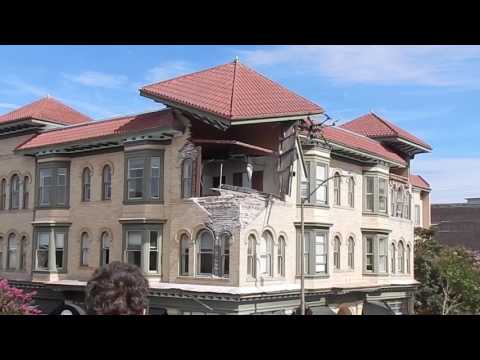
perishable such as the 2014 Napa Valley
earthquake which generated a billion
dollars in damage
sixty Seconds to be able to collect
information helped us to assess
infrastructure eventually help self
lives and also rebuild it
and I imagine you could collect data
first aid from the ground
imagine you could capture the beauty or
build environment
[Applause]
their digital surrogate that can’t just
the geometry
[Applause]
to smelly
was made on to the tiny spheres from the
macro micro scale giving us up next for
giving us content allowing us to make a
take
[Music]
the finest detail instead
[Music]
but no American feels like that’s a
level of detail that we can make
engineering decisions decisions
barmy
imagine import do that at a level of
resolution that suddenly becomes
exciting to all of us to go to these
places where we all become stake lives
[Music]
haven’t reserved you know of scientific
discovery and experience but out there
firsthand is 20/20 vision no mosquito
bites right very very good about now
imagine you could put all this data back
into the palm of your hand wherever you
go explore what’s the environment to
literally touch the surface to look yo
beyond it and maybe even in the Epis one
of your largest and greatest adults
Leonardo da Vinci in first nomination he
put takes a data and share the support
of crowdsource
so qualifies can study
but you toured said
have analyzed build a much more complete
and then takes that data back because it
back into a physical
need to stop image
so imagine
[Music]
so is this in mind we can actually
travel the world we can study art we can
establish their state of health we can
study architecture you can study
archaeology using baseline information
using the data that has been acquired
and determining how it has changed over
time so I hope I’ve convinced you to
become a custodian a steward a guardian
of world cultural heritage but if that’s
not enough this is why you should really
care ant over it if you look at
disruptive technologies that are merging
right now that are completely going to
transform our planet the first and
foremost one is big data right making
the right decision because we are well
informed the next one is robotics and
drones right they’re completely changing
how we are moving information how we’re
moving products around on top of that we
might have the Internet of Things sensor
networks that again allow us to on a
global scale collect information
correlated and again makes the right
decisions five saving decisions
environmentally salient decisions need
to be made many of us have worked this
Bitcoin before used it to pay online
these are cryptocurrencies that are
using blockchain technology that’s built
to establish trust in transactions and
be using this because we need to build
trust in the data that we want to give
you to work this and form an opinion
from you might think about 3d printing
as a mechanism related to craft your
digital assets back into a physical
object or virtual reality and augmented
reality to really interface so always
this technologies are here to stay and
really change our planet and all of
these technologies Visa had to advance
or completely reinvent to build and to
create a future for the past now imagine
this framework is actually in place
which it is so this framework is in
place and you can acquire you can curate
analyze and disseminate information why
don’t we apply it to other areas now
that bucket list item number two is
slowly being touched world cultural
heritage of course is huge now
with NASA and put some of the
information and we’re literally able to
walk on the surface of Mars
so we bypassed the moon initially we
went back but um so we were able to
stand on Mars fully immersive 3d and
actually drives the Mars rover right
from our lab and our students were doing
this right mind change it bucket list
item number three so they have been to
Mars and then we have gone a little bit
further
thanks to now so it’s just Hubble Space
Telescope scope – really this powers of
10 explore the universe literally
staying inside
it’s truly transformational right so one
thing on that bucket list number four of
us illusive so now it’s getting rather
frustrated a year ago the question was
right can we dive the oceans of the
world can visually understand some and
not just on one side for one documentary
but really do it holistically to
understand marine life understand corals
and how they’re impacted by today’s
global climate change and there’s such
an impressively sensitive right
indicator of climate change reacting as
we heard to salinity to temperature and
other changes in the environment causing
this massive die-off event so
questioning why did this happen why does
this happen over all over the world but
why as a place as not as hardly hit no
there was one of these movie moments
that you might have seen where you have
a dog and somebody said squirrel right
and that dog looks to the side and then
moment came to me last year and I got a
call from a year from a very good friend
now he said I don’t recall the
conversation whatsoever the one thing
I’ve remained oh it was shipwrecks and
products at six to twelve year old in me
it is amazing connections that we have
two shipwrecks and the stories they
allow us to tell in regards to human
expedition human adventures you human
tragedy right being preserved right in
front of all those steps clearly right
here so a crash most can be built a
global digital atlas for starters of
shipwrecks because regardless of who I
turn to
fifteen years or younger there will be
on the hook shipwrecks are cool right
I’m going to go there and when they go
to these shipwrecks we actually get to
tell the story about the cultural
heritage symmetry maritime history
aspect but since all of these shipwrecks
have been incorporated into the natural
habitat they have become coral reefs we
get to tell the story about corals but
beforehand our younger generation might
have said huh maybe maybe that’s not me
right so we can literally do that mined
fake of telling one story to tell
another one to our marine scientist
colleagues of got to go with has a story
about coral reefs and by the way that
shipwrecks too right
so we’ve been working over the last year
is our colleagues here looking at ways
to acquire information about the marine
ecosystem and the shipwrecks that you
see right here to tell the story but
most of all get a baseline to better
understand of what does our environment
look like today so a months from now a
year from now we can go back and really
understand the difference right that has
occurred that’s where we need to go for
starters so we made Bermuda actually our
alpha site right our test site to grow
this up much further
what you see here right now is the
product of that labor of love there
she’s 3.5 billion data points being
rendered right now in real-time
this is not a video that’s running on a
tiny computer in the background size of
a laptop being controlled by one of my
colleagues Wade showing us what
parameters submerged heritage looks like
today and he’s actually annotating in
real time a cannon right that’s on some
annular shipwreck the question that was
posed to us this one point for one of
our collaborators here from government
was how many cannons are there and maybe
did any disappear over the years for
system looting on how do we protect this
environment right so this is actually a
notating this right now life working
with 3.5 billion data points and
filtering so you can show us the cannons
right he can literally engage in
real-time forensics on shipwrecks right
now imagine you can do this on your own
terms
right and that’s what we’re moving
towards right now so
we can study on ecosystems you can
understand them you can become a steward
you can become a good jupiter because
the next time you go diving my challenge
to you is take a camera which you might
be anyway documents at shipwreck and
will towards putting a pipe working
towards putting a pipeline and paid
place that allows us to catch your
photos right your prized possession
turn these photos into 3d models and
then you see 3d models to augment that
larger ecosystem but now imagine we
could globally crowdsource that so
whoever goes into the water to take a
photo actually helps us build a
planetary scale map of human tragedy
human accomplishment but most of all
this amazing ecosystem is out there so
as it takes us through the reefs last
year we really get to appreciate what
the seer in ways you normally never
caught because it’s invisible to the
naked eye unless you die if and even if
you die if you have this very limited
field of views that window of
opportunity is in these environments so
we want to go is to really bring right
the beauty of the environment that
surrounds us to the surface so in order
to do this as of 17 minutes and 30
seconds ago we have put online what we
call the Bermuda 100 challenge and we
have challenged ourselves to start
building out that first set of historic
sites three of them are online right now
including the Maurice last year the
Blanche King and the Montana the bottom
line is if you go to Bermuda that 100 or
tcsg.edu you will be able to see the
first set of sites and our invitation to
you since the last one we saw or see
Marie Celeste you steam-powered paddle
boat that runner ground and through that
created own legacy in Bermuda right to
join us on that voyage of exploration
and discovery and really our call to us
let’s do this full steam ahead thank you
so much
Please follow and like us: