
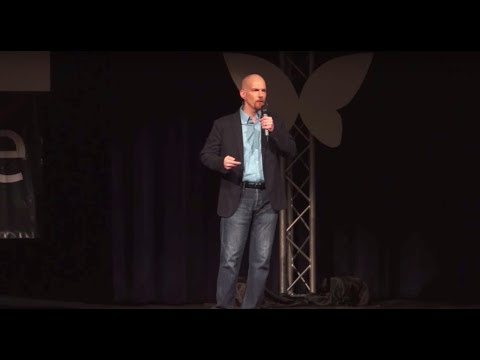
[Applause]
did you know your fingernails grow at
the same rate as plate tectonics
my friends asked me to volunteer for
Dragon Con I skeptical for those of you
who are it’s a big plant and people go
they dress up in costume they talk about
suit any dependency and yes those are
buckets Resta stormtroopers that’s a
thing I can arrive in Huntsville Alabama
with the fresh shiny new PhD in physics
and I was not certain that physicists in
science fiction convention really went
together I could spend years in graduate
school learning to be a serious
scientist to the point that when a
friend of mine gave me a copy of the
book the physics of Star Trek because I
was a physicist I died
so in graduate school I had studied very
hard to become a physicist and my
friends really wanted me to go work for
Dragon Con as one of the members of tech
ops the technical operations the people
who run audio-visual they do flights and
they do sound and I was an obvious
choice because I had a theater degree
and I know what you’re thinking Steven
you gave up a lucrative career in
theater for physics so I had a physics
degree and I had a theater degree in
undergraduate and I really loved doing
theater but I gave it up when I went to
graduate school I needed to focus
emphasize a lot of my professors kind of
looked down their nose at the very idea
of having interests outside of physics
but I was done with graduate school and
my friends were very persuasive and so
eventually I agreed that yes I would
volunteer for Dragon Con yes I would be
a member of tech ops even though I
wasn’t sure I was the kind of nerd who
went to these science fiction
conventions where people dressed up and
spoilers I am in fact exactly that kind
of error
so as a member of tech ops I crawled
around and dragged cables I ran sound
boards I helped lift chick Korea’s piano
up onstage from one of his performance
and I’m pretty sure that thing was made
of lead and I had a great time and the
other members of tech ops really enjoyed
having a physicist to boss around and
then the science Trek found out about me
did you know what you look into the
night sky you were looking into the past
Dragon Con is organized into tracks each
track is centered on a given fandom they
create panels and other events for for
example the Star Wars track or the
fantasy literature track but Dragon Con
also has tracks that are focused on
shall we say the fact behind the fiction
there’s a space track there’s a robotics
track and yes there’s a science track
but the director of the science track
hurt the tech ops had their own pet
physicist he hunted me down and he said
you should give a talk on the science
track and I said yes and then I realized
I had made a tiny huge mistake i given
academic talks before but i never given
a science talk to the public you can
hear the air quotes around the public
right that’s how I thought about it in
my mind back then but after a while I
decided I would be okay because I had
taught classes I had drugged the facts
into people’s head how different could
the audience at DragonCon be all I
needed to do was pick a topic that would
be of interest to non scientists and so
I picked laser cooling and traffic of
neutral atoms to create a quantum
superfluid now in my defense that was
literally my PhD defense so I felt very
comfortable with it so I prepared the
talk I gave it and it went really well
and the director invited me to come back
the next year and give another talk so I
did it I went back the second year and I
another science talk and he talked me
into being on a panel talking about
science in the works of Joss Whedon
creator of the TV series Buffy the
Vampire Slayer in Firefly so where
before I felt faintly embarrassed about
the idea of combining science and Star
Trek I was now combining science and
Firefly
well things escalated quickly the next
year I gave to science talks and was on
to panels and I fell into this rhythm of
preparing talks and giving them and
preparing talks and giving them and I
got comfortable with them which is when
Dragon Con came to me and said you
should be the next director of the
science track did you know you’re
related to jellyfish I was used to
preparing a couple of talks but now as
the director of science of the science
track I was responsible for pulling
together 34 hours of content over four
days and so panicked I did what anybody
would do I started reading journal
articles about life science events that
started going to conferences about
science communication that is possible
my grad school experience has warped how
I approach these things but I learned a
lot about how to communicate science and
it really changed how I approached the
science track I always thought of the
science track as kind of I guess an
informal classroom clearly people came
to the science track to learn science
the job at the science track then was to
provide facts because that’s at the
heart of science right it’s an
accumulation of facts about the world
around us there’s a name for that
approach to science communication it’s
called the deficit model of science
communication the idea is that you have
something gap between scientists and
non-scientists non scientists are
skeptical about science because they
don’t understand and then they don’t
understand science because they don’t
have all of the facts therefore our job
is to give people those facts and if we
give enough facts and pile them into
this chasm of misunderstanding this
deficit then the non scientists
over to the scientists and we will all
love science together yay
it is a view of the world that came very
naturally to me it is also super broken
quick maybe the second fact I gave you
in this talk AHA I didn’t tell you there
was going to be a quiz but I didn’t want
you I used to be a teacher but jellyfish
it’s kind of hard right the answer is if
you look into the night sky you’re
looking into the past but it’s really
hard to remember that because all I’ve
given you are facts I’ve given you no
context in worst I’ve given you no
motivation to care about them at all and
it’s worse when we’re talking about
science that people are skeptical about
or uncertain about giving people just
facts can actually drive them further
away and we have years of research
showing this but even with those years
of research scientists like me just
naturally fall back into the bottle of
all we have to do is provide facts
we’re kind of an academic line we went
to school for a long time and a lot of
us have taught classes we get into this
mindset that how you communicate science
is you exchange facts it doesn’t help
that a lot of us view ourselves as pure
rational actors making decisions based
only on logic and facts well the truth
of the matter is we’re human we make
decisions based on a host of different
factors only some of which have any
connection to logic and focusing on
facts ignores how science is a process
the things we know today are going to be
revised by what we learn tomorrow
just ask Bluto the X planet well if
we’re not going to just pile up facts
communicate science what are our other
options there are a number of ways of
providing context and motivation when
we’re communicating science but one of
my favorites is storytelling from a very
early age we learn from TV and move
fees in books how to understand and
digest stories science communicators can
use these stories to persuade to inform
and to engage stories are a language
we’re fluent in but there’s resistance
to storytelling within the scientific
community I was resistant to
storytelling and I think a lot of that
comes down to when you say storytelling
I hear entertainment or dumbing down the
science or even worse lying about the
science and I think that entertainment
aspect is a real stumbling block it
certainly was for me even after I got on
board with the idea of telling stories
to communicate science I still felt
uneasy talking about the science track
as entertainment earlier this year I was
at a conference for live events I
mentioned that’s I think I do for fight
now I guess and I was on a panel talking
about the science track we’re working on
a new study to see how people’s
attitudes towards science change once
they’ve interacted with the science
track so I was describing that study and
then I heard the following words just
all right out of my mouth but even if
the only thing they got from the science
track is mere entertainment that’s okay
a friend of mine rightfully called me on
that afterwards he said why did you say
Mayr entertainment what’s wrong with the
point of science entertainment being too
entertaining and it really made me have
to think about why was I so reluctant to
embrace entertainment in science and the
answer is the same reason why ultimately
I had given up theater in graduate
school I saw entertainment as being
opposed to being a good scientist but it
doesn’t have to be that way we can have
science entertainment that does not do
harm to science we can craft stories
without undercutting the science at
their heart science is a process yes but
it is also a conversation storytelling
is one tool for
that conversation and entertainment is
an invitation to take part of it for me
that invitation is key two weekends ago
we had Dragon Con and we had a panel
with three panelists Walid Rossi a
doctor Rachelle Burks dr. Daniel Lee and
they were talking about whether
something like the xenomorph the scary
alien monster from the alien movies was
even possible how would that acid blood
and all of that work and could you take
a regular raccoon and turn them into
rocket racoon from the movie guardians
of the galaxy very entertainment focused
a lot of fun great time and afterwards a
woman from the audience went up to the
three of them and I overheard her saying
to them I wish I had seen women like you
talking about science like this when I
was younger I might have stuck with it
oftentimes science can separate us and
how we talk about it can push people
away entertainment is my chance to bring
people back and invite them back in with
the science track I get to say I love
science and we both love this movie
let’s see how those fit together I get
to show audiences that there are people
like them who are into science and like
the things that they like it’s why I’m
excited that I get to have biologists
come down and talk about the genetics of
the Wizarding gene and Harry Potter and
I am always here for Mayor McCheese
explaining the scientific feud between
Edison and Tesla instead of another
science fact what I really want to do is
give you a science suggestion embrace
how stories and entertainment support
science stories in entertainment connect
us
they provide the chance to interact and
they help us remember that ultimately
science is a human activity performed by
humans and is a way of understanding not
just the universe but each other
[Applause]
[Music]
Please follow and like us: