
me knowing who I will be speaking up on
behalf of a hero he is quite sick today
he has a fever we all know him he is not
a hero of tomorrow not only the hero of
tomorrow he was the hero of yesterday he
is the hero of now he is the earth the
before I begin I would like to ask for
his permission whether I could speak on
the behalf of him let me hear from him
he said yes I can speak on behalf of him
but he has a gender reminders to all the
audience first he say please sit
take a deep breath and stay alert
because he said this because lies to
make people think as the speaker
unfortunately I have to say it is ladies
and gentlemen what define success think
about it today our success is defined
economically a country success is
defined by its gross domestic product
GDP and gross national income G and I
the World Bank classifies countries
classify a country as high-income nation
middle-income nation or low income
nation according to it is G and I that
is why today we go and chase after the
numbers the growth in numbers but we
ever stop and ask ourselves what is the
you might be thinking is there a limit
maybe yes maybe no Mohamed Gandhi once
said this the world has enough for
everyone needs but not enough for
everyone’s need great think about it
what do we need clean air clean water no
food a safe shelter because the right
do you agree but today we want more than
that we want more profit more profit
means more production more productions
means more consumptions and that is why
today let me see every year the demand
for the fossil fuels on the increase but
never decrease when there is more
consumption of the natural resources
means there’s more taking from the
nature now doesn’t mean that we have to
when it comes to the questions what is
the limited growth the nature has a
limit one day the natural resources that
we are exploiting who come through
depletions but it is also the natures
has something to teach us the nature
work as an ecosystem in this ecosystems
it shows how an organisms interact with
its environment in which it is a system
how a is influencing B and you see how B
is influencing C and D then C in terms
it is influencing D and how D is
let us look at an example a very simple
footpath we take a look at the most the
bottom most food chain we have the
producer the green plant the green plant
is consumed by the mouse and then mouse
is consumed by snake ow
well cats rabbits then the snake will
then be consumed by kite now imagine one
day the family use the pesticide and
kills all the mouths what will happen to
this food web view the populations of
snake increase or decrease of cause a
decrease
he has no mouth to hunt for as food what
about the number the populations of owl
decrease it is the same case and what
about the number of Wildcats which has
been consuming the mouse as well we
increase or decrease now it is a bit
tricky because of our cat can conceive
on a rabbit as well so the impact that’s
influencing the population of the worker
is not as serious as to the owl and
snake and eventually when the mouse
disappeared the only food to devour cat
will be the rabbit so the population of
the rabbit eventually decrease and this
is what in nature is teaching us that
they work in a system a system that each
element is relying on each other sorry I
saw that eat the nature we have to work
in a system if you reverse the nature if
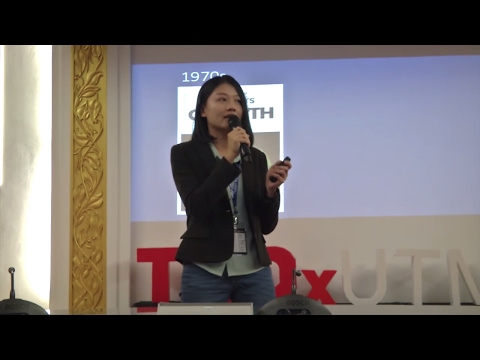
you be disaster so in 1970s the first
model that is considering how the
concentrations of carbon dioxide in the
atmosphere is stimulating the rise in
temperature was developed it was the
very first one and in this model it was
predicted that by the year of 2013 it is
it was expected that the carbon dioxide
concentration will rise to 400 ppm parts
per million and that will induce an
increase in temperature by 0.8 degrees
even pretty that is we continue with the
case of the consumptions 2% increase in
the consumption of fossil fuels every
year the temperature is going to rise up
to 4.2 degrees Celsius by the end of
this century and later on a few years
later with the more advanced in
technology a more complex model was also
developed they also show similar result
to what was predicted in this model and
in 2015 the orders of this book
flourishing within limits to growth this
group of scientists they develop a model
and now this model it runs on different
scenarios and it tells one peek at what
can we do in this century before the
temperature rise up to four points who
degree Celsius how can we slow down the
rise in temperature he came to the
conclusion that as long as we are able
to start investing stop using the
renewable energy at 2020 and have this
fully replaced have it has the fossil
fuel fully replaced by the renewable
energy by the end of 2016 we will be
able to maintain it hamper a surprise to
between 2.5 to 3 degrees Celsius by the
end of the century I have to tell you
that 1 degree Celsius is everyone’s
nightmare and if you would have realized
we are probably the last generation to
act on it coming to the end of this
century 2000 hundred we
most of us here maybe in our 80s or 90s
my second question to you why
development but not grooved when I was
preparing through this talk I talked to
a number of people one of them was the
author of the book flourishing within
the limits to growth so I told him prof
this is the situation I have a talk I
wish to talk about the ecosystem I wish
to talk about climate change and how it
is based on the system thinking we can
do something about it and I say my topic
my proposed topic is modeling two words
sustainable growth we came to these
discussions that the prof asked me then
you find it it is very contradicting to
say sustainable growth because we know
that growth is referring to quantitative
increment in fact we know that the earth
has limited resources to offer us we can
be always taking from the earth forever
if it comes through depletion that is
why
the United Nations use the words
development instead of growth the words
development it is referring to the
improvement in terms of quality and now
when I say in terms of quality is
referring to our well-being our
happiness our health education or even
love and if you look at this SDG
affordable and clean energy is on the
seventh agenda and here if you bring to
my last question to you what is the
trade off if we go hundred percent
renewable yes going to renewable we
could delay the rising temperature but
what is the trade off everything come
with a trade-off according to the United
Nations in order for us to fully replace
fossil fuels by the renewable energy the
investment that we are investing into
renewable made energy right now has to
be tripled which means it has to be
increased from 400 millions USD per year
right now to 1.25 trillions USD per year
before 2030 we have a limited time frame
let’s take the case in Malaysia see now
here in Malaysia we want to go hundred
percent renewable and we found that the
hydropower is the cheapest to invest in
should we go hundred percent with
hydropower no why going hundred thousand
hydropower in is cutting down more trees
the dams it is deforestation taking
another case we found that there is a
very fast way of growing crops and then
converted into a recipe
should we go all-out for biomass energy
no growing crops means yeah we have to
consider we need land and water to grow
food for our own consumption as well
which is our basic needs and now this is
what most of the energy planning
researchers are working on the research
questions that we are trying to answer
what would be that optimal combinations
of renewable energy we can implement in
the researchers one of them is right now
standing in front of you and it brings
to the last things that I want to share
why am I here if you realize the things
the question the thought that I have
been sharing a field in the past 15
minutes they are it is not something
that you can see when sharing is a
thought structure why I’m offering to
you is an idea a structure a thinking
logic most of the time if you go through
a researchers who is working on modeling
he or she won’t come to you and say hey
this is my product however they do see
the value of how they are working how
their model is helping the policy makers
the decisions makers to make more
precise decisions when it comes to a
very complex problem solving it doesn’t
mean that they don’t appreciate
well of a scientific research the value
of this scientific research should go to
the society I have been in front and
before I have been working on the ground
well before I organize conference of ok
the environmental sustainability raising
awareness among the high school students
I also go to the ground and contest the
race to the rural community should
science to society project as I abandon
slurry such journey I thought that I’m
getting more distance away from the
reality something that’s when you do you
see the impact directly that’s why today
I decided to stand up here and speak to
you how how the thought process that
during the journey of research I’m here
standing to share it with you and lastly
I hope at least by the end of this talk
if bring use it brings you three thought
the first one what is the limit to
why development but not growth what is
the trade-off if we go hundred percent renewable thank you