
Ellie Madeira and I’m here to talk to
you about dyspraxia and how it affects
my life so what is dyspraxia dyspraxia
is a form of developmental coordination
disorder affects gross and fine motor
coordination and it can also affect
speech in some people individuals may
vary in how their difficulties present
an analogy I have for you today
dyspraxia is like your brain’s wires
have been all jumbled up so say if you
were playing football your brain would
go from 1 to 2 to 3 to 4 to 5 and get 6
and you would catch the ball my brain
goes from 1 to 2 to 3 to 42 back to a b
c d e v 1 and by the time it’s gone in a
full circle the ball has already hit me
in the forehead dyspraxia is such a
diverse condition that it links with all
of these are the neurological disorders
so OD d specific learning difficulties
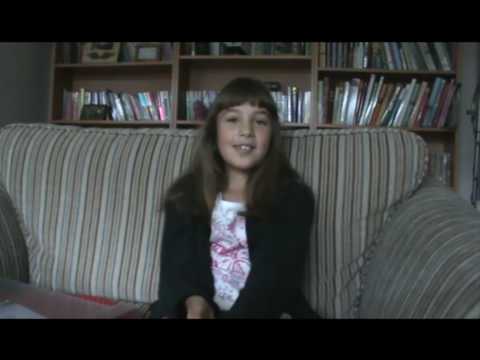
the best way for me to explain to you
what dyspraxia was like in my early
childhood is for me to show you me age 9
talking about my dyspraxia okay I know
I’ve got dyspraxia I first found out I
was just practic a new one when I went
home I went to vow
Roxie’s a bit like um bit like when your
brains wired up in a different way
sometimes you might get told off being
ripped off talkative
well really but really you’re just
forgetting to be quiet I’m sometimes a
bit shy with my work as well I um it
took me two years to learn to ride a
bike and I used to do ballet as well but
I found that very hard and difficult now
I do brownies which which really works
and it’s really the club for me I think
I think I’m going to stick with the
brownies for a very long time I’ve
expanded and I’ve fantastic so things
that are really important to remember
about dyspraxia and dyspraxia people
children who’s dyspraxia is identified
at an early age are less likely to have
problems with acceptance by their peers
and with a lower self esteem so like I
said in the video being diagnosed with
dyspraxia and I didn’t blame myself for
how I was different I felt how different
and how I felt and acted instead I had a
way to explain to others and had a
reason in myself so that I didn’t feel
isolated from my peer group early
recognition can make the difference
between success and failure
the father was recognized early meant
that I got physio like I said in the
video in the physio I learned how to
ride a bike
I learned how to balance on beams I even
learned how to hand write it is a
lifelong condition I am going to have it
for the rest of my life it’s never ever
going to go away unless they come up
with some miracle cure but I can try and
adapt and find ways to deal with my
problems and it might take me longer
than all of the rest of you but I will
always find a way there
six main categories of dyspraxia the
first is organization I find planning
things incredibly tricky just planning
this entire talk took hours and hours in
my brain trying to sort out all the tiny
different things I had to connect just a
plan miss my memory organizing my memory
again with this talk my schoolbag notes
so from year seven probably up until now
all of my notes in my bag were crumpled
putting there’s all just at the bottom
of my bag gross motor so coordinating my
staff was always something that I found
incredibly anxiety-inducing because my
brain connecting to my muscles didn’t
always work quite right so it’s the
classic dis praxic arm you would put
your arm like this my arm would sort of
go like that it never could it didn’t
quite connect and this obviously goes
into sports and sports was something I
also really struggled with of the child
and I never felt like I could quite do
it which was the reason I quit ballet
when I was younger even though I enjoyed
it fine motor so handwriting I went to
the physio and occupational therapist to
help me tie my shoelaces properly which
is still a bit questionable whether I
can do and do buttons concentration I
find it incredibly difficult to stay in
one space if you’ve ever seen me in the
sick form common room trying to do work
one minute I’ll be sitting on the chair
like a normal person the next minute
I’ll be backwards on the chair with my
leg on the back then I’ll be on the
floor writing on the table then I’ll be
back on the chair again and I can’t sit
still or sound still standing on this
little cross is actually quite difficult
all I want to do is pace up and down and
classroom difficulties copying from the
board I’ll look up at the board I’ll
register what’s on the board I’ll look
down and my brain’s lost it and I look
back up and I read the board and my
brain’s lost it again
and that process will come for ages
but dyspraxia is really not just general
clumsiness I know that a lot of you may
think that because that is all that you
may perceive but it’s so much
neurological problems as well but
dyspraxia is not all doom and gloom
there are positives dyspraxia people are
incredibly creative my mother always
told me you know when people think
outside the box well I’ve lost the box
the box is gone I’m so far outside of
the box I’m very good at adapting and
finding alternatives I’d like to say
I’ve developed a sense of humor I can
laugh at myself and the one thing I
think is truly a gift for dyspraxia
people is their empathy I can feel like
I really really connect to other people
and I always like to see the good in
everyone so now in the future now I’m
taking four subjects to a two level two
Sciences and two creatives I’m not
learning to drive yet I feel like there
should be one less this praxic person
behind the wheel for now I never know
what it’s like to have a normal brain
and if someone gave me a pill to change
my brain and be normal I don’t think I
take it
I finally learnt to love and understand
my flaws and my little quirks but I am
thriving and I’m surviving my name is
Ellie Madeira I’m distracted ick and I’m
fantastic [Applause]