
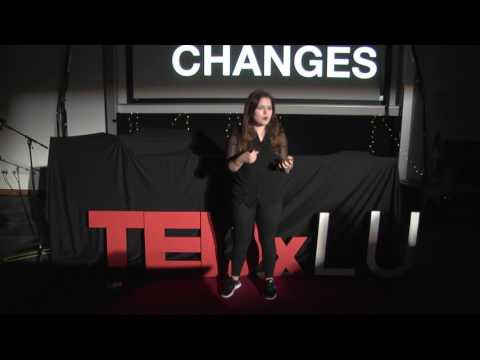
and so as some of you are now aware I
run my own website that is aimed at
women either at the beginning of their
career path or somewhere along the way
and possibly looking for a change so she
works features interviews with women in
a variety of different professions about
how they got to where they are and what
advice they’d like to pass on I’m here
to talk to you this evening about the
most important thing I’ve learned since
starting this project but first of all
let’s go back when I got to my second
year of university I started to panic I
remember opening my laptop going search
for internships really pleased with
myself that I had liked taking the
initiative search for internships and
immediately stopping what on earth was I
going to search for what did I even want
to do and then I panicked school in
university lead us to believe that the
decisions we make right now have much
more gravity than they actually do
chained us to a particular part the
panic I fell stemmed from feeling like I
didn’t know enough about all the
different careers available to me and
this is in part why I decided to start
website often when I do these interviews
the women will turn to me at the end and
be like right you’ve started a career
site what do you want to do and I always
feel super embarrassed because I haven’t
got a clue and they’ve just told me
about their amazing careers and I’d love
to be like yes Susan chemical
engineering is now for me but that’s the
thing I don’t need to know what my
career direction will be right now and
neither do you
the 10-year plan is not always necessary
careers are very rarely linear now and
will go in a number of different
directions for women especially there is
quite deficit between men and women it’s
senior levels of employment and this
disparity is why I decided to aim the
website at women in particular many of
the women we interview we’ve moved
in many different placements and many
different industries so for example
Daffy nabarro started as a human rights
lawyer yeah is now a comedian many of
the women also take a number of career
breaks due to various external
circumstances so the first interview we
ever did was with dawn Bonfield
a materials engineer who took her brief
break when she had her children yet she
felt she wasn’t being taken as seriously
and not being put on as many complex
projects when she came back to the
workplace and now she’s the president of
the women’s Engineering Society so from
their stories the key to success is a
rigorous long-term planning instead it’s
a willingness to take risks to not be
afraid to fail and going back and either
restarting their current career path or
even trying again with a new path now
don’t get me wrong if you have a clear
view on what you want to do then that’s
okay too but if you find that a couple
of months or years down the line it’s
not the rewarding satisfying job that
you’d expected it’s okay to think again
priorities change all the time and a
career is not an outcome for its own
sake but rather something that you
should feel good about doing and enjoy
doing as well so we are not cemented to
a single career path straight after
University whilst there are specific
skills that of course can be taught and
developed in very specific work
placements the most important things are
the core skills which actually you can
be taught in any sort of work experience
and these revolve around a willingness
to nurture an inclusive and positive
culture wanting to work with others and
most importantly a willingness to
continue learning I think that it’s very
easy to leave University into saying oh
my bottom
with education that’s it but if you want
to have a successful career you’re going
to have to continue studying just in a
horrible it’s happened to me and I’m so
worried about this and sorry and yeah
the guys have to if you want a
successful career you’re going to have
to continue studying just in a different
way so one interview we had was with
Gita Sidhu Rob who started as a lawyer
yeah her son fell very ill and she found
that she had to spend a number of days
and nights in the hospital with him and
she was unable to work and I think
shortly after she got a divorce from her
husband and this left her with no home
and no money so she decided to pick up
some consultancy work eventually saving
up enough to rent her own place and then
in 2008 she used a 2,000 pound overdraft
to start her own company and is now the
CEO of Norma Shan it’s hugely successful
so external circumstances whether they
be due to pregnancy divorce grief
illness redundancy they’re usually
inevitable but what géza did was she
used the skill sets that she had
developed from both her degree and her
movement between different industries
and placements to nurture an
entrepreneurial spirit leading out to
create a successful business so what I
want to leave you with is if we’re not
going to worry about our long term
career plans what should we be worrying
about instead the diversity of our
workforce needs to mirror the diversity
of our career paths for women especially
I urge you to accept career twists for
whatever they may be and to go out there
and push through and take risks and fail
and try again until you reach the very
limits of your potential and until we
start to see a change in the diversity
of our workforce and as I stand before
you a tiny undergrad attempting to
preach the wisdom of seasoned career
professionals I created the site as a
media
through which you and other students and
other women could hear the expertise
from the role models you’ve never
usually get the chance to speak to so
thank you
Please follow and like us: