
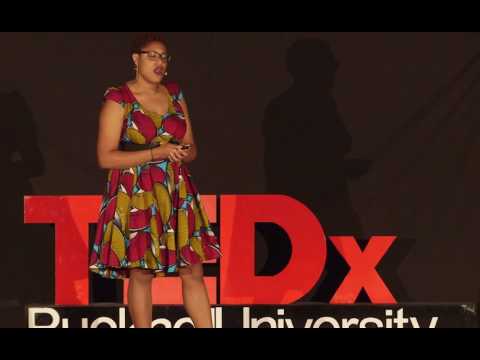
passion for the pen not the mechanical
ones but the ones most of my brothers
and fathers have been in penalizing them
with the penetration of those unfallen
lines that you have the right to remain
silent silence it’s a token that has
been given to me that I have carried
throughout most of my life I was always
embarrassed about where I came from and
who is in my family I was young when my
oldest brother brother number one was
sent away for the first time I was young
when my father was in and out of the
picture throughout my childhood me
oblivious as to why I was in high school
and brother number two was incarcerated
I was in college when brothers number
one and three were locked up again I
only had four brothers and yet more than
half of them have been incarcerated
throughout my lifetime you were the men
I was supposed to look up to I always
thought the black and brown men who were
not a statistic the black and brown men
who were above breaking the law the
black and brown men who were there for
their families not the men who were
criminals the men who were behind bars
the men who I was ashamed to be related
to the men who altered my perception on
what it meant to be black and brown in
the United States the type of men that
people shout black lives matter for yet
I was violent still carrying this token
I hated you I protected all men of color
as delinquents unworthy of my love and
deserving of my trust but worthy of
being pigeon-holed because use of the
description of a thug or criminal you
validated my bias from behind bars and
that black out and everything to me but
now with the birth of my baby brother
Dmitri I’ve had to take a step back and
think about how I don’t want him to be a
statistic how
I want him to be there for his family
how I don’t want him to end up like you
no longer can I be silent we often
consider prisoners in the criminal
justice system there were negative light
as you just heard I saw my own family in
such a light I always thought that if
someone did the crime then well they
should do the time right I had my own
biases against prisoners now at this
point I didn’t really understand how the
system worked but it really didn’t
matter to me because as long as
criminals were off the street and behind
bars well I was okay and I was safe it
wasn’t until the last year and a half or
so after my youngest brother Dmitri was
born that I’ve actively began to make an
effort to educate myself in order to
change that bias you see there is a
stigma in our society that seldom fades
away and that stigma is attached to
prisoners essentially for the rest of
their lives and guess what we contribute
to mass incarceration because we
stigmatize people in the prison
community so in order to understand this
stigma we must first understand certain
components of the criminal justice
system itself in order in order to
understand how it manifested so so in
our current system this country uses the
concept of retributive justice or an eye
for an eye
revenge you get what you deserve or any
other type of saying that you are
familiar with in order to punish and
subsequently incarcerate members in our
community now these crimes can be either
violent such as battery or murder or
nonviolent such as theft or drug charges
aside from that this country’s reflex
response to crime is simply to just lock
people up we all know this right
but think about this the United States
the five percent of the entire
population of the world is in the United
States however we have the highest rate
of incarceration in the entire world
the US houses 20% of the world’s
population as prisoners that is no small
number
additionally thinking about people of
color particularly black and brown
people they make up only 29 percent of
the US population as compared to white
people who make up 64 percent but when
we look at the incarcerated population
black and brown people make up 59%
disproportionately as compared to white
people who make up only 39% it’s
important to mention these statistics
because prejudice is real and I know
it’s real because it’s affected how I
perceive members of my own race which
cause me to think that black men were
less valuable which of course isn’t
another fun fact the average inmates
wage is 93 cents an hour so in essence
the United States feeds off of prison
population more often than not men of
color in order to facilitate its
implementation in state and federal
institutions throughout our nation not
even including private which is a whole
separate ordeal so looking at these
statistics we can kind of see that well
things aren’t really going too well
because more almost half of former
federal inmates can actually relapse
back into criminal behavior which is a
term called recidivism and these
criminal acts can lead to what I call
the 3 R’s reah Rus reconviction and a
return to prison with or without a new
sentence my brother brother number one
fell into this trap and he paid the
price for it and he holds himself
accountable for it every single day
since his release the lack of adequate
resources that people like him don’t
receive once they are released are one
of the things that contribute to this
concept of recidivism so when someone
goes to prison many of their rights and
their human rights have been essentially
taken away such as the right to vote and
the right to access affordable housing
we essentially don’t treat prisoners as
if they are human we label them
criminals as I said before and we deem
them unfit for normal life back into
society
whatever that even means right but if we
are to use these so-called punitive I 4
and I system as a basis for our
judgement of people once they are
released we must understand that
according to that system they have been
deemed fit for reentry or else they
would still be locked up but that isn’t
necessarily the case because employers
can still deny employment based off of
their criminal history so when we look
at the institutional level we can see
how the stigma manifests itself on a
social context as well but let me ask
you this is it possible to implement an
additional system
such as rehabilitation for example in
order to aid in reversing the amount of
people who are sent to prison in the
first place is it possible for a person
for prisoners to strengthen their ties
with the outside world while they are
actually in prison
is it possible to ban the box on
criminal history for job applications
now it could be me just being a
millennial idealist but I think anything
is possible we just have to start
thinking about what our government can
do in order to aid in answering these
questions but more importantly we have
to start thinking about what we can do
individually so that your friends and
your family members could potentially
have the opportunity to succeed in life
if they are ever in prison the day that
I met my younger brother Dmitry Johnson
is the day that I wanted and decided
that I had to make a change internally
if I ever wanted to make that happen so
what did I do
these are a few of the things that I did
in order to try to reverse my bias and
to overcome that bias of the prison
community and by no means are my perfect
I still have a lot of work to accomplish
in order to overcoming that bias but
this is what I’m doing now so the first
thing that I did was I took a class at
my university I had the privilege to do
so so why not in which more majority of
the class was to visit a local women’s
juvenile detention center and interact
with the inmates there in addition to
learning about mass incarceration one
thing that I noted while I was there was
that these young women were extremely
talented in singing and dancing and one
thing that I particularly connected with
them the most on was their writing which
was amazing I could have simply brushed
these girls aside do their inmate status
I didn’t have to care I could have just
gone because well it was a part of the
participation grade and we all know that
participation grade is important for
classes but this was the first time that
I truly interacted with people who were
in car
aside from my family members I kept
thinking about Dimitri and how he could
potentially end up in this situation in
a matter of years and statistically if
you’re sent to prison as a child you’re
more than likely going to be
incarcerated again as an adult the
second thing that I did was I began to
work at a nonprofit organization called
the Lewisburg prison project Lewisburg
Prison project provides advocacy
information and legal assistance
regarding conditions of confinement who
are prisoners and inmates nationwide
particularly regarding conditions of
confinement were interested when those
conditions are considered illegal or
inhumane and many times it’s both
believe it or not my involvement with
the Lewisburg Prison project has
dramatically influenced my understanding
of what’s going on inside prison such as
where prisons are even built in the
first place who has access to certain
vaccinations like hepatitis C flaws in
programs like federal good time which is
a program that was used to replace
federal parole
the Eighth Amendment and what is
actually considered cruel and unusual
punishment in the prison system and what
is not they’re learning about some of
these things that happen inside I have
developed my empathy for people or
prisoners once they are actually
released I’ve also developed more
questions such as what would a better
prison system look like
is it rehabilitation is our retributive
system our punitive system actually
working is it a combination of the two
is it something else
that I hadn’t thought of yet how do we
push our government to act on fair
treatment and prison policies is it even
possible for our current administration
to act on fair treatment and policies in
the prison community why do we continue
to treat these people like animals like
chattel now I don’t really have an
answer to this question and if someone
in this audience does have to answer
this question any of these questions for
that matter please let me know after
this is over but I do have an answer to
this how can i as a member of my
national community or within my local
communities get involved and become and
increase my awareness of what’s
happening in the prison community
well one thinking to do is you can write
a letter to a prisoner I know it sounds
cliche but it’s actually it actually
does have a profound effect on both
parties involved have a conversation
with someone who is formerly been
incarcerated volunteer at an
organization such as the Lewisburg
Prison project in which you can actually
do both of the former two questions more
than likely you’ll see that there’s not
really that much of a difference between
those who are incarcerated and those of
us who have never been incarcerated in
our entire lives my brothers have all
been released my father is no longer in
jail and they’re free free
but that doesn’t mean I can be happy
about it or that I can be silent about
it or that I can be happily silent about
it silence is a token and many of us
choose to carry it in our pockets
because we have the right to do so I
have chosen to throw my token of silence
away I have decided and challenge myself
to do something my question for you now
is will you thank [Applause]