
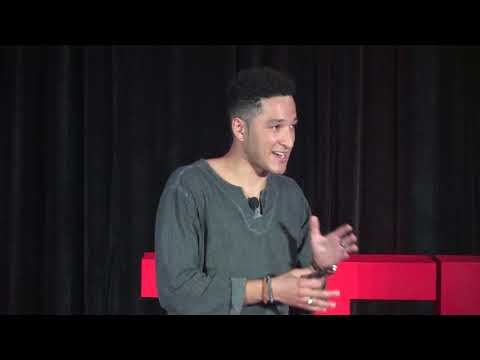
I’m a sophomore at this school and I
came here from Silver Spring Maryland
which is about a thousand miles away one
of the things that drew me all the way
down here was the composition of the
student body my hometown is one of the
nation’s most diverse municipalities in
every sense of the word and I really
like that about going up there so when I
started looking at colleges a diverse
population was one of my top priorities
the student body at this university is
only 49% white which compared to other
competitive private universities is
pretty low but one of the things that I
noticed as soon as I got here was that
statistical diversity the admissions
office supposed to didn’t necessarily
translate into a meaningful interaction
between groups on campus yes obviously
there are black students here and Asian
students and Hispanic students and
Middle Eastern students but everyone
pretty much keeps themselves in social
situations coming from a biracial family
I found the divide between black and
white to be particularly striking and I
had a hard time getting used to such a
blatant lack of interaction I thought I
would get over it eventually but I
couldn’t so rather than committing to a
4-year smoulder I try to channel my
energy into figuring out a way to change
the climate and the first thing that
came to mind was music just about
everyone I met here even the people who
had never known a black person on a
first-name basis and yes they do exist
listen to hip-hop in some capacity I met
people from Connecticut with 2000 rap
songs and their iPhones and zero black
friends or classmates from California
who would throw down 150 dollars to
scream along with chance the rapper at
the Fillmore but still stare at the feet
in silence when they cross past the
black student on campus first time I
went to a house party here two things
stood out to me 90% of the people there
were white and the DJ was playing fairly
well it’s like this weird sense of
cognitive dissonance that everyone in
the room just refuses to acknowledge
whatever you want to call it I couldn’t
adjust so I thought about music and I
thought about my favorite artists and
what it was I liked about them and I
realized that the people who stood out
to me the most were the ones who could
weave an intelligent analysis of social
issues into the music without
compromising the authenticity of the
lyrics or the quality of the sound then
I thought maybe if the people who run in
these all-white circles would listen to
these artists and I mean really listen
to them they might be able to learn
something about the people they refuse
to interact with and if they can learn
enough then maybe they’d be willing to
expand their social horizons especially
in growth centric environments like
campus it’s impossible to overstate the
importance of ethnic diversity it’s been
proven in this country that when a
roomful of people who all look alike or
who all comes from the same background
get together to make important decisions
the people who aren’t in the room who
tend to be affected adversely
historically that’s been pretty much
anyone who’s not a rich white man now
I’m not trying to commit to you that the
decisions we make in our friend groups
carry the same weight as the political
decisions made by our founding fathers
but I do think that they matter the
interactions we have with our closest
friends influence our views of the world
in more ways than most of us are
probably willing to admit or are even
consciously aware of and if our circles
are homogeneous then I views will
naturally become limited no one is
blameless amiss the trap of taking
comfort and familiarity is one that we
all fall into if all you know about
black culture is what you’ve seen in
news media and Hollywood films about
adversity then of course you’re not
going to be able to relate to anyone on
a personal level and on the other side
if you view white people collectively as
the source of all of your problems then
why would you take an interest in
getting to know any individual person
all of us at both ends of the table have
a responsibility to resist that urge to
generalize it’s very easy to allow
inaccurate assumptions and unfounded and
unfounded opinions to define a group of
people when there’s nobody around to
defend them and it takes an incredibly
courageous and empathetic person to take
a step back on their own volition and
say wait a minute maybe 12 years of
slave and hidden figures don’t provide a
sufficient education in black history
and maybe there is more to the
african-american experience than racism
in inner cities of course I think we’re
all smart reasonable people and we can
probably come to these conclusions on
our own but sometimes you need a little
push and I think hip hop can do that for
us there are so many artists who make
the kind of music that’s useful for this
purpose but in the name of familiarity
let’s look at Kanye as an example here
we have a millionaire rapper with
international renown who among the many
less admirable traits that he’s
developed over the last couple years has
an innate ability to pack a lot of
history and harsh reality into very few
words he puts the scale on display
impressively in a song called gorgeous
from his studio album My Beautiful Dark
Twisted Fantasy
chances the devil dances and eventually
answers to the caller autumn all them
falling put the lover ball and get home
with 30 Rock’s the cop look like Alec
Baldwin in essentially anthems faced off
in a city Tantrums based off the way we
was branded face into Rome get more time
than brand
through my bag tell me that is random
but we stay winning this week has been a
bear massage I need all right so there’s
a lot going on here but basically what
Kanye is saying is that the criminal
justice system is maybe not all that
just and he’s right
this isn’t groundbreaking news there’s a
mountain of evidence suggesting that
rates of arrests frequency of conviction
and severity of sentencing are
exponentially higher for
african-americans in this country in
comparison to whites black men are
roughly five times more likely to serve
time over the course of their lives
and despite representing only about 7%
of the general population they make up
more than 35 percent of the male prison
population as you can see similar
discrepancies exist between black and
white women so clearly something is
wrong but how did we get here
faintly while they fingers on the
triggers they pull switch on my head
they downforce on my crotches and they
would be the lucky we had diamonds on
that watch
I get the privilege of policing by
surprise
again there are a lot of layers and you
can be forgiven for not catching
everything the first time but at its
core this first is killing Mike’s claim
that the war on drugs was used to
justify the criminalization of black
skin and just like Kanye he’s right in
the 1970s the federal government
launched an assault against low-income
predominately black communities the
effects of which are still being felt
today despite the negligible percentage
of the drug use and population that they
represented black city dwellers were
coded as threats criminals and most
famously super predators what began as a
campaign to combat drug use has evolved
into a corrupt criminal justice system
that methodically and mercilessly
targets people of color today the
proportion of African Americans and
prison populations at seeds the
proportion among residents in every
single state and in 20 states percentage
of black people incarcerated is at least
5 times greater than their share of the
resident population this isn’t breaking
news I can’t stress that enough this is
not news over the last several years
there’s been an explosion in the
literature surrounding this topic with
acclaimed authors like Angela Davis and
Michelle Alexander publishing works on
the subject and more recently with the
release of the oscar-nominated
documentary film 13th there’s now
officially too much information
available to all of us for anyone to
continue denying the truth but knowing
the facts is no longer enough we all see
what’s going on but now it’s time we
start asking why in the recently
resurfaced interview a former Nixon aide
named John Ehrlichman explains the true
aims of the war on drugs in terrifyingly
simple language the Nixon campaign in
1968 he said and the Nixon White House
after that had two enemies the anti-war
left and black people you understand why
I’m saying we knew we couldn’t make it
illegal to be against the war or black
but by getting the public to associate
the hippies of marijuana and blacks with
heroin and then criminalizing both
heavily we could disrupt those
communities we could arrest their
leaders raid their homes break up their
meetings and vilify the night after
night on the evening news do we know
we’re lying about the drugs of course we
did the suffering inflicted on black
communities wasn’t an accident or a
coincidence or an unforeseen side effect
it was the primary goal of a sinister
plot and these two artists just like a
lot of other intelligent and
well-respected critical thinkers
understood that from the
but what separates them from the
scholars who write about the war on
drugs in lengthy academic journals and
published volumes is that they’ve been
able to condense decades of history and
knowledge into neatly packaged two line
rhymes that are both readily accessible
and easily understood doesn’t take a
genius to listen carefully and ask
questions what I’m trying to say with
all this is that rap music isn’t just
entertainment
there are legitimate extraordinarily
important truths in these lyrics and
they’re not all about unfair sentencing
conscious rappers are taking on a litany
of social crises facing this country and
if we want to understand them all we
need to do is listen closer Chancellor
rapper criticizes the mainstream media’s
racially motivated news coverage in a
lucid and poignant verse and all we know
about him is you don’t want no problem
with me Kendrick Lamar confronts the
self-hatred that results from
internalized notions of white supremacy
and we walk away with bitch don’t kill
my vibe there are artists from Chicago
who express deeply empathetic fear of
race inspired police violence an artist
from Atlanta who engaged with issues
surrounding black authenticity and
limits and imposes on uniqueness and
individuality
there are even artists who reject the
very glorification of crime that’s so
often used by critics to undermine the
legitimacy of hip-hop as a social
movement I had a conversation with a
friend recently who told me that he had
mixed feelings about J Cole he said that
he liked his music and that he respected
his honesty but there was something
about the rapper that bothered him he
just makes me feel so privileged he told
me and I couldn’t help but think that in
some ways that was probably the most
important thing J Cole had ever done he
started that conversation for the two of
us just like all of these artists are
doing for all of their listeners but
their efforts won’t amount to anything
if we don’t follow their lead yes it’s
fine to listen to Tupac and say Wow
poverty’s pretty messed up but that
can’t be the end of the discussion we
need to use the songs that provoke those
thoughtful reactions as entry points
into exploring the more complicated
problems underlying the lyrics what is
it about J Cole’s music that makes you
feel privileged and why do you feel like
that and why does that bother you why do
you think you have those advantages and
that who’s expensively coming and most
importantly now that you’ve had these
realizations what are you gonna do about
it if we can train ourselves to look
beyond the words and try to engage with
the realities that inspire them it might
easier for us to take the intellect of
these artists more seriously I’m not
suggesting that we allow rappers to
stand in for historians or philosophers
or legal scholars but I do think that
could be part of the same conversation
the intellectual credibility barrier
that’s disqualified rap music from
academic conversation for so long is
already beginning to crumble look at
Hamilton
lin-manuel Miranda lin-manuel Miranda
used a musical built on hip hop to
engage a subset of the population has
largely avoided whether they meant to or
not the more sanitized less accurate
version of our country’s history at the
plate depicts and if Miranda can get a
group of women from Highland Park
Illinois to personally identify with the
Somali immigrants then surely there’s
hope for everyone
of course I’m simplifying all of this in
terms of a lie ship claiming to
understand what it means to be black in
America because you’ve memorized the
discography of Outkast is no better than
telling your friends that you don’t see
color listening isn’t the end game no
but it is the first step the way I see
it
there are two possible routes to take
going forward either we all agree to
only consume our own cultures and we
wipe our hands and the harmonious
relations conversation for good or we
commit to making a concerted effort
towards symbiotic cultural interaction
the first option leads to the complete
erasure of racial mingling and
guarantees the progress toward social
equity ends tomorrow but the second
offers us a chance a chance that comes
at a price and if you only remember one
thing from this talk let it be this if
you’re going to reap the fruits of the
people then you have an obligation to
understand the conditions in which
they’ve been sown fortunately we have in
rap music both an incredible pedagogical
tool and a thing that we all love and I
think if we take a closer look at that
thing and just use it as a starting
point we can work toward a placing blind
assumptions with informed conversations
and total separation with empathetic
relationships we can stop hiding behind
intentional ignorance and start seeking
justice for each other and if we can do
those things then maybe we can form some
meaningful and more importantly some
productive connections
came here from Silver Spring Maryland
which is about a thousand miles away one
of the things that drew me all the way
down here was the composition of the
student body my hometown is one of the
nation’s most diverse municipalities in
every sense of the word and I really
like that about going up there so when I
started looking at colleges a diverse
population was one of my top priorities
the student body at this university is
only 49% white which compared to other
competitive private universities is
pretty low but one of the things that I
noticed as soon as I got here was that
statistical diversity the admissions
office supposed to didn’t necessarily
translate into a meaningful interaction
between groups on campus yes obviously
there are black students here and Asian
students and Hispanic students and
Middle Eastern students but everyone
pretty much keeps themselves in social
situations coming from a biracial family
I found the divide between black and
white to be particularly striking and I
had a hard time getting used to such a
blatant lack of interaction I thought I
would get over it eventually but I
couldn’t so rather than committing to a
4-year smoulder I try to channel my
energy into figuring out a way to change
the climate and the first thing that
came to mind was music just about
everyone I met here even the people who
had never known a black person on a
first-name basis and yes they do exist
listen to hip-hop in some capacity I met
people from Connecticut with 2000 rap
songs and their iPhones and zero black
friends or classmates from California
who would throw down 150 dollars to
scream along with chance the rapper at
the Fillmore but still stare at the feet
in silence when they cross past the
black student on campus first time I
went to a house party here two things
stood out to me 90% of the people there
were white and the DJ was playing fairly
well it’s like this weird sense of
cognitive dissonance that everyone in
the room just refuses to acknowledge
whatever you want to call it I couldn’t
adjust so I thought about music and I
thought about my favorite artists and
what it was I liked about them and I
realized that the people who stood out
to me the most were the ones who could
weave an intelligent analysis of social
issues into the music without
compromising the authenticity of the
lyrics or the quality of the sound then
I thought maybe if the people who run in
these all-white circles would listen to
these artists and I mean really listen
to them they might be able to learn
something about the people they refuse
to interact with and if they can learn
enough then maybe they’d be willing to
expand their social horizons especially
in growth centric environments like
campus it’s impossible to overstate the
importance of ethnic diversity it’s been
proven in this country that when a
roomful of people who all look alike or
who all comes from the same background
get together to make important decisions
the people who aren’t in the room who
tend to be affected adversely
historically that’s been pretty much
anyone who’s not a rich white man now
I’m not trying to commit to you that the
decisions we make in our friend groups
carry the same weight as the political
decisions made by our founding fathers
but I do think that they matter the
interactions we have with our closest
friends influence our views of the world
in more ways than most of us are
probably willing to admit or are even
consciously aware of and if our circles
are homogeneous then I views will
naturally become limited no one is
blameless amiss the trap of taking
comfort and familiarity is one that we
all fall into if all you know about
black culture is what you’ve seen in
news media and Hollywood films about
adversity then of course you’re not
going to be able to relate to anyone on
a personal level and on the other side
if you view white people collectively as
the source of all of your problems then
why would you take an interest in
getting to know any individual person
all of us at both ends of the table have
a responsibility to resist that urge to
generalize it’s very easy to allow
inaccurate assumptions and unfounded and
unfounded opinions to define a group of
people when there’s nobody around to
defend them and it takes an incredibly
courageous and empathetic person to take
a step back on their own volition and
say wait a minute maybe 12 years of
slave and hidden figures don’t provide a
sufficient education in black history
and maybe there is more to the
african-american experience than racism
in inner cities of course I think we’re
all smart reasonable people and we can
probably come to these conclusions on
our own but sometimes you need a little
push and I think hip hop can do that for
us there are so many artists who make
the kind of music that’s useful for this
purpose but in the name of familiarity
let’s look at Kanye as an example here
we have a millionaire rapper with
international renown who among the many
less admirable traits that he’s
developed over the last couple years has
an innate ability to pack a lot of
history and harsh reality into very few
words he puts the scale on display
impressively in a song called gorgeous
from his studio album My Beautiful Dark
Twisted Fantasy
chances the devil dances and eventually
answers to the caller autumn all them
falling put the lover ball and get home
with 30 Rock’s the cop look like Alec
Baldwin in essentially anthems faced off
in a city Tantrums based off the way we
was branded face into Rome get more time
than brand
through my bag tell me that is random
but we stay winning this week has been a
bear massage I need all right so there’s
a lot going on here but basically what
Kanye is saying is that the criminal
justice system is maybe not all that
just and he’s right
this isn’t groundbreaking news there’s a
mountain of evidence suggesting that
rates of arrests frequency of conviction
and severity of sentencing are
exponentially higher for
african-americans in this country in
comparison to whites black men are
roughly five times more likely to serve
time over the course of their lives
and despite representing only about 7%
of the general population they make up
more than 35 percent of the male prison
population as you can see similar
discrepancies exist between black and
white women so clearly something is
wrong but how did we get here
faintly while they fingers on the
triggers they pull switch on my head
they downforce on my crotches and they
would be the lucky we had diamonds on
that watch
I get the privilege of policing by
surprise
again there are a lot of layers and you
can be forgiven for not catching
everything the first time but at its
core this first is killing Mike’s claim
that the war on drugs was used to
justify the criminalization of black
skin and just like Kanye he’s right in
the 1970s the federal government
launched an assault against low-income
predominately black communities the
effects of which are still being felt
today despite the negligible percentage
of the drug use and population that they
represented black city dwellers were
coded as threats criminals and most
famously super predators what began as a
campaign to combat drug use has evolved
into a corrupt criminal justice system
that methodically and mercilessly
targets people of color today the
proportion of African Americans and
prison populations at seeds the
proportion among residents in every
single state and in 20 states percentage
of black people incarcerated is at least
5 times greater than their share of the
resident population this isn’t breaking
news I can’t stress that enough this is
not news over the last several years
there’s been an explosion in the
literature surrounding this topic with
acclaimed authors like Angela Davis and
Michelle Alexander publishing works on
the subject and more recently with the
release of the oscar-nominated
documentary film 13th there’s now
officially too much information
available to all of us for anyone to
continue denying the truth but knowing
the facts is no longer enough we all see
what’s going on but now it’s time we
start asking why in the recently
resurfaced interview a former Nixon aide
named John Ehrlichman explains the true
aims of the war on drugs in terrifyingly
simple language the Nixon campaign in
1968 he said and the Nixon White House
after that had two enemies the anti-war
left and black people you understand why
I’m saying we knew we couldn’t make it
illegal to be against the war or black
but by getting the public to associate
the hippies of marijuana and blacks with
heroin and then criminalizing both
heavily we could disrupt those
communities we could arrest their
leaders raid their homes break up their
meetings and vilify the night after
night on the evening news do we know
we’re lying about the drugs of course we
did the suffering inflicted on black
communities wasn’t an accident or a
coincidence or an unforeseen side effect
it was the primary goal of a sinister
plot and these two artists just like a
lot of other intelligent and
well-respected critical thinkers
understood that from the
but what separates them from the
scholars who write about the war on
drugs in lengthy academic journals and
published volumes is that they’ve been
able to condense decades of history and
knowledge into neatly packaged two line
rhymes that are both readily accessible
and easily understood doesn’t take a
genius to listen carefully and ask
questions what I’m trying to say with
all this is that rap music isn’t just
entertainment
there are legitimate extraordinarily
important truths in these lyrics and
they’re not all about unfair sentencing
conscious rappers are taking on a litany
of social crises facing this country and
if we want to understand them all we
need to do is listen closer Chancellor
rapper criticizes the mainstream media’s
racially motivated news coverage in a
lucid and poignant verse and all we know
about him is you don’t want no problem
with me Kendrick Lamar confronts the
self-hatred that results from
internalized notions of white supremacy
and we walk away with bitch don’t kill
my vibe there are artists from Chicago
who express deeply empathetic fear of
race inspired police violence an artist
from Atlanta who engaged with issues
surrounding black authenticity and
limits and imposes on uniqueness and
individuality
there are even artists who reject the
very glorification of crime that’s so
often used by critics to undermine the
legitimacy of hip-hop as a social
movement I had a conversation with a
friend recently who told me that he had
mixed feelings about J Cole he said that
he liked his music and that he respected
his honesty but there was something
about the rapper that bothered him he
just makes me feel so privileged he told
me and I couldn’t help but think that in
some ways that was probably the most
important thing J Cole had ever done he
started that conversation for the two of
us just like all of these artists are
doing for all of their listeners but
their efforts won’t amount to anything
if we don’t follow their lead yes it’s
fine to listen to Tupac and say Wow
poverty’s pretty messed up but that
can’t be the end of the discussion we
need to use the songs that provoke those
thoughtful reactions as entry points
into exploring the more complicated
problems underlying the lyrics what is
it about J Cole’s music that makes you
feel privileged and why do you feel like
that and why does that bother you why do
you think you have those advantages and
that who’s expensively coming and most
importantly now that you’ve had these
realizations what are you gonna do about
it if we can train ourselves to look
beyond the words and try to engage with
the realities that inspire them it might
easier for us to take the intellect of
these artists more seriously I’m not
suggesting that we allow rappers to
stand in for historians or philosophers
or legal scholars but I do think that
could be part of the same conversation
the intellectual credibility barrier
that’s disqualified rap music from
academic conversation for so long is
already beginning to crumble look at
Hamilton
lin-manuel Miranda lin-manuel Miranda
used a musical built on hip hop to
engage a subset of the population has
largely avoided whether they meant to or
not the more sanitized less accurate
version of our country’s history at the
plate depicts and if Miranda can get a
group of women from Highland Park
Illinois to personally identify with the
Somali immigrants then surely there’s
hope for everyone
of course I’m simplifying all of this in
terms of a lie ship claiming to
understand what it means to be black in
America because you’ve memorized the
discography of Outkast is no better than
telling your friends that you don’t see
color listening isn’t the end game no
but it is the first step the way I see
it
there are two possible routes to take
going forward either we all agree to
only consume our own cultures and we
wipe our hands and the harmonious
relations conversation for good or we
commit to making a concerted effort
towards symbiotic cultural interaction
the first option leads to the complete
erasure of racial mingling and
guarantees the progress toward social
equity ends tomorrow but the second
offers us a chance a chance that comes
at a price and if you only remember one
thing from this talk let it be this if
you’re going to reap the fruits of the
people then you have an obligation to
understand the conditions in which
they’ve been sown fortunately we have in
rap music both an incredible pedagogical
tool and a thing that we all love and I
think if we take a closer look at that
thing and just use it as a starting
point we can work toward a placing blind
assumptions with informed conversations
and total separation with empathetic
relationships we can stop hiding behind
intentional ignorance and start seeking
justice for each other and if we can do
those things then maybe we can form some
meaningful and more importantly some
productive connections
Please follow and like us: