
this idea of trying to predict the
future of the next 150 isn’t that a
moonshot trying to look forward 150
years
looking back 150 years so much has
happened
Canada’s contributed so much to the
world around us trying to get our heads
around what’s going to happen in the
next few years it’s quite a challenge
think about going back in time a little
bit of Wayne’s we’re all doing good
we’ll go back in time talk to our
great-great great-great grandparents and
ask them what the world looks like today
what would they say so part of my job is
helping organizations understand where
the technology puck is going look out in
the future so I’m going to share some of
my secrets with you tonight and how
that’s done I think the first thing that
we do is we take a look at the past that
strong heritage that we have establish
that as a foundation and we take that
step back and orient herself and what’s
happening today and that’s critically
important because sometimes I think
we’re so busy that we don’t take that
step back and orient ourselves what’s
the next step the most critical step
about predicting the future designing it
ourselves because if we design it
ourselves then we know what’s going to
happen we define what’s going to happen
so come with me on this journey as we
look to describe the future to find the
future and secure Canada’s prosperity
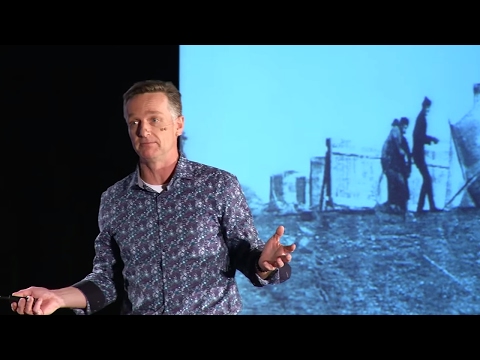
for the next 150 years so a short nine
years after Confederation Melville House
Brantford Ontario Alexander Graham Bell
made a phone call to Mount Pleasant it’s
kind of neighborhoods where I grew up
forever changing transforming the way
that people communicate that first
telephone call really had a dramatic
impact on the world as we know it today
and we still see that impact on a day to
day basis a short 10 years later
Craig Leckie BC on this fine November
morning Donald Smith drove home the
second Golden Spike for this photo
opportunity he bent the first one
bringing together connecting through
steel our emerging nation bringing our
country together that sees the
opportunity of the Industrial Age a
great innovation that was really
showcasing to the world nine years later
Signal Hill Newfoundland a cold December
morning Marconi decided to fly a kite
whatsit with kites and innovators
Franklin decided to fly Katyn did the
first transatlantic broadcast sent that
signal around the world again
transforming the role around us and
these are just three examples in the
first 25 years of Confederation if we
look and throughout the hundred and
fifty years many others from penicillin
to the TransCanada Skyway from Elsie
McGill II and her revolutionising mass
production of aircraft the Hawker
hurricane during World War two to the
Java programming language I could spend
all night here chatting with you about
the great innovations that are happening
great things that happen and to propel
things for him
Canada helping drive punch above our
weight and set that agenda for
transformation around the world now it
was said here earlier tonight that we
don’t take the opportunity to herald the
advancements of Canada to be bold to be
brash well I’ve gone on a TransCanada
innovation nation tour to highlight some
of these great examples and I took the
opportunity to stop by at Signal Hill
last fall and it was equally as cold and
windy on that day as I stood there and I
pondered some of the innovation that was
happening across Canada as I looked west
because of course if you look there’s
only a little bit of Canada left so I
looked west and I thought about all the
innovation in the transformations that
Canada has been part of I think of the
steam age in the industrial age in
Canada’s contribution the Second
Industrial Revolution the internal
combustion engine and manufacturing the
third revolution and what we saw
happening with the microprocessor in
telecommunications and I wondered did
Belle Smith Marconi McGill appreciate
what was happening do we appreciate our
contribution to this fourth revolution
this fourth transformation have we taken
that step back to look around to
understand what’s happening in the world
around us so we can contribute to that
revolution and punch above our weight
well let me start with a mental exercise
right some people look at this
transformation underway and they call it
the digital
economy let’s all take that pause and
think about some word-association
digital economy what does that mean to
you so I’ll throw up some funky graphics
around these connections but certainly
some things will come up we’ve heard a
lot about social networking today
Internet of Things might come up that
connected refrigerator next generation
networks cloud computing robotics 3d
printing block chains and bitcoins big
data so we hear about all those things
anybody think about those I’m sure you
did fantastic you’re all right
winter price yeah so so that’s important
but we as people we need to make sense
of the world around us and we often try
to organize things to make it simple for
us or rootless organizers and when we
think about digital technologies we
might automatically jump to ones and
zeros might automatically jump to STEM
skills we might not imagine a jump to
coding and that’s okay but it might help
us then pigeonhole these things to
something that we don’t see on a day to
day basis we see the technology oh yeah
the digital yeah I’m going to use some
digital economy now when I tweet or I’m
going to use these tools and techniques
we see the tools and techniques and we
don’t realize that these things have
slowly crept their way into every aspect
of our lives
they’ve intertwined themselves into our
business license who are socialized into
the fabric of our garments so as I’ve
traveled this country no not in the RV
but I’ve gone off and talked with
business leaders and policy makers and
I’m starting to see some of these things
come together and we all intuitively
know that the education systems are
connected in intertwine with digital
technologies we’ve used massively open
online curriculum to learn to educate
people we know that the banking systems
there we know that it’s in healthcare
but sometimes we haven’t recognized that
it’s gone throughout the environment I
love this example around the farmer
think about that picture and the image
of a farmer a little bit of
word-association what do you see you
might have come up with overalls Kodiak
boots straw hats corncob pipe that type
of thing anchored on that purpose on
that perspective but when you look at
farming today the farmer knows exactly
where to plant the seed because it’s
done with GPS he knows how much water
that seeds received over this term he
knows how much fertilizer that seed
needs to
he knows where the next seeds are he
knows where went properly to harvest
those seeds and perhaps he’s driving a
harvester that’s computerized so that he
doesn’t even have to be in it so it’s an
automated process he knows how when to
harvest it and went to sell it these
things are all intertwined and if you
see if you’ve anchored your thought on
that farmer of that person with the
scythe that’s taking down the crops you
might not see the opportunity that
presents itself with today’s world an
environment so we need to take that
nudge and move ourselves from those
anchor points to the broader view in the
broader perspective let me help drive
this home let’s go back to Craig lucky
right early days of Confederation how
did we do our business what was the
engine that drove the Canadian economy
well as this behemoth required eight
people to drive you know firemen you had
an engineer at someone that heated up
the boiler so the thing didn’t explode
it’s someone that came in later on to
clean it up now if we use this as a
frame of reference and for our business
for our processes for our lives around
us while we’re sadly going to be deeded
if we look at a business perspective and
say hey we’re gonna supply stuff for
this thing how big is our market place
pretty small there’s not too many of
these trains that are still driving
today I know I know it’s kind of a cheap
trick you’re saying John you know steam
train seriously who do you think I am
all right so let’s fast-forward go to
our current frame of reference and if
we’re doing business with trains in
Ontario in any case we might go to Union
Station in Toronto and we see this great
diesel electric vehicle and so we get an
understanding of the speeds that are
involved with this how we were fuel
those vehicles kind of the interiors of
those things and we expand our
marketplace and we understand that hey
this is how the business works is are
the rules and works so we see beyond the
technology and we see that hey there’s
broader opportunity again what’s the
size of the audience with this right so
this might be antaryami might go as far
as Canada world leaders driving these
completely different speeds right the
rules have changed so the world leaders
are driving though since if we’re not
looking back and we’re not looking
around the world at these things that
are happening then we’re gonna be
missing out and those emerging nations
they’re not going through the steam a
they’re not going through the
diesel-electric age they’re going right
to this or perhaps they’re not even
going to tracks they’re putting magnets
in these things and floating them about
the earth or hey there’s even this
Queens grad that suggests we’re gonna
fire people through tubes right so it’s
not just the technology as well
technology is part of it but we’re going
faster there’s different rules
associated with that so let’s take
another mental activity have you ever
gone over to your friend’s house start
to play a board game and all of a sudden
there’s that five hundred dollar bill
that’s in the middle of the board like
what’s that that’s not in the rule book
oh no that’s House Rules we’ve always
done that or maybe there’s an extra tile
on the Scrabble board we’re playing with
eight letters instead of seven okay
that’s kind of interesting House Rules
again how does that make you feel and
how does that set you up for success
well now all of a sudden you’re
uncomfortable you don’t know the rules
of the game I’m not sure how things are
moving and are you gonna be successful
no because hey that person that invited
you is probably going to skew things to
make it easier for them the rules of
business have changed and we’ve heard a
lot about uber we’ve heard a lot about
Airbnb okay let me bring it local we’ve
heard a lot about snow more and once
your driveways clear to the snow now you
know share my driveway you know those
things so we see that hey the world is
dramatically different the sharing
economy freelance economy my
crowdsourcing the rules have changed in
this and this environment we even see
policy and standards having to change so
those that are successful in this new
world of work we’re going to be writing
the rules right we’ve seen least
recently a lot of debate over Ober and
taxis right people coming almost to
blows over
uber in taxis I mean they’re talking
about who drives the vehicle well what
happens when the driver is no longer
there who’s writing those rules and
let’s think beyond the taxi cab what
about the driverless
truck because driverless trucks are
coming there’d be great because they
don’t have to stop at the border anymore
just carry on through great boon for a
Productivity but who’s writing the rules
for that we need to write the rules to
establish that future for ourselves
and so we have this rather dynamic
environment we have technology changing
very very rapidly we have this
interaction between technology and
social rapidly changing we have this
landscape changing rapidly so how are we
going to ensure that we’re prosperous in
the next hundred fifty years well do we
need to ensure a prosperous maybe we
need to take a look at that environment
say well how are we doing for prosperity
well there just so happens to be an
organization that measures that
Institute for competitiveness and
prosperity down in Toronto and they
looked across 16 regions in North
America and they ranked them to Canadian
regions made the list but we finished
14th and 16th so they looked at that
prosperity said well why is that well
they figured that the prosperity gap is
a Productivity gap so if you increase
productivity your prosperity goes up and
then said furthermore that productivity
gap is an innovation gap and so we need
to innovate we need to innovate more so
this is not ideation it’s not simply
coming up with ideas it’s not invention
this is innovation taking that idea
bringing it to market and changing the
way that the landscape looks and that’s
important because I’ve gone off and
talked with startups across the country
and there’s a lot of fantastic ideas out
there there’s accelerators across the
country people doing great stuff with
technology and guess what you can’t use
it or it doesn’t fit with the particular
environment or it’s very very focused on
a problem that’s here in Canada so we
need to be able to innovate and go
beyond that look that broader sense be
able to build these things oh now I said
that
look technology’s interwoven into every
aspect of our lives we need to innovate
using technology as a part of this
business now we’ve heard that many times
Canada Canadians tend to be to rock the
boat don’t upset the applecart a little
bit risk-averse we don’t invest in
technology as much as other nations how
much so well there’s another Center it’s
a center for everything a center for a
state the study of living standards just
here in Ottawa and they looked at
investment in technology perm Canadian
companies and would you know what
Canadian companies invest 53 cents on
technology for every dollar that a US
company would
invest in that so we’re not going
further we’re not investing as far we’re
not going off and seeking that
opportunity we’re not putting ourselves
out of the comfort place we’re not
rocking the boat we’re not looking for
new opportunities we’re not looking for
opportunities to fail so we need to work
better on the innovation so everybody
when you go out I want you to simply
innovate I need the teleportation
machine because I’m kind of swamped the
traffic’s here and cannot as bad as
booming so it’s just hard
so go off and do that Yeah right John we
need to build our innovation muscle
because this is a marathon it’s not
simply the hackfest weekend I’m going to
come in and do version one and then I’m
gonna disappear I need to see it through
to version two to version three I need
to grow that out I need to take away
that stupid exit strategy that says hey
I’m going to be acquired and sell my
business for ten million dollars I need
to be the next billion-dollar business
we need Canadians to stand up and be
bold be a little bit brash and say
they’re going to be the next big thing
and again it’s more than just the
technology it’s the next big thing that
brings us together
what is that moonshot what is that next
opportunity so at a critical point rut
this signpost this one here at the end
of second line who had a critical point
we have a decision to make we can choose
to be state we can choose to be stoic we
can choose not to upset the applecart
not to rock the boot and we can watch as
others write our future we can stand by
and be fast followers but we might not
be able to secure our prosperity or we
can accept that gentle nudge from the
status quo we can accept that gentle
nudge to look beyond our point current
point of reference that anger we can
look globally and we can write the rules
to secure Canada’s prosperity for the
next 150 years thank you [Applause]