
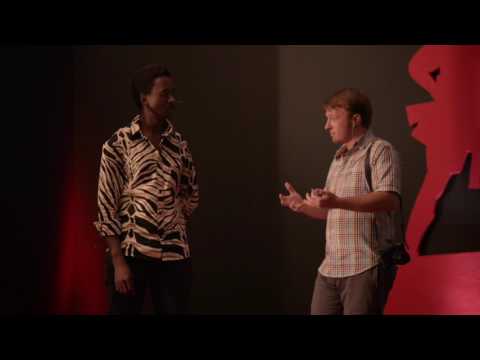
I’d like to give you all a little bit of
a behind-the-scenes look at one of the
great perks of being a speaker here
today believe it or not we get free
almost unlimited access to the vast
archives of shutterstock and as a
photographer I really don’t have a
shortage of images but i must confess
them that it was in a moment of weakness
perhaps that i sat down at my laptop
open shutterstock typed the word
journalist into the search bar and i
just like to share with you a few of the
it would appear that we’re often
perceived as being angry typewriter
wielding people who smoke way too much
and I’m not joking the caption for this
last picture it’s journalists on the
meadow preparing for his next article
anyways what I do know is that if you’re
brave enough to ask one journalist never
mind to onto a stage all they’re gonna
do is just start swapping stories
stories like that time when I was
walking down Jamhuri street it’s
beautiful Sunday morning must in 738 am
the light was perfect and it was walking
down john murray street there’s this guy
he’s having a cup of coffee on the side
of the street there he sees me coming
with camera over my shoulder and he says
to me hey people in tanzania don’t like
being photographed okay I hear that
every week people shout it to me all the
time but he wasn’t done talking he said
something else he said something more
that perhaps gives a little bit of an
insight into the mindset of why he feels
that people don’t like being
photographed he said people in this
society don’t appreciate the value of
the exchange of information it’s a bit
of a mouthful I’m said again people in
this society don’t appreciate the value
of the exchange of information well okay
so he sat back down with his cup of
coffee I kept walking and a few moments
later as I was being detained and thrown
in the back of a police truck for
supposedly carrying an unlicensed camera
in public eye I thought man this guy he
was right about people not liking
photography but what about his his other
statement about people not appreciating
the value of the exchange of information
historically yes I mean you’re talking
about the time of socialism not that I
was there but when you hear stories
about how it was during that you have a
sense that sharing information was not
that something like people you know
value do necessarily we are free to do
but then like we had for example just
one public radio station one public
newspaper one television and
basically these were the main channels
of information that people received from
the government and back to them and so
historically you can say he was half
right about it but then culturally i
would say tanzanians of people who
really love sharing stories I I don’t
drive so most of my movements around
town I used our dollars and for those of
you who don’t know what da da da da
these are public transport now usually
they’re never fool they always parked
but for some reason for some reason this
day it was unusually empty we were just
about five of us and I was sitting at
the back and I looked at the at the door
and I saw this guy and he was
negotiating something with that with a
conductor and a driver I didn’t
understand what was going on but then he
went out few seconds later later he came
back and he came smiling and he looked
at me smiling like what is going on and
he said man I feel so good I really
needed to pee I’m like you needed to pee
why are you sharing this I was just
wondering by myself like why is this
strange guy chilling with me all these
details about him feeling good just
because he went to pee and and this was
just about a week when I had just come
back from Canada where and public
transport everybody is just minding
their business everybody has their
headphones and then I thought wow this
is very tanzanian I mean people don’t
mind sharing their stories I mean you
sit you sit on the dollar dollar in just
15 minutes the passenger next to you has
shared everything about their lives i
mean how their kids don’t want to go to
school have their neighbors are cheating
on their spouses I mean all these
stories and journalist enemy started
thinking wow as a journalist our
businesses just tell stories we hear
stories and then we share stories what
if you just sit there and just listen to
people and hear what really people are
saying to us well I think you’re
absolutely right and that’s something
that’s so important I remember back when
I was in journalism school that was
really
drilled into our heads that from a
subjects point of view an interview
should feel just like a glorified
conversation and that means we need to
do a lot more listening granted it can
take time before subjects trust us
before they realize that we don’t have
an agenda or an ulterior motive they
don’t need to slide us this brown
envelope across the tables and you’re
coming to the event right now but it’s
it’s really it’s really something that
is valuable listening and that gets me
thinking of another story the first time
I went down to John gwanny to cover
flooding here and are it was a busy week
for me just absolutely chaotic and I
knew man up kids already the afternoon
anytime an editor is gonna probably hey
we heard was flooding and dar where’s
the pictures and so I said okay fine I’m
gonna give myself half an hour get down
to John gwanny make some pictures get
back and file them and just be done with
it just forget about it ran down snaps
have snapped bang bang bang just kind of
just machine gun photography in and out
and the reaction I got from the people
in John gwanny was predictable they were
not happy that I was there they really
were guarded about my presence and I
felt guarded about being there because
it was weird that you know I just
marched into these people’s misery and
was like hey you know that’s that’s not
how things are done anyways ever every
time I’ve gone back to jog wani since
them to cover flooding stories and I’ve
made the conscious effort to not do that
and I have to say the transformation is
remarkable just even just standing there
for five minutes chatting with the
coffee guy on the corner being okay so
flooding for lisanna I’m so sorry is
enough that by just that action of
listening not just listening listening
but the action of not taking action and
listening is enough to make that change
by listening I mean especially at this
time when we have you know a great
awakening of technology and social media
especially in Tanzania a lot of people
are using Facebook Twitter and what’s up
I think it’s more than just one-on-one
conversation I think it also involves
observing what exactly are people you
know talking about in this social media
unfortunately i would say we don’t see
this happening much in our media it’s
not reflected that much in our media I
would say yes a lot of media these days
have facebook accounts they have Twitter
accounts and they’re trying to use this
very well but in most cases you would
see like newspapers for instance i would
argue there for your priorities not you
know extracting you’re using this social
media as much but rather is trying to
see how they can get their newspaper for
example in towns like kigoma on the very
same day a lot of places for example in
kigoma people get the newspaper on the
second day and i think this is what you
know is happening right now wind up of
course people using this social media
quite a lot but this is not just for the
media i think even for journalists we
especially here in Tanzania are there
still some of us whose and journalists
are not using that much of a social
media for example few but few weeks ago
I was covering an event in in Dodoma was
a political event and because we are
used to you know a spokeman come and
share with us give us a press release or
shares without what is going on this
time around at this event this book man
came and he did tell us everything that
was happening at the meeting but instead
he shared information on Twitter and so
for a few journalists who did not have
twitter account they were not
complaining like they missed information
and this guy did not share with them
right there but then they shared it on
on on a social media on Twitter and this
is happening while people are consuming
this or using this social media very
much for example what’s up we are having
election we are an election time right
now and people if you look at what’s up
how people are sharing all these videos
it’s amazing people using this social
media very much and while this social
media becoming such a great tools there
is a question of accurate I have
received a number of press invites
through what’s up and they’re all very
correct until a few days ago I received
an invite that said we are launching a
dar Salam rapid transit and I went there
was totally something different and I
had to grab my cameraman and ready to
give this story we went there and it was
started something different and so there
is a question that yes we have this
great awakening of people using social
media to extend the information that we
have to observe and see what the
community is talking about but where do
we get accurate information that we can
trust well that’s just it newspapers
that’s the job is providing accurate
information but as newspapers are still
having a very valuable place in society
more and more people are moving online
more and more people are spending time
online so we’re online do we get this
information where can we find
information that’s not just out there on
whatsapp or Facebook but information
that’s then been vetted by a journalist
checked for accuracy put out in a in a
style and in a format that we can
consume and understand where can we find
that where can we get breaking news
online where can we find these things I
mean yeah the newspapers that do have
websites up until very recently only
update them once a day a day late I mean
happily we can say that in the past few
months at least one daily newspaper has
changed their format completely and they
are updating throughout the day but the
content that’s being put out there is
still the same content that’s going to
be in print it’s these long 28 paragraph
stories that online you’re not in the
mindset to consume online journalism is
something different there has to be a
different content there has to be a well
there has to be listening we have to
listen to what people want to consume
online and I think when we listened as
journalist not only we get news ideas
but we also get to understand what
really people care about what really
interests people for example last month
we were just sitting a bunch of us
friends just chatting killing time and
then one of the friend shared with us a
photo of the Bajaj with some slogan at
the back and it was very funny and it
appeared that almost every one of us
there had received this all have seen
this slogan before and it turned out to
be quite a jolly you know discussion we
all got love you know excited about this
same
things in we were very happy about this
topic and then we I thought wow it just
a photo of a bajaj that has slogan at
the back has created this such an
exciting conversation among us I thought
this could make a great story I went out
and filling my story on budget slogans
and I was surprised the reaction i
received from that and i have covered
almost all kinds of stories I mean human
rights environment political all kinds
of stories but I can tell you the
reaction i received from people how they
just you know love the story how it
relate to them so much it’s amazing and
where did I get this story was just
through sitting around with a bunch of
guys and just discussing and just hear
them what is it that gets them excited
what is it that you know they make them
laugh that’s why I get the store but if
you had asked me a year ago about this
story on a budget slogan I would tell
you you were crazy you know that reminds
me of another story last story I promise
it’s actually another store in jungwan
II another round of flooding and you can
almost make a children’s song out of it
the rain falls down the floods come up
the journalist puts his hip waders on
puts his cameras on his jacket on and
off we go and yeah ended up down in
Jungle wani and as I was actually just
walking right to the water’s edge there
the Sun came up must from the first time
the Sun came out in about a week it felt
great and then it was warm so I took off
my rain Jack and you could see I was
carrying all these cameras and there’s a
guy with the whole crowd of people
watching all the stuff going on and he
turns around he spots me and he just
runs full tilt at me and he is not happy
he’s angry he’s just shaking with rage
he comes up as a hey what do you think
you’re doing here just you and your
cameras and you’re trying to show how
bad door is to the rest of the world and
just just like the guy on John Horace
tree after you have to you know diffuse
situation humor a little bit hi my name
is Daniel I’m doing a story for an
online community news source here under
and this was the first time I’d been to
John gwanny to cover in the local story
for a local audience and the moment he
heard it was for da Ruiz is just like
that he changed instantly said oh well
then let me tell you about John gwanny
let me tell you but why I feel this is
like this and all you see the sewer here
it’s blocked look at the trash I mean
why don’t we use the dump like
buddy else on and on and on and just
like your P passenger on the dolla dolla
I I mean I didn’t learn any valuable
information but it proved that point
that people are interested in the
sharing of information locally and not
only are they interested they are
sharing information and all over it’s
not just happening in person
interpersonally but it’s happening
online people are sharing information
everywhere all we have to do with people
sharing this content is we just have to
bring journalistic standards to this
content and that’s the cool thing is
that community journalism is bigger than
just the politician making promises it’s
bigger than just the celebrity who
doesn’t know who their baby’s daddy is
it’s bigger than all these things
community journalism community
journalism is big enough for the little
stories big enough for the little stuff
that perhaps isn’t even really news it’s
just helpful information for a newcomer
or visitor to dar all these types of
things that’s what community news is for
that’s the untapped power of it and and
here’s the thing this goes for all of us
if we don’t like what we’re seeing in
the media in the news that we’re
consuming both in print and online but
especially online let them know and if
they’re not listening to you find
somebody who does the beauty about
community media is that especially don’t
commit online coming to media is that
that the audience also become a
contributor they also get to participate
in sharing the information somebody’s
driving down the street and they saw a
car accident they take a picture and
then they send it to community median la
online community media and then people
you know know that there is something
happens so if I need to change the route
I change the look so it’s not just about
me as a journalist shearling to people
whatever I think it’s right for them but
also the community also get to hear what
they think it’s important for them and
spread it to others and like you were
younger guy he might be right half right
like tanzania’s maybe sometimes they can
be reluctant to share the information
but as the story of the guy
the biology i mean the the p guide may
dala dala story this is changing and
it’s changing so fast and all we have to
do as journalists is just listen and
hear what really community are talking
about and what really is interesting
that we can share back to them so yes we
see the media is changing really fast
but again the relationship between the
journalist and a community still remain
the same yeah thank [Applause]