
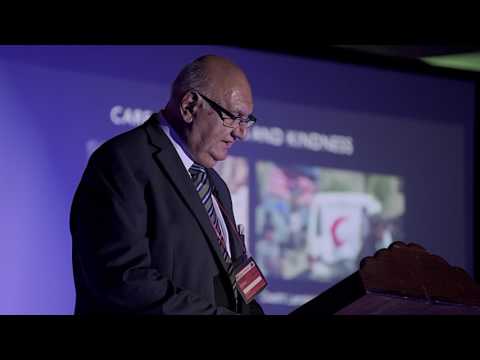
switzerland United Kingdom Canada and
the United States I have lived in eight
countries spanning three I have lived
and worked in eight countries spanning
three continents and in my lifetime as
you heard i visited 83 countries for
work and leisure for the last 22 years i
have been working with the agua con
development network also known as the AK
DN many of the countries that have
worked in and lived in were ravaged by
natural and man-made disasters and
political unrest on a voluntary capacity
I am the interim chair on the board of
fair trade international being involved
in social enterprise activities
particularly in helping improving
quality of life through community
development access to education to help
alleviate poverty and hence sustainable
livelihoods is one thing that really
motivates me and drives me the topic of
my conversation with you today is around
cosmopolitan ethics helping shape
Africa’s future and the rest of the
world His Highness dialga Khan is a
great advocate and proponent of
cosmopolitan ethics I want you to hear
in his own words a him explain this
concept he addressed this into the
Canadian Parliament in 2014 the holiness
ethic is one that welcomes the
complexity of human society if balances
rights and duties freedom and
responsibility it is an ethic for all
peoples the familiar and the other
whether they live across the street or
across the planet and further a month
later at Brown University at the ogden
lecture he said in an increasingly
cosmopolitan world it is essential that
we live by a cosmopolitan
one that addresses the age-old need to
balance the particular and the universal
John about human rights and social
duties to advance personal freedom and
to accept human responsibility it is in
that spirit that we can nurture bonds of
confidence across different peoples and
unique individuals welcoming the growing
diversity of our world even in matters
of faith as a gift of the divine
difference in this context can become an
opportunity not affect a blessing rather
than a burden I am a strong believer in
the notion of one humanity whether one
is born like us here fortunate in areas
of opportunities or those that through
no fault of their own are born in areas
of poverty and depravity we all take an
average of twenty one thousand six
hundred breaths per day we have a
lifespan of around 4,000 weeks a little
less for those unfortunately in the
impoverished areas the main difference
between where we live where we are born
and what we do is what we really do
during the time we’re on this earth when
we’re on this earth for those fortunate
enough you and me we spend forty seven
percent of our lives 1800 weeks on
education developing a career and then
for the balance of the time we have
gainful employment we look after our
families and then hopefully if we have
time we give back to community
unfortunately for those people that were
born on the other side they spent eighty
percent of their lives on survival
fighting illnesses looking for shelter
and trying to gain employment
when one looks at the world today it is
fragmented and fragile nationalism
patriotism is all on the rise respect
tolerance and understanding of different
cultures different faiths is waning this
has a tendency to eliminate those
marginal societies it in it impacts
their quality of life and sustainable
growth my experiences working around the
globe has shown me that we find it
extremely difficult to embrace the
complexity of human society graciously
however there is one silver lining if I
may call it or one exception is what
happens post disasters when an
earthquake hurricane landslide has
struck you can see clearly at that time
the care the compassion the
understanding and the importance and the
implications of social duties that are
being embraced with dignity this is what
is really cosmopolitan ethics let me
give you some examples at the time of
Buju earthquake in India in 2001 I had
gone to India to assist in putting
together logistics for an AK DN response
when we’ve got to bhuj those people that
were displaced which was most of the
town were sitting in makeshift camps and
and were just mulling around not able to
find things we went there to help him
and it was few hours later at lunchtime
we got people coming to us and saying
please join us for meals despite them
having rationed food they took us in
helped us and gave us food to eat at the
time it started raining they came
running out to give us some plastic
cloth to put over our heads so we did
not get wet when then in Tajikistan in
2002 in the aftermath of a landslide
that affected
village of dashed in Ghana badakhshan
were unfortunately twenty poor people
died seventy-five houses were destroyed
and five hundred people were displaced
again when we went there a few hours
after the disaster struck one was amazed
to see the compassion the care of those
that were affected coming to you making
sure you were comfortable and working
with you to help their fellow brothers
and sisters this is something that I
found extremely gratifying and then a
few years later yes in the United States
of America in 2005 when Katrina Rita the
outpouring of generosity was out of this
world people from different faiths
Christians Hindus Jews Muslims you name
it all of us we got together to help
those that were displaced find shelter
get food and indeed opportunities for
employment this was what we all did
there are many other countries where I
was that had the same effect but the
essence of time I’m not going to go into
all of them Pakistan Afghanistan
kazakhstan Madagascar these are all
countries where there were disasters and
you could see the compassion outpouring
there it was so gratifying to see that
however on the flip side as soon as the
headlines were forgotten guess what
societies went back to doing what their
own thing and they forgot those were
affect those that were affected those
that were affected in these disasters
took five to ten years to get their
lives back together It was as if a new
page was turned and the suffering that
occurred was forgotten in a distant
memory so why am i bringing this up to
you today the subject so late at night
after we had a wonderful dinner today
like no time in history but the world is
facing a critical time and we need to do
something sensing this fragility and
fragmentation
since 911 in 2001 the other con has been
advocating relentlessly the inculcation
of cosmopolitan ethics and embracing the
growing diversity of our world one of
his endeavours is where we are today the
alga Khan Academy the aim of the
academies is to develop future ethical
leaders with the skills and knowledge to
support positive development in their
societies how does it achieve this it
achieves it by recruiting exceptional
young individuals from all backgrounds
regressive means and providing them with
the highest international standard of
education the each school emphasizes the
importance of academic excellence at the
same time it instills in the students a
sense of civic responsibility leadership
and the desire ability and commitment to
give back to their communities locally
and globally the academies are rooted in
an educational approach that measures
success not just by academics
achievement but also how students apply
what they know to make the world a
better place students also receive a
grounding in ethics and living in
diverse communities doesn’t that sound
like cosmopolitan ethics embedded in the
academies programme is something special
it’s called the strands the AG account
strands these are aimed at strengthening
and understandings and outlooks needed
by our ethical future read leaders these
strands are unique to the Agra konica
damis only and they encompass five
critical areas ethics pluralism culture
governance and civil society and
economics for development these strands
examine issues of global importance and
are tailored to the cultural context of
each Academy this allows our students to
engage with international issues and
challenges while remaining strongly
grounded in context the other
khanacademy are different from any other
educational institutions secondary
junior school in the world this is what
makes us different and this is why we
are poised in a real good place to make
a significant difference my call to
action today particularly to the Academy
community is to take the knowledge we
have accumulated put it into practice
lead the way so we can show the world
how it is to live by cosmopolitan ethics
we can for starters today in our daily
lives right now in our interaction with
our colleagues our neighbors those
sitting next to you those in front of
you those behind you treat them all with
respect with love with care compassion
and with a smile a smile costs nothing
it creates so much it enriches those who
receive and impoverishes those who get
it does not impress those who give a
smile happens in a flash and the memory
sometimes can last a lifetime when we
get into the global workforce we should
accept other people for who they are at
the Africa conference in Egypt about a
year ago the Agra Consett Africa’s
moment has come and the best way to move
into the future is to walk hand in hand
with the partners who had to share our
goal less seize this moment end quote so
my friends and colleagues remember we
have every reason to stout stand tall to
proudly let the world know the
importance and advantages of living in a
cosmopolitan ethic way in conclusion let
me reiterate let us not wait for the
next disaster to hit to treat everyone
with compassion let’s make it a part of
our every
a practice our everyday life it is
important we come together as a common
humanity in the swift response to
disasters yes however today there’s
another underlying urgency that we see
more and more fragmentations and
divisions in the world it is even more
critical today the as the Archon said
let’s come together on the timeless
truth that we are each one of us and all
of us born of a single soul I thank you
I wish you Godspeed good luck and video
idea
[Applause] [Music]