
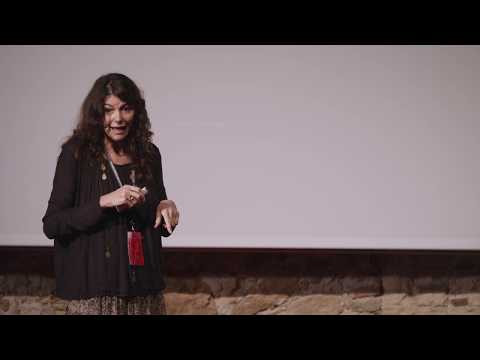
good morning today I will talk about the lis
how many of you know what the lis is
raise your hands
ok, someone is there, so let’s see immediately
film that gives us the measure of
knowledge we have of the lis
[Music]
if I tell you liszt what you tell me
Lisbon is one thing to be a psychological
I do not know anything
the lis no what is the lis what is ise
you just do not know you know what the list is no
if I tell you sign language you really do
something
exactly yes the sign language for i
deaf-mute yes
some strange sign as hands ste things
here the people, that is, run then the lis
is the Italian sign language the language
of the deaf community marking in Italy
my meeting with the list was
casual during university years
that I spent in urbino the faculty of
foreign languages and Literatures
the boy who used to go then
giacomo spoke to me about sign language
Italian and intrigued me so much I thought that
the leaf if it was a very language
different in a sense from us
languages I studied in universities like
German or English because it is one
language that is expressed also through
the body through the expressions of the
face
so I decided to follow my first one
liszt course
right here at the deaf national of
still a few years later the meeting with the
professor of general linguistics
of the University of Urbino
caterina donated in some way decided
my future profession caterina
donated encourages me to continue it
study on liszt in more ways
more rigorous scientific language
and thanks to another linguist another
woman the teacher anna cardinaletti
of the university foscari di venezia
today I am a researcher and teacher of
Italian sign language at the university
ca foscari of Venice that the only one
university in Italy where you can
graduate in Italian sign language
our students choose the lis
together with one of the 17 languages offered
from the department of linguistic studies e
cultural comparative in 2016 a group
of linguists of
international researchers referred to
I’m part of it got an important one
European financing a horizon 20 20
to study and promote and disseminate
the language and culture of the communities
deaf signers the project is called
sign
ab are seven countries participating in
this project la spain la france la
Germany, the Netherlands, Turkey
Israel is for the Italian university ca
foscari di venezia and the university of
milano bicocca together with the
collaboration of the state institute
deaf of Rome
the four-year project therefore
will end in 2020 the objectives of
this project is four
the first goal is to write
the grammar of six sign languages
for the lis
it is the first grammar of
reference
you will wonder how do you write the
grammar of a language that does not have one
written form is a it is about
digital grammars will then put
together, the written text is more contained
there will be an Italian version is also
one in English for it to be
also accessible abroad
next to the text that explains the
buildings and
grammatical linguistics of the language
there will be some concrete examples
with big ones that transcribe the signs
and combined with these large examples
videos subtitled in the language of the
Italian signs so that we can see
really how the language works and then
of the images so many images that
portray these signs to respect
the visual nature of sign language
Italian
second goal will be to
create a linguistic atlas that
contain information on the
main features of languages
some signs of the world already exist
linguistic atlas for vocal languages
but not yet for sign languages
third goal is to develop
tests that are useful for
diagnose language disorders
in sign language
as far as the lis are concerned, they exist
a few tests that diagnose for example
dyslexia or disorders
of learning in deaf children but
we have no diagnostic tests for them
adults this means that if one
adult deaf person to one injury
cerebral due to a stroke
or to a degenerative disease a
accident we can not evaluate if it is
took over a language disorder
we do not have the tests to do it or not
we can not even rehabilitate it
language the fourth objective is that
to create a digital archive that
contain and make all of these
materials will be accessible online
once the project is finished then
accessible to all the fourth quarter
goal is to create a digital archive
of the interviews we have
harvest of the elderly deaf and this for
two main goals one is to
preserve their linguistic heritage
the sign language does not have a shape
written
therefore the variety of the marked of the
elderly people deaf and at risk of
extinction if the video does not come
registered and on the other hand instead
to preserve cultural heritage
of the elderly deaf community in that
witnesses of European historical events
as crucial as the Second World War
like the great social changes of the
nine hundred which are filtered through
the eyes of a community
unheard and then the deaf community one
very troubled history that maybe not
many know in 1880 the congress of
milan vote
naturally the hearing ones were those who
they took the decision to vote against
of the education that was to be imparted
the deaf voted against the use of language
of signs and in favor of rallying that
he prescribed for the exclusive use of the
vocal language
then we see a small extract of the
footage of the interviews we have
collected
so the project comes from the need
to support and promote the language e
the culture of the deaf communities that they are
community that has always been marginalized and in
some invisible way of them we know
very little what we often know is
inaccurate, for example, we continue to
call them deaf-mutes a word that
implies that they are silent while not
they are at all their vocal apparatus
intact as ours we call them not
hearing people denying a condition that
we think it’s normal as if they are
they call us into a deaf in reality it is
the right term is deaf or there
we refer to their language as al
language to a language this
term means a system of
communication that does not possess the
linguistic characteristics of the
in fact, we speak of natural languages
body language of the language of the
computer but we will never talk about the
Italian language, let’s say the language
Italian
and so we should say the sign language
or let’s say that they express themselves in gestures
instead they express themselves to teach the
difference is that while the signs are
of complex linguistic entities that
they can be decomposed to their surroundings
inside them in minimal units like this
as the words gestures no gestures do
part of the mimic language are not
linguistic entity here is this ignorance
this inattention we have in the
against the deaf community
unfortunately, it has serious consequences in the
2006 the convention the general assembly
Un
with the convention on the rights of
people with disabilities have warned them
member states to recognize and support e
to spread the sign language of the
national territory all states
members have transposed this convention
this directive except Italy
Italy and after twelve years from
convention
the only European country to have not yet
recognized sign language
Italian
and this lack of recognition
legal effect has consequences on the
violation of human primary rights
what rights we speak right
to education a deaf child today in
Italy does not receive the same instruction
of a hearing child
we talk about the right to peers
opportunities and it seems to be accessible in
all the spheres of public life in
Hospital
I have personally witnessed
of a deaf woman was brought one
emergency evening in the emergency room
he had a heart attack and there was not one
interpreter there was nobody who could
to mediate between you and the doctor and was
question of life or death because the
doctor had to understand what had happened
what were the symptoms but no one was in
able to bridge or the
right to social participation if
a deaf person wants to participate in a
conference can not do it because it is not there
the interpreter or a normal one
cognitive and social linguistic development
we know from linguistic studies that it is
a child is not exposed by one
limited time window that goes from
zero at about 12 years of life at an input
linguistic sufficiently rich not
will never be able to develop a language here
and for the deaf ones the only natural language
which can guarantee full development
linguistic and cognitive that can
guarantee a full rich input
linguistics are the languages of the signs e
the deaf community a particular case of
linguistic minority because 95 per
one hundred deaf children is born of parents
deaf
it means that the situation occurs
paradoxical that between parents children not
there is a language in common and therefore the
normal linguistic acquisition that
it happens from parents the child can not
happen and hence the risk that the
child
not deaf does not have a normal development
linguistic and cognitive
so it must be the environment
around the family the school ad
example to provide linguistic limp
he needs
here is despite that all the fakes
beliefs the wrong information that
we have the Italian sign language is
a natural complex language as well as
it is Italian independent
Italian has an even
a phonology a morphology and a
very rich syntax is made poetry
theater becomes cinema in sign language
Italian is always more this is one
very important thing in the last
decades of linguists educators are
using Italian sign language
with hearing children because it has become
the only communication tool for
children who have disabilities of the
communication for which to use the
vocal language is not possible in cases
of autism
in cases of flashes and minutes in
cases of many syndromes including the
syndrome of down landau syndrome
klaffner and also in cases of disturbances
learning
so the project will have like how
produced the first grammar of
reference for diagnostic tests
that allow us to diagnose i
language disorders but also
will contribute to the formation of children
and of the deaf adults of the interpreters of
all the people who take care of that
they play a role in the educational field and then
we really hope it is a
contribution for the recognition of the
Italian sign language and rights
of the deaf community
this is the site of our project
Italian and we also have a page
facebook if you want to visit it thanks
[Applause]
Please follow and like us: