
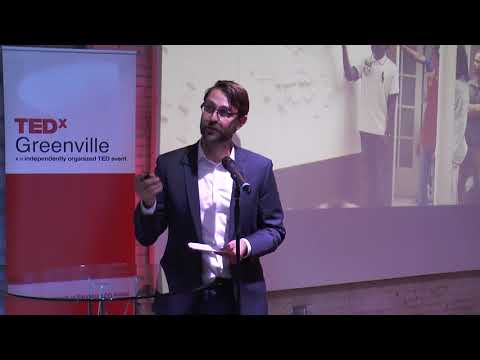
I want to share today how urban farming
can be a vehicle for healing ourselves
and our community and the only way I
know how to share that is through by
sharing my journey and what I’ve learned
through these years so I want to start I
grew up here in South Florida to then
living and going to school here at
Furman University to then moving and
living here in this home in the Greater
Sullivan neighborhood directly behind
Greater Greenville high school walking
distance from here so as you can imagine
this was an intense change that forced
me on a path to grapple with this
dichotomy of environments I’d like to
share the history of what has now become
my home a history that you might not be
aware of the Greater Sullivan
neighborhood as many of my neighbors
affectionately call the butler Sullivan
or Dean Sullivan community a
neighborhood that was birthed by
hard-working mostly working-class
African Americans in the night early
1900s that had hopes and dreams of a
better future our neighborhood was
surrounded by textile mills and now a
remnant of an economic boom for our
region that provided many jobs and
growth for our city
however during the height of this era
many of these textile mills and so many
other industries left many of my
african-american friends systematically
not hired but nevertheless our
neighborhood was bustling with activity
with so many neighbors caring for other
neighbors it was loads of personal
investment pride and passion our
neighborhood even had the first
community center ever built in the city
we even have a community park that has
still actively used today we even have
vibrant and historic churches one in
fact that’s 90 years old that actually
started by two homes that were combined
together where neighbors began
worshipping together and that church
today is more vibrant than ever meeting
many of the spiritual and physical needs
of our neighborhood our neighborhood
though was birthed in a Jim Crow era
south where many of my neighbors were
educated in vibrant schools yet unfairly
underfunded by our school district one
of those historic schools is Sullivan
squawk
he sat right across the street from my
house that you saw in the picture as
many of you know schools in our city in
our district were not integrated until
1970 that’s 16 years after the Brown
versus Board of Education ruling and by
1980 ninety percent of african-american
students in our district were bused to
neighborhood school to schools not in
their own backyards and I’ve learned of
leaders like a.j Wittenberg and so many
others that have created a more just and
prosperous future for my neighborhood
but I want to bring it to a present day
and share some of the difficult
realities that I’ve learned we’re
roughly about 1,300 of my neighbors live
the unemployment rate is nearly double
in my community compared to the to the
region nearly one in three are living
below the poverty line compare that to
3% of where I grew up and almost half of
the kids in my neighborhood are growing
up in poverty 32% of my neighbors report
and reporting to be in poor or fair
health forty-two percent of my community
is obese and one in four of my neighbors
have diabetes compare that to just ten
percent of where I grew up the
businesses surrounding my neighborhood
largely include dollar stores and
fast-food joints in other words our
community as a food desert but back to
my journey the suburban privileged white
kid and moved into the Greater Sullivan
neighborhood with way too many woefully
ignorant assumptions many of which I’m
still confronting today but I remember
when I first moved into my neighborhood
several of my neighbors actually
actually thought I was an undercover cop
that moved on to the block and after
serious time of building trust and
making friends what I continue to learn
is that there was incredible hope
resilience and work ethic and my
community by listening with parents and
pastors and community leaders I learned
that we all wanted to work together to
create more opportunity for our youth to
thrive
so we began by planting seeds through a
small urban garden through a corner
garden we started we eventually grow and
started a green house and from there we
began incorporating hydroponics and
aquaponics to growing more food we
eventually supported started suburban
and rural farm locations to help support
our work
we first began by selling that produce
in front of our neighborhood church but
then eventually expanded to a mobile
market where we could bring our fresh
produce to community centers and
churches and businesses across our city
we’d begun going to farmers markets as
well as packaging produce boxes for
families we’re even in the midst of
starting a market within our downtown
bus station so we can reach some of the
bus riders that have some of the most
challenging access getting a crosstown
for healthier food this is all sounding
pretty good right well let me tell you a
few of the difficult lessons we learned
along the way in the beginning we had an
early group of teens that we worked with
and I remember when we gave them their
first paycheck which was a pretty big
deal in the summer we quickly learned
they took those paychecks to a check
cashing store just down the street and
burned up most of the remaining money by
buying fireworks we were we were pretty
dismayed but we began starting personal
finance classes and we started learning
that our teens didn’t know how to open
up a bank account so we took them to
banks we brought in bankers and help
building trust and skills we learned
that our teens had so many dreams for
saving for college or saving for a car
or being able to help out a loved one
Chris a young adult that we worked with
early in the neighborhood whose third
generation growing up in our
neighborhood it was clear when he first
started working with us he felt an
immense responsibility to care for his
little sister and a single mom in times
of need
I remember when we gave him his first
paycheck he used most of that money to
help his family survive and it was
apparent he had a god-given passion for
helping others but his path was not
linear after working with us he
graduated high school started working
odd and end jobs but I’m happy to share
that he just got a full-time job at our
local hospital and is working towards
becoming a nurse we eventually began
teaching entrepreneurship classes where
we encourage teens to pursue
opportunities within their own
communities their own neighborhoods they
learned how to start micro enterprises
we had a group that started mowing their
neighbours lawns we even had a group
grow microgreens in their neighborhood
and sell it to downtown restaurants just
up the block even this group here they
actually built a bike repair stand and a
station within their neighbor within
their neighborhood again
like we were getting on the right track
and getting somewhere but another lesson
we learned teens don’t eat fresh
vegetables even when they might help
grow it so we partnered with folks we
brought in nutritionist we brought in
chefs to teach culinary skills and
teaching health education with local
partners we started teaching about
nutrition and wellness again feeling
like we were on to something and we
continued to learn but again the more we
worked with our teens we started
learning about their environments their
schools their families and even some of
their internal dialogue we learned how
stress impacts their daily decisions for
example how stress can impact how we
interact with our families and our peers
so we recently began hosting mindfulness
classes that have helped equip our teens
to stop and just take a few breaths
before reacting to a stressful situation
Laura one of our teens she actually
found herself having a really rough day
at school ran home to the pantry looking
for an unhealthy junk food snack like so
many of us do after a bad day of work
but she shared with us before grabbing
one of those junk food snacks she
stopped she paused she took a few deep
breaths and shows otherwise
this may seem small but has taught us
how tiny seemingly insignificant
decisions can have a huge impact on us
for the rest of our lives through this
work of growing food and growing jobs we
have learned that it takes a holistic
and integrated approach where we can
have mutual exchange for learning and
sharing especially with youth that come
from a variety of different backgrounds
and we’ve learned that an urban farm can
be just the place where we can learn
from one another exchanging ideas and
passions and stories while growing good
food for our community and we’ve seen
how farming can be a common bond to
unite us with our land and with our
communities and we’ve seen how paid work
coupled with mentorship can truly be a
path forward for many of our youth and
we’ve learned ultimately that by
cultivating a nourishing environment
through God’s help we can heal ourselves
and one another
personally what I’ve learned is that we
can’t change our environment or a world
without first believing and behaving
that we are inextricably tied to one
another especially not without focusing
on the growing wealth disparity and in a
quality that’s happening in this very
city so I want to end with a poem
written by one of our students this past
summer but I think best summarizes our
calling sprouting out of the ground we
have grown new friendships built a
family of love it’s crazy this is our
last day together like the plans we’ve
pulled out of the ground
you can’t fake moments like this we’ll
try not to forget the bond that we have
made with the soil not forgetting to
grow organic fruit roots from every
working arm bedded to the farm we are
the farm keepers kids looking for work
what better way to work than being
keepers of the great Lords earth God has
brought us together for a reason making
families changing people’s lives he has
brought us here to change not only
change but to live the life of
influencers [Applause]
can be a vehicle for healing ourselves
and our community and the only way I
know how to share that is through by
sharing my journey and what I’ve learned
through these years so I want to start I
grew up here in South Florida to then
living and going to school here at
Furman University to then moving and
living here in this home in the Greater
Sullivan neighborhood directly behind
Greater Greenville high school walking
distance from here so as you can imagine
this was an intense change that forced
me on a path to grapple with this
dichotomy of environments I’d like to
share the history of what has now become
my home a history that you might not be
aware of the Greater Sullivan
neighborhood as many of my neighbors
affectionately call the butler Sullivan
or Dean Sullivan community a
neighborhood that was birthed by
hard-working mostly working-class
African Americans in the night early
1900s that had hopes and dreams of a
better future our neighborhood was
surrounded by textile mills and now a
remnant of an economic boom for our
region that provided many jobs and
growth for our city
however during the height of this era
many of these textile mills and so many
other industries left many of my
african-american friends systematically
not hired but nevertheless our
neighborhood was bustling with activity
with so many neighbors caring for other
neighbors it was loads of personal
investment pride and passion our
neighborhood even had the first
community center ever built in the city
we even have a community park that has
still actively used today we even have
vibrant and historic churches one in
fact that’s 90 years old that actually
started by two homes that were combined
together where neighbors began
worshipping together and that church
today is more vibrant than ever meeting
many of the spiritual and physical needs
of our neighborhood our neighborhood
though was birthed in a Jim Crow era
south where many of my neighbors were
educated in vibrant schools yet unfairly
underfunded by our school district one
of those historic schools is Sullivan
squawk
he sat right across the street from my
house that you saw in the picture as
many of you know schools in our city in
our district were not integrated until
1970 that’s 16 years after the Brown
versus Board of Education ruling and by
1980 ninety percent of african-american
students in our district were bused to
neighborhood school to schools not in
their own backyards and I’ve learned of
leaders like a.j Wittenberg and so many
others that have created a more just and
prosperous future for my neighborhood
but I want to bring it to a present day
and share some of the difficult
realities that I’ve learned we’re
roughly about 1,300 of my neighbors live
the unemployment rate is nearly double
in my community compared to the to the
region nearly one in three are living
below the poverty line compare that to
3% of where I grew up and almost half of
the kids in my neighborhood are growing
up in poverty 32% of my neighbors report
and reporting to be in poor or fair
health forty-two percent of my community
is obese and one in four of my neighbors
have diabetes compare that to just ten
percent of where I grew up the
businesses surrounding my neighborhood
largely include dollar stores and
fast-food joints in other words our
community as a food desert but back to
my journey the suburban privileged white
kid and moved into the Greater Sullivan
neighborhood with way too many woefully
ignorant assumptions many of which I’m
still confronting today but I remember
when I first moved into my neighborhood
several of my neighbors actually
actually thought I was an undercover cop
that moved on to the block and after
serious time of building trust and
making friends what I continue to learn
is that there was incredible hope
resilience and work ethic and my
community by listening with parents and
pastors and community leaders I learned
that we all wanted to work together to
create more opportunity for our youth to
thrive
so we began by planting seeds through a
small urban garden through a corner
garden we started we eventually grow and
started a green house and from there we
began incorporating hydroponics and
aquaponics to growing more food we
eventually supported started suburban
and rural farm locations to help support
our work
we first began by selling that produce
in front of our neighborhood church but
then eventually expanded to a mobile
market where we could bring our fresh
produce to community centers and
churches and businesses across our city
we’d begun going to farmers markets as
well as packaging produce boxes for
families we’re even in the midst of
starting a market within our downtown
bus station so we can reach some of the
bus riders that have some of the most
challenging access getting a crosstown
for healthier food this is all sounding
pretty good right well let me tell you a
few of the difficult lessons we learned
along the way in the beginning we had an
early group of teens that we worked with
and I remember when we gave them their
first paycheck which was a pretty big
deal in the summer we quickly learned
they took those paychecks to a check
cashing store just down the street and
burned up most of the remaining money by
buying fireworks we were we were pretty
dismayed but we began starting personal
finance classes and we started learning
that our teens didn’t know how to open
up a bank account so we took them to
banks we brought in bankers and help
building trust and skills we learned
that our teens had so many dreams for
saving for college or saving for a car
or being able to help out a loved one
Chris a young adult that we worked with
early in the neighborhood whose third
generation growing up in our
neighborhood it was clear when he first
started working with us he felt an
immense responsibility to care for his
little sister and a single mom in times
of need
I remember when we gave him his first
paycheck he used most of that money to
help his family survive and it was
apparent he had a god-given passion for
helping others but his path was not
linear after working with us he
graduated high school started working
odd and end jobs but I’m happy to share
that he just got a full-time job at our
local hospital and is working towards
becoming a nurse we eventually began
teaching entrepreneurship classes where
we encourage teens to pursue
opportunities within their own
communities their own neighborhoods they
learned how to start micro enterprises
we had a group that started mowing their
neighbours lawns we even had a group
grow microgreens in their neighborhood
and sell it to downtown restaurants just
up the block even this group here they
actually built a bike repair stand and a
station within their neighbor within
their neighborhood again
like we were getting on the right track
and getting somewhere but another lesson
we learned teens don’t eat fresh
vegetables even when they might help
grow it so we partnered with folks we
brought in nutritionist we brought in
chefs to teach culinary skills and
teaching health education with local
partners we started teaching about
nutrition and wellness again feeling
like we were on to something and we
continued to learn but again the more we
worked with our teens we started
learning about their environments their
schools their families and even some of
their internal dialogue we learned how
stress impacts their daily decisions for
example how stress can impact how we
interact with our families and our peers
so we recently began hosting mindfulness
classes that have helped equip our teens
to stop and just take a few breaths
before reacting to a stressful situation
Laura one of our teens she actually
found herself having a really rough day
at school ran home to the pantry looking
for an unhealthy junk food snack like so
many of us do after a bad day of work
but she shared with us before grabbing
one of those junk food snacks she
stopped she paused she took a few deep
breaths and shows otherwise
this may seem small but has taught us
how tiny seemingly insignificant
decisions can have a huge impact on us
for the rest of our lives through this
work of growing food and growing jobs we
have learned that it takes a holistic
and integrated approach where we can
have mutual exchange for learning and
sharing especially with youth that come
from a variety of different backgrounds
and we’ve learned that an urban farm can
be just the place where we can learn
from one another exchanging ideas and
passions and stories while growing good
food for our community and we’ve seen
how farming can be a common bond to
unite us with our land and with our
communities and we’ve seen how paid work
coupled with mentorship can truly be a
path forward for many of our youth and
we’ve learned ultimately that by
cultivating a nourishing environment
through God’s help we can heal ourselves
and one another
personally what I’ve learned is that we
can’t change our environment or a world
without first believing and behaving
that we are inextricably tied to one
another especially not without focusing
on the growing wealth disparity and in a
quality that’s happening in this very
city so I want to end with a poem
written by one of our students this past
summer but I think best summarizes our
calling sprouting out of the ground we
have grown new friendships built a
family of love it’s crazy this is our
last day together like the plans we’ve
pulled out of the ground
you can’t fake moments like this we’ll
try not to forget the bond that we have
made with the soil not forgetting to
grow organic fruit roots from every
working arm bedded to the farm we are
the farm keepers kids looking for work
what better way to work than being
keepers of the great Lords earth God has
brought us together for a reason making
families changing people’s lives he has
brought us here to change not only
change but to live the life of
influencers [Applause]
Please follow and like us: