
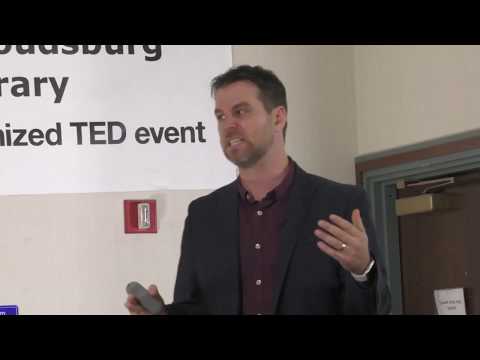
so my name is Michael albear I am the
president CEO of the United Way of
Monroe County and today I’m gonna be
talking to you about collective impact
so collective impact has been this
concept has been around for a little
while it’s not new it’s not my concept
there was a very now famous article that
came out in 2011 by Kenya and Kramer
from FSG FSG is a is a nonprofit
consulting firm that consult with
nonprofits to efficiency around
nonprofit works and they labeled
collective impact as well collective
impact initiatives are long-term
commitments by a group of important
actors from different sectors to a
common agenda for solving a specific
problem and their actions are supported
by shared measurement mutually
reinforcing activities ongoing
communication and are staffed by an
independent backbone organization so
that’s what I’m going to talk to you
about for the next 15 minutes this
collective impact approach so why why do
we have such a an approach out there
well essentially we know that there are
a number of complex problems in our
community today’s all about building
communities there are a lot of complex
problems that can’t be solved by a
single organization implementing a
single initiative we often hear about
the fact that there’s no silver bullet
there’s and and by the way collective
impact is not a silver bullet either but
essentially we’re saying what you need
is a number of mutually reinforcing
activities working together when we work
together we can actually start to you
know move the needle on some core issues
in our community and start to solve some
problems so these are the five elements
this common agenda for change we all
have to get together behind the same
idea we’re all working towards the same
goal then we have to actually measure
results and we all have to be measuring
the same things we can’t know if we’re
achieving results and the mistakes we
might be making unless we’re measuring
the same thing then we have to have
these mutually reinforcing activities
that’s a key part this is the part we
usually think about when we think about
sort of community service work but we
need open and continuous communication
and we need a backbone coordinating
organization to help that process most
of what I’m going to talk about today is
that backbone organization because it’s
sort of the part that is is often
lacking in a lot of other collaborations
that exist
the community so collective impact like
I said it’s been around since 2011 there
are lots and lots of examples of very
successful collective impact initiatives
out there lots of different
organizations across North America
across the world that are implementing
collective impact in achieving
incredible results you see United Way is
is there ant there in the middle they
are growing more and more the United
Way’s have been around for a hundred
years here in Monroe County it’s our
75th anniversary this year but collected
it back to sort of new to to United Way
but later in the talking and explain why
United Way is very much strategically
positioned to help out with these
collective impact initiatives so first
I’m gonna I’m gonna spend a few minutes
and just highlight a very specific local
example of a collective impact
initiative so a year and a half ago we
implemented a community needs assessment
for Monroe County and highlighted
financial stability is a core issue that
exists here in Monroe County we have a
very high cost of living here in Monroe
County and we have a lot of people that
are making thirty thirty five thousand
dollars a year but they’re not quite
making enough to get by so we launched a
number of initiatives to try to tackle
some of the complex elements of that
overall poverty problem and one of them
is access to healthy food food is a
great example because it’s one of those
things where there are lots of
activities out there there’s lots of
things we can do but it’s also all about
systems building there’s a lot that has
to happen by lots of different players
so let me go through each of those five
core elements so a common agenda so
you’re not away working with together
with a number of partners came up with
his agenda that all residents are in
Rock County would have access to healthy
nutritious food improving the well-being
health and independence alright we got
number one taken care of for the time
being okay shared measurement and I
should say this is a work in progress
but there was an agreement among a
number of partners that these the five
the core issues that we wanted to really
pay attention to and measure and
essentially we’re looking at just access
to supplemental food we’re looking at
ensuring that those providing
supplemental food we have dozens and
dozens of food pantries and food
providers in this community we want to
make sure that they are providing
quality and nutritious
dude there’s increase awareness and
understanding so that sort of education
piece for the community but also for
government leaders advocacy is a core
component of any collective impact
initiative and so we wanted to see that
as a specific measurable outcome for for
this initiative and we also wanted so
individuals to understand the value so
there’s a nutritional education
component there and then also increase
efficiency efficiency of the overall
food system in Monroe County you have to
add mutually reinforcing activities
there’s lots of players in a food system
it’s not just the food pantries that are
down low that down the street it is not
just the food bank there but there are
food pantries food providers the school
districts play a major major role in
food distribution we have we have four
school districts 50% of students in our
school districts are are eligible for
free or reduced-price lunch under 50%
which is kind of staggering so you have
summer lunch programs as well for those
kids when they’re not in school
we have Education Food Bank services
corporate and nonprofit food providers
snap-snap is what the food stamps used
to be there’s lots of activities there
I’m not going to go through everything
there’s also we need that open and
continuous communication so United Way
Monroe County formed a hunger coalition
which is made up of all of the different
food providers in the community and they
meet on a monthly basis there is a
listserv where people are able to
communicate we have a Facebook page we
have a website to enable that sort of
regular communication back to an
organization so United Way is playing a
bit of that role as well Second Harvest
in Lehigh Valley northeastern PA is is
playing some of that role now future
research around collective impact said
well that backbone organization it’s
actually really really essential and
some other collaborative efforts that
haven’t had that backbone organization
just aren’t working well what does it do
it sounds a little bit like overhead and
I’m originally I was going to go into a
whole talk about the overhead myth but
I’ll leave that for another TEDx
conversation maybe next year so there’s
six essential functions facilitating
dialogue so again we formed a hunger
coalition of providing an overall
strategic direction it’s not United Way
of Monroe County that’s
providing a strategic direction it is a
hunger coalition steering committee
which is actually meeting for the first
time this month managing data collection
analysis we actually have invested in
specific software that is used for
analyzing collaborative work data from
from different partners we’re handling
communications as it relates to were
developing website listserv newsletters
to communicate with everyone community
coordinating community outreach so we’re
doing social media advertising community
conversations actually just this morning
I boosted a post on Facebook for a
partner organization actually Pocono
Alliance that is gonna speak later on
today about a little project that
they’re doing related to food so we’re
helping to sort of boost that get that
information out there and then mobilize
funding so we’ve already been successful
by coming together working together to
apply for funds we were successful in
receiving fifty thousand dollars from
the Pocono Mountains under another fifty
thousand from all one charities while
our braces groups and Mattioli
Foundation and of course our annual
campaign helps us to raise funds to to
help out with these projects so quickly
our results in our first year
The Hunger Coalition has been formed
social media campaign was implemented
throughout of all of September steering
committees been it was established or is
it being established this month initial
funding secured snap to food stamps we
actually expanded that program if you go
down the street right now and go to the
farmers market and you are a snap you
have food stamps you can double your
food stamp use by going to a local
market that’s a little a little project
we have health you’re eating happening
by supporting pantries to buy healthier
foods actually there’s 22 food pantries
that are receiving $1,000 grants to
specifically purchase healthy foods in
their communities and grants to multiple
partners have been issued with over
15,000 individuals receiving food
assistance through 250,000 meals served
last year and one just sort of little
tidbit we trip one of there’s very
simple things that the hunger coalition
did was it just published information
about all the summer lunch programs that
existed in the community and sent it to
every single family every single student
in all four school districts got just a
little flyer that said where are the
summer lunch programs and we looked and
the number of meals that were served
this this some
premiered last summer tripled in numbers
now we can’t take you know full credit
for that
but the hunger coalition in its entirety
and all the work that all the providers
are doing can you know take credit for
it for doing that so United Way is a
backbone organization what you’re seeing
actually United Way’s across the country
and every United Way is an independent
organization is is stepping up and
becoming that backbone organization so
why is that well United Way’s our
mission is all about building
partnerships that improve lives so we’re
not about raising funds for other
programs we are about building
partnerships we already have
partnerships with for-profit companies
nonprofit partners government partners
so we’ve got those relationships we also
have relationships with individuals with
labor because we’ve been doing these
workplace campaigns for 75 years we have
relationships with thousands of donors
individuals local government volunteers
and those that are in need we are
strategically positioned to carry out
advocacy efforts we are part every
United Way is part of a State
Association so I’m regularly in
Harrisburg meeting with United Way of
Pennsylvania to see what are the
different advocacy things we can do at a
state level and then at a federal level
there are 1,200 different United Way’s
across this country and we all work
together around advocacy issues at a
federal level so that can include the
EITC tax credit that families working
families need around Snap is a major
effort around advocacy for snap programs
that sort of thing knowledge so we often
are a lead agency that implements
community needs assessments and
communities and it’s important to have
that knowledge and we’re we’re happy to
be able to work with partners to develop
a community needs assessment and then
share that with the community and
learning so we have these 1,200
different independent United Way’s
across the country and they’re all
learning different things about
collective impact stuff that doesn’t
work stuff that does work so it’s great
to be able to pull those resources
together okay and and funding we
obviously we implement an annual
campaign that enables us to supplement
any funds that we might want to
to do to implement these collective
impact initiatives okay now I said it’s
not a silver bullet and I want to just
take a couple of minutes to highlight
some of the challenges that might exist
with a collective impact approach
because it itself is not a silver bullet
and a lot of this comes from a
publication and nonprofit quarterly in
2016 by a fellow named Tom Wolfe and
that was actually a little bit critical
of collective impact his approach but I
think his points are all very valid and
what’s important that we need to be
cognizant of these things when we imply
implement these collective impact
initiatives in our community so one of
the things that isn’t highlighted in the
collective impact initiative and most of
these things are things that aren’t
specific part but can be added and I
think that’s important um we still need
to have meaningful engagement with those
people that are most affected by an
issue and it’s not specifically spelled
out and collective impact approach but
we need to make sure that they are
involved in those conversations or
leading the conversations so collective
impact was born from a top-down
consultancy model FSG is a consultant
firm that sort of focuses on CEOs and we
know that top-down doesn’t always work
we want to make sure we have that
grassroots approach we have to be
cognizant that policy and systems level
changes are not specifically highlighted
in a collective impact approach but as I
already mentioned them week is set of
them key activities as part of those
mutually reinforcing activities that we
need to make sure we implement similarly
social injustice –is are often
associated with the root causes of many
problems we have social injustice in our
community and that’s not again
necessarily integrated into collective
impact approach and we need to make sure
that we’re cognizant of those we
identify root causes social injustice as
a root cause for many poverty issues in
our community and see how we can
integrate those things the other thing
is there are other very effective
community collaboration models out there
there’s evidence for other
collaborations and and so we just have
to make sure we learn from those those
as well and there are great examples of
success in collective impact but there’s
actually limited hard research there’s
no randomized control trials around
collective impact as compared with other
collaborative efforts so something that
would be great to see in the future to
compare this this coordination approach
compared to others here’s a big one it
has to be well-funded all those elements
require a lot of
money and sometimes in rural communities
such as ours it can be hard to mobilize
those resources resources to really make
a collective impact project work we have
to remember that the backbone
organization is not necessarily a leader
but that but they do need to help to
build leadership and again that’s not
specifically often spelled out in a
backbone organizations role but we
definitely see that as well here in
Monroe County that we want to help to
build the capacity of our partner
organizations where they’re lacking and
let those that are better positioned to
take on leadership roles to take on that
role when when possible the other thing
is it’s hard it’s really hard to
implement this the funding there you can
imagine bring lots of people together
lots of people have different opinions
just the first step of agreeing on an
agenda item can be really really
difficult you get everyone in the room
that’s together on on a subject and
you’d be surprised we’re all here to end
hunger right but we pollute so it can be
very very hard to implement and then as
I mentioned before there may be a need
to incorporate additional elements in
those five elements into an effective
collective impact approach another one
and I highlight this a lot especially
because we have a lot of great partners
implementing great programs collective
impact is about solving complex problems
there are some problems that have very
clear solutions and if there’s a very
clear solution a very specific program
you want to implement then that should
be the program I used to work in malaria
for a number of years and there’s sort
of five tools that you have around
malaria and you’ve got those are the
programs you want to implement and
there’s there’s randomized control
trials to show that those are effective
when there’s evidence out there that a
specific intervention it works in a
specific issue then that’s what we
should be funding that’s what we should
be supporting but when it’s something
that’s more complex like hunger like
poverty other elements of poverty you
might need this collective impact
approach and then there’s some problems
that simply are not solvable at all and
some that require a lot of money that
might not exist in a community that are
not solvable we’ve talked about
transportation and it’s this underlying
problem in our community and we just
realized we just don’t have
resources the funding that could
actually legitimately solve that that
problem in our community so I do want to
highlight for any of you that wants to
know more about collective impact in the
community there are some incredible
resources out there for collective
impacts of Stanford Social Innovation
review is a great publication that
regularly has articles on collective
impact community toolbox is not just
collective impact focus it is all about
community collaborations and they
actually highlight some challenges with
collective impact as well and some other
things that we should be doing but the
big one is a collective impact forum and
you can join as a member for free you
can join as a backbone organization as a
as an organization that implements
activities and there’s a whole wealth of
tools best practices that exist for
implementing collective impact in the
community so with that I essentially
just want to leave you to to highlight
what what we’re doing here in this
community together with our partners
around these new this this new approach
it’s definitely new for United Way we
have of Monroe County we very much been
focused on being a sort of collaborative
funding instrument but more and more we
are now focused on how can we serve as a
backbone organization to solve these
complex problems in our community using
this collective impact approach so we
are all about bringing people together
in our community to make it a better
place because we do have a lot of
problems threatening our community that
underlying issue is financial stability
but we have challenges around
homelessness we have challenges around
transportation mental health all sorts
of things that are all very complex and
there is no silver bullet that’s going
to solve those problems so we really do
need to work together to fight for those
people those people in need so they can
achieve their dreams
but last thing to highlight is that we
cannot do it alone and our nonprofit
partners can’t do it alone companies
individuals can’t do it alone a lot of
times people think the government will
do this the government’s responsible for
coordinating it they can’t do it alone
they’re gonna be very helpful in policy
changes but they need assistance they
need work from from the different
partners but together more than ever we
can help those in need today to enjoy a
better life tomorrow thank you so much
you
[Applause]
Please follow and like us: