
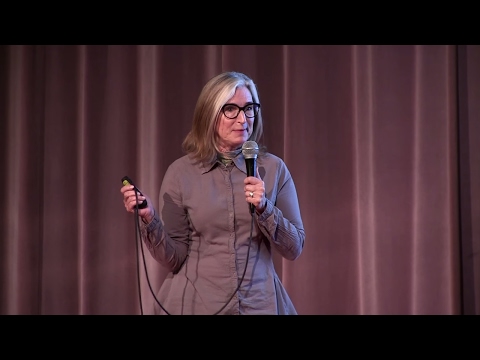
you will be transforming our world
you may be the generation that will
finally make the world so much better
for Humanity and for the planet that we
live on so I want to help you with what
I’ve found to be a secret ingredient for
transformation it’s imagination now the
root of the word imagination is image
and there’s a reason for that images
relax our minds and when our minds are
relaxed they can be more creative if you
ever get in on haha experience when
you’re we just wake up in the morning
and you’ve had a dream or when you’re
walking in nature or you’re looking at
art wonder why that is when we get a
hose well I think of it as i call it
mental spaciousness the mind is open the
reason that that helps us to think
better is that the words are not in our
way for a change I’m not against words I
was a writer for many many years words
have a function they’re important the
challenge with words when you’re trying
to be creative as words represent
something that already happened words
represent the past and memories and when
you want to do something brand-new they
just kind of get in the way so we use
images as a way to help people think
together and that is something that is
not typical when you get a group
together but we’re doing it more and
more and what happens when you get a
group of people together and their minds
are all relaxed is that you get a
collective aha and when people are
together and you’ve got a lot of ideas
together that’s when true innovation and
creativity happens in a group this can
work with people who are
very different from one another from
people who don’t know each other and
they get together even if they don’t
like each other you can get them
together and help them listen to one
another first getting in touch with
their own creativity then putting their
ideas together something happens I want
to tell you a little bit about my work
which involves imagination so I think of
myself as an igniter of imagination I’m
a visual facilitator so as I said that
means that we get people together and
help them think together I work with a
lot of great organizations worked with
like Edwards Lifesciences that makes
heart valves and saves lives I work with
IBM big organization doing massive
amounts of innovation work with many
nonprofits who are trying to make the
world a better place and my favorite
really was unforgettable was going to
the nobel peace prize ceremonies in oslo
and working with the youth summit for
the nobel peace prize these were people
from all over young people very young
people all over the world making change
you could see the power of youth for
global change and it’s a power that you
today there are so many challenges on
the planet and I want to talk about
having a dream about change something
about this picture that was Baja behind
me as i was telling you about my work i
want you to notice that there are a
bunch of people hanging old-fashioned
paper on old-fashioned walls with
old-fashioned tape and what’s
interesting is that one of these people
well they’re all technology leaders one
of them is Vince Cerf who actually did
create the internet how many people use
the internet today that’s almost
everybody this is a 19th in the early
70s he created that he had a vision of
the future and actually once he drew me
a picture of what he was thinking was
kind of an
envelope that went around the world
packet-switching he had a vision the
thing is now we’re at this meeting at
google recently he was working with
people to talk about what is the future
and his vision is about humanity the
human asst because he knows that the
internet we have today is the result of
hundreds and thousands of people
imagining together and that’s part of
the dream that’s continuing so let’s
move forward to another dreamer how many
of you used a computer mouse in the last
day everybody again this is dr. Doug
Engelbart died in 2013 he created the
first computer mouse and pretty much
everything for the personal computer we
use today now behind him is a big mural
actually was in the previous slide from
the meeting at Google this is one of our
tools for imagination what it is is a
big giant mural that tells the history
in this case of technology of culture
and of many streams of knowledge we put
them all together in a big visual let me
go back a little bit to tell you about
my job I work with people by being in a
room and drawing pictures while they are
talking so they’re coming up with new
ideas we choreograph then and then we
while they’re talking say to ourselves
what does that concept look like this is
not about fine art and that’s one thing
I really like about showing these messy
pictures this is an outtake from that
mural all hand done with people standing
around it’s not about how pretty the
picture is it’s about having an image
that helps us talk together and we
wanted to find out how dr. Engelbart
managed to have a vision that would
change the world so this long mural
helped us tell the story of what he
called co-evolution and we got some real
insights here coevolution means culture
changes so slowly people change
technology moves very very very fast
what if you can have technology speeding
up culture and then culture using
technology we could start moving a lot
faster we could start solving problems
we can have a vision for Humanity and
make change make it real if we can have
this was dr. Engelbart’s dream networks
of people working together seeing the
same thing the dream is continuing on
that long mural you just saw a little
outtake from a long mural is actually
four feet by 28 feet originally at the
very end of that mural we had another
wave this wave is about the future is
twice the size of the wave in the middle
of the mural that you saw earlier this
wave was allowing us to ask a question
which we did in many many groups
standing around together looking at this
mural and again very different people
very different faction saying what do
you think the future will be and in that
meeting at Google actually this murals
from way back in 2008 and that meeting
was just a couple weeks ago we’re still
asking the question and at that meeting
we had a tentative answer and it was
what if we had an Internet we had an
online world that wasn’t just a bunch of
words and it wasn’t just a bunch of
pictures and it wasn’t just entertaining
and it wasn’t just a lot of knowledge
but it was really an interactive space
where words and images work together to
relax our minds so we could really solve
problems together so we’ve been working
on a problem actually it’s a pretty
tough one the gender gap a little
problem to work on a lot of people
working on this spending a lot of time
and a lot of money how do we solve this
problem of this planet where women do
not have the same influence and impact
as men everybody’s wondering and yet we
don’t seem to be able to solve it I’m
not saying we can do that ourselves but
we can make a big stride by looking at
all of history and saying when did women
actually
of leaps of change and influence that
they didn’t have before what caused that
let’s look at history and that’s where
these big timeline murals come into play
so here we have a mural that’s a hundred
years of women inventors and innovators
and behind we see the different eras
what was going on in the different eras
up front here is joy Montford how many
people have looked at a video on the
screen in the last day or posted one
just about everybody again and that’s
because of joy she created quicktime for
apple that was the first graphical media
where we had movies on the Internet she
and her team thought of that
interestingly I had to talk her into
being on the mural because she said it
was my team not just me and we find that
a lot with women really being a team
oriented and not really necessarily
wanting the spotlight but we think it’s
really important so how does a mural
help us solve problems when we look at
the background in these long histories
we see some patterns that can take us to
the future what’s the next wave we found
a pattern as we SAT around looking at
this mural with women and men and people
of all ages having conversations started
with memon expanded we came up with a
theory let me tell you a little bit
about that the theory was that big
changes for women collectively tended to
happen after there was a social trend
some a popular conversation technique in
which women talked about themselves
their situation as women and their
responsibilities to others so go back to
the quilting bees of the 1800’s people
know about that when when we’re talking
skip ahead to the industrial era now we
have cities brand new whole different
social structure children going to work
a lot of exploitation exploitation of
immigrants a lot of problems then they
had what they called
men’s clubs and the women had on their
nice hats they went to tea it all looked
very innocent actually they were
absolutely taking care of our culture
and launching many of the institutions
we have today for social justice and
after that women working together there
was a big leap in the number of women
who went to university getting PhDs
master’s degrees and so we see then an
influence of conversation on the culture
leap ahead again not many of you
probably heard the phrase
consciousness-raising but a lot of women
who your grandmother’s probably know
about this it was a time after the 50s
when you know at that time women were in
the home a lot of times not in the
workplace it was the era of Mad Men if
any of you watch that and women really
weren’t front and center at all in
culture consciousness-raising means
women got together in groups and said
we’re not really happy with this let’s
support each other to make change and
change there was by the 80s pretty much
oh I think every institution stem being
the last but that’s actually evening out
now but so many women entered the work
force and changed the world however the
institution’s themselves didn’t really
change so a lot of times women were
working but they didn’t feel like it
they had as much influence and couldn’t
have as much impact so skip ahead the
next round of conversations social trend
started by Sheryl Sandberg was lean in
lean in circles what that meant where
women in organizations were talking to
one another and other bosses about how
they wanted to have more impact more you
got egalitarian treatment and balanced
with their home life made a big
difference organisations changed what’s
next we ask that question what’s next is
the institution’s themselves change
government education politics businesses
they look different there’s more
entrepreneurs so how is it going to come
to be that
we’ll really have an equal completely
equal influence in the planet we know
that certain topics aren’t talked about
very much that’s what we found so what
we need is more conversation but this
time conversations where we allow
everybody to talk about what’s really on
their minds these are conversations
between men and women we tackle things
like unconscious bias there’s some I
don’t know how many of you have had the
experience of talking to a friend and a
man says to moment that really bothered
you I don’t understand and there really
is the need for these deeper
conversations it’s happening now we’re
seeing this happen but we’re naming it
and now that we have these big murals
help to see it’s not just a random thing
it’s a pattern and we’re part of a new
pattern where there’s going to be a big
change we don’t know what it is but we
know the conversations are happening
this was an important identification of
a trend that empowers us for the future
how did it happen we just had a lot of
people standing around a mural and
talking telling the stories of women in
history and telling stories of a future
they wanted to see happen we asked
ourselves feeling good about identifying
that pattern what if we could scale this
so it’s not just where the mural
physically is and there’s one over there
you can look out later what if we could
do this globally and have these
important conversations all over the
world we got Juanita Varco one of our
friends in mixed reality virtual reality
to design a three-dimensional world so
now we can go and look at the mural with
people all over the world and have these
conversations go into a room see the
photographs you can actually click on
the mural and drill down to see the
individual stories but more importantly
look at the long pattern of history and
the history looks different in every
country and talk about how did changes
happen in the past how will they happen
in the future because of Technology and
we’re back to
a dream the dream of doug engelbart the
dream of joy Montfort the dream event
surf technology leaders who really work
to make the world a better place it’s
the dream we can have 3d worlds we know
these from our entertainment in our
games but we can have these worlds not
just for fun and entertainment but to
solve the world’s problems we can walk
around in images tell our stories we can
say what we want to be real and if
enough of us agree on what that is we’ll
make it real let me close again with
words capture ideas images freedom and
in summary to say that the great
visionaries of our time and you of our
future have been able to do that by
really seeing what they want to happen
and I want to invite you to go back to
the drawing board which is the theme of
our TEDx conference to go back to the
drawing board take some friends and draw
out what you want to see in the future
to really realize that you can change
the world imagination is your birthright
and it’s something you can carry forward
thank you
[Applause] you
you [Music]