
organization here in Louisville founded
in 1972 it was originally started as the
global Community Design Center which was
in an organization meant to provide
architectural design services to
underserved neighborhoods after about 25
years or so they realized that buildings
are great but the people that live in
the buildings are probably a little more
important we should – the focus of what
we did to more of a service to residents
and resident led organizations again
we’ve been around since 1972 our mission
is building healthy sustainable safe and
attractive neighborhoods through engaged
informed and committed neighbors so we
do that through a variety of ways we do
neighborhood plans we offer technical
assistance to resident led organizations
we do a lot of data work but our biggest
problem probably our biggest program and
what I do is our education programs the
biggest of which is the neighborhood
Institute which is celebrating its 30th
anniversary this year very very grateful
to my predecessors for having the
foresight to create this program here
are some classes in the past I think the
one on the right is actually the very
first class from 1987 and pay special
attention to the black and white image
in the left-hand corner because we’re
going to talk about that a little bit
later so that’s how I got involved with
Center for neighborhood to neighborhood
Institute because I started out as a
student and the thing that really moved
me about neighborhood Institute was
watching people understand that they
were able to create change in their
neighborhood because if you haven’t
really had that experience and you don’t
have the skills or the resources to do
that that may seem like a really foreign
concept and a really impossible thing
for you to do but it’s possible and
we’re going to talk about that a little
bit so we have some guiding principles
in the
frame work that we base neighborhood
Institute around and most importantly is
the residents know what is best for
their community and when I say that what
I really mean is we let the residents
decide what they want in their community
we don’t really go into a neighborhood
association or a neighborhood that were
working with and say you know what you
guys need to do you should do this
because that’s not our role it’s not our
neighborhood we don’t live there so we
can’t we can’t determine the path for
other people so we’re very very intent
on letting neighborhoods self determine
their future very huge recent thing that
was in the news in the last couple years
may remember the bio digester that was
proposed in the West End so that is a
great example of residents getting
together and really determining their
future standing up for themselves
organizing and letting the
powers-that-be know that this is our
vision for our neighborhood in the
future so that’s really important to us
at neighborhood Institute another
guiding principle is that people are a
community’s greatest resource so it’s
great if you have a huge organization
that can fundraise and you can have
concentrated money to try and create
change in neighborhoods but it’s not
possible without people people are
really the greatest resource and we
think that everyone has a gift and
everyone has things that they can share
in the community you may have a passion
for something you may have a passion for
making sure that there are activities
for kids in the neighborhood or you may
have a passion for making sure that the
streets are safe or public safety and
how much training you have may not
really totally come into play if you
have the passion to work towards that
and those are gifts that everyone has to
share and everyone in every neighborhood
has gifts like that to share so our role
with neighborhood Institute and Center
for neighborhoods is we hone and
leverage existing strengths in
neighborhoods so we take your passions
your skills that you already have and we
figure out ways to help you use those in
the community to improve the quality of
life for you and your neighbors so we do
that by helping community members
identify opportunities so one thing that
we do in neighborhood Institute the
curriculum involves a self-directed
project in the neighborhood we’ve had
over thirty years we’ve had hundreds of
projects um you’ve seen some have been
behind the scenes that you’ve probably
never heard of and would never know that
it exists but they are out there and
we’re going to talk about some projects
later on but we ask people to identify
what their community needs more of what
what can you create what can you change
in your neighborhood to improve the
quality of life for you and your
neighbors we help community members
build skills so I said that everybody
comes in with a certain set of skills
but there are other skills that may help
you get the change that you want in your
neighborhood so not everybody likes
public speaking so we help people we
help people learn communication styles
so the sort of communication I’m doing
right now is not necessarily what I
would do in a private meeting or if I
was meeting with the government
officials so we help people tailor their
message to the audience that they are
addressing we also help people learn how
to navigate local government because if
you’re going to create change in the
community the government is going to be
a part of it at some point whether you
like it or not and we connect community
members with resources so we introduce
government agencies nonprofit partners
who can help create the change because
you can’t really do this stuff by
yourself it takes a team of people if
one person there’s a saying you know I
can do a lot of things but
do everything so really any sort of
long-term neighborhood change takes more
than a single actor so we connect
community members with resources and
remember the biggest resource and the
community is people so we try and
connect people with other people as well
then we do that we step back because we
take an advisory role but not a
leadership role because as I said
earlier we want residents to self
determine the future of their
neighborhoods and the first rule of
community organizing is you don’t do for
people what they can do themselves so we
like to give people the skills and
access to resources to create that
change for themselves and their
neighborhoods so I want to talk about
some awesome projects that have come out
of neighborhood Institute so there have
been some that are more formal
organizations that you would think of
like a neighborhood association here a
couple the lucky horseshoe Neighborhood
Association lucky horseshoes the
subdivision over by Churchill Downs so
Churchill Downs is really famous about
one week of the year and the rest of the
year the neighborhood kind of gets
swallowed in sort of a massive industry
and business that nobody really seems to
pay attention to them so they realized
that they needed to organize to have a
collective voice to interact with the
government interact with nonprofit
partner agencies to improve quality of
life for them selves and their neighbors
this is a very grassroots organization
when I say grassroots they had the
meetings in their living room one thing
that I thought was really clever they
gave mayor Fisher an award to get him to
come to one of their meetings and the
meeting was in the living room so it
doesn’t really get much more grassroots
than that the Breckinridge is straight a
state’s Neighborhood Association
Breckinridge estates is a neighborhood
in the east eastern part of the city
right inside the water Senate well it’s
actually right outside the Watterson
Expressway they had trouble access
city services once the Jefferson County
and Louisville Metro governor Louisville
government merged so they got together
formed a collective voice were able to
contract out for services that they were
previously receiving from many different
vendors my favorite Breckinridge estates
story is for their garbage contract they
have to provide their own trash pickup
the person that was in charge of getting
the contract was the vice president she
called the first company that she called
said oh I can’t talk to you can you have
your husband call me back so the first
thing she did was called their two
biggest competitors set up a meeting
with all three of them with overlapping
five minutes of time so they had to pass
each other in the hallway so you can you
can imagine who did not get the contract
for that
so the Parkland community garden the
Parkland community garden was a
neighborhood Institute project funded by
a Councilwoman Attica Scott who is now a
state representative this took a vacant
lot that was you know it was just a
vacant lot and it made a place where
people can meet each other people can
get together so it created a sense of
community and in an informal gathering
place in a neighborhood where there
wasn’t one
and Russell lofts there I am with my
friends Jackie Evan eke Julia and ebony
‘kz mom so Russell walks was a project
out of the neighborhood Institute so
it’s a multi-purpose project so the
walking part is you know an access to
sort of healthy activities but Russell
in West Louisville is also a
neighborhood that some people may be a
little afraid to walk around and even
the residents so the idea is to get eyes
on the street and have large groups of
people walking together showing that
they love their neighborhood and you can
come join us and we’ll all be a group
together here in the neighborhood it’s a
great project I’m really proud of them
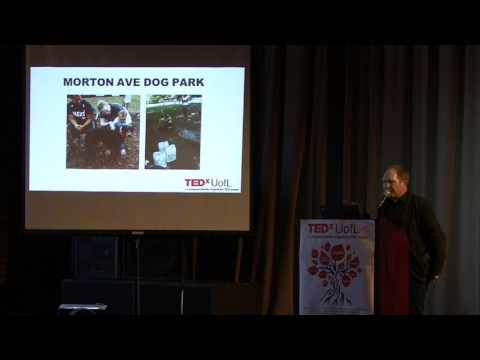
the Morton Avenue dog park I’m sure many
of you
seen this so this was a project from
some neighborhood Institute students in
about 2006 I believe every time I tell
people about this they’re like oh I know
the people that run the dog park that’s
not who runs the dog park that’s the
beauty of projects like this because
they don’t run the dog park anymore
because they don’t have to do it for the
rest of their lives they set up a
framework for other people to take it
over in the future and that is a key
element to a long-lasting community
project so while the dog park is not a
formal organization it’s an informal
place where people can get together to
meet their neighbors and it provides it
fills in need in the community so if you
live in the Highlands and you live in an
apartment you have a dog you don’t have
anywhere for your dog to run so it hits
many birds with one stone
the Morden Avenue dog park and I just
like the baby petting a dog that’s just
a great understatement
so I also want to tell you about some
great leaders that we’ve worked with
throughout the years
Mike O’Leary that’s Mike O’Leary on the
left that’s also him in the green shirt
getting a proclamation from Mayor
Fischer so Mike lives in the clifton
neighborhood mike is the founder of the
billy goat hill cliff community garden
which is on Paine Street you probably
either driven past it or ridden the bus
past it maybe bring your bike past it
here’s an interesting thing about Mike
founding the garden Mike is not a
gardener Mike hates gardening but across
the street from his house there was a
large piece of vacant land that he
thought other people might be interested
in utilizing is a community garden so he
got together with some other neighbors
and you know he just really did the
management part and set up a garden had
property rights agreements with the
people that actually owned the property
because he saw a need in the community
and put the community needs before his
own interests so we love Mike and Mike
actually serves on our board of
directors now after attending
neighborhood Institute so this was his
neighborhood Institute
the Billy Goat Hill community garden my
favorite thing that Mike says that I
share all the time people who show up to
the meetings are the ones who help make
the decisions so I know everyone’s busy
but if you see a public meeting about an
issue that you’re interested in
somebody’s going to be there it might be
you it might not be you but the people
that are there are the ones whose voices
are going to get hurt so keep that in
mind so here’s my friendship room
Gilinsky chip was the president of the
Shelby Park Neighborhood Association my
favorite thing about Shelby Park the
Shelby Park Neighborhood Association is
they are without a doubt the most
inclusive organization that I’ve ever
worked with and because they are so
inclusive it really eliminates a lot of
conflicts that you will see in
organizations like this chip has spent
years and years trying to just improve
the outward image of the Shelby Park
neighborhood because he loves the people
there he loves the houses there he loves
everything about the neighborhood and he
will tell you about it for hours and
hours and hours but chip actually that’s
that picture is when they used when chip
got a national award for his work in
neighborhoods and part of his acceptance
speech talking about his neighbors so
the way I see it they are all my
neighbors with them all time with them
to stay and be contributors to our
success so chip loves all of his
neighbor’s he realizes that everyone in
the neighborhood has a gift and has
something to contribute to the
neighborhood so you remember at the
beginning I said pay attention to this
black-and-white image in the left hand
corner so there’s my friend Lucille
Leggett that’s Lucille right there this
is a neighborhood Institute class from
I’m not sure what year so it was way
before my time I’m thinking it was the
late 1980s Lucille is again in
neighborhood Institute and she was in
our class last night
she’s she’s still around there’s Lucille
with mayor Fisher last week so
Lucille still plans projects in the
Russell neighborhood so if you’re in
Russell next Sunday but next Saturday
morning and you see a bunch of people
cleaning up at rats cleaning up trash
for the neighborhood cleanup you’ll see
Lucille she’ll be out there she’ll
probably to be telling people what to do
and not doing a whole lot of trash
picking up but and actually the image on
the right is for neighborhood institute
we did specifically for residents in
Russell
so Lucille’s been a great community
asset for many many years and we’re
lucky to have her involved with our
organization so if any of this has
inspired you I want to leave you with
two thoughts so what we really do with
neighborhood institute is we empower
residents to let them know that they can
make a difference the first time I
realized that was the first time I met
my council my Metro council person said
I have a problem in my neighborhood and
I don’t know what to do and we work
together to fix that and it changed my
life so going forward if you want to be
involved in your community in the way
that we are involved in communities I
want you to think about these three
things so what is one thing you’re
passionate about in your neighborhood
that you would like to improve to change
the quality of life for you and your
neighbors again it could be used
programming it could be what I do that’s
faking a lot at the end of my street how
do I keep the neighborhood clean what I
do about traffic issues what can you
commit to being a part of the process to
create that change so can you commit
time can you commit your skills can you
commit to asking five people to come
help you and what do you need outside of
yourself to create that change because
again everybody can’t do everything you
can do a lot of things but you can find
other people that can make up those
deficiencies and you can always call
Center for neighborhoods because we are here to help and thank you very much