
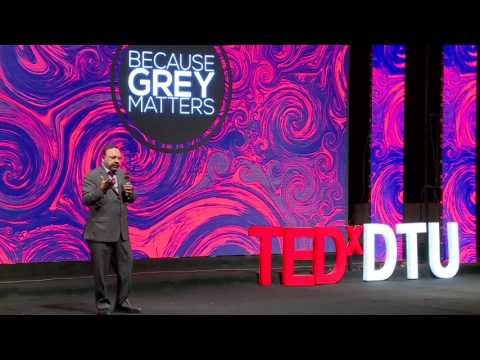
scintillating performance and it’s a
very difficult act to follow so I’m
going to try my best in discussing with
you and talking to you about an
opportunity that India has for the
future and that is how can we IT enable
ourselves and bring about productivity
transparency efficiency I know it’s a
pretty dry subject after the you know
access to the deep cultural roots that
you just witnessed but I think it’s very
very relevant for you who are really the
next generation India if you look at
where we are today 1.3 billion people
and the dichotomy that I live with every
working day of my life is that I
represent an industry which is almost
going to be about two hundred billion
dollar industry where we are making
lives of people around the world a far
better place through technology and
India is clearly the undisputed backyard
of everybody around the world’s
technological solutions the dichotomy
that I live with is that this very skill
and this very repository of knowledge
and experience that we have is being put
to very little use to bring benefits of
IT to our own people and that’s really
the challenge that I want to discuss
about today is when you look at
governance all over the country and we
are a three-tiered country you know we
have the central government we have the
state government and we have the local
governments there is a fair amount of
physical interaction to be able to get
governance in fact I would use the word
it is a struggle to get governance
because
the population of civil administrators
that we have probably is relevant for a
population base of India in the 1960s
whereas we have become a 1.3 billion
strong nation and it’s a matter of
complete disproportionate ratio of the
ability of the government to serve this
vast mass of society coupled with this
please picture eyes a silent revolution
that’s taking place around India which
is the advent of direct-to-home
and cable television where today an
average Indian home has access to 400 to
500 channels of television and therefore
they are able to benchmark their lives
with everybody else’s lives around the
world and therefore the aspirations and
expectations of governance are
phenomenally increasing and I really
empathize with the government because
they have huge constraints within which
they have to deliver governance so
therefore the proposition that I want to
make here is the question is not about
yit anymore it used to be you know when
in the 80s and 90s when there were there
were people sitting on the borderline
and saying you know is going to take
away jobs it’s going to displace people
today it’s about how much I tea and how
soon when you look at the ability of
technology to aid governance and you see
examples like for example we were
involved with how many of you have
passports in this audience to raise your
hands so we were involved with the
passport program which brought about a
huge degree of transformation and today
the government of India actually
demonstrates that as a classic example
of service delivery transformation that
they’ve been able to bring about for the
passport applicants to me the measure of
success of the passport program
as having been one of the people who led
it for TCS was that the tout of the
passport is looking for another job that
to me is the critical measurement factor
for the penetration and the success of
the program now extrapolate this
possibility across every form of
government to citizen connect whether it
is driving license whether it is land
records whether it is the fact that we
have to simply go and make a payment for
a government service whether it is a
telephone service or a municipal
property tax service or any of these
services
how much convenience and the gross
national productivity that we all can
gain if we were able to do this without
having to go through a physical connect
with the government which means if we
could proliferate some of these services
to come on to our mobile phones for
example could we talk to the government
24 by 7 through our mobile phones and
when you multiply the time spent by all
of us when we go and interact with
government in the physical offices of
the government which are few and far
between and they’re invariably crowded
full of paper full of many other ills
that I don’t need to elaborate you can
imagine the national productivity gain
that we can have as a country now I know
that I’m standing in front of the
engineers who are going to be continuing
the building of the nation of tomorrow
so therefore I am expecting that there
is a fair amount of access to technology
that you have but just do some
introspection what is it that we do
today in India with our mobile phones we
are either on whatsapp or we are on
Gmail or we are occasionally making some
calls and most often than not we are
communicating with each other through
missed calls you know I have a fantastic
way to call my driver two missed call
rings and he brings the car to the porch
so we have also innovated as Indians on
the use of
while phones but is that really the true
use of their technology today if you
look at some of the global disruptions
that have taken place on technology and
on the mobile we are able to book a air
ticket we are able to book a plane train
ticket we are able to do many services
so my question is why not
all of government on the mobile and when
you look at the mobile penetration of
India and you look at the physical
access to computer systems and Internet
for Indians Mobile has gone far ahead
far far ahead so therefore that’s the
opportunity that I believe that we have
as a country to really extrapolate this
technology for much much more effective
delivery of government services so
that’s one example then imagine in the
area of education some of us have had
the privilege of being taught by the
best teachers but when I used to go to
college the best teachers class would be
consumed and forgotten after the 45
minute session but today if imagine we
could capture some of those sessions of
the best professors that we have around
the country and can it in the form of
Education and distribute that on the
mobile phone of many other students who
are not necessarily in that privileged
class but can have access to that
quality of education delivery imagine
the benefit that it would accrue to the
students who do not have that privilege
again where technology can play a very
effective role in in percolating quality
education amongst the masses today India
has five hundred thousand teachers short
there are five hundred thousand teachers
vacancies and therefore you can imagine
the kind of deprivation that happens to
the education system because of the
sheer absence of the teacher whereas if
we are able to transform all that onto a
digital platform we will be able to
reach those who are unreached today
or bring quality to those who are being
taught in a fairly average manner I
think I am assuming all of us are in
Delhi imagine the government has four
hospitals which are government-owned in
Delhi you know lady Harding aims sub the
Jung and Romano lawyer and many of the
patients need to go to one hospital
today and the other hospital tomorrow
but what happens today is that every one
of these hospitals is maintaining their
own records and therefore I have to as a
patient have four files and I have to
choose which one I need to be able to go
to which hospital to get whatever
treatment imagine a scenario if the four
hospitals had a common hospital
management information system on the
cloud and I would have a unique number
as a patient and I could go to any
Hospital just quote my patient number
and from my electric electronic health
record the treatment would be there done
with exactly the last diagnosis that I
had and the treatment that I had coming
back from the records of the digital
records of my health so when we talk
about technology we are talking about
convenience and we are talking about the
ease of interaction which is what we
have today imagine if all of you and
most of you actually take buses to come
if you had an ability on your mobile
phone to know that the route that I need
is going to hit this bus tap stop at
so-and-so time how much of convenience I
could plan my day based on that
information so when you translate some
of these
into into application of technology
that’s how you bring convenience to
society and this is where I think with
the digital India push that our prime
minister is providing from the top there
is a need I would further qualify that
digital India push into a digital by
default India which means that every
entity of the government or public
service
delivery entities need to convert
whatever they have to be a to offer to
the citizens needs to come on to the
digital platform as indeed it is
available in the traditional
old-fashioned way of brick-and-mortar we
need to come to a concept of what I call
click and mortar which means that I
bring in the concept now to you of the
digitally divided society and why I say
click and Rother is I will connect those
two dots in a minute large sections of
India do not have access to Internet do
not own a computer most importantly do
not know how to use a computer so for
that section of society who are on the
digital divide on the negative side of
the digital divide we need to think of a
solution that’s going to address that
how can technology be also used and
availed by this lot so that they are at
par in society because I think we all
know the dangers of what can potentially
happen if the digital divide becomes
more and more acute it can actually lead
to a social unrest because there is a
section a small percentage of Indians
who are rapidly moving forward because
of their access to technology and their
ability to take the benefits and a large
section of society who do not have that
access and therefore they are disproved
so when we talk about solutions and I
work on them almost every day of my life
is how do you bring the benefits of IT
to that section of society how do you
benefit the farmer so that he knows the
information about the price of his
produce not just in the neighborhood
Mundi but he knows it across a 200
kilometer radius and he can choose where
to sell his produce to that’s what
technology can bring to him as a
proposition it can predict and tell him
that the weather patterns in the next 15
days when he is actually going to start
to sew is going to be so and so and is
it going to be conducive to the activity
that he will have to do on his land
that’s the benefit of technology that it
can bring to him for example so digital
divide and the click and mortar
when I say click and
we are talking about digitizing all the
services of the government and providing
it through brick-and-mortar kiosks like
cyber cafes you could actually go into a
cyber cafe and get hundreds and hundreds
of services of the government where the
person who runs the cyber cafe will be
the person to assist that illiterate
that IT literate person on how to get
the benefit from that service so that’s
the click with the brick and India’s
model of addressing the digital divide
is indeed the click and the brick model
we are actually running this in three
states
‘mother Pradesh Maharashtra Andhra
Pradesh where it is effectively reaching
the governance to the doorsteps of the
people so the benefit of that is you are
actually disintermediating governance or
disintermediating government so
therefore all of us know of the levels
of corruption and a scenario can
actually be built where who are you
going to ask the bride from if nobody is
going to come to your office that is the
real effect that the positive effect
that it can accrue if we are able to
holistically adopt technology to deliver
governance right now many initiatives
are being taken there is a lot of high
energy in the leadership in India but
that needs to percolate down to the last
person so that there is a holistic
approach and this is where I think the
next generation of India is going to
actively play a part in ensuring that
with the technological access that you
have as students with the kind of
awareness that you are able to access
every day on your mobile phones through
Google and many other search sites your
perspective is going to be much wider
and as I always tell a government
servant that really it’s not about
technology it’s a matter of mindset we
are dealing with mindsets here is really
not a technological issue because when a
government servant resists to use
technology in the day time in the night
time he is actually gone on to Skype to
speak to his child who’s studying in
another part of the world
so it is a selective use of technology
which we have to get out of and get into
a holistic embracing of technology
because there is no other way to deal
with 130 billion people and govern them
as I say and I will end by saying that
the era of the Nara wallah file which is
the traditional way in which government
does work needs to give way to a digital
workflow and a digital way of doing
things and I am sure that all the work
that’s going on today is going to be
bringing fruits to when you get into
society as citizens as people who are
going to work or who are going to become
entrepreneurs and India will truly stand
tall amongst the committee of nations
which is where we rightfully belong I
mean there was this golden age of India
and all of us are working to bring it
back and I think that a holistic
absorption of technology will fast-track
our destination or the goal that we set
for ourselves which is to be amongst the
committee of Nations standing tall proud
indeed demonstrating our true capability
that we have indeed done to the rest of
the world not only to them but to our
own people thank you for your attention [Applause]