
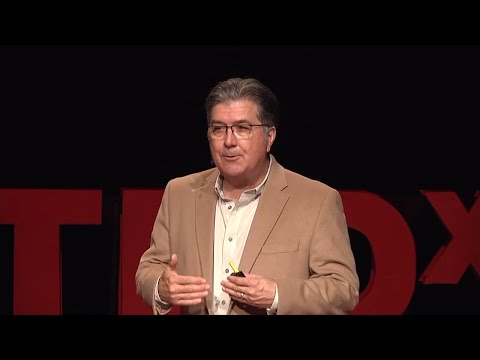
I was born in 1960 and if you can’t tell
by that image I grew up in the analog
world
I used rotary telephones and I solved
complex math problems with a pencil and
a piece of paper what I what I knew of
the world I got from watching
black-and-white television and reading
an encyclopedia and no dinosaurs were
not roaming the earth then look being
born in 1960 offered me a rather unique
opportunity to witness the dawn of the
digital world I was in my late 20s and
since that time I have spent nearly my
entire adult life in the technology
industry I’ve seen some amazing things I
have seen mainframe computers the size
of this stage reduced in size to fit in
my back pocket I witnessed the birth of
the Internet and web browsers and social
media right now from the stage using
this device I can control no less than
six Internet connected devices in my
home even more incredible doctors today
can remotely diagnose and administer
medication to patients anywhere there’s
digital broadband connectivity
yeah the digital world is pretty amazing
and it has really been a profound it has
a profound impact on the direction of my
life but it’s come at a cost millions of
people throughout the world many right
here in South Carolina are being
excluded from the digital world they
call this exclusion the digital divide
and I am here today to talk to you and
introduce that topic to you and to show
you the plan that we have for making it
now I want to use this image of the
London Underground to help us visualize
the digital divide the London
Underground is made up of several
elements the train that takes us back
and forth between our destinations the
platform where you stand to access the
Train and the gap and that’s the space
in between the platform in the Train
mind the gap there’s actually a life
lesson there now for the purpose of this
discussion what I’d like us to do is to
imagine for the moment that the Train is
the digital world and the platform is
how we access it now there are two p
types of people standing on that
platform those who can get on the train
and those who cannot those people that
can get on the train they have the
necessary skill and knowledge and
economic ability to do so for them it’s
just a simple matter walking over the
gap and getting on the train for those
people who cannot get on the train they
don’t have the skill or knowledge or
economic ability to do so for them the
gap is already way too wide to try to
cross and so they’re left standing on
the platform this is the digital divide
in 1995 William Cunard then chairman of
the FCC stated in a society where we are
increasingly defined by our access to
information and what we earn is what we
learn if you do not have access to
technology you’re going to be left in
the digital dark ages let’s fast forward
to today you might be interested to
learn that the digital divide that space
that gap between the platform and the
Train has continued to grow wider let me
put this into perspective in the u.s.
there are over 34 million people who do
not have access to the digital world
simply because it’s not offered to them
and when it is offered to them in many
cases it is far too expensive for them
to afford additionally one out of every
four US adults are either illiterate or
they have a very limited literacy skill
set and I’m not even talking about the
people that don’t have the technical
skills in order to do something with
these statistics define the primary
factors attributing to the growth in the
digital divide access having the ability
to actually obtain a digital connection
and understanding having the necessary
knowledge and skills to be able to do
something with it today we have global
federal and locally funded projects that
are actually addressing access to the
digital world we can actually visualize
the day when digital broadband
connectivity will be both ubiquitous and
affordable understanding having the
required literacy levels and technical
acumen to do something with that
connection those problems have proven to
be significantly harder to solve now I
mentioned earlier that I have been in
the technology industry for most of my
adult life and that’s over thirty years
really old guy and even for me at times
I have difficulty accessing and
understanding the digital world what
hope do we have a bridging the digital
divide when people with my level of
knowledge and experience have
difficulties maybe everyone just wasn’t
meant to ride the train at least that’s
how it felt to me
and then one day something extraordinary
happened I read a book I guess I read
two books Daniel Suarez his novels are
an interesting blend of action thriller
meets the Geek Squad thank Jason Bourne
teaming up with Bill Nye the Science Guy
to save the world got the image now my
apologies to Daniel his books are way
cooler than that all right in his books
the protagonist creates a way to access
the digital world that’s comprehendible
to all people on the planet regardless
of their language literacy or technical
skill levels he calls it a shamanic
interface and yes I am referring to a
shaman as in a diviner of spiritual
intent shaman this shamanic digital
interface uses somatic gestures to
invoke access to the digital world
similar in many respects to the somatic
rituals that shamans use to access the
spirit world
in short the characters in the book use
motion and sound to gain access and
control elements connected to the
digital world and then the lights came
on for me the problem with the digital
divide isn’t literacy or technical
acumen the problem with the digital
divide is that we’ve created an
interface that requires them what if
instead of trying to make everyone on
the planet literate or technically
astute why don’t we create a shamanic
interface that gives everyone standing
on the platform the ability to step over
the gap and ride the train this is my
okay let’s do the math to overcome the
digital divide we’re going to need to
overcome literacy and technology skill
gaps and to do that we’re going to need
to create a shamanic interface and then
that is going to need to understand
somatic gestures all right let’s start
with somatic gestures the good news
there is we already know them we’ve seen
them in movies since Close Encounters of
the Third Kind which I guess celebrated
its 30-year anniversary some time ago a
really old guy minority poor were Tom
Cruise he’s using a haptic glove to
actually control objects in the digital
world we use somatic gestures to
communicate to the hearing-impaired
there are a very small set but a growing
set of globally understood somatic
gestures as an example all right next
thing we got somatic gestures all right
next thing we need our digital devices
to understand these gestures and motions
that we’re putting in front of them good
news guess what we already got that too
a digitally connected camera that
measures movement in the physical world
and then translates that into actions in
the digital world Microsoft Kinect I
guess what I’m saying is this we have
all the elements we need to create a
shamanic interface save one groundswell
and this is where you guys come in
day we have activity already underway
that is developing they’re developing a
standard set of somatic digital gestures
and we expect device manufacturers to
include motion recognition technologies
into the more into the devices that we
use each day ah we already have somatic
gesture recognition to a very small
degree in our smart devices I can
actually wave my hand over my phone and
it’ll turn a page or I can put my hand
over my phone and shut it down our part
in this plan is actually pretty simple
continue the support of global federal
and locally funded projects that target
the affordable access to the digital
world we can’t we can’t miss this we
can’t drop the ball I said before we can
visualize the day when it’s going to
really be here but we have to realize
the day and it’s our job to do that
let’s build the shamanic interface and
let’s use it to bridge the digital
divide and let’s give everyone an equal
opportunity to step over the gap and
ride the digital train to wherever it
can take them thank you
[Applause]
[Music]
you [Music]