
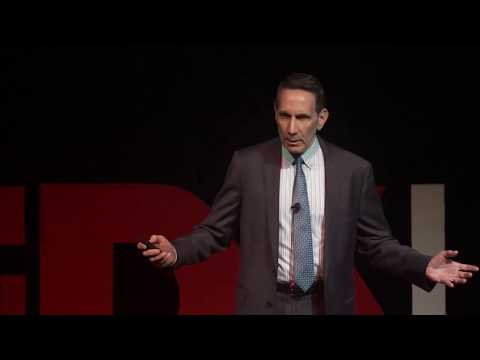
good afternoon I’m Douglas chlorin I’m
the associate dean of the College of
Architecture planning and public affairs
here at the University of Texas at
Arlington I’m going to talk about slum
housing today and I want you to remember
two things from the start first don’t
let the necktie fool you I’m gonna be
offering a radical rethinking of how we
educate people to deal with a global
housing crisis in the developing world
and second I’m gonna be using a lot of
text in here because I know that when
this is on the web I want people when
they view it on the web to pause to stop
and to carefully think about what I’m
saying
because this is a very important topic
for us to address this is based upon an
article you see it up there on the
screen that was published Oh in 2011 by
the ETH in Zurich
and it also led to me developing a
course that’s the name of the article
there by the way called slum housing and
I still teach this course and the first
time I taught heard it was supposed to
have 20 students we wound up with 54 so
that tells you the need to have people
talking about this honestly I don’t have
to show you many pictures of slum
housing in the developing world but my
point is that this is not affordable
housing in the developed world it is
slum housing in the developing world and
I have to tell my students to be
prepared for something that they have
never ever seen before there are two
words that I want you to keep in mind
today urging see and magnitude because
both of those are not addressed by our
educational systems to deal with this
crisis so we can look at endless
pictures of slum housing around the
world we’ll stop at this one momentarily
and just have you look at that and ask
yourself who should be dealing with this
type of housing and I will tell you now
that it should not be architects they
are not equipped to deal with this
moreover they are harmful to finding a
solution to this so I’m gonna tell you
who should be dealing with this because
no one has anyone dealing with this to
address urgency and magnitude
of course some people are writing about
this you see different articles here on
the screen
questioning architects in slum housing
around the world my favorite of course
was this one that will happened a couple
years ago or architects and planners
obstacles of slum upgrading and you can
guess by the tone of my voice that I
think they most definitely are for those
of you don’t know what I’m showing here
on the screen this is a typical scene in
our architecture school around the world
it will have very well-educated people
very well-intentioned people critiquing
minutiae of design over and over again
until they’re satisfied that a design
has been resolved this is not the way to
approach this crisis so urgency
magnitude what’s wrong with that way
that’s taught in all of our architecture
schools I don’t care whether you take an
affordable housing court course in your
school or whether you go on a summer
project and build a house in a slum
that’s not addressing the two issues
that you see up there
urgency and magnitude so what’s wrong
with our educational system right now
well first of all the projects that we
have are way too limited in scope second
they’re too reflective as design
exercises and that word design I’m going
to probably beat to death here in this
lecture for a good reason
number three these are way to leisured
regarding their time frames which goes
back to urgent II and number four they
are totally incommensurate regarding
materials we do not solve this crisis
using materials that we have in the
developed world we cannot solve the
crisis so we have to do away with this
so Adrien 40 wrote perhaps the most the
best quote that I’ve ever seen about why
architecture schools and archaea
education no longer serve us well and
I’m going to quote I’m gonna read this
for you so you listen to the words
carefully in architecture he’s talking
about modern architecture the effect was
that what architects learned in their
training cease to be practice and became
principals in other words a holy D
materialized and cerebral version of the
art and what students produced from
they’re turning was not architecture but
drawings commonly referred to as designs
the separation between architecture as a
mental product which was taught and
architecture as a practice in
gauged with the material world now
emerged for the first time as a visible
fact of life
now with the separation of education
from practice design rather than being a
convenient way of conceptualizing a
particular feature of architecture came
to be seen as a pure and self-contained
activity within itself it’s a lot of
words but as I say when you pause and
look at this on the web later on you’ll
get it look at the words that I’ve done
in red here they emerge and you begin to
see something happening here a
separation between building and
architecture so design a pure and
self-contained activity within itself
that is the problem let’s go back to our
jewelry here are these people to solve
this let’s go back to the jewelry
they’re well-intentioned but are they
the ones to begin solving the issue that
I’m talking about today and as you see
we fade into a tiny portion of a slum in
Dharavi in Mumbai so design out so
becoming builders again an edge of
global crisis we cannot permit students
and practitioners to retreat comfortably
to the familiar territory of an American
European affordable housing design ethos
that although perhaps noble in intention
and I don’t doubt that has utterly
failed to address the vast scale and
exponentially growing magnitude of the
crisis that’s the problem perhaps the
time has come for us to return to our
long-lost identities as builders there
is no other way for whatever outposts of
social responsibility that remain with
an architectural practice have proven
ineffectual and the profession has
remained numb to responding in
appropriate dimensions and rapidity to
the crisis the era of well intention yet
small-scale interventions must end for
their seductively reassuring photo-op
nature has lulled our profession into
complacency and that’s the danger that
I’m pointing out to you today they’re
well-intentioned but they have led us
down to the wrong path
so what do we do what does need
therefore is not a feel-good add-ons
dooty or to a participatory design but
rather an entire new pedagogy parallel
to the existing one that will train
experts not designers to respond to this
crisis we need a new paradigm focus upon
resolving the slum housing crisis on a
scale and pace that are commensurate
with the magnitude and exponential
growth of the problem and so what do we
do we need a participatory housing
practice and that’s what I’m terming in
of course this has been talked about for
years decades now we go back to John
Turner spoke of the mid 70s we go back
to him a recent book we have articles
that look at this but no one’s
addressing the fact that we have to
train different people for this and
that’s what I’m talking about today so
what would this look like this weird
animal I’m proposing you today okay it
would be a truly transdisciplinary
program from that first day that brings
students interested in housing
sanitation sociology planning and
government all five come together on
that first day of school they address
these issues then we address issues of
dwelling sanitation issues social issues
urban planning issues and of course
probably most important municipal issues
in regarding land tenancy and financing
the goal is to train students to
practice as a transdisciplinary team
during their education of course
afterwards and practice so I’m going to
quote just twice from this article by
Arthur nappa Dorie listen to his
description of a transdisciplinary
coalition in the slums of Mumbai and see
if this resonates with anything that we
teach in our schools the Coalition
cultivates a highly transparent non
hierarchical anti-bureaucratic and anti
technocratic organizational style a
small clerical staff conscientiously
serves the needs of the activists and
not vice versa
that’s important because everyday
organizational activity is filled with
meetings with contractors lawyers state
officials politicians in between our
inés members spatial fixity meaning
your location is not valued and the
organization functions in and through
mobility the general impressions of a
fast game of ice hockey with players
constantly tumbling in and out of the
most active roles in response to the
shifting needs
in game plans what a great definition so
his words provide a glimpse of what this
really could be so the mobility of which
epidural and I speak is true nimbleness
of mind
now the simulacrum achieve through
legions of computer programs and
functionaries within a hothouse studio
environment but that’s what we have
currently the mental nimbleness of which
i speak until communicating not with
fellow architects but rather with slum
residents using perhaps only pencils pen
and paper to offer them the one ability
that your transdisciplinary teammates
cannot and do not possess translating
needs and requirements into imagery the
mental illness of which I speak revels
in using the most basic and inexpensive
materials instead of following that that
siren song that murmurs be advanced by
using cutting-edge technology and
materials so participatory architecture
practice why don’t I call it that
because of this now you know we can’t go
that route we’ve tried that route it
doesn’t work so we have not trained
architects to recognize the nuances and
permutations that characterize what our
professionist label informal settlements
for the dwellers of slums however those
gradations and differentiations are as
evident as important as those that exist
for the growls within the formal built
environment of the city how is it we
remain unable to perceptively read and
understand the urban environments of
one-sixth of humanity our treatises may
breathlessly expostulate upon the new
urban forms of informal settlements
then there’s Nessa ties the readers
vicarious experience via edgy
photography yeah we do that however as
usually remain detached from actually
doing anything other than small overly
celebrated interventions within these
developing world slums we are kinder
doctors who cannot diagnose much less
treat the most basic conditions of human
life now of course there are good
examples happening out there but on very
small scale here’s one book for instance
you go into a slum in this particular
part of India
you just don’t map out the slum as
Architects would do roofs capes are
important
this particular some people go from roof
to roof so you have to understand what’s
occurring above you as well it’s a basic
simple lesson over here you don’t show
people a computer programming plan you
show them on a street with string what a
12 meter square room might look like so
they get an idea of the dimensions so
all of this is coming together in a
transdisciplinary team and of course
slum residents become integral and vocal
part of the process so a critical
question of course arises on account of
all of this okay because we’re dealing
with a billion people in developing
world slums
if standardization and therefore mass
production is antithetical to a true
participatory housing practice how does
someone propose attack of the global
slum housing crisis the answer is not in
mass production but rather a massive
amounts of small nimble
transdisciplinary teams being assembled
and deployed in slum areas I’m making a
deliberative distinction by the way
between interdisciplinary and dense
disciplinary and I while they’re reading
that right now but you can look at it
later on so once more from a pod re we
have these teams hundreds of them in a
loose Federation what does the
Federation mean in this instance the
primacy of the principal Federation also
serves to remind all members
particularly trained professionals that
the power of the Alliance lies not only
its donors its technical expertise we
think it does or its administration but
rather than the will to federate among
poor families and communities on another
level the image of the Federation
Reserve asserts the primacy of the poor
in driving their own policies however
much others may help them to do so so
akin to adjusting the lens on a camera
the vision of this practice now begins
to come into focus so this is not some
utopian dream we know that at the end of
the day though those team members get to
leave the slump
we know that the fact is that conspired
them makes such alliances so difficult
are daunting by the end of day we have
no choice if we’re going to solve this
crisis
so we need visionaries with an academia
who are also activists people who can
shatter disciplinary boundaries and
create learning programs that will equip
students with the skills to become true
transdisciplinary team members and good
doctor decisions of some dollars housing
needs we need students and practitioners
to view a participatory housing practice
as a legitimate professional endeavor
not as a brief internship summer studio
or occasional pro bono work that has not
worked we’ve tried it for 40 years
we need municipalities and governments
to financially encourage people to
pursue this career path finally we need
to train this new type of housing expert
how to negotiate successfully the
municipal officials for they often hold
the key to improving slum conditions due
to the central control a central issue
of land ownership if we don’t know how
to work with the governments and most
architects don’t we will never succeed
in this ah you exclaim these are not
subjects that should be taught in an
architectural curriculum but they have
little to do in that here’s that word
again with design imagine a building
curriculum that is radically different
that is why we need to train and we to
create a parallel program that focuses
upon producing diagnosticians and
practitioners of simple housing that is
why a participatory housing practice
degree program needs to be independent
for the law of regressing into our
default designer setting is very strong
and I know this it has to be completely
independent away from the architects you
keep them out of this program due to our
training it is our nature too socially
professionally and psychologically
distance ourselves from striving
wholeheartedly into the unsavory topic
of developing we’re slums which is
that’s our nature we’re designers we
would rather hold sleekly presented
competitions and earn student crits
about fordable housing so we can
insulate and isolate ourselves from the
harsh reality that was needed are not
more designers
thousands of good building practitioners
let me repeat that we do not need more
designers we need thousands of good
simple building practitioners that’s
what the world needs we’d rather donate
money yet another NGO that plants an
administrative office in a slum ignoring
the reality that for instance over 700
NGOs have been in Kibera Africa’s
largest slum for several decades
all the negligible impact concerning
Housing and sanitation imagine that 700
of them in this one slum and decade
after decade nothing is done about
housing there so you can have your
feel-good moment at an NGO but keep in
mind you’re not solving the crisis so at
the end of all of this will this TED
talk pass largely unnoticed from the
architectural scene as my article did
will it be too upsetting and too
disruptive to our shake ourselves from
our academies and practices will we
continue to tell us also the distinction
between architecture and building not
only isn’t necessary one but really a
noble one and finally this is the most
important point will we concoct in our
brains the curious and defensive
equation that the building’s we do bring
into the world somehow compensate us for
having made 1 billion souls 2 billion if
include merely substandard housing
irrelevant to our profession my
sincerest hope is that the answer to
each of these questions will be no thank
you
[Applause]
Please follow and like us: