
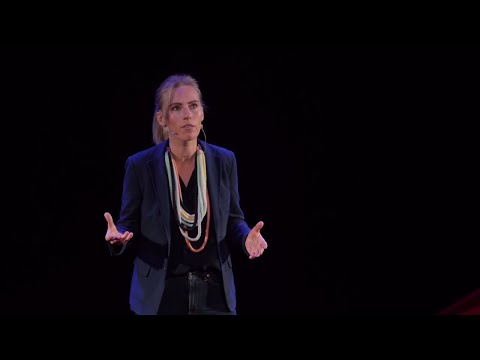
[Applause]
imagine not having to put a limit on
yourself based on your need for an
income not letting the obligation that
you have to do this or that or you won’t
have food to put on the table or a roof
of your head control your choices if you
have the basics taken care of food
clothing shelter health what would you
spend your days doing what’s the first
thing that comes to your mind if you
want to start a business develop a new
idea devote yourself to your art or
dedicate your life to helping others how
much opportunity do you have to do so
how much time and energy left over after
eight hours at work and two in a commute
how much freedom after bankrupting that
business you finally took a chance at
starting if it fails that might very
well be the end of it your last chance
to live your dream gone into debt and
disillusionment for those of us who have
no fallback no economic safety net the
stress that gives rise to is a burden we
carry with us in all that we do what a
difference it could make if we were able
to set that burden down what a
difference it would make if we were able
to take a chance and mess up and know
that our bills would still get paid
because making mistakes is far more
valuable than we give it credit for
failure is inherent in all learning the
path to mastery is through constant
failure and constant readjustment in
response to that failure again and again
and again what if all those who failed
and had to go back to their day jobs had
gotten a second a third a fourth a
perpetual chance even where would we be
today cancer cured flying cars a colony
on Mars the world that I imagine as a
result of this thought experiment is a
world that I believe we can reach but
the only way to reach it
is if people are truly free the type of
freedom that comes from equal
opportunities and the ability to make
choices based on not what you have to do
to survive but what you want to do to
thrive we could do this by providing a
universal basic income to everyone now
in its simplest form the idea of a
universal basic income means that
everyone should receive an amount of
money sufficient to make ends meet
regardless of their circumstances like
employment social status or even need
and then those who are able or wish to
supplement their income are then free to
take any work that they choose and the
income they receive from that work would
be an addition to their Universal basic
income after taxes of course the basic
income is unconditional in that nothing
you do or don’t do will affect your
receiving it it enshrines the principle
that we are all valued members of these
human societies we’ve created all over
the world and we have a right to share
in their collective wealth the
philosopher Thomas Paine in 1797 wrote a
pamphlet called agrarian justice where
he makes an argument for a universal
basic income he states that the earth in
its natural uncultivated state was and
ever would have continued to be the
common property of the human race he
goes on to say that is the value of it
is the value of the improvement only and
not of the earth itself that is
individual property and that the
proprietor therefore of cultivated lands
owes to the community a ground rent for
the land which he holds now the idea
that we should all receive a dividend
from our stake in our shared ownership
of the planet’s resources is a powerful
one and I think an important one for the
future a future where technological
advances with machine learning and
automation are poised to greatly disrupt
our societies and create an ever
deepening inequality to counter this we
must find a way to sever the connection
between work and income and I believe
that we have a unique opportunity to do
just that and at the same time do away
with that very stress of having to make
ends meet by working a job that
essentially a robot could do better a
report published by Karl Benedict Frey
and Michael Osborn of Oxford University
found that 47% of US jobs are at risk of
automation in the next decade or two and
in poorer countries like India 69% of
jobs are at risk in China 77% a report
published by the World Economic Forum
argues that job losses could be offset
by employment growth in other areas but
comes to the conclusion that the rise of
robots will still lead to a net loss of
over 5 million jobs in 15 major
developed and emerging economies by 2020
and these aren’t just factory jobs that
we’re talking about here the those jobs
are already mostly gone in the Western
world we’re talking about cashiers
telemarketers jobs and insurance in the
food industry serving office in
administrative jobs sales transportation
the list goes on the power of machine
learning means that the jobs people
thought would be safe from automation
are now at risk too
kochak grace from Oxford’s future of
humanity Institute led a study asking
the world’s leading researchers and
artificial intelligence when they think
artificial intelligence will be better
than human beings at a wide range of
tasks North American researchers
estimate that this will happen in 74
years but their Asian counterparts see
this happening in just 30 years so
however you look at it before long
AI will outsmart humans in almost
everything I think 30 years is a
reasonable estimate but there are
important factors in slowing down
automation and one of those is likely
the cheapness of labor think how
difficult the fight for higher wages
will be in a
where technology offers cheaper and more
efficient results than human labor in a
current economic model where income and
therefore survival is dependent on
having a job workers will have very
little leverage to negotiate as wages
will be driven down by the constant
threat of either outsourcing to a
cheaper labor force overseas or to
robots and in our current economic model
who benefits from automation in the past
the main benefactors of technological
advances have been businesses industry
technology has made the world richer
overall yes but not everyone is
benefited in 2009 the top one percent
owned 44 percent of the world’s wealth
in 2014 they had 48 percent by 2020 it
is estimated that the one percent will
own 54 percent of global wealth now this
concentration of wealth it doesn’t have
to continue we can change the system for
the first time in history technology
could lead us to the abundance necessary
to enrich humanity on an individual
level but to get there we have to be
brave and open-minded enough to dream a
better world and then take the steps
towards that world right now automation
is a threat but it doesn’t have to be
with the universal basic income it could
be a road to freedom but to buy that
freedom to buy that freedom we need to
stop running our economy on the
ideologies of the past and start
designing the economy of the future now
there are many ways that we could fund
the universal basic income
most of them involve taxation reforms
that are sorely needed in our shifting
highly technical globalized economy we
could as as Thomas Paine suggested start
thinking differently about the private
ownership of land or even the resources
that we all need to survive we could
start thinking differently about
innovation
and the ownership of ideas or the
ownership of data that we give freely to
large corporations who then profit from
it or the ownership of technological
progress which has been driven by
centuries of interchanging ideas many of
the technical wonders that we enjoy in
our everyday lives like computers and
smartphones are based on on research
that to some degree has been
taxpayer-funded and are produced with
resources many of them rare minerals
there are sourced from the very ground
we all walk so how should these profits
be shared there is also mounting
evidence through the many experiments
that have been done with universal basic
income all over the world that the
system leads to lower crime rates lower
school dropout rates fewer accidents and
stress-related illnesses whilst
increasing the level of education and
entrepreneurship these findings along
with the removal of the burdensome
bureaucracy that comes with our current
welfare system would lead to two massive
savings in taxpayer money that could be
diverted into funding a universal basic
income now these are just a few ideas
and they may seem implausible or
impossible even but where there is a
will there’s a way know to better
understand where we are today
and how we got here it is important to
understand it’s important to delve into
the past and to understand that the
systems that frame our lives are
man-made we can change them and our
current man-made system is designed to
reach a goal grounded in ideology that
is today at odds with an equitable and
sustainable future that goal is maximal
growth of the economy in perpetuity Adam
Smith who’s been coined the father of
modern capitalism had a clear idea of
how to get there of how to reach that
goal by maximising worker efficiency and
as a result production and consumption
by breaking down complex processes into
many tiny steps each allotted to one
worker
human beings became little more than
cogs in the industrial machine whose
output was an imagined infinite economic
growth it’s interesting to note that
Adam Smith himself pointed out the
downfall of a system which in effect
employs human beings into mindless
drudgery for half of their waking life
in order for them to make ends meet he
warned that forcing individuals to
perform mundane and repetitive tasks
would lead to an ignorant and
dissatisfied workforce this was it seems
an acceptable side effect as the goal
was after all the material wealth of
nations and not an enlightened and
content population Smith he believed
monetary incentives to be vital to get
people to work after all why would
anyone choose the hard and repetitive
toil that offer in the factories of his
day if it wasn’t absolutely necessary
for survival but the preconception was
that human beings are in essence lazy
and to some degree untrustworthy unless
incentivized monetarily to be otherwise
the same school of thought was then
applied to our education system where
instead of money exam scores and degrees
and certificates are used to incentivize
learning as well as being prerequisites
for graduating and then finding a job so
from an early age we become accustomed
to working for extrinsic rather than
intrinsic rewards so instead of being
motivated from from that feeling of
accomplishment when you come to
understand concepts in their application
in the world you know that you wreak a
moment when you finally get something
instead of that we’re motivated to
memorize words and labels repeating them
like a parrot to pass that exam get that
degree and contribute to that common
goal endless economic growth so what’s
wrong with that hasn’t it served to make
all of our lives a lot more wealthy yes
it has at least materially it has but
it’s also led to
as Smith warned an uninformed
dissatisfied population for ever seeking
extrinsic validation and instant
gratification the perfect consumer
pollution of land sea and air are the
other fruits of this locust like
approach to civilization where we
consume more with every passing year as
if this planet were actually expanding
in step many of the conditions that make
this planet beautiful bountiful and
capable of sustaining human life are
facing threats so far gone that our
current technology might not be able to
deal with them even if we made a
concerted effort to do so which we are
not despite this our measure for success
and well-being is still gross domestic
product the amount of stuff we produce
without any regard to actual need making
our economic system work against the
very systems we rely on for our survival
and well-being so what does this tell us
do we not have to rethink our very
definition of success what makes a
nation truly wealthy I believe that to
find these answers we have to be willing
to examine our core belief systems and
ask ourselves if they’re serving us and
by us I mean all of us because if we’re
to evolve as a species we must rise
above the individual interest and start
looking towards the interest of the
collective the whole our world is fast
changing and with it the societies and
the systems that we’ve built to sustain
us now these changes will happen with or
without our participation it’s not a
question of if but of when and how now
the how is something we have a little
control over but only to the extent of
how willing we are to look at the paths
ahead understand the inevitable changes
we face and to prepare we must prepare
these will be the deciding factors and
whether a particular change will be
positive or negative for society
now the how might very well be a
universal basic income which has the
potential to both mitigate unemployment
greatly accelerate the rate of
technological development possibly save
the planet and make people be more
fulfilled and happy than they have ever
been now I think that’s worth a shot
don’t you thank you
[Applause]
imagine not having to put a limit on
yourself based on your need for an
income not letting the obligation that
you have to do this or that or you won’t
have food to put on the table or a roof
of your head control your choices if you
have the basics taken care of food
clothing shelter health what would you
spend your days doing what’s the first
thing that comes to your mind if you
want to start a business develop a new
idea devote yourself to your art or
dedicate your life to helping others how
much opportunity do you have to do so
how much time and energy left over after
eight hours at work and two in a commute
how much freedom after bankrupting that
business you finally took a chance at
starting if it fails that might very
well be the end of it your last chance
to live your dream gone into debt and
disillusionment for those of us who have
no fallback no economic safety net the
stress that gives rise to is a burden we
carry with us in all that we do what a
difference it could make if we were able
to set that burden down what a
difference it would make if we were able
to take a chance and mess up and know
that our bills would still get paid
because making mistakes is far more
valuable than we give it credit for
failure is inherent in all learning the
path to mastery is through constant
failure and constant readjustment in
response to that failure again and again
and again what if all those who failed
and had to go back to their day jobs had
gotten a second a third a fourth a
perpetual chance even where would we be
today cancer cured flying cars a colony
on Mars the world that I imagine as a
result of this thought experiment is a
world that I believe we can reach but
the only way to reach it
is if people are truly free the type of
freedom that comes from equal
opportunities and the ability to make
choices based on not what you have to do
to survive but what you want to do to
thrive we could do this by providing a
universal basic income to everyone now
in its simplest form the idea of a
universal basic income means that
everyone should receive an amount of
money sufficient to make ends meet
regardless of their circumstances like
employment social status or even need
and then those who are able or wish to
supplement their income are then free to
take any work that they choose and the
income they receive from that work would
be an addition to their Universal basic
income after taxes of course the basic
income is unconditional in that nothing
you do or don’t do will affect your
receiving it it enshrines the principle
that we are all valued members of these
human societies we’ve created all over
the world and we have a right to share
in their collective wealth the
philosopher Thomas Paine in 1797 wrote a
pamphlet called agrarian justice where
he makes an argument for a universal
basic income he states that the earth in
its natural uncultivated state was and
ever would have continued to be the
common property of the human race he
goes on to say that is the value of it
is the value of the improvement only and
not of the earth itself that is
individual property and that the
proprietor therefore of cultivated lands
owes to the community a ground rent for
the land which he holds now the idea
that we should all receive a dividend
from our stake in our shared ownership
of the planet’s resources is a powerful
one and I think an important one for the
future a future where technological
advances with machine learning and
automation are poised to greatly disrupt
our societies and create an ever
deepening inequality to counter this we
must find a way to sever the connection
between work and income and I believe
that we have a unique opportunity to do
just that and at the same time do away
with that very stress of having to make
ends meet by working a job that
essentially a robot could do better a
report published by Karl Benedict Frey
and Michael Osborn of Oxford University
found that 47% of US jobs are at risk of
automation in the next decade or two and
in poorer countries like India 69% of
jobs are at risk in China 77% a report
published by the World Economic Forum
argues that job losses could be offset
by employment growth in other areas but
comes to the conclusion that the rise of
robots will still lead to a net loss of
over 5 million jobs in 15 major
developed and emerging economies by 2020
and these aren’t just factory jobs that
we’re talking about here the those jobs
are already mostly gone in the Western
world we’re talking about cashiers
telemarketers jobs and insurance in the
food industry serving office in
administrative jobs sales transportation
the list goes on the power of machine
learning means that the jobs people
thought would be safe from automation
are now at risk too
kochak grace from Oxford’s future of
humanity Institute led a study asking
the world’s leading researchers and
artificial intelligence when they think
artificial intelligence will be better
than human beings at a wide range of
tasks North American researchers
estimate that this will happen in 74
years but their Asian counterparts see
this happening in just 30 years so
however you look at it before long
AI will outsmart humans in almost
everything I think 30 years is a
reasonable estimate but there are
important factors in slowing down
automation and one of those is likely
the cheapness of labor think how
difficult the fight for higher wages
will be in a
where technology offers cheaper and more
efficient results than human labor in a
current economic model where income and
therefore survival is dependent on
having a job workers will have very
little leverage to negotiate as wages
will be driven down by the constant
threat of either outsourcing to a
cheaper labor force overseas or to
robots and in our current economic model
who benefits from automation in the past
the main benefactors of technological
advances have been businesses industry
technology has made the world richer
overall yes but not everyone is
benefited in 2009 the top one percent
owned 44 percent of the world’s wealth
in 2014 they had 48 percent by 2020 it
is estimated that the one percent will
own 54 percent of global wealth now this
concentration of wealth it doesn’t have
to continue we can change the system for
the first time in history technology
could lead us to the abundance necessary
to enrich humanity on an individual
level but to get there we have to be
brave and open-minded enough to dream a
better world and then take the steps
towards that world right now automation
is a threat but it doesn’t have to be
with the universal basic income it could
be a road to freedom but to buy that
freedom to buy that freedom we need to
stop running our economy on the
ideologies of the past and start
designing the economy of the future now
there are many ways that we could fund
the universal basic income
most of them involve taxation reforms
that are sorely needed in our shifting
highly technical globalized economy we
could as as Thomas Paine suggested start
thinking differently about the private
ownership of land or even the resources
that we all need to survive we could
start thinking differently about
innovation
and the ownership of ideas or the
ownership of data that we give freely to
large corporations who then profit from
it or the ownership of technological
progress which has been driven by
centuries of interchanging ideas many of
the technical wonders that we enjoy in
our everyday lives like computers and
smartphones are based on on research
that to some degree has been
taxpayer-funded and are produced with
resources many of them rare minerals
there are sourced from the very ground
we all walk so how should these profits
be shared there is also mounting
evidence through the many experiments
that have been done with universal basic
income all over the world that the
system leads to lower crime rates lower
school dropout rates fewer accidents and
stress-related illnesses whilst
increasing the level of education and
entrepreneurship these findings along
with the removal of the burdensome
bureaucracy that comes with our current
welfare system would lead to two massive
savings in taxpayer money that could be
diverted into funding a universal basic
income now these are just a few ideas
and they may seem implausible or
impossible even but where there is a
will there’s a way know to better
understand where we are today
and how we got here it is important to
understand it’s important to delve into
the past and to understand that the
systems that frame our lives are
man-made we can change them and our
current man-made system is designed to
reach a goal grounded in ideology that
is today at odds with an equitable and
sustainable future that goal is maximal
growth of the economy in perpetuity Adam
Smith who’s been coined the father of
modern capitalism had a clear idea of
how to get there of how to reach that
goal by maximising worker efficiency and
as a result production and consumption
by breaking down complex processes into
many tiny steps each allotted to one
worker
human beings became little more than
cogs in the industrial machine whose
output was an imagined infinite economic
growth it’s interesting to note that
Adam Smith himself pointed out the
downfall of a system which in effect
employs human beings into mindless
drudgery for half of their waking life
in order for them to make ends meet he
warned that forcing individuals to
perform mundane and repetitive tasks
would lead to an ignorant and
dissatisfied workforce this was it seems
an acceptable side effect as the goal
was after all the material wealth of
nations and not an enlightened and
content population Smith he believed
monetary incentives to be vital to get
people to work after all why would
anyone choose the hard and repetitive
toil that offer in the factories of his
day if it wasn’t absolutely necessary
for survival but the preconception was
that human beings are in essence lazy
and to some degree untrustworthy unless
incentivized monetarily to be otherwise
the same school of thought was then
applied to our education system where
instead of money exam scores and degrees
and certificates are used to incentivize
learning as well as being prerequisites
for graduating and then finding a job so
from an early age we become accustomed
to working for extrinsic rather than
intrinsic rewards so instead of being
motivated from from that feeling of
accomplishment when you come to
understand concepts in their application
in the world you know that you wreak a
moment when you finally get something
instead of that we’re motivated to
memorize words and labels repeating them
like a parrot to pass that exam get that
degree and contribute to that common
goal endless economic growth so what’s
wrong with that hasn’t it served to make
all of our lives a lot more wealthy yes
it has at least materially it has but
it’s also led to
as Smith warned an uninformed
dissatisfied population for ever seeking
extrinsic validation and instant
gratification the perfect consumer
pollution of land sea and air are the
other fruits of this locust like
approach to civilization where we
consume more with every passing year as
if this planet were actually expanding
in step many of the conditions that make
this planet beautiful bountiful and
capable of sustaining human life are
facing threats so far gone that our
current technology might not be able to
deal with them even if we made a
concerted effort to do so which we are
not despite this our measure for success
and well-being is still gross domestic
product the amount of stuff we produce
without any regard to actual need making
our economic system work against the
very systems we rely on for our survival
and well-being so what does this tell us
do we not have to rethink our very
definition of success what makes a
nation truly wealthy I believe that to
find these answers we have to be willing
to examine our core belief systems and
ask ourselves if they’re serving us and
by us I mean all of us because if we’re
to evolve as a species we must rise
above the individual interest and start
looking towards the interest of the
collective the whole our world is fast
changing and with it the societies and
the systems that we’ve built to sustain
us now these changes will happen with or
without our participation it’s not a
question of if but of when and how now
the how is something we have a little
control over but only to the extent of
how willing we are to look at the paths
ahead understand the inevitable changes
we face and to prepare we must prepare
these will be the deciding factors and
whether a particular change will be
positive or negative for society
now the how might very well be a
universal basic income which has the
potential to both mitigate unemployment
greatly accelerate the rate of
technological development possibly save
the planet and make people be more
fulfilled and happy than they have ever
been now I think that’s worth a shot
don’t you thank you
[Applause]
Please follow and like us: