
[Music]
you
[Music]
the first part of this talk is intended
to scare you really scare you okay and
what I want you to think about is what
you do in your job or what you may well
be doing in your future career or your
future job and ask yourself this
question could a machine do what you do
that’s the question now I want to yeah I
mean let’s think about like some things
that you could potentially do that you
would think these are things that no
machine could possibly do so let’s say
what do you think you think if you’re a
doctor do you think a machine could do
what a doctor does hands up anyone who
thinks that’s possible okay
anyone who thinks okay an artist anyone
think that machine could do what an
artist does okay anyone there’s a lot
less people anyone who thinks that a
machine could do what the prime minister
does okay so there are huge numbers of
of reasons to be afraid about this right
this is the possibility that in the
future that will note there will no
longer be any jobs for humans all right
this is not a future that is completely
mad yes a lot of people believe that
this is a almost a sure thing to the
point that you see headlines which say
things like hey I’m making huge strides
performs dermatologist level skin cancer
classification or I’ll forego for
example beats the world player more
robots fewer jobs yes these sort of
headlines now I don’t know if there’s
going to be a robot teacher remote robot
professor like me in the future and I
wanted to set out to see whether that
was really going to be true and my
process of setting this of of setting
out on this quest so I asked his
question
about whether or not this is really true
it’s what I’m going to be talking to you
about today to understand where we got
to this point that machines could
potentially take over what humans do we
have to go back and have a look at a
little bit of history next slide please
so this has really been developing for
over 200 years but I’d start with the
Victorian era and this is these people
Charles Babbage and ADA Lovelace and
Charles Babbage was the first person to
invent what might call computer hardware
really an Ada Lovelace was the first
recognizable computer programmer now the
thing is that it’s taken a long time
nearly a century had to go passed before
Alonzo Church and Alan Turing came up
with this the idea of a general
theoretical basis for computing because
there was hardware and software but no
theory for how to sort might all fit
together and in principle at least they
came up with this idea of a machine
called the cheering machine that could
potentially do all calculations that any
human could do that’s the idea it’s a
thesis it’s not a proof that there are
machines out there that you can
demonstrably show can do all
calculations they’re humans could do now
the thing is that’s in theory the
practice of it only really started
taking off when will Shockley and others
at AT&T Labs invented the transistor and
invented there the microchip as well
which came along with that invention
they kicked off the era of so-called
exponentially increasing miniaturization
of computing machines and this is
famously summed up in a law named after
Gordon Moore who was the co-founder of
Intel Corporation Intel that make all
the chips that go into your pcs for
example known as Moore’s law after
obviously that’s right at the same time
in 1950s pioneers such as Frank
Rosenblatt here who’s actually a
psychologist started experimenting
seriously with the idea of mimicking how
the brain is wired up yes so this is
really the beginning of the notion of
artificial intelligence you came up with
this idea for the artificial neural
network and later it became clear that
to make substantial progress artificial
intelligence was going to have to cope
with uncertainty because computers are
not very good with uncertainty but the
real world is always uncertain right but
this idea has been essentially solved in
theory by this chap do they a pearl in
1980s and this brings us up to the
modern era the modern era of artificial
intelligence with these two people
Janna Kuhn and Geoffrey Hinton and they
came back this idea of called deep
learning which is basically artificial
neural networks which are very very deep
layers and this supports us things like
serious speech recognition yes and
things like Google’s automated photo
labeling apps right this is all powered
by the ideas that have been invented by
by these two pretty much now that we
understand how we got here we need to
know what the current state of the art
is yes that’s the past now let’s look at
the current where are we now
with this hardware and it leads us to
ask the first question which is what is
intelligence it’s what I mean by that
this is a very vexed question it is a
very difficult question to answer but
let’s put I just want to put it to you a
few possibilities about what
intelligence could possibly be one
possibility is that intelligence is just
about memory yes it’s just about
memorizing lots and lots of things
really really well right so if that’s
the case we would have to pit nature’s
memory against computer memory now what
is nature’s memory
well nature’s memory is essentially DNA
now that represents
all the information in your genome which
is the record in history of all the
things that all animals before you that
led to you encountered in their
environment and led to you as as the
winner you are the success story of that
massive evolutionary history which is
recorded in your DNA and of course there
have been trillions and trillions of
individuals and there are countless DNA
strings out there yes so but these
things have survived for billions and
billions of years yes for billions of
years now that means really that the
amount of information that’s stored in
DNA versus the amount of information
that’s stored in computer memory that’s
the winner
so DNA is very much definitely winning
currently so intelligence really isn’t
just about memory is it right
intelligence could be more than that you
could be married plus you have to have a
lot of experience yes you’ve got to see
a lot of things if so what that’s going
to do is Pitt for example I’ll just give
an example of what mean by experience
like sensory experience things that you
see with your eyes yes
so that’ll Pitt say your eye that’s your
retina against a digital camera right
look these are broadly similar things
yes and we’d have to ask how much
information is this thing capturing
versus how much information is a digital
camera capturing yes and by one estimate
retina has about 74 million dots on it
light-sensitive dots right now camera
digital camera sensors approach that
there are camera sensors you can get
they’re even more detailed than that but
the thing about the hue about the human
retina is you’ve had one ever since
you’re a fetus and you’ve this has been
collating images once every twenty five
times a second from the moment you were
born yes and possibly earlier so the
thing is that this has been amassing a
vast amount of information and it’s been
somehow filtered into your filters into
your perception
raining somewhere so I estimate it’s
just a simple calculation would be that
there’s about five times ten to the
eight number of bits of information so
it’s very five times ten to the 18 bits
of information that you’ll experience
over your lifetime now to give you some
idea 10 to the 12 is a trillion right so
it’s a lot bigger than that and the
thing is that that is about the scale of
the size of all the information on
YouTube so that’s what you’ve been
experiencing over you that’s what you
will experience over your entire life
right but there are billions of us of
course so that gives you some idea that
this the the human retina is probably
experiencing more information than all
these cameras are currently so it can’t
just be about the amount of information
we’re amassing yes it could also be
about computational speed yeah so how
fast can you think someone who can think
faster than somebody else is presumably
more intelligent yes that’s how we would
suggest that’s what we’d suggest now
here the story is quite different yes
this is a neuron okay it switches about
10 to 100 pulses per second if you’re
lucky it takes about a second for you to
stub your toe and then for you to feel
the pain right so it gives you how long
that gives you an idea about how fast
the information transfer is transferred
in neurons yes this thing here that’s a
transistor and there are now all tens to
a hundreds of billions of these on there
on a smartphone’s processor and so but
this thing here can make about one to
five billion decisions per second yes
so clearly transistors win hands down
computers can currently think far far
faster than we possibly can so if we
just sum this up and you ask what’s
intelligence at the moment yes the
current state of humans versus machines
well they’re not equal right there’s a
it’s it’s not clear which who’s the
winner here you know machines are
certainly faster but nature stores much
more well but nature is also more
efficient can process more information
with
less energy for example so it’s not a
slam-dunk either way next line so let’s
now look to the future so you’ve looked
at the past the history look at the
current state of the art and let’s see
where this is going
we can try to extrapolate into the
future a bit so this is how a future of
AI could work and I’m going to give you
like a really simple idea that could
mean that all of this the idea of
putting all of you out of work all of us
out of work in the future is totally
possible yeah
totally possible on some really simple
principle and it’s the idea which I like
to call the giant lookup table
hypothesis I’ll explain what I mean by
that this is the big data dream for AI
right this is about collecting vast
amounts of information and let me give
you a simple idea about where this could
work and how this would this might work
basically maybe many of you will
probably know about things like a.m. PR
so automatic number plate recognition if
you go to your garage and you fill up
your car there’s not somebody sitting
there looking at a CCTV and writing down
your number plate yes it’s actually
machine learning that recognizes what
the alum number plate is and then
records that information automatically
so that’s already happening right now
yes now the question is how could that
work not how does it work but how could
that work the answer is pretty simple
right all we do is we get a list of all
the possible digital images that could
exist so we’d have a table that has all
the possible lists of values of pixels
for example for a B C D etc for all the
numbers yes and let me just have this
big lookup table that tells us what the
label is associated with that yes so
what letter what number is it based on
that image the thing is that then all
the camera has to do is it just has to
ask the computer I’ve seen a new image
so what’s the label for it yes I’ve seen
this these these pixels here
I’ve seen these pixels what’s the label
for it you just have a program that just
looks it up and gives you the answer
that’s perfect right and it will always
work it’s completely infallible and it’s
completely possible to solve every
possible AI problem that way yes now
this is actually quite close to how a
lot of AI systems work these days but
the question is is there a catch to this
with this with this possibility you can
see how simple it is right would it work
would it work at all in practice I’m
gonna say fortunately answer is no it’s
complete bunkum yes it’s nonsense why is
it nonsense because even if I take a
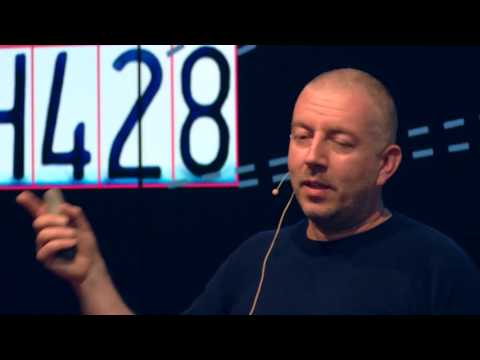
really small image like this yeah this
is only 20 by 20 pixels yeah and it’s
got Iowa so it’s got 8 bits per pixel so
that tells me how many how the values of
the gray scales in here there’s 2 to the
3200 possible in that yes now that
number is more than a number of
particles in the universe so that means
it is totally impossible to do that
dream yes this big data dream for AI is
never gonna happen because you’d need as
much hardware as there is why you need
the whole of the universe to be that
computing hardware to make that possible
yes convert all the stars all the
planets you everything into big bit into
into hardware to make that happen and
it’s still not feasible right so but a
child can easily read digits like this
and recognize them so how does a child
do it if AI can’t in principle do this
well in essence the reason why this
isn’t isn’t the case why why this is not
just looking up information yeah it’s
because of the fact that knowledge
requires more than just remembering lots
of data yes ok and next example here’s
another thing that a I could do so we
just have a really simple idea here
which
that we want to solve some tasks some
tasks in your job involves processing
information and coming up with some
particular answer yeah there’s a
solution to every problem presumably you
just have to try them all out yes let’s
try out all possible solutions given a
problem yeah now given how fast
computers really are you could quite
easily see that this could be done right
so a computer can be completely done all
it has to do is search through all the
possible answers yes I call that the
giant hypothesis search engine yes it’s
like a search engine that tries out all
possible explanations for your problem
and then it picks the best one yeah so
let me give an example of this I don’t
know if you know about the logistics
network the global logistics networks
global so-called containerized transport
network now if you don’t know about this
this is absolutely amazing yes because
containerized logistics network move
pretty much everything you buy around
the world yes on shipping containers and
trucks and rail etcetera it’s actually
mind bogglingly vast and the thing is
that the number of problems that you
have to solve are pretty large in this
in this system for example one of the
hardest problems and it may seem like an
easy problem but it’s not is the
so-called Traveling Salesman problem
right this is there that computer
scientist call it that is what you have
to find is the shortest circular route
that visits a number of cities yes
that’s a simple idea just visits these
cities and how might we solve this
problem using this big computer idea
this big search engine well it’s simple
we just try all the possible routes yeah
and pick the best one
yeah that’s not that’s how they solve
that problem it’s that gonna work
fortunately for us the answer is no that
doesn’t work either right why can’t that
work well because of the fact of a
really nice idea a really nice phrase
that computer science is called use
called combinatorial explosion
combinatorial explosion so what does
that mean if you have 15 cities and you
want to find the shortest route through
yes
it turns out there’s over over a
trillion possible routes yes so that’s a
lot
we just assert just 15 cities and
imagining containerized network you have
to solve problems with hundreds of
cities or thousands of them right the
reason why is because it’s factorial
that exclamation mark just means 1 times
2 times 3 times 4 all the way up to 215
yes and that gets bigger and bigger and
bigger it gets astronomically large as
this number is even like up to 20 years
ludicrously large ok but the kicker is
that human planners can actually come up
with pretty good routes that are close
to optimal just by plotting this out you
say yes that’s a pretty good route that
we’ll do and most of the time when you
do that it works really well it’s not
optimal but it works for you well so how
do we do that
well in essence you can set up
understanding a problem is not just
searching for all the dump through all
the dumb possible solutions you
understand something about this problem
right and that’s how you’re able to come
up with a good route this is about
predicting the future to see what we are
we’re machine versus human intelligence
and try and make predictions it’s
helpful to look at one particular area
of human ingenuity yes to see where this
is going this figure here is called
Moore’s Law that I mentioned earlier on
and it charts the decrease in time
needed to solve a fixed mathematical
problem due to improvements in computers
alone
improvements just in computer hardware
right and that since time has gone by
since 1960s and it’s a particular area
it’s the area that I do a lot of work in
it’s called mathematical is just
mathematical algorithms numerical
problems and you can see here that
Moore’s Law follows the straight line
downwards right at the top that’s just
computers getting better right this is a
logarithmic scale and this is called
exponential and exponentially decreasing
line because
right what you want is that that line
goes down because that means things get
faster basically yes now that’s just
computer Harbor alone let’s have a look
at this blue line instead what that is
is improvements in speed in solving this
problem due to human ingenuity yes due
to people who are trained to understand
these problems worked out ways to
improve that find better algorithms for
solving these problems and you can see
that this vastly outstrips Moore’s Law
yes what this means is that human
ingenuity has long outstripped what
computers have been able to do yes that
the improvement is is vast you can see
I’ll end on this point that back to my
question I started off pretty scared and
I’ve started off I think in a way by
trying to make it clear to you that in
some ways if you believe those headlines
you should be scared
you really should be scared because this
could be worse than climate change this
could be the end of the economy for us
right no productive role for us
whatsoever but I think that having gone
through this this detail if you look
behind the headlines and you look at
what’s actually possible I start to feel
a lot better start feel a lot less
scared for my future a lot less scared
for my children’s future yes I don’t
think it’s going to happen in anytime
soon that computers are going to take
over our economy I don’t think that’s
actually going to happen however there
is one area where things could get worse
for us and that’s because of us if some
programmer over there we’re over there
decides to make a to formulate the rules
of this person’s job yeah then that
programmer could write a program that
puts that person out work yes but that’s
people using computers to buy off
against each other
to come up with way better ways of
putting each other out of work
essentially so I think that there that
it’s not really machines are going to be
at fault for making this happen it’s us
it’s us for using these machines in
essentially in an unethical way yes so I
can’t tell you what’s going to happen in
future after all making predictions is
hard particularly about the future but I
think we’re going to be ok if we just
think ahead thank you very much
[Music]
Please follow and like us: