
door
room when you enter into this room
you’re going to have choice to make as
you enter you look until you’re right
you see on the floor a pile of money
there’s a million-dollar sitting there
you look to your left and you see an old
man who has fallen and broken his hip he
needs your help now since it’s a magic
room whatever choice you make the other
option will immediately disappear and
also no one in this room will ever know
what choice you make except for you so
do you go to the right and take that
money thinking I have a family of a
future my roof is leaking I need this
money where do you go to the left and
you help that old man do you get on your
magic phone and maybe called the magic
ambulance or do you think if I million
dollars and I donate it to some effect
release I could help hundreds maybe
thousands of people and not just one
what do you do why should we care about
that old man why should we care about
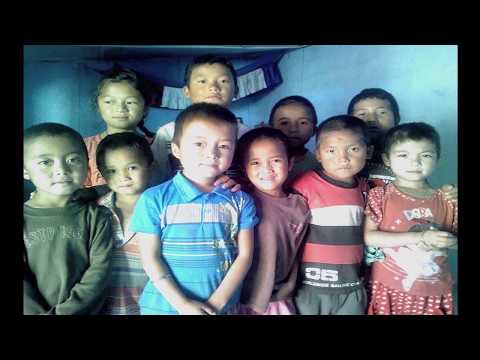
children in Nepal why should we care
about each other what happens if we
don’t what happens if we don’t care I
could stand here and for hours tell you
the events of our world that illustrates
the decline of our moral character but I
don’t need to do that you all have eyes
and ears you know what’s going on in the
world you know that here for and about
each other it’s damaging and corrosive
not only to our interpersonal
relationships but possibly to the
so tonight I’m going to talk a little
bit about altruism and compassion I
teach altruism through the critical
thinking classes in the philosophy
department here at Cerritos community
college in Norwalk and I am also blessed
and so proud to be the faculty advisor
of the altruism club here on campus and
in my spare time I actually run a small
nonprofit group in the country of Nepal
so people today think that young people
I’m not going to call the Millennials
because I’ve learned they don’t actually
like to be called that people think
today that young people are less
altruistic and more self-absorbed and
that makes me laugh because that’s been
said of just about every single
generation at least right in the modern
times I work primarily with 18 to 30
year old and I have to tell you I work
with the most amazing group of young
people their civic minded their
collaborative and they really value help
amazing to work with them few little
nerdy moments here just to kind of get
some context to what I’m saying in 2008
Harvard University found out that sixty
percent of young people wanted to go
into public service in 2009 the center
for information and research found out
that young people were volunteering at
historically high rates and in 2010 the
Pew Research Group did a study and they
found and this is very interesting to me
that young people valued helping others
more than having a high-paying job and
that last little bits especially
interesting to me because I talked to my
students about the exhaustion that comes
from pursuing a consumer-driven
lifestyle we all know this right you buy
green TV you get it home you put it in
your living room and after a few weeks
you’re like that my living room get
bigger this TV suddenly doesn’t seem big
enough for me maybe I need the one
that’s Kurt right we are so messed up by
consumer
ism or you get your new car you drive it
a few months and then what happens like
I wish I’d gotten that other model you
know all of a sudden I really need a son
really important I have son while I’m
driving a motor vehicle it’s a really
important thing so I talk to my students
about how helping other people can
actually fill us with happiness and give
us something meaningful it’s instead of
something superficial and kind of
shallow and material and happiness is
important because when we’re happy we
tend to be more effective helpers and
reason since I teach critical thinking I
have to mention reason right give ode to
reason the ability of our minds to
assess and understand evaluate and then
make good decisions reason is also
important because it allows us to
understand that the happiness of other
people is also really important right so
when people around you are thriving and
flourishing happiness goes up and
suffering goes down what a wonderful
thing in the world right sometimes I
asked my students can you be truly truly
happy when others around you or not and
of course there’s always a few who say
yeah yeah that’s right a few most of
them though report to me that the
happiness of other people is very
important to them so isn’t engaging in
behaviors that increase happiness and
so what I’m kind of talking about
tonight is part of my holistic teaching
model and is really founded on the idea
that we can connect ideas like
compassion and social activity with
academic subjects like sociology
psychology and even critical thinking
this teaching philosophy is also founded
on the idea that students get something
positive for their own personal identity
through the meaningful actions that we
engage in we find that these kind of
pro-social behaviors of generosity and
giving really give the students some
kind of purpose in their life and we see
that by connecting them to a club on
campus and then to our local community
that they actually begin to feel as if
they’re part of something larger in the
world so this is a phase just a couple
other nerdy little moments here there’s
some studies by a man named John Rushton
who found out that all tourism most
likely has an evolutionary origin but
also that altruism may be taught
especially through modeling the behavior
so I find this very interesting because
the altruism club here at Cerritos
College organically grew from my
conversations in the critical thinking
classes that I teach I also discuss my
work in Nepal I discuss being a
compassionate activist and I’m also part
of the effective altruism movement I
don’t know if anyone doesn’t know what
that movement is please go check it out
but effective altruist use critical
thinking is one of their core principles
in order to make really good decisions
Before we jump into activities right
sometimes our heart is willing but maybe
we don’t have a good plan and then
things don’t always work out so this is
really one thing and kind of planning
out what we want to do before we do it
so the club kind of organically grew out
of my discussions in class we all
decided we wanted to do something
together and we started in august of
2016 we were deciding what projects that
we wanted to work on and we found out
that on our campus there is an issue of
students not having enough food and
nourishment so the club chose to work on
food insecurity issues for the year so
we’ve done many different projects also
critical thinking skills the way we do
right now we’re doing a survey we have
hundreds of surveys that have been
returned we’re going to be getting
several thousands and perhaps in the
future that data side some of our
altruistic projects
so what I can report though from
observing the students for a while
either in class or through the club is
that I notice its students when they
begin engaging this way seem to have an
increase in self-esteem sometimes
students begin getting involved in
student government I’ve had students who
then went on and took leadership
workshops and even took classes in
social activism so I find this phase of
their development very important because
working with students this way really
you kind of have to show students and
give them some confidence and maturity
but they really see the value in
developing these kinds of helping and
caring behaviors so this is an important
phase for them but in the long run it
tends to make them more confident
leaders and more sensitive helpers so
here’s a picture of our club in action
I’d like to tell you just a little story
about something that the club did and
this isn’t even about our altruistic
project that we did this is about what
happened the day before we did a project
at the end of last semester the students
decided that we wanted to make lunches
for people on campus before they went
and took their final exams so we had
some fundraisers we made a bunch of
money we went to costco if I could say
costco we went and we bought a lot of
food so the students were coming over to
my house we’re going to pack all the
bags the next day we were going to give
lunches out to as many people as we
could and by the way we gave 150 lunches
out in 20 minutes it was amazing what
happened those students come to my
apartment we get all the food out we get
everything all ready to go and I noticed
the students aren’t putting the food in
the bag and I’m thinking what are they
doing and I looked and they have pens
out and they’re drawing all over the
brown bags and I’m thinking what is
going on over there I did not tell them
what to do I did not know what they were
doing they spontaneously began drawing
little hearts and peace signs and
writing messages on the bags be inspired
you can do it Christmas breaks almost
here girl said she would and she did
they went on to google they start
writing
all these motivational messages all over
the bags and decorating them I was so
touched by this my students not one of
them said one word that day that I need
to get home and study which I have to
say probably is good because I prepare
them to not cram the day before so maybe
they were already prepared I don’t know
no one said the word I the whole day so
the next day we gave these lunches out
that was our altruistic project but to
me what happened the day before was so
special and you know why because I
watched the young people that I work
with they SAT there for hours and all
who was make the students happy the next
day they didn’t want to just put food
looks but they also wanted to make their
heart smile when students who came and
picked up their bags students I don’t
know if you could see this one here they
were walking away just looking at it
like what is this little special gift
that I have in my hand and it made the
students in the club so happy because
basically they knew they were dumped
doing something really full of joy and
kind of beautiful for the students here
so I have to tell you I have seen
altruism right in front of my eyes and I
see it every day here at Cerritos
College now you don’t have to get on a
plane and go to India and help the poor
to do altruistic acts right if someone
falls down you can help them up if you
see a professor with a big stack of
papers open the door for them maybe you
share your lunch with someone it’s a
very easy thing to do and i have to tell
you the altruism that i see going on
here with the students i get to work
with it’s a beautiful beautiful thing I
see them transforming I see them growing
I see them becoming more confident and I
see them also realizing that they’re
part of something so much larger than
just what’s going on here so we connect
them to the college we connect them to
the community but I see as we are acting
locally they begin to think globally
so i have to tell you the young people i
get to work with sometimes they are
underappreciated I find them to be
motivated intelligent and have this
tremendous capacity to care for others
it’s just I this is the blessing of my
life do be able to work here and work
with this population it really is so
please do not underestimate young people
they have so much to offer and the ones
i know are ready to get out there and
help transform the world with me so I’m
really excited about that so try to wrap
it up very quickly here today here we
are happy faces we also call ourselves
the CIA compassion in action that’s our
nickname so basically I would like to
end today with this it’s a paraphrase
people think this is a direct quote and
it’s not Aristotle said though educating
the mind without educating the heart is
no education at all and that is why I
teach altruism here at Cerritos
community college thank you so much [Applause]