
[Music]
I lived in Europe for about ten years
before coming back to South Africa in
2007 and what I saw in South Africa
puzzled me greatly there are millions
people that need homes and basic
infrastructure our country has all the
raw materials available to do it the
technology is nothing new it’s more than
100 years old to build core
infrastructure we have millions of
unemployed people who I’m sure would
like to build the infrastructure they
want to live in but we’re not doing it
why is that why are we not doing it well
I started researching this and I believe
I found the root causes and a solution
to this in 2011 and I’d like to share
that with you today
the solution is a bit mind-bending so
strap on your seat belts and let’s go
for a possible let’s look into her into
a possible future together so what’s
happening in the developed world they
have all the infrastructure they need
everyone has a home populations are
stable or declining they produce all of
the food they need
no one has much of one for anything what
are they focusing on what are they
investing a lot of effort into the
sharing of funny cat videos
a massive amount of investment into
leisure and entertainment millions of
YouTube videos reality shows cooking
shows travel all sorts of chit-chatting
and leisure and laughter an enormous
amount of investment as the economy is
moving more and more towards the space
what are they also doing they are
investing tremendously into the
automation of the production and
distribution of basic goods and services
so this is interesting what is the major
challenge that the developed world is
facing their major challenge for the
next 10 to 15 years is who gets what
from the automated production engine in
the past we used to determine this by
what job you have if you have this kind
of job you can get so much if you can
get this kind of job you get so much but
it’s looking a bit weird because it
seems like the world is moving to a
place where there are more people than
jobs so how he can you determine who
kids won one of the proposals is a
universal basic income but weird you
don’t have to work but you get a place
to live and food and stuff to live
without having to have a job it’s a bit
strange but crazy right well these are
the crazy people who are thinking this
was an excellent idea so maybe we should
pay attention to what they’re saying
what are they really saying I understand
that as the developed world moving to a
joi economy and they’ll be well advanced
on this road by 2050 the production of
and distribution of basic goods and
services automated a universal basic
income for everyone and the ability to
equitably share the remaining amount of
manual labour so what about South Africa
will we be able to migrate to enjoy
economy by 2030 well the first thing
we’ll have to do is to build the
infrastructure so how does that work how
do we both the infrastructure we need
homes the roads water circulation
although it normally plays out is some
property developers want to put up an
apartment building
I go to a bank and they say dear bank we
want to do this can you create a hundred
million ran for us to do this and the
bankers absolutely sure but we also need
to create the hundred million random
debt because that’s how our society
works every round of money is backed up
by a rand of debt so sure we’ll do it
but only if we think there will be
people that have jobs but can move into
the apartments because they need to pay
down to date so no jobs no debt based
money no building and that’s exactly
where we are what if the Asian Tigers do
to get over this problem
well they became the cheap manual-labor
of factory of the world and that’s how
they started along this road of
industrialization which enables them to
move in by 2030 to something approaching
a joy economy but as we saw the world is
automating everything no one is
interested in our manual labor let me
say that again no one in the world is
interested in our millions of manual
labourers no one so this opportunity is
gone this path does not exist anymore so
what are we to do how are we to solve
this problem so this is why we’re having
open slums growing all across the
developing world there simply is no
business case no one can figure out what
jobs these people are going to do so
that we can build the infrastructure but
we need what we need to do is to realize
that this joy economy thing is real it
is really happening and we need to make
plans that match the fact that this is
happening so here’s a plan let’s just
start building anyway I said worry about
date they just pulled the stuff we need
high-quality social housing
integrated neighborhoods modern cities
the same way as was done in Western
Europe and all the across the Asian
Tigers but how it must be financed it
and we were going to get the money from
we’re gonna use sovereign money so what
is sovereign money sounds a bit strange
but it’s money that we just create type
it into a computer when we use it to
coordinate ourselves to build the
infrastructure we need sounds a bit
cuckoo right yeah well these are the
crazy people but think this was a really
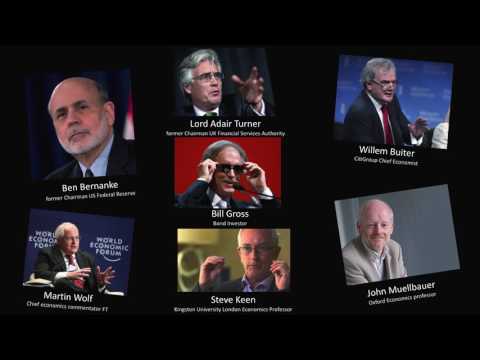
cool idea central bankers Lord add a
Turner Financial Regulator of the UK
economist professors all of our rules
say this is a super idea just create the
money that you need and start bowling so
it’s not only them it’s also think tanks
and nonprofits around the world are
saying they’re saying to the developed
world we’re not going to make it if we
don’t do this now imagine us in the
developing world we doubly need it as
much as they do so what would this money
be them what is this money that we would
create this money would be the
manifestation of our joint societal
commitment to migrate to a joy economy
by 2030 taking that first step to both
the infrastructure and it doesn’t
require massive risk taking or geniuses
because the technology is known it’s a
problem of coordination it’s a problem
of coordination so this money is not for
the enrichment of the fuel of a corrupt
so here’s another mind-bending piece
that money that we create it’s going to
be on an open digital blockchain based
platform and we will be able to see all
the balances we will be able to see
where every cent is from the point of
creation into perpetuity or until we
decide to destroy that money it’s the
only way that we’ll be able to move fast
enough with a societal commitment to
migrate to a joy economy what we need is
money forums and see
money for South Africa a new kind of
money on a new kind of money platform
not only do we need to have this money
so that we can start the coordination we
also need this coordination to be
efficient therefore we need to create a
national Kickstarter platform where
these construction companies can bid for
the work and we as citizens that are
outsourcing this work to these
construction companies can see every
single cent what does every brick cost
what does every laborer cost and is it
being done fairly and is it used for
broad economic activation across our
country so great let’s decide to do that
so we can get the infrastructure we need
we can massively reduce unemployment and
we can put money into the hands of
people to boost the economy
well that third one maybe it’s a bit of
a problem if you put hands to the money
of people they’re gonna buy stuff from
our trading partners because our
manufacturing industry is not so hot so
trading partners
it’s called trading not gifting they’re
gonna want something in return so what
do they say to us they say they they
give us two options they’re saying to us
either we’re gonna buy more of your raw
materials and you know what we don’t
think we really need any more or you can
become instantly brilliant at
manufacturing
better than us and then we will have to
buy our stuff from you well we’re not
gonna be able to do that there are
decades ahead of us so instead of
focusing on export we need to focus on
import substitution it’s the only way
that we will be able to control our
internal rate of collaboration because
at the moment our internal rate of
collaboration is tied to our rate of
export and therefore we stuck but how
will we compete or what is nature do the
little fish that are scared of the big
fish and I can’t compete they hide in
the shallows they’re very careful they
protect themselves what do we need we
need import tariffs Oh
import tariffs at anti-globalization Oh
crazy talk
okay well let’s see what the home of
free trade did they didn’t like the
British telling them what they can’t
allow to manufacture so they had a
little war the Americans won the war
their first Minister of Finance
Alexander Hamilton said this is how you
grow an economy and he laid down what is
now known as the Hamiltonian approached
the National Economic Development
massive investment into infrastructure
and protecting your innocent
manufacturing industry with import
tariffs but they weren’t quite done with
us yet in the South they had the slave
plantation owners and they were using
cheap manual labor to produce cotton and
sugar and exported to Britain and they
were didn’t care about this because they
bought all their toys from Britain in
the north they didn’t like this at all
they wanted to increase import tariffs
even more so that they can migrate the
economy to an industrialized one doesn’t
it sound like South Africa rich model
class exporting raw materials cheap
labour buying toys for overseas while
other millions are struggling for the
basics of life how did the u.s. solve
this
well they had a civil war the North won
they decided to increase import tariffs
and the rest is history this is what
they did after they beat the British but
increased the import tariffs to 17
percent after the north beat the South
they increased the import tariffs to 29%
for more than 50 years as they become
one of the strong players in the world
during the first and second world war
they reduced their import tariffs to 15%
and how they’re the biggest fish in the
world they are need import tariffs
anymore but they’re quite sneaky they
replaced import tariffs with massive
government subsidization of research and
development and industry so if America
really believed in a comparative
advantage and free trade they’d still be
the country known for cotton
and sugar but they took a different path
we have to take that same different path
we have to commit to a Hamiltonian
approach F national economic development
what do these import tariffs really mean
well I’m sorry rich folks in middle
class we can have to pay a bit more for
our imported stuff on the other hand
economists are always going around going
not enough savings rate not enough
savings rate we haven’t not saving
enough therefore we’re not investing and
therefore econ industrialize well done
correctly import tariffs can be exactly
that savings rate we need again import
tariffs would be our national commitment
to industrialize ourselves so that we
can move toward joy economy by 2030 and
because again it’s a societal decision
we put this money onto the new open
blockchain platform with open balances
but when we do this do we do it to
create jobs is at the point jobs jobs
jobs jobs no the point is we want nice
apartments where we can all live and we
want the basics for life so we are going
to use automation to the absolute
maximum possibility and we’re going to
use this money on an open Kickstarter
platform as well where these
entrepreneurs can put forward their
business cases and the business cases
will be for the automate production
locally of the basic goods and services
that will go into the homes we build but
it’s not about jobs it’s about
automation so we will also need to start
incrementally introducing a universal
basic income into South Africa because
it is the mechanism by which we will be
able to to equitably distribute their
main amount remaining amount of manual
labor in our country will this be really
easy
no it’ll be really hard because what we
need to do as a country is we need to
commit to a Hamiltonian approach of
economic development we need to create a
new kind of money
a new kind of money bag thing it means
we will have to fundamentally change the
way that we in South Africa collaborate
and that’s why I created the nonprofit
money forums unseen it is to inform to
communicate to collaborate and to lobby
our citizens business and government
because together we can migrate to a joy
economy by 2030 thank you
[Applause]
[Music]
Please follow and like us: