
I think the kids apparently up to and
including the tender age of meg Pearson
call it a humble brag but the last time
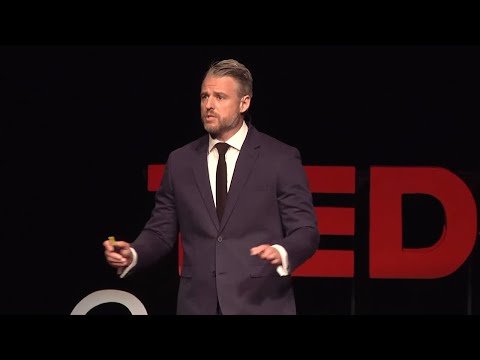
I gave a TED talk I look like this I’ll
give everyone four guesses as to what
the subject my talk was a my years a
real-life mrs. Doubtfire be the art and
science of not bathing ever see 50
shades of my premature gray or D duck
calls so a tremendous amount has changed
since this photograph personally and
professionally not just the length and
volume of the gray I’ve made some really
tremendous or really significant
personal mistakes I’ve also made some
great choices most notably I still
practice law just no longer with the
federal court I’m an Assistant United
States Attorney and I prosecute
violations of federal criminal law but
and I cannot emphasize this enough today
I’m merely illustrative in the state and
throughout the country there Assistant
United States Attorney’s who are better
more able much much longer tenured and
clearly capable of a whole lot more
basic personal hygiene than myself and
so I think it’s important probably
useful to start with a brief civics
lesson you all might recall from your
government class or not we have two
parallel systems state and federal both
with their own laws and jurisdictions
some of which overlap and some of which
are distinct the Department of Justice
is the law enforcement agency of the
executive branch of the federal
government which is the law enforcement
branch of our federal government the US
Attorney’s of the prosecutorial arm the
prosecutors for the Department of
Justice but in each of the respective
states so in the state we have one u.s.
attorney miss Beth Drake and then under
her various Assistant United States
Attorney’s like myself at the state
level or on your television you would
know them as solicitors or district
attorneys all this to say I’m an example
not necessarily representative of but an
example of many many more so do you need
to pause here real briefly for a quick
legal disclaimer certainly none of y’all
thought you were going to escape today
without some limitation of Liability but
everything I say is in my personal
capacity
my own personal view not any official a
particular view of the Department of
Justice the administration or any of
constituent members now by virtue of
your tenants here today you have
consented to a permanent lifelong
wiretap and on your way out a very very
deep body cavity search so it’s it’s not
any sort of news the recent and mostly
bipartisan attention given to the issue
of mass incarceration 1973 there are
roughly 200,000 prisoners in this
country as a 2015 there were 2.3 million
prisoners in this country we have four
percent of the world’s population but we
house 20% of the world’s prison
population this phenomenon has been
dubbed mass or over incarceration and as
I refer to the problem in criminal
justice a that’s the issue to which I’m
referring the symbol written work
redirecting much the public’s attention
on this issue is by a former federal
prosecutor Michelle Alexander called the
new Jim Crow there’s been a recent
documentary the 13th which powerfully
depicts this predicament has been a
number of TED talks already specifically
in the space Brian Stevenson the equal
justice initiative adam fossa
massachusetts state prosecutor and our
very own TEDx curator caroline caldwell
richmond and all these are necessary
reading for my talk although it’s not my
intent to revisit the underlying problem
it cannot be emphasized enough 2.3
million prisoners in our country rather
i’d like to pick up on this important
story and add some additional value in
perspective especially at this very
critical important political and
cultural time in our US history and so
i’d like to do three things first and
primarily i’d like to make the case that
real systemic systemic change is almost
always an inside job the societal
institutions themselves must be willing
to change either by force or feeling in
commiseration the revolution must be
reciprocated from the seat of power
second i’d like to do a little
show-and-tell about what federal
prosecutors are actually doing to
improve your criminal justice system and
third for all these reasons beg your
political and civic patience and calm as
to the first bureaucrats are
revolutionaries too we typically think
about societal change as revolutionary
in a function of the rebel and the
change
in the reformer King Gandhi the boys X
Snowden we think about militant
resistance versus nonviolent protests
cyber attacks
Selma bridge Standing Rock WikiLeaks
Anonymous we think about the people
versus the power Public Enemy bring the
noise fight the power class conflict we
think about those without any authority
versus those with authority we think
about this very moment in US history UC
Berkeley women’s marches Twitter
bullying Ferguson black lives matter we
think about the community vs. the cops
versus law enforcement versus the system
along with others I’d like to suggest
today that our reform and our revolution
can be community plus the cops plus law
enforcement in parallel with the system
indeed history suggests that it must
King marched and judges ordered Rosa sat
Johnson and Kennedy signed for every
revolutionary and community activist
along the picket line there was some
bureaucrat or sue or elected official on
the inside I think the greatest example
of a system revolutionaries Mandela
himself know persecuted reformer I would
suggest today in history has ever sees
so much power after suffering so much
persecution and declined so much
retribution and yet when he was released
from prison he worked within the
existing political system invite his
political enemies to the table
participated in the writing of a
constitution and used and delivered
reform through the vehicle in the
mechanism of democracy when he could
have burnt when he could have and maybe
even should have burned it all to the
ground the criminal justice system is
like an essential but massive naval
vessel out at sea not the Department of
Justice as a bureaucracy but literally
the entire systemic process it’s got
some wear and tear most people agree
that it’s off-course to one extent or
another has some barnacles maybe some
old technology and revolutionaries and
community activists have literally been
hanging off of its hull
scraping tediously individual barnacles
one at a time
maybe trying to paddle against its
powerful engines some even hope that
they can pirate the ship Caroline
Caldwell Richmond but it’s too big to
move by external force the crew itself
has to be a part of the redirection
where community entities and groups can
focus on one or two parts typically to
extreme frustration and consternation of
the criminal justice problem maybe early
childhood education or job placement for
individuals after they returned from
prisoner a prosecutor is actually
uniquely positioned to impact an
interface with individuals all along
what is called the sequential intercept
model or the whole ship so to speak the
sequential intercept model Maps a
continuum of five points of intervention
with citizens and individuals who
violate the law the first intercept is
prevention in law enforcement before
anybody ever violates the law can we
intervene in their lives and make some
sort of difference the second intercept
is detention at the moment where there’s
reason to believe someone has violated
the law
can we still intervene in their lives
and make a difference the third
intercept is courts in jail after
someone has admitted or it’s been proven
that they violated the law can we
intervene their lives and make a
meaningful difference
the fourth intercept is re-entering
after someone’s paid the consequences
for violating the law can we intervene
in their lives and make a difference in
finally community support can we
intervene their lives and make sure that
they never violate the law again which
is to return full circle to the first
intercept prevention in law enforcement
with some irony there is no entity
better equipped to impact it each point
along this continuum than law
enforcement not community activists
about educators church leaders not the
media where they can impact again often
great frustration at one or two points a
prosecutor can impact not completely but
in part at each point indeed in
rendering Community Safety which is our
mandate is our solemn obligation to make
exactly that kind of difference all on
the way in the words of my legal mentor
the Honorable Bruce ëhow Hendricks this
is not new in his ancient as part of our
common law heritage Heritage’s federal
prosecutors our duty is to the citizen
law abiding or not
to be aware of the use of power and have
the courage not to use power so your
federal prosecutors are in your schools
talking with students about bullying and
gun violence and the tremendous opioid
epidemic last year in the state 25,000
students were reached with those
messages your federal prosecutors are in
the community with state probationers
offering social services to incentivize
the to stay out of trouble and avoid
violating the log in your federal
prosecutors are in mosques and you with
religious communities have been the
target the victim of hate crime
discrimination in the court room your
federal prosecutors are charging more
proportionally and ighting nonviolent
offenders more carefully and where
appropriate looking for alternatives
incarceration like drug courts veterans
courts mental health courts and pretrial
diversion and six years of operation the
federal drug court in this state which
is one of the first most nationally
recognized of its kind has saved over
three and a half million dollars in
taxpayer savings by helping over 50
defendants maintain sobriety and avoid
lengthy prison sentences but even once a
defendant is sentenced the courtroom is
not the end of the intervention your
federal prosecutors are behind the fence
in juvenile facilities and state prisons
and Frederick tional institutions
talking with prisoners about their
release considering clemency petitioners
hosting job fairs helping with
identification and documentation
necessary for a successful return home
in the last 12 months over 800
individuals in the state have been
reached with those resources in this
state the point of the day is not system
players or federal prosecutors are the
most important or the only reformers and
revolutionaries and although as a
middle-aged white male government
bureaucrat I certainly almost
cartoonishly embody him I am NOT here to
shell for the man from the Civil War to
the civil rights movements in terms of
reform activists have said the most
important blood in US history but just
us a leadership has a critical motto it
says those closest to the problem or
closest to the solution but they are
furthest from the reach
sources and the power so today we need a
model of change in expectation about
revolution that all along this continuum
bring system resources to the problem
solver victims of the problem historical
victims of the problem alongside
historical keepers of a problem those
without authority with those in
authority and so no matter what you fear
see on your television these are the
faces of some of the individuals who
serve your country committed to better
and more complete justice in the
courtroom and in the classroom from
youth to post incarceration there’s no
more important time for the federal
prosecutor to seize their full and quasi
judicial responsibilities as curators of
Community Safety and criminal process to
be system players that honor the system
even as they seek to improve it here the
revolution in the streets make it the
standard operating procedure on the
shelves so without taking a poll realize
today that the composition of this room
is more likely system player in your
respective spheres of influence that
reformer more rule-follower than it is
revolutionary so the question is how you
be a part of bringing your system
resources to those without any
[Applause]
[Music]
you [Music]