
today is a beautiful day to speak my
asemu le o he said quit treatment on
autumn or as a way enough time on us
that South Korea tonight Sanaa Kwantlen
so when people talk to me as I look what
does reconciliation mean to you what
does it mean to the Aboriginal peoples
and when they ask me that speaking my
language that I TED talk that’s a moment
of healing that’s a moment of us taking
another step forward and that’s another
moment of us making our circle just a
I’m from Kwantlen First Nation and we
are located in Fort Langley BC we’ve
been living beside the Fraser River
since the beginning of time
since time immemorial and my ancestors
have been there for the first sunrise
and the first sunset so when we talk
about moments of healing those only come
in small moments right doesn’t happen
all the time was important to note that
the trauma is still here the trauma is
still here for how we’ve been mistreated
for way too long and that a lot of
West’s are still broken a lot of us
still hurt a lot of us are depressed sad
addicted and some of us chose not to be
here anymore
so it’s important to acknowledge those
small moments of healing but also
acknowledge that Kwantlen and the trauma
is still there when I think about
Kwantlen I my hands go up to our editor
each if Marilyn Gabriel when she
received her hereditary chief Dane ship
back in 1994 six months before her
father passed away he was hereditary
the first thing she did was reclaim our
name back so we were now known again
that’s Kwantlen first nation working in
the school districts as an Aboriginal
support worker I know it would be
incredibly embarrassing and just
degrading to me to go into the classroom
and say and so weighing up to neaten
Langley Indian ban number six so that
was the name that the Canadian
government gave to us as just one of the
hardships that we had to face so
reclaiming our name is a great thing and
our hands go up to Chief Marilyn for
that the second step was even more
difficult we had this she had to ask the
elders to come back imagine that’s where
the hardship is still there the silence
is still there and people don’t want to
listen so how we’re going to ask the
elders to come back when they’re still
broken when they’re still hurting and
they can’t even deal with living with
their own family members they don’t even
know how to say I love you or I’m sorry
or that they think it’s their fault for
the way they’ve been treated so that was
incredible thing to have the elders come
back and teach us reteach us our culture
that we lost we teaches our language and
they had to learn how to love for the
first time as an elder and they had to
share their story which wasn’t easy they
had to share their experiences so other
people like us too they can know what
truly happened we started with six
elders when she asked them now we have
30 elders at our table running our
community and all our business
organizations and all our business
enterprises so our hands go up to chief
Marilyn and our elders I’m here because
the next step was learning our cultural
practices again learning how to regain
our songs that we lost and we had to
make our visits to the river our hands
go up to Chehalis my family into haleyss
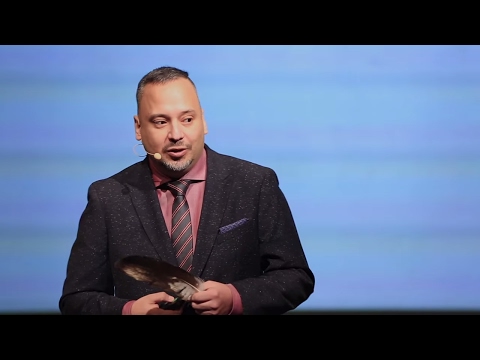
this feather just came this ego feather
just came from Chehalis just the other
day and the Chehalis
our family from JLS would we would go to
their smokehouse and do the winter
dances over there and learn how to do
the dances and know how to rehab
ourselves too so that we can move
forward and do the cultural work and
spend time with our family the next step
was regaining our language and that came
with help from Musqueam for MacWilliam
with the help from Musqueam we helped
regained our language that we thought
that was once going to be lost but it’s
still here and we know it’s still here
because it’s being taught in the
language school district language school
district has their first ever hung
Camino teacher fern Gabriel says mallet
teaching our language that we thought
was once lost so those are all small
moments of healing that help us move
forward how to rebuild relationships a
very tough thing to do because we had to
rebuild our relationships within our own
family right I know some families can
relate to their difficulties within
their own families and knowing that
everything’s not the way it should be
but we had to rebuild relationships with
our family with our selves and then try
to go out and say and tell people that
were ready to share our teachers with
you share our culture with you share our
language with you and when I think about
all the moments of relationships that
were rebuilt with Kwantlen and elder and
non-native people it wasn’t
instances that they came up there and
say hey listen we need to reconcile
let’s be friends again everything’s
going to be great it doesn’t work that
way so one moment I think about is South
Korean family they had just moved from
South Korea to Canada and they were in
Langley Fort Langley and they wanted to
know the true history about the
Aboriginal peoples of Canada and they
came to our band office and asked the
people there’s is there any cultural
lessons and teachings any courses we can
take we really want to acknowledge and
honor your family and the first peoples
of Canada and we want to know about the
true history what can we do to learn
this and it just so happened that our
language teacher was there and the band
offices and she said he should come to
our language classes which is every
Monday night and our band office and
they’ve been learning our language with
the elders and with our qualen members
and our Kate’s team members and they’re
learning the language with us so we
thought it was an amazing experience not
only is it the Helders have come back
but people from different countries want
to know about our little reserve it
warms our heart and that’s when you know
a relationship is rebuilt right there is
when when that’s developed over time and
one that you don’t rush it’s not
something that you can measure it’s not
something that you have high
expectations of of thinking about and it
just happened that way and then during
Christmas they brought a whole bunch of
care packages to our reserve and just
stuff that we need to get through life
right because we know that some were
going through a difficult and hard time
and just gained through life is hard
enough so they’ve brought packages to
single mothers the single fathers the
bachelors
the elders and when you see the look on
the elders face when they received this
care package is a moment in your life
you’re never going to forget and when
you see how the elders are healing and
learning to love and knowing that other
people care and are sincere and genuine
and that’s when you know a relationship
is truly rebuilt we need to listen to
understand instead of listening to reply
I know is it something to be a part of
because we’re all using social media
right now right I see it so we’re in a
moment where reconciliation means the
aboriginal elder elders and the
Aboriginal people have regained their
voice they regain their strengths there
were proven that they’re resilient and
we just need people to listen to
understand instead of listening to reply
right because we know through social
media and what happens on when CBC
posted in an article about anything
related to indigenous people they have
to block the comments because people
feel the need to reply and let us know
how they truly feel so it’s important
that we listen to understand and we
think about social media social media is
used by many many people so there’s that
the urban native versus the resonate of
just adds more confusion and insight to
what we think of as what reconciliation
may be right and we’re starting to find
out a lot of members are starting to
make their way back to their traditional
territories like myself and my mother my
mother is a residential school survivor
and she left Fort Langley she left
Kwantlen at the age of 18 and she didn’t
come back she didn’t come back for
so after that long time and you’re in
your 60s and getting into your 70s you
have to relearn your culture for the
first time right but yes I understand
that there’s certain protocols and
certain teachings that we need to
relearn and we have to relearn our
language and for those who are trying to
make their way home and for their
families who identified as not being
native but they knew what their native
and it was a secret there’s a time now
we’re in the generation of
reconciliation where we can be proud of
who we are we can be qualms qualms we’re
gonna be strong we can say we’re native
I can come up and speak my language and
in public and not get in trouble and
knowing that the government is not going
to take me away from my mother and
father I’m the result of the government
not taking me away and look at the work
I’m doing now that’s all thanks to the
elders but there’s also key to note that
those who are making their way home back
that the image that you have in your
head is not going to be the same way of
what it’s going to play out in life and
there’s going to be difficult
conversations to be had and you need to
be prepared for that and know that the
trauma is still there but there’s small
moments of healing that help us move
forward day by day and when we say that
we all need to be part of the same
circle urban natives resonators try to
evaluate our expectations learn our
teachings learn our language learn that
there’s different protocols and
different teachings and different
communities right and this also has to
do with non-native people – with the
rest of Canada and to know that even
though there’s been hardship there even
though there’s been a lot of belligerent
things said they are still allowed to be
part of our circle –
so when I think about the circle we just
got to do it
start with one small circle and then
make the other circle a little bit
bigger I think about now they’re
bringing us down to the Fraser River
throw in the rock in the Fraser River
and he says what do you see I see a rock
in the river
there’s no look at the circle where the
rock is the circles getting smaller and
there’s other circles getting bigger and
bigger and that’s what we need to do so
when we think about 150 years plus 150
plus that’s Canada Day celebrations
coming up we know that it’s going to be
some difficult conversation has not
everyone’s not going to share the same
view right and that there’s gonna be
some upsetting things set so we need to
get prayer be prepared for that and that
we know that for the Aboriginal peoples
of Canada when we think about 150 years
is 150 years of pain for us but we’re
celebrate now celebrate at a TED talk we
want to celebrate our language we want
to celebrate our culture we want to
celebrate our teachers but I also know
that there’s some stuff that is just for
my family there’s some stuff just for
other families right so with the time to
celebrate the time to honor the elders
our ancestors there’s a time to honor
the Aboriginal people of Canada and my
family for an Aboriginal person it’s
absolutely key to know where they’re
from that’s how they gained their
prestige and status and it doesn’t
matter if they’re from Vancouver BC or
atewa Scott and I weigh enough to neaten
Kwantlen I am way look and I am from
Kwantlen and I want to show you this
the field
here
you and here
I heard here
here
[Applause]
and here
here
yeah
and here
[Music]
I’d uh
here
here and here
[Music]
this TED talk is dedicated to the 6,000
children who never came home my mother
in our Kwantlen elders hey sepka hey
sepka all my relations [Applause]