
live in about the plants and animals
around you but what do you know about
what you can’t see about life too small
to catch with the naked eye only a few
steps away from you there are unknown
territories waiting to be explored today
I will take you on a journey inside the
micro world I’m a photographer and I
make portraits of microorganisms my work
is being used in art exhibitions as well
as for science education and I helped
create the first Museum about microbes
in Amsterdam now where shall we start us
our journey what do we need first of all
a microscope and I happen to have one
with me this is the microscope Antony
van Leeuwenhoek used with this
he discovered the micro world in water
from a lake it’s the birth of
microbiology and by pure coincidence I
happen to live at the exact spot
reverend layman Luke did his great
discovery the first microorganisms he
described he found he described as green
coils regular green tendrils that’s the
exact word regular coils about the
thickness of a human hair made out of
little balls it’s been a bit of a
mystery what they were but recently I
discovered their identity they are
cyanobacteria that’s when I learned you
don’t have to be a scientist to make
discoveries and did you know that Walt
let’s dive into the micro world and find
out more we are in the lake now with
cyanobacteria these organisms were the
first to use light as an energy source
long before the plants evolved the
cyanobacteria created the oxygen in the
Earth’s atmosphere they are very
important to us without them we wouldn’t
be there nowadays there are many other
organisms that feed on sunlight
we call them algae the best architects
in the micro world are lv2 the diatoms
you may think that humans are good at
architecture the diatoms master did
millions of years before us and they
built their houses of glass let’s travel
further in case you hadn’t noticed many
algae move they use beating hairs to
swim towards the sunlight or to avoid
predators because life is hard when
you’re only one twentieth of a
millimeter so many organisms many algae
form colonies to grow bigger and bigger
Volvox can grow to the size of one
millimeter algae are great but my
favorite microorganisms are the ciliates
what would a micro Safari be without the
giraffe of the micro world luckily
maravilla
alors it can stretch its body to the
extreme so watch out in the front rows
it’s a predator we are now at the bottom
of the lake where paramecia graze on
bacteria what they don’t realize is that
lurking there is a fearsome hunter the
amoeba amoebas are not just simple blobs
yes this one actually grabs the
Paramecium compared to us they may look
simple but isn’t it much more admire
about how they cope we humans need a
huge complicated body made out of
trillions of cells to eat a simple
sandwich
amoebas don’t need all that one cell no
brain still they’re capable of very
surprising behavior the miniature jungle
on the water is dangerous place when you
are a company la and your arch enemy
truck Helius is approaching you
you don’t need fangs or claws when you
have a big mouth it’s actually not a
true mouth turkey leus engulf its prey
and shoot some poisonous darts into it
fix them to paralyze it silly aids are
amongst the most advanced microorganisms
every Safari needs scavengers to OFI
Alina’s are feasting inside the remains
of a dead organism the extreme
flexibility helps them to reach even the
narrowest parts and the most surprising
thing is yeah that number 2 will follow
its friend almost immediately
look I wouldn’t call this consciousness
but it’s clever for a single cell
there are also multicellular true
animals of microscopic scale the
rotifers they invented the wheel no they
didn’t if it’s the hairs they used to
sweep in food particles but one group of
rotifers is special they have discarded
the male’s
there are no there are only females yes
it’s possible
males are so overrated we don’t really
need them so ladies next time a man
tells you what to do remind him of the
rotifers are you already feeling at home
in the microworld some of these micro
animals can even have a relaxing effect
on you
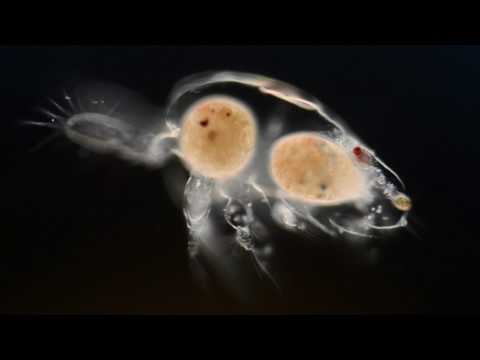
don’t you want to have this water flee
as a pet the microbe dressage is very
hard you can even witness the birth of a
water flea look isn’t that amazing the
microworld is full of amazing characters
okay
some are scary okay we are now at the
edge between water and land what happens
if the water dries up the water bear can
form escape capsules that can with
withstand extreme conditions heat cold
radiation it can even be shot into the
vacuum of outer space it can last for
several decades like this impressive but
ultimate survivors are the bacteria
their spores can survive for millions of
years
eventually bacteria are the basis of
life it all starts and ends with the
bacteria we humans are just there as a
nice ornamentation we’re back where to
go next
how about soil life just press the heel
of your shoe in a petri dish and you get
a glimpse of what lives underneath our
feet we know so much about the moons and
the planets around us but what do we
know about the soil we stand on or those
aliens in the lake there’s still so much
to discover just around the corner not
just for scientists but also for
adventurers with a microscope so
remember you don’t have to be a
scientist to make discoveries even a
simple photographer like me to make
groundbreaking scientific discoveries I
end with my own contribution to science
my latest study about the musical
capabilities of the water flea
[Music]
[Applause]
[Music]
Oh
[Applause]
[Music]
[Applause]
[Music] [Applause]