
I personally grew up playing soccer and
still do and I can think of many
examples in which this sport or a coach
has shaped me as a child but just as my
experience as a sport are probably not
much different than any of your
experiences this is not what I’m here to
talk to you about today the power sport
I’m speaking about is a little bit
different the power I’m talking about is
the ability of a soccer field to take
away things such as housing status or
mental health diagnosis our sexual
orientation it’s the ability to create
pure equality and a 60 minute period and
the ability to restore humanity now I
know the ability to restore humanity it
sounds a little bit far-fetched so we’ll
break it down a little bit and we’ll get
you there I’m going to first share with
you all about the sports team i’m
currently involved with the kelowna
Kodiaks and we’re a local soccer team
comprised of individuals who are either
at risk of or experiencing homelessness
and the Kodiaks was started in 2010 by
Tom and Tiffany Maxwell who are sitting
somewhere out there today I can’t see
them and ran official program even from
the cold Kelowna and so our team gives
the opportunity to those who do not
usually get a chance to play in sport to
become a part of a team and as the
stories of those individuals that I wish
to share with you all today as I’m sure
they’re just a little bit different than
what we might be used to but before
diving into the stories I’ll give you
more of a background on this so-called
street soccer as I’m used to getting a
few confused looks when I first start
talking about the team street soccer is
actually a national organization and we
have street soccer Kelowna and there’s
also street soccer Canada and street
soccer Canada helps teams all across the
country compile these municipal
individual soccer teams and every year
holds a tournament and creates a
national team that then has the
opportunity to go play in an
international tournament called the
homeless World Cup which I’ll talk about
in just a few minutes and so street
soccer has its own style of game it’s
quite different than your average game
of soccer or football on any given game
there’s only three players and a goalie
allowed and probably one of the biggest
rules is that only two players can cross
that center
I’m which creates a constant three
verses to game which can be quite fast
in quite exhausting luckily the games
are only 14 minutes broken into two
seven minute halves so they don’t last
quite as long as you’re 60 minute game
which is good so I started volunteering
with a team about five years ago when I
moved from Calgary and I’ve had
incredible experiences along the way in
one of my first years here I gotta go
coach the Canadian woman street soccer
team and the 2012 homeless World Cup
which took place in Mexico City so what
is the homeless World Cup well just 20
street soccer kelowna and street soccer
Canada there’s street soccer teams all
across the world and every year 70 plus
countries come together and play in this
international tournament called the
homeless World Cup so it was founded in
2010 by sorry 2001 by Harold Mead and
Mel young and these two hundred
individuals attended an international
conference on homelessness and they left
so inspired by this event but also so
bothered that there is no individuals at
the event that it actually experienced
homelessness so that led them to
brainstorm they wanted to create another
experience where individuals who are
either recovering from homelessness or
had experienced homelessness could
attend a similar international
inspiration and so by the end of the
night and the end of their brainstorming
they came up with the idea of the
homeless World Cup and 18 months later
they held their first one in Austria so
these homeless World Cups they take
place in a different country every year
and we’ve had local players here from
kelowna go to places like Amsterdam and
Chile in Paris and for some of them that
was their first time ever being on a
plane and this year’s is actually taking
place in Norway in August so we’ll try
and send a player but if not this year
we always try and have one in the next
tournaments when I got to go to Mexico
City and coach in the Canadian women’s
team for the homeless or elk up there I
go to watch some incredible soccer it’s
probably some of the best soccer I’d
ever seen which says a lot because I
grew up watching a ton of soccer but
that wasn’t the only incredible thing I
saw when I was there when I was there I
every day I got to see these players who
were used to being walked past and
ignored on a daily basis be treated like
celebrities like being stopped
ask for pictures and autographs and they
were no longer being defined by their
housing status but rather their soccer
ability it was incredible and back here
in Kelowna I get a witness similar
things within our street soccer team
every week I get to see how these
players who are used to being ignored
and walked by they show up and and they
become a part of a soccer family I get
to see how a ball an open field and a
common goal strips away the daily
stereotypes that this population faces
and just like I saw in Mexico City I get
to see how they are no longer being
viewed and defined by their housing
status but rather their soccer ability
so maybe that opponent in the blue
jersey or that strong defender are
incredible forward or quite possibly
even their name so the Kodiaks we play
in a league here in Kelowna mostly
through the generosity of urban
recreation it might be familiar to you
guys great organization and we’ve made
some a lot of familiar faces in the
league most of the teams might look at
us and recognize this and they might
think that there’s something a little
bit different about our team maybe
because we usually have a cloud of
cigarette smoke following us or we have
people from under 16 2 + 50 playing with
us but the cool thing it has never
changed how a person or a team has
approached us I’d like to think we’ve
made many friends in the league and have
become quite a competitive team as well
and so the more I think about all this
the more it makes me question how we
currently view and identify homelessness
as a masters of public health student
I’m constantly learning about different
policies and programs and approaches to
deal with this marginalized population
but yet there is still something so
natural and simplistic about sport and
recreation that continues to prove
itself to me why does our housing status
become a part of our identity well for
the majority of us here it doesn’t I
didn’t come out today and start by
saying hi my name is Ashley Sagan and I
rent a townhouse nor did you sit down
with the people beside you and explain
that your house door a homeowner so if
I’m not being identified as a townhouse
renter then why are those who
experiencing homelessness identified by
their housing status well because it’s
different it’s what sets them apart from
the norma society
and although the lives live by those who
experience homelessness are quite
different than what you and I might be
used to to an extent that we will never
understand unless we were to experience
it ourselves is it different enough to
question how we welcome them into
humanity well sadly apparently it does a
study done by lisanna harris ken suzanne
fisk at the study of brain mind and
behavior princeton university they
looked into this and they wanted to test
the brain’s ability to dehumanize
certain groups and so using a functional
MRI they tested the brains prefrontal
cortex which is required for social
cognition to see if it would light up
when being shown different groups of
people so the participants were shown
different pictures of people and indeed
the prefrontal cortex would light up for
most groups of people except for those
which are called the extreme out groups
such as the homeless or addicts these
participants were also sewn pictures of
objects and similarly to the extreme out
groups the prefrontal cortex did not
light up so let me take out some of that
fancy talk and simplify their findings
their study was able to show that the
brain has the ability to dehumanize the
homeless population and view them to the
same extent as an object like the
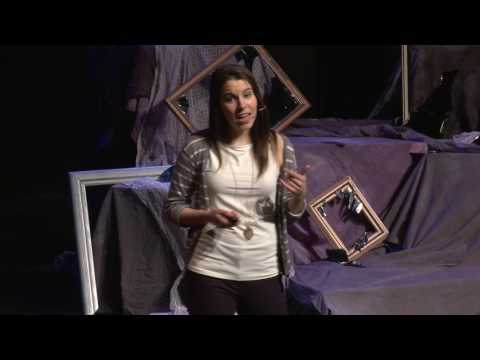
mirrors hanging behind me or the chairs
you’re sitting in and they did not do
this study on the entire population so
I’m not saying that we are all guilty of
this but I am saying that the brain has
the ability to do so which is quite
terrifying quite disheartening chapter
reading the study it kind of made me
understand not really comprehend not
really except but understand how some
homeless individuals can spend days on
the street deceased being walked why
because they are being viewed as a
lifeless object and it painted a picture
for me my head in a little bit of
scenario and I pictured what it might
look like if if something was to happen
to the Kodiaks maybe four before knowing
them having them sit there deceased
being walked by I pictured what a
celebration of life might look like for
them really just an empty room another
mortality statistic from the
Street and in my head I compared to what
it might look like now if something was
to happen to the Kodiaks not that I
would wish that on any of them but now I
see something very different now i see
very full room i see many from the
soccer community there and i can
guarantee that there would be many
hurting hearts grieving their loss and
this is exactly what the homeless troll
cop is striving to do they released
statistics from their most recent event
in glasgow scotland and reported that
eighty-three percent of spectators
interview now had a more positive
attitude towards the homeless population
after attending the event eighty-six
percent felt that the event raised the
issue of homelessness and ninety-three
percent felt that it raised the profile
of homelessness now with approximately
80,000 spectators attending that event
that is a significant amount of people
that might view this population and a
better light that is a significant
amount of people who might have their
prefrontal cortex light up the next time
they passed someone who might experience
homelessness so how why what is it about
soccer or sport in general that has the
ability to do this I would like to think
that it is because soccer is an
incredible sport probably the best one
around but I think I might be a little
bit bias and there might be a few people
disagreeing you on that one but I think
the one thing that we can all agree on
is that sport really is a universal
language it is one form in life where
people with different beliefs and values
and backgrounds can come together and
bond over the same thing it really is
one venue in life where things like IQ
nationality gender housing status they
don’t matter and when it comes to sport
there is no such thing as an extreme out
group so there’s extreme out groups that
I’ve mentioned they come from the world
of psychology and they’re actually built
off of the stereotype content model in
which the stereotypical warmth and
stereotypical competencies of an
individual or group of people are
assessed which then puts them into four
out groups and so if you remember from
the Princeton University study the
homeless was being defined as an extreme
out group so they are being looked at as
hostile and incompetent which puts them
in this
warmth and low competence and then
therefore the extreme out group so maybe
if we start thinking about the homeless
population in this sense we we might be
able to change some of those stereotypes
and then change this extreme out group
category that they fall under I can
definitely speak to the competencies
that sport brings out in this population
the teamwork strategy and logistics and
playing sport as I’m sure many of you
know those are just a few examples that
show their competencies I’ve had players
walk for over an hour on a regular basis
just to attend our practices or games
I’ve had players reach out to other
community members for funding or
sponsorship just to help me in my tasks
of managing the team I’ve also recently
had a player take on the task of
organizing the equipment bag in washing
the jerseys which is actually quite a
huge load off my back so I’m quite okay
with that and as for the warmth I can
honestly say that I’ve seen some of the
best bortz Minh ship add street soccer
events it’s my favorite thing about
being part of this is you see these
individuals who on the street and in
life have to deal with things on a very
different manner than we do constantly
surrounded by conflict negativity and
judgement when they get to that field
their height like high-fiving each other
helping each other up coaching each
other encouraging each other and they’re
turning the other cheek when they need
to I don’t think I could count the
amount of times that one of the Kodiaks
have been it has been a bigger person
some sort of refereeing or soccer
controversy and it’s not just me who
notices this I’m know I’m biased but
it’s not just me whether it be a league
manager or other substitute players that
play up for us I’ve had multiple people
comment on our team’s hospitality
willingness to help and just
encouragement and it melts my heart
every time so when I hear that the
homeless population is being defined as
a hostile extreme and competent out
group I cannot help but disagree it has
proven to me every week twice a week how
this is not the case and although I
understand that the general population
might view them in a different light I
would challenge any one of us living
with the daily circumstances and
struggles that they do would be no
different
so is my hope that after understanding
the profound impact that sport can have
on this population that that will
continue to be explored and integrated
into services for them but more
importantly it is my hope that after
hearing some of these stories today that
you might look at them a little bit
differently that you might question the
hostile and incompetent stereotype that
surrounds them and rather consider the
warmth and competencies that really do
exist within them I’ve had multiple
people ask me about how to help the
homeless and although there’s many
examples like donating at your local
food bank or serving a meal or
advocating for better services just
taking the time in a day to make a
conversation and build a connection can
go a long way look them in the eye find
a reason or a way to bring them into
your in group whether that be through a
conversation about sport or music don’t
pass them by look at them and give your
prefrontal cortex a reason to light up
thank you
[Applause] [Music]
Please follow and like us: