
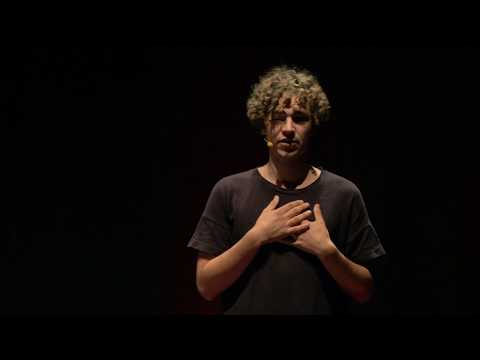
[Music]
so my story begins with me and my best
friend
Dario we’ve known each other for
actually since we made our first steps
on this planet and we wanted to meet
just to have a relaxed evening but it
turned out different than expected we
just wanted to watch a movie have some
pizza and we thought why not watch a
documentary why not find out how the
clothes were wearing are made and as the
Pisa was finished and the last scenes of
the movie ended and the Sun was slowly
rising on the horizon we were so
shattered
we were so hopeless because we had just
seen how our daily consumption ruins the
lives of the people behind our product
and we were fell so small we thought
there was nothing we could do that in
this very moment we decided never to
have children
we were 14 years old and today we’re a
little more relaxed but still this
feeling that there’s something wrong
with our consumption the way we treat
the people behind our product and the
natural resources this feeling stick
with us I was very lucky I could travel
this planet a lot I lived in Argentina
for a year I gave speeches in Malaysia I
travelled through India but there was
one experience that really stuck with me
and it was the central market of
Marrakech the medina because if you have
ever been in this magical place and
you’ve smelled the spices from all
around the world if you’ve ever here
heard the thousands of voices praying
and bargaining and singing and chatting
and laughing if you ever seen the
magical colors of the spices and the
carpets you just fall in love with it
and as you go through the small streets
you can actually see the people crafting
the products the carpets and the lamps
you get a small glimpse of their world
of their life and of their work and
buying something is so very different
from supermarket in Berlin where
everything just ends with a beep the
first thing you do when you buy a
product is you sit down and have a cup
of tea and then the shop owner will tell
you this story of his entire life where
he grew up how his family’s doing where
his wife is from and then he will tell
you everything about the product the
story and how it was made the history
the entire history of this product ever
and then and that’s really interesting
to me you understand that there are no
fixed prices on this market you yourself
decide how much the product is worth for
you
and then you decide who of the both
sides need them needs the money more and
this impression I took back to Berlin
Dario directly drag me to a
demonstration against Primark because we
thought thank you because for us it was
the symbol of fast fashion consuming
without even thinking about it
it was the first Primark ever to open in
Germany and in Berlin and it was quite a
funny picture actually because on the
one side there was these masses of
people all waiting for the countdown to
end for the doors to open and to sweep
in to flood in and grab everything
shirts that are worth less than a cup of
coffee and on the other side there was
us some 15 students with long hair and
guitarists trying to convince them to
change something about their life and it
might not be surprising to you but it
was very surprising to us they didn’t
even look at us
so in this moment Dario and I we were so
hopeless again because we had really did
everything to convince these people to
change something in their lives in their
consumption and as we sat there and
we’re 14 year old boys again we thought
no we’re not going to give up this easy
maybe it is not our task to tell the
people how to live their lives what’s
going wrong in this world
maybe our task is to listen first to
talk to the people and try to understand
them and that’s what we did we cross the
sides and we ask the people why do you
buy here well there’s not a lot of
affordable alternatives
ok do you know anything about how this
product is made how the people behind
the product live no clue never thought
about it how do you feel when I tell you
that only 1% of the price you pay
actually goes to the people behind the
product well if I wouldn’t if it could
make sure that the money actually goes
to the people I would pay more and this
idea stuck with me so a few days later
as I was sitting in a cafe and paying
the bill and tipping the waiter I
thought why can I only tip the waiter
what if I could give the money on in the
supply chain what if I could tip the
people that plucked my coffee the very
coffee farmers and I fell in love with
this idea and I’m so so very proud to
stand on this stage and say that from
this very moment
I’ve worked days and nights with an
amazing team to make this become reality
we have tipped me are trying to
establish the global tip imagine you
could tip those that made your product
the next time you buy coffee you tip
those deflect it because we think that
the first pillar for a fair
globalization is not only to tell people
what’s going wrong in the world it’s
giving people the opportunity to make a
difference the obvious question here is
how do we create transparency how can we
make sure the money actually goes to the
people that it belongs to how do we even
know who the be who are the people the
companies themselves they don’t know
that’s part of the problem right I’ve
struggled with this quite a long time
and happily I found out that there are a
lot of people that are smarter than me
for example there’s the amazing startup
called ever llege they’ve been able to
trace down the entire supply chain of a
diamond from the mine to the jewelry
store they can trace down every single
hand it has gone through and actually I
don’t own any diamonds and I don’t know
a favor will but if I do I want this
symbol of love not to spark conflict or
even war in another region and we’re
seeing the same thing happen with coffee
with foods and the fish because we
believe that the second pillar for a
fair globalization is transparency and a
beautiful side effect of this is that
for the first time we the consumers
actually understand the entire journey
of a product this shirt I’m wearing here
has probably seen more of the world than
myself statistics say that this shirt
has been through 140 stops before it
reached my shelf I’m actually quite
jealous of my shirt right now so maybe
we should keep that in mind the next
time we buy something if we really need
it
but I still think that’s not enough we
can give people transparency we can give
people the option of doing the right
thing of making a difference but we’re
still not living on the madina we cannot
sit down with for a chai with everybody
that made this shirt I don’t know about
you guys but I know what my friends had
for breakfast this morning because of
social media I know when they graduated
high school they show me where they’ve
been in on vacation I know their entire
life and even people I have never met I
have the feeling I kind of know them pop
stars and founders and activists they
carry me
in their pockets and every time they
share a valuable moment of their life
and their work I actually have the
feeling I really understand them and if
that’s possible for pop stars why
shouldn’t it be possible for the people
that made your product because even the
people in Pakistan of my age picking
cotton there have smartphones and
they’re on social media
I’m so happy to stand here right now and
to do my part to make this globalization
a fair one meanwhile Daario studying in
Lima how to live a sustainable life in
the 21st century and I feel trying
really hard I’ve been working on this
stuff for months now and they’re trying
really hard to find a beautiful ending
with nice red rakes and beautiful
picture I can draw I couldn’t find one
so I think what’s best is just I talk
from my heart and I think and I tell you
that I just think we can do this I just
think we can make this globalization a
fair one we can make the next century
amazing we can make the next century
essentially where I can proudly put my
children in we can make the space next
century I believe the most beautiful in
human history and more importantly not
the last thank you
you
so my story begins with me and my best
friend
Dario we’ve known each other for
actually since we made our first steps
on this planet and we wanted to meet
just to have a relaxed evening but it
turned out different than expected we
just wanted to watch a movie have some
pizza and we thought why not watch a
documentary why not find out how the
clothes were wearing are made and as the
Pisa was finished and the last scenes of
the movie ended and the Sun was slowly
rising on the horizon we were so
shattered
we were so hopeless because we had just
seen how our daily consumption ruins the
lives of the people behind our product
and we were fell so small we thought
there was nothing we could do that in
this very moment we decided never to
have children
we were 14 years old and today we’re a
little more relaxed but still this
feeling that there’s something wrong
with our consumption the way we treat
the people behind our product and the
natural resources this feeling stick
with us I was very lucky I could travel
this planet a lot I lived in Argentina
for a year I gave speeches in Malaysia I
travelled through India but there was
one experience that really stuck with me
and it was the central market of
Marrakech the medina because if you have
ever been in this magical place and
you’ve smelled the spices from all
around the world if you’ve ever here
heard the thousands of voices praying
and bargaining and singing and chatting
and laughing if you ever seen the
magical colors of the spices and the
carpets you just fall in love with it
and as you go through the small streets
you can actually see the people crafting
the products the carpets and the lamps
you get a small glimpse of their world
of their life and of their work and
buying something is so very different
from supermarket in Berlin where
everything just ends with a beep the
first thing you do when you buy a
product is you sit down and have a cup
of tea and then the shop owner will tell
you this story of his entire life where
he grew up how his family’s doing where
his wife is from and then he will tell
you everything about the product the
story and how it was made the history
the entire history of this product ever
and then and that’s really interesting
to me you understand that there are no
fixed prices on this market you yourself
decide how much the product is worth for
you
and then you decide who of the both
sides need them needs the money more and
this impression I took back to Berlin
Dario directly drag me to a
demonstration against Primark because we
thought thank you because for us it was
the symbol of fast fashion consuming
without even thinking about it
it was the first Primark ever to open in
Germany and in Berlin and it was quite a
funny picture actually because on the
one side there was these masses of
people all waiting for the countdown to
end for the doors to open and to sweep
in to flood in and grab everything
shirts that are worth less than a cup of
coffee and on the other side there was
us some 15 students with long hair and
guitarists trying to convince them to
change something about their life and it
might not be surprising to you but it
was very surprising to us they didn’t
even look at us
so in this moment Dario and I we were so
hopeless again because we had really did
everything to convince these people to
change something in their lives in their
consumption and as we sat there and
we’re 14 year old boys again we thought
no we’re not going to give up this easy
maybe it is not our task to tell the
people how to live their lives what’s
going wrong in this world
maybe our task is to listen first to
talk to the people and try to understand
them and that’s what we did we cross the
sides and we ask the people why do you
buy here well there’s not a lot of
affordable alternatives
ok do you know anything about how this
product is made how the people behind
the product live no clue never thought
about it how do you feel when I tell you
that only 1% of the price you pay
actually goes to the people behind the
product well if I wouldn’t if it could
make sure that the money actually goes
to the people I would pay more and this
idea stuck with me so a few days later
as I was sitting in a cafe and paying
the bill and tipping the waiter I
thought why can I only tip the waiter
what if I could give the money on in the
supply chain what if I could tip the
people that plucked my coffee the very
coffee farmers and I fell in love with
this idea and I’m so so very proud to
stand on this stage and say that from
this very moment
I’ve worked days and nights with an
amazing team to make this become reality
we have tipped me are trying to
establish the global tip imagine you
could tip those that made your product
the next time you buy coffee you tip
those deflect it because we think that
the first pillar for a fair
globalization is not only to tell people
what’s going wrong in the world it’s
giving people the opportunity to make a
difference the obvious question here is
how do we create transparency how can we
make sure the money actually goes to the
people that it belongs to how do we even
know who the be who are the people the
companies themselves they don’t know
that’s part of the problem right I’ve
struggled with this quite a long time
and happily I found out that there are a
lot of people that are smarter than me
for example there’s the amazing startup
called ever llege they’ve been able to
trace down the entire supply chain of a
diamond from the mine to the jewelry
store they can trace down every single
hand it has gone through and actually I
don’t own any diamonds and I don’t know
a favor will but if I do I want this
symbol of love not to spark conflict or
even war in another region and we’re
seeing the same thing happen with coffee
with foods and the fish because we
believe that the second pillar for a
fair globalization is transparency and a
beautiful side effect of this is that
for the first time we the consumers
actually understand the entire journey
of a product this shirt I’m wearing here
has probably seen more of the world than
myself statistics say that this shirt
has been through 140 stops before it
reached my shelf I’m actually quite
jealous of my shirt right now so maybe
we should keep that in mind the next
time we buy something if we really need
it
but I still think that’s not enough we
can give people transparency we can give
people the option of doing the right
thing of making a difference but we’re
still not living on the madina we cannot
sit down with for a chai with everybody
that made this shirt I don’t know about
you guys but I know what my friends had
for breakfast this morning because of
social media I know when they graduated
high school they show me where they’ve
been in on vacation I know their entire
life and even people I have never met I
have the feeling I kind of know them pop
stars and founders and activists they
carry me
in their pockets and every time they
share a valuable moment of their life
and their work I actually have the
feeling I really understand them and if
that’s possible for pop stars why
shouldn’t it be possible for the people
that made your product because even the
people in Pakistan of my age picking
cotton there have smartphones and
they’re on social media
I’m so happy to stand here right now and
to do my part to make this globalization
a fair one meanwhile Daario studying in
Lima how to live a sustainable life in
the 21st century and I feel trying
really hard I’ve been working on this
stuff for months now and they’re trying
really hard to find a beautiful ending
with nice red rakes and beautiful
picture I can draw I couldn’t find one
so I think what’s best is just I talk
from my heart and I think and I tell you
that I just think we can do this I just
think we can make this globalization a
fair one we can make the next century
amazing we can make the next century
essentially where I can proudly put my
children in we can make the space next
century I believe the most beautiful in
human history and more importantly not
the last thank you
you
Please follow and like us: