
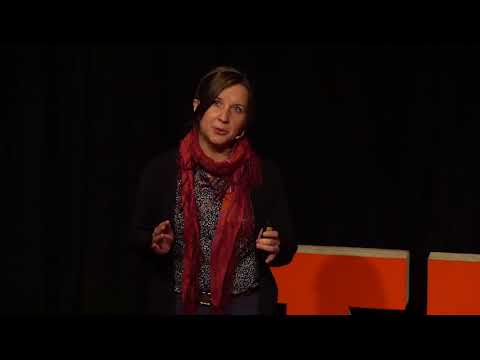
when I first heard that I had been
selected to give a TED talk I was amazed
but once I realized what had happened I
began to get nervous
mwah presenting on my passion a plan of
action a blueprint for better
I have better I have for 289 million
people visually impaired world wild
including 39 million people who are
blind and 280 million people whose
vision condition cannot be fully
corrected using spectacles or eye
surgery did you know that a blueprint
for a self-propelled cart came from
Lonardo da vinci in the 15th century and
it took more than 500 years to make his
big dream about self driven cars come to
pass but that it’s possible now there
are predictions that by 2040 50% of
vehicular traffic will be self driven
and it’s wonderful news especially for
people visually impaired because
self-driving cars mean for them more
independence and more freedom so how can
I stand shoulder to shoulder with renard
the da Vinci and speak about my
blueprint for the future well on one
level I can’t not if you are going to
compare us by our creativity and
scientific knowledge lonardo da Vinci
was one of the most creative people in a
history but on another level I feel
comfortable standing next to him as a
fellow human being
as a human being who believes we all
poses different talents and we all have
the power to help each other in changing
the world for the better I believe that
I have talents and I am absolutely sure
that each of you have talents too and I
am here today because I would love you
all to be involved in my plan
my name is Delta Sampson and I’m a
scientist involved in research on eye
health and today I’m going to speak
about blueprint for better eye health
and unlike for Leonardo I’m hoping to
see my blueprint realized a little
sooner as you may pick up from my accent
I am polish I was born in Poland and so
far have spent most of my life there
Poland is in Central Europe has
beautiful landscapes to blend history an
interesting culture and cuisine Polish
language has 32 letters a few more than
in English but apparently is seen as a
difficult language to learn and I’m not
sure why my husband David wonderful and
very smart native English speaker still
struggles to pronounce some polish words
but what it’s difficult in saying Streb
Josh in a short brief senior worse when
David performing it sounds like a snare
business Nizhny snorting you bring me
funny
so perhaps polish language is difficult
to learn however I can’t provide you a
very scientific answer to this question
because I am NOT a specialist in Polish
linguistics I am a physicist I obtained
my PhD in biophysics
nicolaus copernicus University in Poland
and for last three years I have
continued my research in the Lions Eye
Institute here in Paris my research
focuses on developing instruments and
metals to be applied by clinicians for
the study of retinal eye diseases
although human eye is very small organ a
size of the ping-pong ball it has more
than two million working parts and is
the second most complex organ in our
body just after the brain human retina
is a light-sensitive detector at a
backside of the eye and it’s very
important component for our vision
if the retina does not work properly
our vision can be impaired of lost
retinal vein occlusion is one of the
retinal disease that may lead to vision
lost and it’s caused by a blockage of
retinal veins although many advances
have been made in red in the treatment
of retinal diseases many challenges
remain one of the challenge is lack of
tools to monitor how single retinal
cells change as a disease progresses or
in response to treatment as a result our
knowledge of how disease affects the
retina is still very limited and
development of more effective treatment
is slowed however good news is that
there is many research groups in the
world working on this problem and their
work very very hard because motivation
is real motivation are people children
and adults who suffer from
disease and this disease not only affect
their vision but also impacts on their
well-being communication and
relationships unfortunately aging of
world’s population will cause big
increase in the number of people
affected so we have a growing number of
people who will become visually impaired
one day we have a children and adults
who offer feel lonely isolated from the
society we have a disease we don’t fully
understand without the right tools to
watch it what should we do I have spent
quite a lot of time discussing this
topic with my local and international
colleagues scientists and clinicians as
well as with people visually impaired we
all agree that blueprint for better I
have need to involve three aspects in
parallel diagnosis treatment and
well-being and that blueprint is us we
all working together for better eye
health visually impaired people society
schools doctors scientists and decision
making bodies so what is the plan first
of all wouldn’t be brilliant if we all
could become more empathic towards
visually impaired one schools and
teachers could teach children how to
form friendships with their disabled
colleagues to help address the
loneliness and equalize rights for
joyful life in the community there could
be special activities undertaken schools
for example
we could design and produce special
glasses that simulate visual impairment
give it to children with normal vision
and ask them to play some simple games
with their visually impaired colleagues
to be able really understand a problem
and therefore to build up empathy for it
is best by directly experience it
moreover as a society we should create
more opportunities to actively involved
visually impaired people in our
communities we should give them more
opportunities for paid jobs at the
moment an employment rate for them it’s
about sixty percent and visually
impaired people they want and they need
job as anyone else they want and they
need to be productive members of the
community for better I have we also need
to improve
I have systems starting with making sure
that doctors have opportunity to spend
high quality time with their patients a
few months ago my own father was
diagnosed with retinal vein occlusion
and his site is likely to worsen over
the coming years
he asked the doctor what next
and the doctor replied well there are
some therapies available that you have
to pay for but now you have to go
because there are other patients
weightings my that was left with many
unanswered questions what does some
therapies mean are there safe will my
vision come back
if we really want to understand disease
and provide the best treatments then
patients needs to be involved
effectively how am I doubt a person
without medical knowledge can decide
what next how he can be ready to spend
all of his savings to fight for his
sight patients need to feel that doctor
cares and they need to have their
condition and choices fully explained to
them for better eye health we also need
to improve a scientific environment the
place were actually all of this research
is happening many researchers share the
view that a pressure to obtain external
funding and fixed term employment
contracts often for a one year at a time
causes questionable research practices
the same pressure pushes them to spend
too much of their time and energy to
advertise their discoveries too
enthusiastically and too soon giving
false hope to their patients I have
heard so many stories from people
visually impaired that they heard on
news about breakthrough in AI research
they became very enthusiastic about it
perceiving hope for themselves which
quickly turned into disappointment
because advertisement was far ahead of
reality so our blueprint seeks to
replace competitive eco system with more
collaborative one and universities and
funding bodies needed to provide the
best research environment for
researchers and they have to make sure
that they promote transparent
honest and inclusive collaboration and
scientists should be ready to be open
sharing their metals and data because if
we want to put hypotheses about disease
then probably data from few patients
it’s enough however in the real clinical
practice variability in disease it’s so
huge that we really need to analyze data
from hundreds of patients if you want to
get this big picture of disease and in
the end of this process we need to
believe in our data and we need to
publish high quality papers so as a
scientist I’m urging you my colleagues
to be more transparent inclusive and
honest in your work and I’m asking you
universities and funding bodies to give
us more support as a daughter of a
wonderful person with retinal disease
I’m asking you doctors to spend more
time with your patients to provide them
with a full support they deserve and
they need as a human being I wish we may
all become more welcoming towards
visually impaired people if you know
that in your local communities there are
people visually impaired visit them
offer to go out perhaps form a
friendship in time I really would like
to see in each visually impaired person
the same enthusiast and joyful life as
displayed by this great musician Ray
Charles and I hope that for you too
thank you
you
[Applause]
Please follow and like us: