
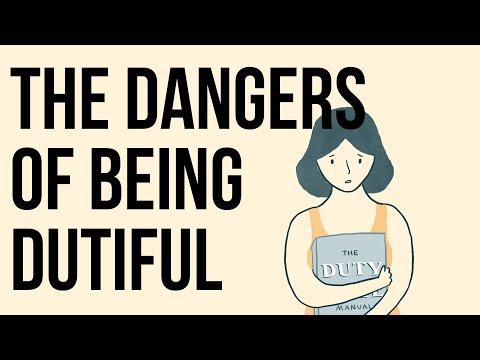
We start our lives very interested in happiness and pleasure
In our early years we do little except for our selection of positions that will satisfy us
Pursuing our fun targets with the help of small ponds, crayons, balls, dolls, and computers
And some small things that we find in the kitchen drawers.
Once anything becomes boring or disappointing, we simply leave it and go looking for other sources to enjoy, and no one seems to mind much.
Suddenly, at the age of five or six, we face a terrible new reality,
The “rule of duty”
This rule states that there are some things but a lot of things to do, not because we love them or see any meaning
But because other terrifying people with authority, and perhaps by our size, expect to do it
So these people confidently explain that we will be able to make money
Buy a house and then go to vacation after almost 30 years from now.
It seems somewhat important.
Even when we go home after school and start to cry and tell our parents
We do not want to write an article tomorrow, they may take the side of duty
They talk to us in anger and fear (and behind them a lot of fear) how people
Who can not end the simple imposition of volcanoes (and prefer to build a tree house)
They will never survive in adult life.
The questions about what we really enjoy or what makes us happy are still important to us from time to time in our childhood, but only a little.
Gradually these things are left aside in comparison to the world of daily study
And holiday and weekend breaks.
There is a fundamental difference: Happiness, hobbies and work.
It is not surprising that this fission becomes enormous as we approach university life.
Usually we can not comprehend to honestly ask ourselves what we would really like to do in our lives
Or what can be fun in the remaining years to us.
That is not the way we learned to think about it.
It has always been the rule of duty that governs our thinking 80% of our time on earth and has become our second nature.
We are convinced that good work must be very tedious, annoying and boring.
Otherwise, would not someone else pay us to do it?
The way of thinking emanating from the sense of duty has a high influence because it seems like a path to safety in a competitive world, and it is worrisome.
But the rule of duty is not really a guarantee of true security.
As soon as we finish teaching, al-Qaeda will actually emerge as a transparent barrier disguised as a virtue.
The duty becomes a danger to us.
The causes are doubling.
First, because success in the modern economy will generally go to those who show exceptional dedication and imagination in their work.
This is possible only when the individual enjoys a great deal.
Only when we are motivated
Essentially we are able to produce high levels of energy and brain capacity necessary for excellence in competition.
Work whose production was limited to duty alone would be soft
And less compared to that which resulted from love.
The other thing that happens when our work is compatible with our senses of pleasure
We become more understanding of the delight of others, they are customers and customers who depend on them work.
We can delight our audience to the maximum when we have gathered our feelings of enjoyment.
In other words, fun is not the opposite of work, but it is an essential component of successful work.
However, we need to realize that we are asking ourselves what we really want
(Without any immediate or essential considerations of money or reputation)
Is contrary to every hypothesis established by education that can preserve our safety
So it is rather frightening.
He needs a great insight and maturity to hold true:
We will serve others better (and we will be able to contribute more to society) when
We release the more personal aspects of imagination and the more truthful of our nature in our work.
Our duty can ensure a basic entry
But sincere and loving work can generate great success.
When people suffer from the rule of duty, it is helpful to take a huge turn
We ask them to imagine the idea they might think about their lives from the perspective of illness on their deathbed.
The idea of death in our chapter may be useful to the fears that dominate us and to what others think of us.
The perspective of the end reminds us of a still stronger order of duty in society
It is our duty to ourselves, our talents, our interests and our emotions.
The perspective of the bed of death can lead us to understand the hidden recklessness and danger
Within the folds of the rational way of duty.
Translation: team translate autrjim @
Please follow and like us: