
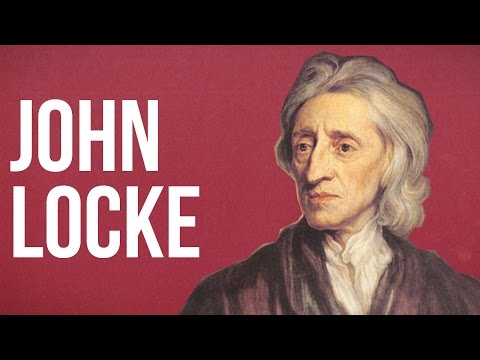
A 17th-century English philosopher
John Lock is remembered for his
wise and brilliant contributions to
The three big issues that continue to
are significant to this day how they should
educate children, who to rule
over us and what we need to do about it
people who are of different religious
ideas for us Locke was born in
The village of Somerset in 1632. He was 10 years old
when the English Civil War exploded
and his father became captain in
parliamentary army. King Charles
was publicly executed in 1649
a few steps from Locke’s
has studied at the Westminster School
The cries of the crowd heard from
the library was deeply marked by Locke. He went on
is to study medicine in Oxford and planned
to become a doctor, but his life changes
significantly when accidentally
gets acquainted with it
the ambitious politician Liberal Anthony Ashley
Cooper, known as the first Count of
Shaftesbury, who had come to Oxford to look for
treatment for the liver disease he had
Cooper offers Locke to move
in London to become part of his household
Offer is difficult to quit
part of Cooper’s Lock entourage begins
to participate in a large number of scientific
educational religious and political
debates. the day on the way he
also helps Shaftesbury’s healer to heal himself
liver problems that he wins
his gratitude for life. Locke’s first question
is what to do with people
who disagree with our religious views
detachment from the Catholic
Church that happens during Henry ‘s Eighth Century
16th century English Protestantism
begins the process of noisy doubt
to a religion that can not be easily stopped
because this threat can
to get out of control. There were arguments
that there should be a government
control over religion
Locke turns into one
of the most important defenders of Freedom
faith. In her beautiful essay on
toleration written in 1667 here he
preaches tolerance based on
three points in the first place, as the earthly
judges,
The state and, in particular, the people
as a whole, can not reliably evaluate
the views of competing religions
Second, even if they can
the application of a unified true religion
it would never work because it can not be
forced into his conviction by violence
and third coercion into a religious one
uniformity leads to many more social problems
from allowing Lok’s variety
argues that the ultimate goal of
the state is just to keep its calm
comfortable life of the people in society, but
that it has nothing to do with goodness
of people’s souls religion is personal
choice and the churches were voluntary
organizations that could identify their own
rules and be left to it thanks to
Thanks to Lok, that idea for
locking people because of their beliefs fell
totally in disgrace from the 18th
century other European countries are watching
with the envy of England, where in that in which
you just believe
it does not matter to your well-being.
this is a truly remarkable achievement
for one book by one person.
But Lock does not stop here
1689 he published a second work
the real treatises on governance
this is trying to answer the question who
must manage the country and what
legitimate basis,
at this point
it was believed that political power was obtained
directly from God, but
Thomas Hobbes is
claimed that the totalitarian power of
kings were justified by their ability to
In order to keep the state whole and prevent repetition of
the chaos that reigned. Hobbes insists
that in time before the mighty
governments and that it has been called
a state of nature. By painting the </ font> state
nature in the darkest and colors Hobbes
asks its readers to determine themselves
expectations about what a decent ruler is
it had to be something better than
the Stone Age savage
and rulers did not have the responsibility to
to guarantee religious freedom or human freedom
right, but now in the first monograph
Locke is completely destroyed
a biblical statement that God has created
kings, and in the second treatise he takes over
Hobbes’ ideas on the state of the art
nature. Locke agrees with Hobbs that
before and without government the world
he would be in a state of nature, but he
does not agree with what this place would be
he states that the world
would be more peaceful
That’s why people do not have to
agree and reject all of their rights.
In fact, they have a number
irrevocable or natural rights that no one
a ruler can never take them away. Locke
insists that people voluntarily
have relinquished part of their personal
freedom, but only to the extent that they are better
to preserve their rights and they could not
Expects to renounce these rights
entirely because that would be thought out
accession to society.
If a ruler begins to act as
tyrant and unfairly deprives his subjects
of freedom or property
they would be in full
you are entitled to withdraw your support to the ruler
removing it and forming a new one
government. Locke’s work
Extremely influences the development of the
Western societies and in particular
US Declaration of Independence.
For example, in his insistence on
separation of church and state and in
the right to carry a weapon that is
a clear descendant of Locke’s point of view
a people, should always keep as well
the right and the means of downloading on
government. Lok makes another great one
innovation this time in education. In your book
thoughts related to education
in 1693. That’s probably it
the influential book of education ever written
In 1684, the aristocrat Edward
Clark asks Lok for boarding advice
his son though he
he never had his own children.
Locke responded with
a series of letters that eventually
turned into a book Locke begins with the words,
that we all start life with
minds that are empty – taboo raza
he calls them in another way in another of his famous work
his essay on human understanding
from 1689 idea in contrast to the overwhelming
understanding that our minds are mounted at birth
with any ideas of religion
moral ethics and Locke government </ font>
claims that everything we think and believe
it actually comes out
from experience, from simple ideas which
we get from sensations in
the world
or internal reflections on processes
Locke’s own understanding is </ font>
to the belief that education is absolute
crucial to how people evolve. I think that
you can say, all the people we meet
nine out of ten are what they are good at
or evil useful or not, because of
Education Locke thinks we are
very vulnerable to the ideas people have
they put us in our mind when we are children
he wrote the little, and almost
insensitive impressions in ours
early childhood “that it is very important to have and
long-lasting consequences, he argues
the association of ideas we make while we are young
are more important than those made
later, as they are the basis
to ourselves, so he warns
against allowing silly servants to convince a child
that goblin spirits
related to the night
And that it will carry with you
these fearsome ideas. Lock is </ font>
our predecessor
the techniques of education in which they proceed according to
the assumption that everything is happening
to a child regardless of whether he spends well
in the zoo with us or get enough hugs
up to four years of age plays enormous
role in later age these ideas do not
appear in our heads so,
without necessarily knowing them
are the work of a wise philosopher
from the 17th century lived in England Lock also had
some remarkable thoughts about that, who
subjects should be included in the curriculum
He hates the idea of children learning
what he calls useless items such as
Latin Greek music or poetry. According to him it must be
learn practical things that
will help them in life.
This means science ethics business and what
we today call psychology-instructions
about how best we can calm ourselves to be
miles and understand others,
although he does not use the phrase directly
which should be studied in the “school” of life
Locke died in October 1704 he is one of
Europe’s best-known destination
continues to influence exclusively to this day
for him, we
believe in religious tolerance,
in that governments should not
tyrannize their subjects and that we are trying
so much to give our children
good childhood
Please follow and like us: