
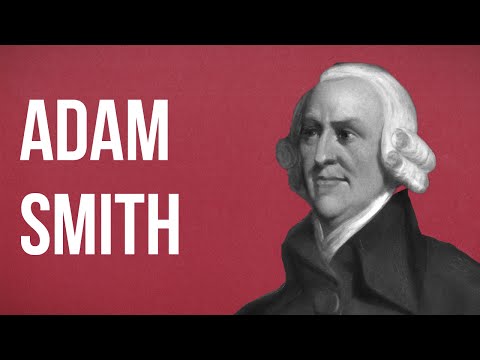
Adam Smith is almost our guide to one of the most pressing dilemmas of our time
How to make an economy more humane and more meaningful
He was born in Scotland in Kirkcaldy – a small manufacturing town – near Edinburgh in 1723
He was a diligent student close to his mother
He then became an academic philosopher and wrote a great book on the importance of empathy
He gave lectures in logic and philosophy of beauty
He was also one of the greatest thinkers in the history of the economy – in part because his interests transcended the economy,
He wanted to understand the money system because his primary ambition was to make peoples and people happier,
Smith is still an invaluable leader for four ideas:
When one looks at the modern world of work, two facts emerge:
The modern economy produces wealth in unprecedented quantities,
Many ordinary people find work somewhat boring and (basic complaint): meaningless
In fact these phenomena are closely related, and since Adam Smith first understood them through his theory of specialization
He saw that in modern business, tasks performed by one person in one day
It is possible to divide it profitably into many tasks performed by many people on full functions,
Smith also hailed this as a fundamental development: he predicted that national economies would become richer as their workers were specialized
One sign that our world is now very rich, he tells Smith, every time we meet a stranger at a party is unlikely to know what their work is,
The extreme craving for incomprehensible job titles – logistics supply manager, packaging coordinator, communications officer and education – proves the economic logic of Smith’s view
There is, however, one problem with specialization: the meaning.
When businesses are small and operational, we have a sense of helping others easily
But, when everything is manufactured, the person ends up as a small cat in a giant machine
Whose general logic is likely to be absent from people’s minds by the decline in the organization.
A company with 150,000 employees spread over four continents makes things that require five years of idea to connect,
Will suffer to maintain any sense of purpose and cohesion,
So Smith realized that the heads of contemporary professional companies had an additional responsibility to their workers
To remind them of that goal, role, and absolute status of their work
Smith’s era saw an evolution from what we now call consumer capitalism
Manufacturers began to turn luxury goods to expand the middle class has been appalled by some commentators,
The philosopher Jean-Jacques Rousseau wished to ban luxuries from his home in Geneva. He was particularly impressed with old Sparta
He argued that his city must emulate its military and military lifestyle
Strongly opposed, Smith told the Swiss philosopher that luxury consumption actually plays an important role in a good society
– They generate surplus wealth that allows communities to nurture their most vulnerable members,
Consumer communities, regardless of their futility, do not allow young children or adults to starve. They can provide hospitals and subsidize the poor.
So Smith championed consumer capitalism on the grounds that it had served the poor more than societies dedicated to the higher ideals,
This tells us that Smith held some great hopes for the future of capitalism,
He did not want to stay stuck at the petty level forever
He noted that humans have many high requirements that are currently outside the capital project, including:
Our need for emotional education, for self-understanding, for beautiful cities and for rewarding social life
We hope in the future that we will learn to generate substantial profits from helping people in truly important and ambitious ways,
Properly developed capitalism should not serve our material needs while motivating us to buy trivial things,
You must make money from goods and services that lead to real satisfaction
So far, the big question has been how to make the rich behave properly towards the rest of society,
The Christian answer to this was: Make them feel guilty
At the same time, the answer was radical, leftist at the time and now: raising taxes.
But Smith objects to both methods:
The hearts of the rich are likely to remain indifferent and high taxes will simply lead the rich to escape the country
It was suggested that the opposite of what a person expects is not money is what the rich are interested in, but appreciation and respect,
Wealthy people accumulate money not because they are greedy physically, but in the first place to be loved and accepted
So instead of taxing the rich, governments must understand the vanity of the rich and their motives
And therefore should give the rich a lot of honor and status – in return for doing all the good things that these narcissists will not be bothered by the habit,
Such as funding schools and hospitals and paying decent salaries to their workers,
As Smith said: “The greatest secret of culture is to show vanity for appropriate purposes”
Now we feel that big companies are very sinister to us,
They are natural targets blamed on low-wage businesses, environmental violations, and nasty ingredients
But Adam Smith knew that there was an unexpected and more important element in his responsibility for these ills: our taste.
It is not the company that corrupts the world in the first place, it is our desires and they only satisfy it.
As a result, the reform of capitalism depends on a strange but crucial task: consumer culture,
We need to learn to ask for higher quality things and pay a suitable price,
The price reflects the real burden on the worker and the environment
A good capitalist society not only provides choices for the consumer but also teaches people to exercise this choice wisely,
Capitalism as suggested by Smith is saved by raising the quality of consumer demand
The economic situation of the world can someday appear wrong and very complex and end up collapsing into despair and negativity
Adam Smith gives us confidence and hope. His work is full of ideas about how human values can be reconciled with business needs,
He deserves our constant attention because he was interested in the issue that has become the top priority of our time:
How to make an economy that is both profitable and civilized.
Translation: team translate autrjim @
How to make an economy more humane and more meaningful
He was born in Scotland in Kirkcaldy – a small manufacturing town – near Edinburgh in 1723
He was a diligent student close to his mother
He then became an academic philosopher and wrote a great book on the importance of empathy
He gave lectures in logic and philosophy of beauty
He was also one of the greatest thinkers in the history of the economy – in part because his interests transcended the economy,
He wanted to understand the money system because his primary ambition was to make peoples and people happier,
Smith is still an invaluable leader for four ideas:
When one looks at the modern world of work, two facts emerge:
The modern economy produces wealth in unprecedented quantities,
Many ordinary people find work somewhat boring and (basic complaint): meaningless
In fact these phenomena are closely related, and since Adam Smith first understood them through his theory of specialization
He saw that in modern business, tasks performed by one person in one day
It is possible to divide it profitably into many tasks performed by many people on full functions,
Smith also hailed this as a fundamental development: he predicted that national economies would become richer as their workers were specialized
One sign that our world is now very rich, he tells Smith, every time we meet a stranger at a party is unlikely to know what their work is,
The extreme craving for incomprehensible job titles – logistics supply manager, packaging coordinator, communications officer and education – proves the economic logic of Smith’s view
There is, however, one problem with specialization: the meaning.
When businesses are small and operational, we have a sense of helping others easily
But, when everything is manufactured, the person ends up as a small cat in a giant machine
Whose general logic is likely to be absent from people’s minds by the decline in the organization.
A company with 150,000 employees spread over four continents makes things that require five years of idea to connect,
Will suffer to maintain any sense of purpose and cohesion,
So Smith realized that the heads of contemporary professional companies had an additional responsibility to their workers
To remind them of that goal, role, and absolute status of their work
Smith’s era saw an evolution from what we now call consumer capitalism
Manufacturers began to turn luxury goods to expand the middle class has been appalled by some commentators,
The philosopher Jean-Jacques Rousseau wished to ban luxuries from his home in Geneva. He was particularly impressed with old Sparta
He argued that his city must emulate its military and military lifestyle
Strongly opposed, Smith told the Swiss philosopher that luxury consumption actually plays an important role in a good society
– They generate surplus wealth that allows communities to nurture their most vulnerable members,
Consumer communities, regardless of their futility, do not allow young children or adults to starve. They can provide hospitals and subsidize the poor.
So Smith championed consumer capitalism on the grounds that it had served the poor more than societies dedicated to the higher ideals,
This tells us that Smith held some great hopes for the future of capitalism,
He did not want to stay stuck at the petty level forever
He noted that humans have many high requirements that are currently outside the capital project, including:
Our need for emotional education, for self-understanding, for beautiful cities and for rewarding social life
We hope in the future that we will learn to generate substantial profits from helping people in truly important and ambitious ways,
Properly developed capitalism should not serve our material needs while motivating us to buy trivial things,
You must make money from goods and services that lead to real satisfaction
So far, the big question has been how to make the rich behave properly towards the rest of society,
The Christian answer to this was: Make them feel guilty
At the same time, the answer was radical, leftist at the time and now: raising taxes.
But Smith objects to both methods:
The hearts of the rich are likely to remain indifferent and high taxes will simply lead the rich to escape the country
It was suggested that the opposite of what a person expects is not money is what the rich are interested in, but appreciation and respect,
Wealthy people accumulate money not because they are greedy physically, but in the first place to be loved and accepted
So instead of taxing the rich, governments must understand the vanity of the rich and their motives
And therefore should give the rich a lot of honor and status – in return for doing all the good things that these narcissists will not be bothered by the habit,
Such as funding schools and hospitals and paying decent salaries to their workers,
As Smith said: “The greatest secret of culture is to show vanity for appropriate purposes”
Now we feel that big companies are very sinister to us,
They are natural targets blamed on low-wage businesses, environmental violations, and nasty ingredients
But Adam Smith knew that there was an unexpected and more important element in his responsibility for these ills: our taste.
It is not the company that corrupts the world in the first place, it is our desires and they only satisfy it.
As a result, the reform of capitalism depends on a strange but crucial task: consumer culture,
We need to learn to ask for higher quality things and pay a suitable price,
The price reflects the real burden on the worker and the environment
A good capitalist society not only provides choices for the consumer but also teaches people to exercise this choice wisely,
Capitalism as suggested by Smith is saved by raising the quality of consumer demand
The economic situation of the world can someday appear wrong and very complex and end up collapsing into despair and negativity
Adam Smith gives us confidence and hope. His work is full of ideas about how human values can be reconciled with business needs,
He deserves our constant attention because he was interested in the issue that has become the top priority of our time:
How to make an economy that is both profitable and civilized.
Translation: team translate autrjim @
Please follow and like us: