
this is Caesar an Anatolian sheepdog his
ancestors were bred in Turkey to guard
sheep and fight wolves but this intrepid
dog is in the million an arid land far
from his native home here Caesar faces
not walls but cheetahs and he’s not
supposed to fight them but to help them
it’s estimated there are fewer than
3,000 cheetahs left in the country and
these survivors are under threat from
farmers who may kill them for stocking
their livestock I came here first in
1977 at that point in time I found out
that there was a great deal of conflict
between the farmers and the cheetahs and
doing cheetah research at that period of
time I realized that if we did have a
hope for the cheetah to survive in the
wild Namibia was the best chance it has
land it has wild game and I believe that
there’s opportunities that farmers and
cheetahs can live together for the
future naturalist Laurie marker is
co-founder of the cheetah Conservation
Fund
the organization provides farmers with
dogs that protect flocks without hurting
cheetahs Anatolians are perfect for the
assignment after two years of research
the livestock guarding dog that was best
suited for the farmers needs as well as
the area that they have to work in was
the Anatolian the dog is a very
independent thinking dog which as it was
another characteristic that why it was
chosen it has 6,000 years of instincts
it will do exactly what has to be done
like other dogs in the program Cesar was
placed with a herd as a puppy and was
raised with the livestock without much
human contact he stays with his herd
24/7 at first it was difficult to
convince rural farmers that owning and
feeding a dog could be beneficial but
more than 250 dogs have gone to work
since the program began and cheetah
mortality is dropping now many farmers
have stopped using poison baits because
of the dogs the dogs and training are
free as is vet kit the people actually
do see the benefit of the dog and they
are not angel of the dog very well and
because they see the benefit that if
they take care of the dog properly the
dog is going to do a job properly the
dog projects been very very successful
over 90% of the farmers are extremely
pleased we’ve reduced livestock loss so
that farmers that do have the dogs do
not have livestock loss not only to the
cheetah but to other predators RA also
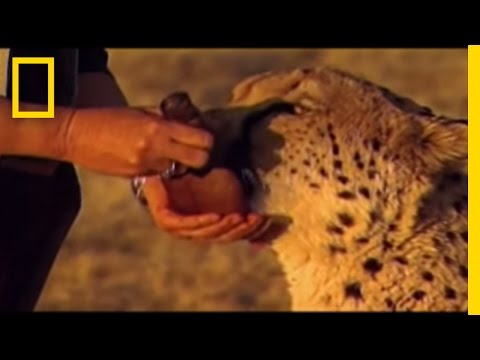
runs a refuge for injured or orphaned
cheetahs
the goal is to return them to the wild
but some are not able to survive on
their own instead they become part of an
education program to promote cheetah
conservation through our education
programs through our farm management
programs all of these are ways that we
can help the cheetah where people if
they learn more about the cheetah and
its needs in ways that people and the
cheetah can live together that there’s a
chance that this species can survive on
earth
Turkish dogs and African cheetahs to
animals worlds apart brought together
for the sake of peaceful coexistence
sponsored by National Geographic mission
programs taking science and exploration
into the new millennium
Please follow and like us: