
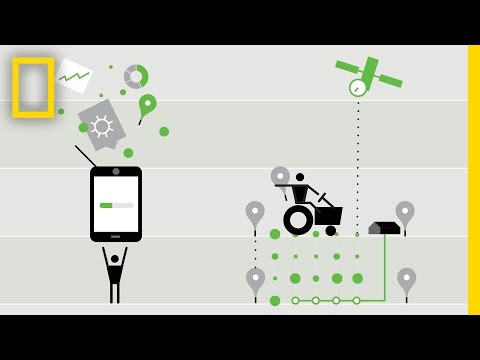
what happens when agriculture goes
high-tech farmers using what’s known as
precision agriculture can harness the
power of science and technology to
improve their lands productivity this
can be done in many ways and at any
point in the process but most farmers
begin by collecting data about their own
farms
for example smart combines can detect
differences in yield among fields while
harvesting soil maps can reveal the soil
structure and chemical properties and
mobile weather apps can provide short
and long term forecasts computers then
analyze all this information and help
farmers decide how to make each field as
productive as possible once the farmers
have their analysis in hand that can put
it to use GPS guided systems help steer
machinery reducing seeding and spraying
overlap to less than an inch variable
rate technology places specific amounts
of fertilizer and pesticide on each part
of a field monitors and other sensing
technologies such as drones track field
conditions so would a farmer stand to
gain well by using guidance systems and
variable rate technologies small farms
saw an average gross annual benefit of
eleven thousand dollars typical sized
farms stand to gain even more and large
farms reap the greatest return with the
technology paying for itself in less
than two years a pretty sweet reward
after a hard high-tech day’s work
you
Please follow and like us: