
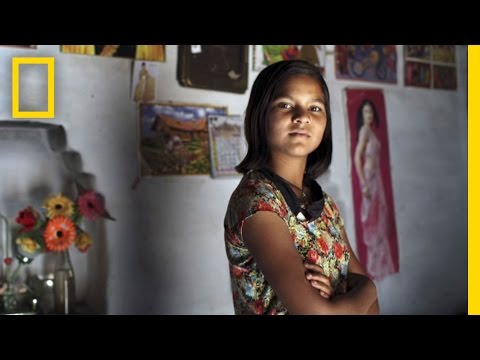
child marriage occurs in more than 50
developing countries around the world
and almost always results in the girls
removal from school what families don’t
realize is that by curtailing girls
education they’re only perpetuating the
cycle of poverty still families do this
for a number of reasons perhaps they
can’t afford to feed the rest of their
children it can create family alliances
and it often settles debts early
marriage often results in abusive and
even deadly consequences
I first ran into this issue in
Afghanistan in 2003 I was doing a story
on the burn ward in Herat Afghanistan
there several girls had set themselves
on fire and I didn’t understand why they
would do that as a westerner as someone
who you know just had it had anything
personal in my life that was so bad that
I would want to do that and then I met
this young girl Marcia she was 15 years
old and turned out she had been married
at the age of nine and she had set
herself on fire because she broke her
husband’s television set and you know
obviously was so fearful of reaction by
him or the family that she decided to
set herself on fire and really that’s a
suicide attempt so while I was in the
burn Ward I met several girls who they
all gave different reasons for why they
would do this like someone didn’t make
the tea hot enough it wasn’t reasons
that I could comprehend the more I
researched about their lives
I learned that more than half of those
girls were married underaged now I don’t
believe that’s the only reason why those
girls did that but at the same time it
was a common denominator I couldn’t deny
I wanted to look at the issues that
would lead to such a horrific act I felt
it was a bit irresponsible actually as a
photojournalist the journalist part
being important to just show this end
result so I started looking at the issue
of underage marriage something I had
never encountered before like this I had
the great fortune to meet mullah like a
car and she was a police officer in
Kandahar just a powerhouse really
amazing woman and so she had been
working with in the police department
for more than 20 years even under the
Taliban only working on women’s issues
and so I told her what I was working on
and she said Stephanie this is
impossible you’re never going to
photograph a wedding here in Afghanistan
she’s like no I don’t even know if I can
even get you anything like this she’s
like it happens all the time but I don’t
know if I can get you this and I said
okay so then I went back to the hotel
and she called me that afternoon she’s
like Stephanie get over here and she had
this young girl jameelah which actually
means beautiful and Arabic but this
young girl Jamila she was 15 years old
she had been stabbed by her husband this
is her husband there she already had two
kids and she had just been trying to
visit her mother without his permission
and so I asked Moll I said what’s going
to happen to this man and she said
nothing she and she kind of scoffed and
then that’s when she said men are Kings
here and unfortunately she was the one
who was later murdered by the Taliban
having worked in the Middle East for a
long time I really wanted to make sure
this wasn’t something that was just
against one religious practice you know
it’s not meant to be against any
religion really just practice but I
didn’t want it to single out one and so
I went looking in different countries
and cultures as well and so this series
of photographs is from Nepal and this is
a village called the karate village and
it’s just only 30 minutes outside of
Kathmandu this village is known for
practicing in this and there’s a day
it’s not a cottage which they do in
India but it’s a different auspicious
day where a lot of girls are married on
the same day and so I was able to see
several of these young marriages the
girls are usually married between 13 and
16 it was very difficult to get access
to in a lot of cases I showed them some
of the other pictures that I had done
before and I wanted them to know that I
wasn’t you know even though I mean I was
focusing specifically in the beginning
of the project on kind of the harmful
repercussions because I wanted that
message to get out but at the same time
I wanted to show the cultures of the
weddings and the beauty in these
cultures and that was one of the reasons
why I actually wanted to show the
weddings themselves because you know you
see all these beautiful colors and there
are some really beautiful traditions one
thing that I learned was that some of
the people in these weddings that were
participating were actually against the
practice but they were walking a fine
line between trying to like speak out
but also they had they were part of the
culture and so they wanted to help me
out and help be their voice I also went
to Ethiopia where they have a strong
Christian population in January there’s
a lot of weddings up in the UM horrid
district which is where it’s most
predominant in Ethiopia and I went to
several weddings there and this one was
of a young girl I think she was 14 lai
ulam and here they actually drape this
sheet over her head to take her to her
husband’s house and so that’s when they
were taking her and actually she was one
of the girls who didn’t mind that she
was getting married she thought she was
going to have a better life so she
wasn’t against her
marriage but they were taking her to the
house and I asked why she covered up
like that and she said well we just want
to make sure that if she escaped she
can’t find her way home so she’ll have
to come back this is the first time that
I actually was involved in the stopping
of a wedding in this situation the
mother came over and she said to my
translator that this girl was going to
get married that week she asked us if we
could stop it and I said I really don’t
know that’s not my job to do that it’s
not my position as a foreigner not even
as a journalist but as a foreigner and I
said but if you want to discuss it with
the Sheikh and with our we have a
government minder as well if you want to
discuss it and tell them what you
learned then you can and so that’s what
she did they made a decision even the
government minder made a decision to go
talk to the head of the hospital not so
far away and they came back and they
talked to the village about the physical
consequences of early marriage and they
ended up stopping this particular
wedding and this is a young girl who was
early 20s and already had all those
children and this is a young girl named
aja and she was 14 and already had two
children she was still bleeding from her
pregnancy she didn’t know what was going
on with her body and that was one of the
scariest situations is I’m not knowing
what’s going on with their bodies and
and why things are happening to them
Yemen is one of the places where it’s
most predominant it’s not as reported on
because it’s harder to get statistics
and and whatnot from but an amazing
situation I went to one village in haja
and I said can you show me where there
are some young girls who were married
underage and so all of a sudden all
these girls come in and I was like wow I
was expecting like two so all these
girls were married a couple of them had
children most of them were about 15 16
most of them were not in school or had
never been in school and I asked them
why hadn’t they gone and they said
because there’s no female teachers when
you have a culture like this where if
you don’t have girls who are educated to
be enough to become teachers then how do
you put female teachers in these rural
areas because this is
so nah this isn’t even ha data this is
like the rural village areas and so it’s
hard to change a culture cultural
practices where you know there’s nothing
for them to do but get married if
they’re not educated to do anything else
so it was kind of a catch-22 and I felt
that that was an important part of this
story thank you so I started in India on
my in my fieldwork because it is the
case of course that this happens a great
deal in India as well as other countries
in India being one of the most populous
countries on the planet there’s a whole
area in northern India the state of
Rajasthan where this practice is more
widespread than anywhere else
concentrated in India although it does
take place all over India and in
particular there is a season in India
called a cottage which it’s not
specifically marriages that are regarded
as auspicious as we came to learn during
a cottage all new enterprises including
business enterprises are thought to have
a good start if they take place during
this set of religious and astrological
holidays in a cottage so I first went
Stephanie and I didn’t connect until the
second trip I first went and spent a lot
of time just in the field that Stephanie
says just talking to people and coming
to understand how extraordinary how
extraordinarily complicated this is
here’s something that we all sort of
know in the abstract but that takes a
very different reality when you’re in
India many many of the marriages in
India are arranged marriages
it is thus it remains to this day the
most common way for marriage to occur in
India for young men and young women so
the notion that there is some
independent right for a woman or a girl
to select who she’s going to marry is
regarded in many of the most enlightened
families in India as just nonsensical
because that’s not the way you do it a
marriage Indians would say to me of all
educational levels is a joining of two
families it’s not to excuse me to
foolish young people in love with each
other
deciding to get married they’re so very
much more at stake so that goes out the
door right away then you think about a
village a very poor village as this one
was where the only option for a girl
growing up
is to work on a field in tremendous heat
or tremendous monsoon and suffer
possibly the consequences of having some
young man or boy have sex with her
before she’s married which in that
culture renders her basically an outcast
for the rest of her life so those are
two things right there that are very
different from anything that a typical
American or western young woman might
have to contemplate in her future this
village is the one that we went to after
weeks and weeks and weeks of hanging
around on both of our parts Stephanie is
the most amazing hanger around her
waiting for things to happen I’ve ever
encountered and she does it in the most
brutal circumstances you can imagine we
had been told that there were two
adolescent girls sisters who were going
to be married and that it was going to
take place at night and that if we were
very careful and did all sorts of
elegant negotiations and brought some
kind of a token of respect to the
village we could watch so we came we
were prepared for the wedding of a 12
year old and a 13 year old or something
like that we’ve been told this is one of
the teenage girls preparing putting on
her makeup this is a big event both for
the girls and for everyone in the
village the entire village is consumed
by the festivities that are coming to
pass this little girl was part of the
family that we met and her face will
haunt me for the rest of my days that is
very much what she looked like we first
saw her in the afternoon in her little
pink dress as she was wandering around
we said who is that they said oh she’s
the cousin of the two sisters people
were kind of circumspect about it then
they started putting makeup on this
little girl I remember this room it was
a tiny little room in the village it was
enormous ly hot everybody was crammed in
there of course there were only women as
you might imagine crammed into this
thing and Stephanie and I just sat
watching and we all began to realize and
are in our translator who was also a
young woman began to realize what we
thought was likely to happen and this
horrible feeling grew in all of us
Stephanie had been living with this
reality for many years longer than any
of us but I think if I’m not mistaken
Stephanie that this was the first time
you had actually seen a child this young
being prepared for what looked like her
wedding the women gathered around there
were many many prenuptial traditions
some of which were quite beautiful in
the tremendous heat
I remember them walking with crockery on
their head across a long field and at
one point the cloth that you see behind
they had multiple kinds of beautiful
sari cloth strung out all over the
village to make canopies to make
celebratory places because people were
going to come from far and wide so the
women are standing behind there’s the
three girls and they’re all bathing in
there in the dirt and now they were
washing the little girl and now we
understood for sure that she was going
to be part of the wedding the
proceedings went on for hours that’s
typical for an Indian wedding
it’s especially typical for weddings in
this part of northern India where when
they are breaking the law
as it’s important to remember they were
doing this is not a legal practice in
India it has not been for over a century
and that’s the case in most not all but
most of the countries in which child
marriage takes place if you go to the
Indian authorities at the state the
provincial at the local level the state
level in the national level they will
decry this practice just as vigorously
as anyone here in the United States
would but they will also say it’s very
difficult to climb into these cultures
and find out what’s going on and
furthermore when you do get the word of
what’s going on if you try to stop it
which way they will sometimes do they
will make a great show they will throw
someone in jail you have probably
disgraced that family for a generation
to come you have probably not stopped
the girl from getting married too early
you have certainly not given her a life
which would be a healthy option to being
married what have you done it’s a huge
and complex problem the night comes the
ceremonial fire is lit and the
expression on the children’s face is one
of pretty much utter bewilderment I
would say the extent to which this this
young boy who’s about three years older
than our five year old understood what
was going on
was really not possible for us to know
the older brothers were obviously
clearer about what was happening these
children were not and it’s also because
it’s such a long drawn-out ceremony it
has none of what we regard as the sort
of tidiness of a Western ceremony I now
pronounce you husband and wife boom were
done it went on and on and on this is
the picture that haunts me still and the
reason I wanted to show it to you
afterward is that this picture conveys
utterly the confusing feeling of that
evening at this moment she’s taken a nap
she’s been awakened from her nap and
she’s being carried to the ceremony and
the tenderness that you see in this
picture on behalf of the man holding her
was absolutely what we saw there it was
one of the most complicated scenes I had
ever seen as a reporter knowing that
this child is going off to something
that is a horrifying notion to me and at
the same time at being very clear that
the people who are doing it including
this uncle who’s carrying her loved her
deeply
and think they’re doing the right thing
for her it is important also to remember
that in India unlike some of the other
countries there is a second ceremony
that takes place the plan typically
although not always is that this child
will live at home in this case with her
grandfather and she will not go to her
husband’s family until she’s past
puberty that second ceremony is called
Ghana and part of what they do in India
is try as hard as they can to postpone
the Ghana but it was the gentleness with
which this man lifted her from sleep and
took her to the ceremony that really
haunted me and made me realize how far I
had come from my original absolute
clarity about everybody involved in this
practice being simply evil now this
child is someone for whom I want you to
have some hope
I talked to you originally about some of
the reasons that a parent a loving
parent would do this you’re protecting
your child from possible rape because
you live in a society in which loss of
virginity before marriage renders a
young woman an outcast number one number
two you know in the abstract that people
from the government have told you
schooling is important but that’s kind
of irrelevant when you live in a village
where the only schooling your child can
get to goes up to fifth grade after
fifth grade there’s a long bus ride
that’s required there are predatory men
on the bus which makes the bus ride
itself dangerous if you’re in a culture
like this you don’t send your child to
that school no matter what a government
person is telling you about the
importance of schooling so that stops
right there so if you have no cultural
option no effective schooling past fifth
grade no tradition of regard for the
importance of individual right in
choosing a marriage a clear life
involving rural life agricultural work
and some kind of poverty in your future
what do you do to protect your child you
make sure she’s marrying into a good
family and you do it very young so that
she won’t be attacked she’ll have some
sort of respect as a married child
already and so that there’s no chance
that she can go astray this child lived
in a village some distance away from the
one we’d been at previously and she had
been in a school where the government
teachers understood how bad child
marriage was and they had really drummed
into all of the children don’t do this
don’t do this her older sister was
getting married in a house just a few
houses away and the night of the older
sister’s wedding
her mother do her aside and said you two
tied a string around her wrists which
was part of the ceremonial process she
jumped up and according to everybody
that we talked to including the mother
said to her mother and father if you do
that I will call the police and I will
break your head with a rock those were
her actual words she read they were they
said this the mom finally said this to
me with some pride
was not someone’s afterward she ran up
the street to the home of a village
worker they have these in India they are
paid for very nominally by the local
governments and their job is to monitor
public health in a general sort of way
the village worker went over with with
her own parents and in-laws to the
village and said don’t to this house and
said don’t do this let us tell you all
the reasons that this is a bad thing for
your daughter astonishingly finally
there’s a huge Rao apparently an entire
village got in on it the parents were
persuaded she was not married off and by
the time I met her some months later she
was an avid cricket player and those are
movie star pictures that she has up in
her room and she was preparing to go on
to middle school and beyond
you
you
developing countries around the world
and almost always results in the girls
removal from school what families don’t
realize is that by curtailing girls
education they’re only perpetuating the
cycle of poverty still families do this
for a number of reasons perhaps they
can’t afford to feed the rest of their
children it can create family alliances
and it often settles debts early
marriage often results in abusive and
even deadly consequences
I first ran into this issue in
Afghanistan in 2003 I was doing a story
on the burn ward in Herat Afghanistan
there several girls had set themselves
on fire and I didn’t understand why they
would do that as a westerner as someone
who you know just had it had anything
personal in my life that was so bad that
I would want to do that and then I met
this young girl Marcia she was 15 years
old and turned out she had been married
at the age of nine and she had set
herself on fire because she broke her
husband’s television set and you know
obviously was so fearful of reaction by
him or the family that she decided to
set herself on fire and really that’s a
suicide attempt so while I was in the
burn Ward I met several girls who they
all gave different reasons for why they
would do this like someone didn’t make
the tea hot enough it wasn’t reasons
that I could comprehend the more I
researched about their lives
I learned that more than half of those
girls were married underaged now I don’t
believe that’s the only reason why those
girls did that but at the same time it
was a common denominator I couldn’t deny
I wanted to look at the issues that
would lead to such a horrific act I felt
it was a bit irresponsible actually as a
photojournalist the journalist part
being important to just show this end
result so I started looking at the issue
of underage marriage something I had
never encountered before like this I had
the great fortune to meet mullah like a
car and she was a police officer in
Kandahar just a powerhouse really
amazing woman and so she had been
working with in the police department
for more than 20 years even under the
Taliban only working on women’s issues
and so I told her what I was working on
and she said Stephanie this is
impossible you’re never going to
photograph a wedding here in Afghanistan
she’s like no I don’t even know if I can
even get you anything like this she’s
like it happens all the time but I don’t
know if I can get you this and I said
okay so then I went back to the hotel
and she called me that afternoon she’s
like Stephanie get over here and she had
this young girl jameelah which actually
means beautiful and Arabic but this
young girl Jamila she was 15 years old
she had been stabbed by her husband this
is her husband there she already had two
kids and she had just been trying to
visit her mother without his permission
and so I asked Moll I said what’s going
to happen to this man and she said
nothing she and she kind of scoffed and
then that’s when she said men are Kings
here and unfortunately she was the one
who was later murdered by the Taliban
having worked in the Middle East for a
long time I really wanted to make sure
this wasn’t something that was just
against one religious practice you know
it’s not meant to be against any
religion really just practice but I
didn’t want it to single out one and so
I went looking in different countries
and cultures as well and so this series
of photographs is from Nepal and this is
a village called the karate village and
it’s just only 30 minutes outside of
Kathmandu this village is known for
practicing in this and there’s a day
it’s not a cottage which they do in
India but it’s a different auspicious
day where a lot of girls are married on
the same day and so I was able to see
several of these young marriages the
girls are usually married between 13 and
16 it was very difficult to get access
to in a lot of cases I showed them some
of the other pictures that I had done
before and I wanted them to know that I
wasn’t you know even though I mean I was
focusing specifically in the beginning
of the project on kind of the harmful
repercussions because I wanted that
message to get out but at the same time
I wanted to show the cultures of the
weddings and the beauty in these
cultures and that was one of the reasons
why I actually wanted to show the
weddings themselves because you know you
see all these beautiful colors and there
are some really beautiful traditions one
thing that I learned was that some of
the people in these weddings that were
participating were actually against the
practice but they were walking a fine
line between trying to like speak out
but also they had they were part of the
culture and so they wanted to help me
out and help be their voice I also went
to Ethiopia where they have a strong
Christian population in January there’s
a lot of weddings up in the UM horrid
district which is where it’s most
predominant in Ethiopia and I went to
several weddings there and this one was
of a young girl I think she was 14 lai
ulam and here they actually drape this
sheet over her head to take her to her
husband’s house and so that’s when they
were taking her and actually she was one
of the girls who didn’t mind that she
was getting married she thought she was
going to have a better life so she
wasn’t against her
marriage but they were taking her to the
house and I asked why she covered up
like that and she said well we just want
to make sure that if she escaped she
can’t find her way home so she’ll have
to come back this is the first time that
I actually was involved in the stopping
of a wedding in this situation the
mother came over and she said to my
translator that this girl was going to
get married that week she asked us if we
could stop it and I said I really don’t
know that’s not my job to do that it’s
not my position as a foreigner not even
as a journalist but as a foreigner and I
said but if you want to discuss it with
the Sheikh and with our we have a
government minder as well if you want to
discuss it and tell them what you
learned then you can and so that’s what
she did they made a decision even the
government minder made a decision to go
talk to the head of the hospital not so
far away and they came back and they
talked to the village about the physical
consequences of early marriage and they
ended up stopping this particular
wedding and this is a young girl who was
early 20s and already had all those
children and this is a young girl named
aja and she was 14 and already had two
children she was still bleeding from her
pregnancy she didn’t know what was going
on with her body and that was one of the
scariest situations is I’m not knowing
what’s going on with their bodies and
and why things are happening to them
Yemen is one of the places where it’s
most predominant it’s not as reported on
because it’s harder to get statistics
and and whatnot from but an amazing
situation I went to one village in haja
and I said can you show me where there
are some young girls who were married
underage and so all of a sudden all
these girls come in and I was like wow I
was expecting like two so all these
girls were married a couple of them had
children most of them were about 15 16
most of them were not in school or had
never been in school and I asked them
why hadn’t they gone and they said
because there’s no female teachers when
you have a culture like this where if
you don’t have girls who are educated to
be enough to become teachers then how do
you put female teachers in these rural
areas because this is
so nah this isn’t even ha data this is
like the rural village areas and so it’s
hard to change a culture cultural
practices where you know there’s nothing
for them to do but get married if
they’re not educated to do anything else
so it was kind of a catch-22 and I felt
that that was an important part of this
story thank you so I started in India on
my in my fieldwork because it is the
case of course that this happens a great
deal in India as well as other countries
in India being one of the most populous
countries on the planet there’s a whole
area in northern India the state of
Rajasthan where this practice is more
widespread than anywhere else
concentrated in India although it does
take place all over India and in
particular there is a season in India
called a cottage which it’s not
specifically marriages that are regarded
as auspicious as we came to learn during
a cottage all new enterprises including
business enterprises are thought to have
a good start if they take place during
this set of religious and astrological
holidays in a cottage so I first went
Stephanie and I didn’t connect until the
second trip I first went and spent a lot
of time just in the field that Stephanie
says just talking to people and coming
to understand how extraordinary how
extraordinarily complicated this is
here’s something that we all sort of
know in the abstract but that takes a
very different reality when you’re in
India many many of the marriages in
India are arranged marriages
it is thus it remains to this day the
most common way for marriage to occur in
India for young men and young women so
the notion that there is some
independent right for a woman or a girl
to select who she’s going to marry is
regarded in many of the most enlightened
families in India as just nonsensical
because that’s not the way you do it a
marriage Indians would say to me of all
educational levels is a joining of two
families it’s not to excuse me to
foolish young people in love with each
other
deciding to get married they’re so very
much more at stake so that goes out the
door right away then you think about a
village a very poor village as this one
was where the only option for a girl
growing up
is to work on a field in tremendous heat
or tremendous monsoon and suffer
possibly the consequences of having some
young man or boy have sex with her
before she’s married which in that
culture renders her basically an outcast
for the rest of her life so those are
two things right there that are very
different from anything that a typical
American or western young woman might
have to contemplate in her future this
village is the one that we went to after
weeks and weeks and weeks of hanging
around on both of our parts Stephanie is
the most amazing hanger around her
waiting for things to happen I’ve ever
encountered and she does it in the most
brutal circumstances you can imagine we
had been told that there were two
adolescent girls sisters who were going
to be married and that it was going to
take place at night and that if we were
very careful and did all sorts of
elegant negotiations and brought some
kind of a token of respect to the
village we could watch so we came we
were prepared for the wedding of a 12
year old and a 13 year old or something
like that we’ve been told this is one of
the teenage girls preparing putting on
her makeup this is a big event both for
the girls and for everyone in the
village the entire village is consumed
by the festivities that are coming to
pass this little girl was part of the
family that we met and her face will
haunt me for the rest of my days that is
very much what she looked like we first
saw her in the afternoon in her little
pink dress as she was wandering around
we said who is that they said oh she’s
the cousin of the two sisters people
were kind of circumspect about it then
they started putting makeup on this
little girl I remember this room it was
a tiny little room in the village it was
enormous ly hot everybody was crammed in
there of course there were only women as
you might imagine crammed into this
thing and Stephanie and I just sat
watching and we all began to realize and
are in our translator who was also a
young woman began to realize what we
thought was likely to happen and this
horrible feeling grew in all of us
Stephanie had been living with this
reality for many years longer than any
of us but I think if I’m not mistaken
Stephanie that this was the first time
you had actually seen a child this young
being prepared for what looked like her
wedding the women gathered around there
were many many prenuptial traditions
some of which were quite beautiful in
the tremendous heat
I remember them walking with crockery on
their head across a long field and at
one point the cloth that you see behind
they had multiple kinds of beautiful
sari cloth strung out all over the
village to make canopies to make
celebratory places because people were
going to come from far and wide so the
women are standing behind there’s the
three girls and they’re all bathing in
there in the dirt and now they were
washing the little girl and now we
understood for sure that she was going
to be part of the wedding the
proceedings went on for hours that’s
typical for an Indian wedding
it’s especially typical for weddings in
this part of northern India where when
they are breaking the law
as it’s important to remember they were
doing this is not a legal practice in
India it has not been for over a century
and that’s the case in most not all but
most of the countries in which child
marriage takes place if you go to the
Indian authorities at the state the
provincial at the local level the state
level in the national level they will
decry this practice just as vigorously
as anyone here in the United States
would but they will also say it’s very
difficult to climb into these cultures
and find out what’s going on and
furthermore when you do get the word of
what’s going on if you try to stop it
which way they will sometimes do they
will make a great show they will throw
someone in jail you have probably
disgraced that family for a generation
to come you have probably not stopped
the girl from getting married too early
you have certainly not given her a life
which would be a healthy option to being
married what have you done it’s a huge
and complex problem the night comes the
ceremonial fire is lit and the
expression on the children’s face is one
of pretty much utter bewilderment I
would say the extent to which this this
young boy who’s about three years older
than our five year old understood what
was going on
was really not possible for us to know
the older brothers were obviously
clearer about what was happening these
children were not and it’s also because
it’s such a long drawn-out ceremony it
has none of what we regard as the sort
of tidiness of a Western ceremony I now
pronounce you husband and wife boom were
done it went on and on and on this is
the picture that haunts me still and the
reason I wanted to show it to you
afterward is that this picture conveys
utterly the confusing feeling of that
evening at this moment she’s taken a nap
she’s been awakened from her nap and
she’s being carried to the ceremony and
the tenderness that you see in this
picture on behalf of the man holding her
was absolutely what we saw there it was
one of the most complicated scenes I had
ever seen as a reporter knowing that
this child is going off to something
that is a horrifying notion to me and at
the same time at being very clear that
the people who are doing it including
this uncle who’s carrying her loved her
deeply
and think they’re doing the right thing
for her it is important also to remember
that in India unlike some of the other
countries there is a second ceremony
that takes place the plan typically
although not always is that this child
will live at home in this case with her
grandfather and she will not go to her
husband’s family until she’s past
puberty that second ceremony is called
Ghana and part of what they do in India
is try as hard as they can to postpone
the Ghana but it was the gentleness with
which this man lifted her from sleep and
took her to the ceremony that really
haunted me and made me realize how far I
had come from my original absolute
clarity about everybody involved in this
practice being simply evil now this
child is someone for whom I want you to
have some hope
I talked to you originally about some of
the reasons that a parent a loving
parent would do this you’re protecting
your child from possible rape because
you live in a society in which loss of
virginity before marriage renders a
young woman an outcast number one number
two you know in the abstract that people
from the government have told you
schooling is important but that’s kind
of irrelevant when you live in a village
where the only schooling your child can
get to goes up to fifth grade after
fifth grade there’s a long bus ride
that’s required there are predatory men
on the bus which makes the bus ride
itself dangerous if you’re in a culture
like this you don’t send your child to
that school no matter what a government
person is telling you about the
importance of schooling so that stops
right there so if you have no cultural
option no effective schooling past fifth
grade no tradition of regard for the
importance of individual right in
choosing a marriage a clear life
involving rural life agricultural work
and some kind of poverty in your future
what do you do to protect your child you
make sure she’s marrying into a good
family and you do it very young so that
she won’t be attacked she’ll have some
sort of respect as a married child
already and so that there’s no chance
that she can go astray this child lived
in a village some distance away from the
one we’d been at previously and she had
been in a school where the government
teachers understood how bad child
marriage was and they had really drummed
into all of the children don’t do this
don’t do this her older sister was
getting married in a house just a few
houses away and the night of the older
sister’s wedding
her mother do her aside and said you two
tied a string around her wrists which
was part of the ceremonial process she
jumped up and according to everybody
that we talked to including the mother
said to her mother and father if you do
that I will call the police and I will
break your head with a rock those were
her actual words she read they were they
said this the mom finally said this to
me with some pride
was not someone’s afterward she ran up
the street to the home of a village
worker they have these in India they are
paid for very nominally by the local
governments and their job is to monitor
public health in a general sort of way
the village worker went over with with
her own parents and in-laws to the
village and said don’t to this house and
said don’t do this let us tell you all
the reasons that this is a bad thing for
your daughter astonishingly finally
there’s a huge Rao apparently an entire
village got in on it the parents were
persuaded she was not married off and by
the time I met her some months later she
was an avid cricket player and those are
movie star pictures that she has up in
her room and she was preparing to go on
to middle school and beyond
you
you
Please follow and like us: