
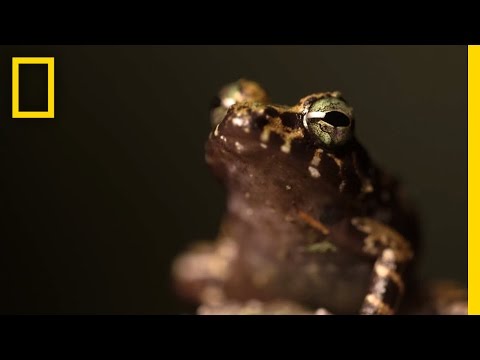
the case of the lamps on frogs of the
Philippines our first a new set of
knowledge in understanding evolution
specially convergent evolution is linear
species for sure close-up view this fall
but it sounds a bit like other ones
evolutionary biologists think that if
empty habitat and niche space is
available species will be drawn into it
and form these unique types frogs invade
an island archipelago there’s no frogs
here occupying that space there’s a nope
no competitors and then they’re free to
adapt into all those types of ecological
niches
in the past 20 years we found over 50
new frogs in the country and what we
found how it was actually you know
dumbfounding from each new locality that
we surveyed we practically found a
completely new set of phibian fauna you
think we’ll be doing this until we were
16 or something I hope so
the most exciting part for us was that
the previous idea of relationships in
this group appeared to be wrong and that
this was a case of not three or four
types of frogs in the Philippines there
were each other’s closest relatives
but in fact that many of these types had
evolved many times in this case in
response the environment the same these
are obviously wider toads
they’re pretty close even though they do
better you know it’s at this point when
we find line stone frogs it’s very
obvious to us that they are this
specialized form that exists solely on
limestone when we go to those areas and
there may be other frogs that live in
and around that environment as well but
when we find one of these specialists
limestone karst frogs they are obviously
a different type of frog than the other
frogs we may find on the forest floor up
in the trees and that’s the one that we
identify as the habitat structure a
little specialist that is really honed
in on this limestone environment and are
utilizing it in a unique way
we believe that the story of limestone
frogs
its diversity its evolutionary history
will provide more avenues for deeper
understanding on how evolution of
biodiversity especially in island
archipelagos actually works
Philippines our first a new set of
knowledge in understanding evolution
specially convergent evolution is linear
species for sure close-up view this fall
but it sounds a bit like other ones
evolutionary biologists think that if
empty habitat and niche space is
available species will be drawn into it
and form these unique types frogs invade
an island archipelago there’s no frogs
here occupying that space there’s a nope
no competitors and then they’re free to
adapt into all those types of ecological
niches
in the past 20 years we found over 50
new frogs in the country and what we
found how it was actually you know
dumbfounding from each new locality that
we surveyed we practically found a
completely new set of phibian fauna you
think we’ll be doing this until we were
16 or something I hope so
the most exciting part for us was that
the previous idea of relationships in
this group appeared to be wrong and that
this was a case of not three or four
types of frogs in the Philippines there
were each other’s closest relatives
but in fact that many of these types had
evolved many times in this case in
response the environment the same these
are obviously wider toads
they’re pretty close even though they do
better you know it’s at this point when
we find line stone frogs it’s very
obvious to us that they are this
specialized form that exists solely on
limestone when we go to those areas and
there may be other frogs that live in
and around that environment as well but
when we find one of these specialists
limestone karst frogs they are obviously
a different type of frog than the other
frogs we may find on the forest floor up
in the trees and that’s the one that we
identify as the habitat structure a
little specialist that is really honed
in on this limestone environment and are
utilizing it in a unique way
we believe that the story of limestone
frogs
its diversity its evolutionary history
will provide more avenues for deeper
understanding on how evolution of
biodiversity especially in island
archipelagos actually works
Please follow and like us: