
you
I learned about slideshows from my
father who taught me photography
photography was associated with the very
best times in our family life the
holidays and birthdays the games sports
teams and especially the summer
vacations my parents were both teachers
we took trips out into America every
summer
we learned about American history
culture landscape values and after we
came home about ten days or two weeks
later the film would arrive in the mail
and my dad would put on a slide show it
was in Technicolor
and it featured us against a backdrop of
America it’d be very difficult for me
not to fall in love with photography I
grew up to be a photographer who
believed in publishing his photographs
one of the things that I do is take
photographs backwards I photographed the
setting first and wait for the subject
and it’s something that I learned from
my dad to compose and wait even though
I’m stealing the picture down everything
is set and that bursts of life that
dramatic moment is why I wanted to be a
photographer I have the thought from the
time I first held the camera in my hands
and felt how right it felt in my hands
that it was a dynamic invitation to be
in life to get up out of my chair to
walk out the door to be in the light to
be in the day to be with people to be
with animals to be with landscape to be
with cultures to be out in life and so I
never wanted
photography to be a business I didn’t
want a studio I didn’t even want a
career I wanted a life and that led me
to National Geographic which offered in
my opinion the greatest life that a
young person and a documentary
photographer could want to have because
National Geographic put you in life
thank you all for coming by now you’ve
heard me speak of my father I think not
many young men or women are taught to
see seeing is taken for granted but my
father would talk about light and color
and shape and space and he had his
little Maxim’s about photography that he
gently taught me this is my father and
me photograph made in 1977 I used to
joke that haha I’m the one on the right
but I did the math I added up the years
his birth the year this picture was
taken and the numbers were poignant to
me I’m now the age he was then when I
made this photograph my father died in
2002 the same year that this book came
out my father saw this book before he
died he got to see that I had taken to
heart the not only the lessons that he
had taught me but the life that he
wanted and the life that he had wanted
for me it’s always been easy for me to
describe the influence of my father I
simply say he taught me photography but
in the photographs you’ve seen and
especially the photographs you’re about
to see you will see the influence of my
mother whose influence has always been
harder to explain I think I can explain
it best by saying to you that it’s her
taste her style and her aspirations that
are in the photographs that my father
taught me how to make speaking of making
she made those suits that my brother and
I are wearing my brother was three years
older than me but it didn’t stop my
mother from dressing us as twins for the
first 10 years of our lives in 1942 my
mother made this needlepoint mat at the
United States it was her dream that are
yet to be born boys together with her
and her husband my father would touch
all of those things on our able family
vacation trips and we did and out of
that man I think grew the kinds of
photography that I see what I’m
attracted to photographing the content
and style of my photography this
photograph here is on the cover of the
book and the reason it’s on the cover is
that it well represents the photography
in it and me is taken in a small city on
the southwest coast of Japan it’s in
color but barely it’s a table for two a
room with a view a bus is pulling out a
woman is walking across the pavement
soon the scene will change but for a
moment it is held in a photograph
because it is held in a photograph the
moment has a life I’ve talked to an
about this photograph to understand that
they think this is how I live and this
is where my photographs come from I take
a room in a small Inn and right outside
the window there’s a Zen view and I
simply set up my camera and quietly one
day take this picture the beauty of this
book is that it shows you that that’s
not true this is how the same load all
of the elements of the cover photograph
are there they’re just in chaotic
disarray as is most of the life that
photographers see and out of this chaos
and disarray photographs are made
they’re made through in my case several
styles of seeing several points of
concentration one thing that I believe
in is internal framing photograph is a
frame and if I cannot reframe it and
reframe it again the other thing that I
believe is in micro composition and
right at the top of the tile roof the
chaos begins but I’ve composed the
photograph intensely enough so that none
of the chaos is visible and all of the
poetry is centered this is a double
photograph there are two photographs
here one a vintage photograph of the
employees of the US Button company and
my photograph of their buttons both the
photograph and the buttons have outlived
the people that made them therefore it’s
altogether fitting that this picture
beyond the title page of the new book
the life of a photograph photographs I
think we all know have a life in this
photograph on the left there are the
strong horizontal lines that define the
graphics and design geometry of my
childhood landscape another reason why
it’s fitting that it beyond the title
page of this book but my favorite page
in the book features this four
a roughest fronted flycatcher from
tropical Peru being held by a scientist
at a research station on the madre de
dios river in peru in order to identify
the bird the scientists got out a page
in the south american bird analyst the
Rufus fronted flycatcher is looking at
itself it happens to be bird number 11
on an 11 bird page and in this book
there are 11 chapters and that’s the
kind of small thoughtful detail that we
put into this book that no one will know
about unless they’re sitting in this
room tonight the first chapter in the
book is the all-important phrase seeking
the picture pictures don’t appear in
front of you you go after them you are
stopped by them I was stopped by this
space and waited for the woman to come
around the corner and complete the
composition it’s on the cover of a book
of mine and it’s one of the important
primary pictures of my life and has an
important place in this book but I would
not show it to you tonight nor would I
look at it myself if her shadow were
touching the shadow of the bank building
she’s about to pass in two together with
Robert and Poole my distinguished
colleague I was in Tokyo doing a story
on the Imperial Palace the Imperial
Palace officials did not want us to
photograph the Emperor and yet here we
were on an embassy invitation at the
Emperor’s spring garden party
our minder mr. takahashi said in anger
you must not this spot and you must
leave 20 minutes before the Emperor
arrives so I was frozen in place and I
turned around and I saw what was before
me what was before me was a setting the
very thing that my father had taught me
to see and to seek and it wasn’t hard to
wait and a micro compose the moment of
the dignitaries the ambassadors and the
diplomats arriving at the party a
photograph of the Imperial archery
target and Zen archery arcade deep
within the Imperial Palace and the same
archery arcade six months later with the
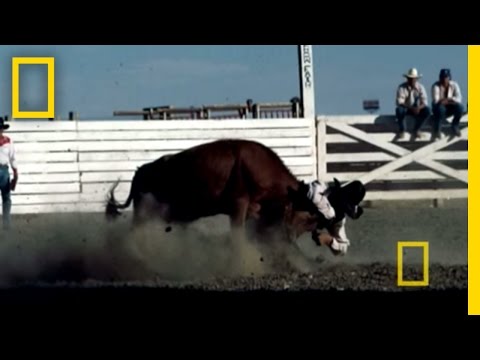
archery master present disregard the
cowboy bulldogging that steer to the
ground concentrate instead on the broad
anding at the composition the stunning
line the sharp shadows the internal
framing and to me the wonderful scale of
the little boy looking over the shoulder
of the rodeo announcer that’s the
photograph it existed before the cowboy
and a steer when I look at this
photograph the steer in the cowboy are
the last things I see second chapter in
the book is called road trip and the
first sentence and the book comes I
spent a lot more time in cars than I
ever expected to and saw a lot of the
world through windshields what I became
attracted to was the idea of stilling
down the sensation of speed a cracked
windshield raindrop
on the windshield high-speed streaks of
still mud on the side of my car in
Newfoundland in 1970 all emblems to me
of the idea of speed hurrying somewhere
in the name of photography hurrying
somewhere in the name of the last good
light by presenting two views in this
book it was our intention to put you in
the field making choices making
photographs secondly it was our
intention to put you in the editors
chair at National Geographic making
choices which picture goes forward this
photograph carries the sentence with it
in the book the photograph is noteworthy
to me for two reasons one the
excruciating sound of a train coming off
the tracks is absent and two it’s the
only photograph in this book taken and
not made I happen to be on the phone
when I heard this excruciating sound
behind me felt like the world was coming
to an end I dropped the phone picked up
my camera and made a fast photograph
down the track to the left the train
cars are toppling over if it continues
the taxi cab will be crushed and covered
in corn it didn’t happen the train
stabilized itself off the tracks still
standing and this is the most complex
photograph I’ve ever made on the road I
had the composition well in hand I was
pumping gas myself and I micro composed
into the corner of the picture the
landscape of Utah each chapter of the
book asked the question what about this
chapter as a life what gives portraits
their life I wrote that what gives my
portraits of life these portraits is
that the people are within themselves
emotionally not happy not sad
but thoughtfully within themselves I
make the further point that each
photograph be a part of a larger
photograph his expression matters but so
does his gesture and so does the setting
setting expression gesture what sets
this picture in Australia and not in
Montana is the sky filling flight of
cockatoos behind the cowboy perhaps my
favorite photograph in the book is this
one and the reason is I took it as a
summer intern at National Geographic in
1967 bedding Leonard’s sandwich on one
of America’s great artists Willem de
Kooning within himself thoughtfully
neither happy nor sad and the same for
Christopher Pratt
Canada’s great artist and the artist
whose work and life has had the greatest
affect and influence on my photography
and my life you’ll see later my version
of clothes on the clothesline which is
homage to Christopher Pratt a
grandfather and granddaughter in the
outback of Australia backstage at a
Shinto festival in Hoggy Japan and a
favorite portrait of mine enigmatic
emotionally a young person deeply within
themselves two photographs at a little
lunch stand a small little corner store
in Newfoundland in 1970 outside and
inside to be 15 and to be in
Newfoundland in a sequence of
photographs of a cowboy approaching me
in the winter in Montana the caption in
the book carries the simple statement
the approach and departure of Gerald
Mack
during the book is called portrait of a
people and the people are they
Aborigines of Australia who until the
English arrived two hundred years ago
had lived there uninterruptedly for 80
thousand years this is a picture of
ancient aboriginal life and this is a
picture of contemporary Aboriginal
Cowboys cradling the head of his dying
horse the horse was gored by a wild
both in the cowboy had tethered to a
tree with too weak a tether the wound
was cleaned with canteen water and hair
from the mane of the horse was taken
cleaned with canteen water and used to
sew up the wound
after that the horse was stood up and we
rode away and I said what’s going to
become of the horse and the station
owner said the horse knows the way back
to the station it’ll go back if it can
about everything that I aspired to in a
photograph is on the screen right now
the photograph is in color but barely
the graphics are original to me the
horizon line is wildly curving and yet I
like it and I also like the reflection
of the light on the water the texture of
the sand and the scale of the people but
the people are in a dire emergency their
truck is bogged and they’re about 40
miles from their village their truck is
doomed and possibly so are they and
they’re shouting for help our pilot
radios for help as I only take pictures
of people in troubles but the people
were pulled to safety and so I can
credit the flight at least if not the
photography the flight which was for
photography for coming upon them for
getting them help for pulling them and
their truck to safety this is Mark Mora
an Aborigine I’m about to go on a hunt
with him in the great sandy desert I
asked that the hunt come off it either
dawn or sunset for the purposes of light
because the light in the middle of the
day in the great sandy desert is deadly
as is the heat the hunt comes off at
noon
first we eat and Markel stories the
story he’s telling right now is that the
greatest aboriginal hunter of them all
and uncles he is saying and uncle who
was so tall and so strong that he could
lift up a dead kangaroo with one hand
and as he says that one hand I make this
photograph the hunt as I said came off
at noon brutal deadly hot light I look
around for something to base a portrait
on and I select the grass it on top of
my Land Cruiser and have marked pose
against the grass many people perhaps
all people see this as a portrait of
Mark Mora or as a portrait of Mark Moore
with a bird or of the bird but what I
see and what I say to myself it is is a
portrait of grass the chapter land sea
and sky is about landscape photography
but some of my landscapes were seascapes
and some of my seascapes
were sky scapes so we group them
together and gave them this title and
chose this picture as the chapter opener
because it has land sea and sky all
merging and obliterating that solemn
solid centering line the only time I’ve
ever seen
on a landscape the horizon disappear I
asked the boat captain what the name of
that Island and the Galapagos was and he
said Ye Lawson nombre
I looked at him and he said no-name
Island I write in the book that no-name
Island is a good name for a lot of my
landscape photography because it’s about
anonymous places and what gives these
photographs of life to me is not their
anonymity but they are landscapes in
motion the storm is arriving the fire is
burning the mist is lifting
so even though their landscape pictures
they’re in motion a tree lies inert on a
beach and the far northwest corner of
Alaska something about the tree and the
river and its relationship to the
horizon attracts my attention and I
approach closer from an elegant
anonymous Noble in the far northwest
corner of Canada on the Arctic plain I
photograph an approaching storm beneath
the storm is a crevasse a north-facing
crevasse still holding snow from the
previous winter and in this book for the
first time I publish and see for myself
essentially the wider view and I’m
surprised to see it’s a second crevasse
of snow but now seriously the storm is
upon us and so I hasten off the knoll to
secure the tent but one look back at the
elegant Knoll looking like a killer
whale coming out of the water land sky
and the illusion of sea in the great
sandy desert is a small outcropping of
very weather-worn hills called the Balgo
hills I’m flying over them the landscape
is so hot and so bright that the dry
landscape is reflecting light as though
it was water there’s no door on the
airplane am I feeling about these
photographs these aerial photographs are
that they don’t really catch the vertigo
that the photographer feels when he’s
taking it
and so I took a second one that gives
you a feeling of what it’s like to lean
out from an airplane that has no door
probably my favorite landscape
photograph because it is biographical as
a 17 year old I saw the moon cast the
shadow of trees onto fog and I thought
I’ll never see that again I saw it again
in Yellowstone Park behind the pine
trees the moon it’s casting the shadow
of the pine tree onto thermal hot
thermal steam scattered around the edges
of the photograph are the stars as the
breeze moved the mist the picture
appeared and disappeared and reappeared
again we broke the word wildlife into
two parts I wanted it to be about
wildlife but I wanted it to be about the
wildlife that I led led in getting these
photographs what gives these photographs
their life is their intimacy I’m not a
wildlife specialist and so these are
actual close encounters with wildlife
what I wanted from photography was to be
in life not with gear and so all of my
wildlife photographs are like my
photographs of the landscape and of
people I am together with the animals is
human moment as well as a wildlife
moment photographing wild dolphins isn’t
out of a controlled experience to bring
it under my control I composed the
picture without the dolphin and waited
for the dolphin to come into my
composition here is that picture
compose and wait I’ve also taken up an
interest in the passing of animals there
remains wilderness travel in our time
leads to not so many wilderness
encounters but often there can be a
spiritual encounter with the remains or
the evidence for the presence that
animals were here these two photographs
are of sperm whales which beached
themselves at low tide in Tierra del
Fuego and then the tide left without
them I treated them as landscape
photographs small Hills in a foggy
landscape bison disappear over a
hillside in Montana in all approaches
and flies over my head in Alaska a bird
in Alaska walks through mud steps on a
rock walks across it and steps off and
four photographs from recent work in the
Amazon nine Birds
approached gliding in for a landing what
gives this picture of life to me is it’s
the only moment in the 15 weeks I was in
the Amazon that I was ever able to get
back that is step back from the jungle
step back from the river get a little
height one time in 15 weeks I had this
vantage point I set up on a tripod and I
was photographing the little Egret that
you see along the edge of the beach sort
of in the right-center lower right
center of this picture that was my
photograph I was happy about that it was
something I hadn’t had a view of the
Amazon that was stepped back and
inclusive and into this poem of a
photograph came the life-giving presence
of the egrets landing the whole
nothing more than the home of a giant
armadillo that was enough for me in that
dark and heavy forest was the lightest
most incandescent form of beauty that
I’ve ever seen a transparent winged
butterfly and this last picture from the
Amazon catches the philosophy of
photography I had in the Amazon to not
take portraits of animals which could be
done in a zoo or a game park but to show
the most beautiful of them and the
smallest of them in their setting so
that no one could say this isn’t the
Amazon and one of the thing just about
beauty I think that when there’s a gem
of a beautiful object like this Morpho
butterfly it’s best seen in context the
small node of beauty in the large world
of the Amazon that’s how MorphOS are the
other thing that’s rare and special
about this is that they’re unfotunately
and keep them closed so why was this one
for half an hour sitting on the mud with
its wings open the reason is that it’s
dining on a delicacy and so are hundreds
of other little insects and butterflies
what they’re dining on is the
regurgitated contents of a Jaguar
stomach you can see the the paw prints
of the Jaguar about a foot foot and a
half above the Morpho become so obsessed
with eating these minerals is the Morpho
that it doesn’t close its wings the
built world is the next
factor and what gives the built world
its life is itself architecture itself
this is my favorite house in all the
world iguanas lived on the roof birds
lived on the inside they flew in and out
it sat at the entrance to the only real
Harbor in the Galapagos I visited the
house and after the visit I stepped out
into the strong equatorial light you can
see my shadow at the lower right hand
edge of this picture and as I stepped
onto that patio the iguanas came to
attention for photographs of the most
humble dwelling in the world and one of
the most elegant in this chapter which
begins with this teepee construction in
Alberta we will move from the most
humble to the densest part of adult
world both brought me signs I did a book
on Lewis and Clark and one of my goals
was to photograph everything and
anything that had the words Lewis and
Clark on it I was taking this picture of
the Lewis and Clark cafe when that
something caught my eye on the
right-hand side of the photograph and I
walked over to see what it was it was
American history in one photograph
geologic history American Indian history
pioneer history telecommunication
history in two forms telephone lines and
a satellite dish I’m at work on a book
on American photographs in 1967 the day
before I came to National Geographic to
apply for an internship I was at the
Museum of Modern Art the assistant
curator of photography there Peter
Bernal engaged me in a conversation even
took me to his office he held forth on
photography and held forth some more
well into the conversation I said whoa
what do you think about
the photography of National Geographic
Life magazine
an expression of disdain came over his
face and he said so you want to go up in
that direction and he said well here and
he handed me a picture had me a book of
American photographs by Walker Evans
it’s my lifelong goal to prove to him
and anyone else that it didn’t waste my
photographic life by coming to National
Geographic in this photograph there’s a
Walker Evans picture in the background
it’s in the background of my
contemporary photograph in the book I
say the truth about the American
landscape today architectural or
otherwise is the product placement is
never far from you what I think about
our culture having traveled extensively
around the world when I come back here I
think it’s the most layered landscape
where layers of time and history and a
culture and of society and of
architecture lay closely on top of one
another this is a photograph of a
warehouse and truck Depot in Davenport
Iowa at the top of the photograph is a
band that expresses geologic time
eternity if you will then the truck
Depot then a cemetery submerged by the
flooding Mississippi River in the desert
in Doha and Qatar in the Middle East two
buildings rise like a mirage on the
horizon but it isn’t Iraq they’re
designed to be waving that’s when I put
all of the true vertical posts and lines
into this photograph to accentuate their
waving us I marveled at this in the
workshop I was teaching in Doha and one
of the students shyly said those
buildings are mine I said what do you
mean
I designed them I said really I said
what are you doing in this class he said
I want to be a photographer I’ve always
wanted to be a photographer it is my
passion the imperial palace story was
the last story that I did for National
Geographic magazine it was done in 1999
and 2000 was also the hardest story that
I did Bob and I every night came back to
the hotel we often stood by this window
I in particular was entranced by this
same and one day went all the way back
to my room to get a tripod to make this
photograph of the roof of the Imperial
Hotel why was this entrancing to me I
think it was the aesthetic of it but it
was also the color and the light it’s
hard to explain
I think only Bob would know this but in
calm me and consoled me to stand and
look at this scene and I write in the
book that this intensely developed
utterly built world of Tokyo all of its
weight was gathered in this view and
lightened my favorite chapter in the
book is just looking and it’s in this
chapter and I think you’ll find the
sensibility of my mother best expressed
just looking has two meanings one is in
to them looking informal looking nothing
important happening here just looking
but the other meaning is right looking
or just right looking or in my mother’s
phrase just so as Rudyard Kipling
load-in just so stories that just those
stories are just right and just singing
and just photography is something that
you feel as I write in the book when the
photograph looks right it also feels
right just so
chapter singing Gardens is drawn from
the books and gardens but with no
photographs the key sentence in the book
seeing gardens is near the end of it
it’s as follows often we are far from
the garden of our dreams but nearby may
be a reminder of it waiting to be seen
and so these are non garden Gardens
emblems of gardens ideas of gardens
echoes and reminders of gardens when
we’re far from the garden of our dreams
it’s 5 a.m. in Moscow in 1984 I’ve been
at work in Moscow and around Russia for
3 weeks and I’ve been together with
people minders sometimes as many as 11
all minding me of course I’m used to
working alone as I said earlier and so
on this day when I get out of bed and I
look out at red square and the kremlin
Saint Basil’s Cathedral in the distance
I know that it’s a day off it’s a Sunday
I won’t have any minders and I don’t
have to take any pictures but I take a
picture and then I remove the curtains
and take it again time passes and later
in the day when buses and people are
there cars I rephotographed the scene
and take a vertical of it and then get a
really really bad idea of excluding the
Kremlin and red square and including in
the background with the cars but there
are multiple horizon lines that’s the
thing that I’m after that’s why I’m up
there I’m taken in by those multiple
stack horizon lines and now I’m closing
in on the solution and for the first
time when I return to red square another
really bad idea
of making the pears gigantic and the
Kremlin small I’ve done something
significant and that has excluded the
parking lot the buses the people in the
cars and now I’m close to the solution
12 hours have passed it’s 5:00 p.m. and
the light is leaving the pears but just
before it does it strikes st. Basil’s
Cathedral in the deep background with
its pear shaped dome exactly the color
of the pears so that the furthest then
the closest thing in the photograph are
identical all that’s left is for me to
return the curtain to where it was at
5:00 a.m. because the cameras on a
tripod I can concentrate on the one
unfinished aspect of the composition and
that is to allow the wind to wait for
the breeze to gently blow and lift and
hold the curtain into the composition so
that at the bottom of the photograph
there is the graceful silver in line of
the hem of the curtain my father taught
me to take this picture my mother taught
me to put into it all of those elements
the last chapter in the book retraces
the title of the book the life of the
photograph the accompanying picture is
the kind of photograph that most of you
and certainly I include myself would say
have a life those photographs of our
family the family snapshot this family
snapshot is being looked at by an
Aboriginal elder she’s being taped
recorded as she tells the story of this
family
this family is part of the lost
generation of children in Aboriginal
Australia in the 1940s the government of
Australia in an attempt to whiten
Australia removed selected Aboriginal
children from a large number of families
and sent them to boarding schools many
never returned this photograph is all
that remains
of this once intact Aboriginal family
it’s what I call a derived picture a
picture of a picture a picture about the
life of a photograph in a photograph in
my travels I have photographed
photographs in rural Japan I came upon a
vending machine it had this photograph
of the American Midwest what on earth
was that doing an avenging machine a
picture of an interstate highway zooming
off to a horizon line that could be a
photograph of Ohio or Nebraska or
Illinois what was it doing an amending
machine with the Japanese inscription
something like have a nice day and then
the answer came to me that photograph
means to a Japanese consumer thirsty
Japanese consumer the same thing that
meant to me as a little boy I can go
anywhere the horizon line says unlimited
possibilities how does it life like this
again it begins with a photograph that I
took when I was 15 years old of my
father watching a train depart from
Painesville Ohio it’s cold
he’s closing his jacket against that
cold and the trains departing the things
that he taught me take a low angle keep
the Sun to your back look for strong
diagonals bad weather makes good
pictures and above all compose and wait
waiting for the train to pull out of the
station and you
you
Please follow and like us: