
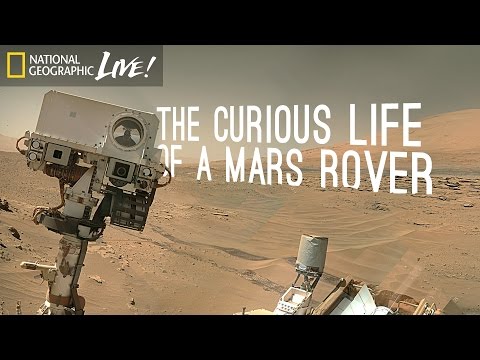
tonight what we’re gonna try to do we’re
gonna take an exploration an exploration
of the planet’s surface of Mars and
we’re gonna look at that planet through
the eyes of Rovers and the first Rovers
we’re going to talk about are spirit an
opportunity the two Mars exploration
Rovers and then we’re going to switch
into curiosity a larger Rover and its
job is to do something a little
different but first we have to go back
in time and we’re gonna go back
approximately ten years a little bit
more than ten years and we’re going to
discuss what happens and how spear an
opportunity made it to the surface of
Mars so we’re gonna fly over to Kennedy
Space Center in Florida and we’re gonna
go and we’re gonna get real close and
personal with the Delta two rocket now
this is a delta 2 rocket it’s built by
the Boeing Company it has three stages
to orbit and around the bottom side of
this vehicle there’s nine air lit solids
so this is going to help us get a little
bit extra lift so that we can get to
Mars as rapidly as possible if you don’t
mind counting down with me five four
three two and the delta ii rocket with
the bars x-ray and a minute and thirty
seconds were in orbit around Earth as
you see we’re starting to drop away some
of those air lit solids once those air
let solids fall back away they get
recycled they get picked up once our
first stage burns out we’re gonna let go
we’re gonna light our second stage once
we light our second state’s that we let
that first stage fall back to the ocean
it becomes an ecosystem for the fish we
light our second stage at this point the
spacecraft has very little stability so
we’re gonna spin it up we spin it up to
about 12 rpm more or less like a
quarterback that there’s a nice tight
spiral we’re gonna get really good
flight through the air
will light our third stage this puts us
on a direct trajectory to Mars we’re
gonna do what we like to call the
quiescent period the boring period of
traveling through interstellar space
okay so now seven months later here we
are traveling at 16,000 miles per hour
toward the surface of Mars we lose our
cruise stage because we don’t need it
anymore it’s pointed us directly at Mars
we’re ready to go we’re going to hit our
landing site we’re traveling at 16,000
miles per hour and we hit the upper
atmosphere of Mars when we hit the it
upper atmosphere of Mars the friction as
we come through literally burns a hole
in the upper atmosphere the heat shield
in the front of our rover gets to about
the surface temperature of the Sun 1600
degrees centigrade at this point we’re
going to start what I like to call
reverse origami we’re going to
pull up at a parachute this is
supersonic parachute and that’s gonna
start changing our angle of attack from
being directly in to being more vertical
with the surface of Mars at this point
we’re gonna slow down to around three to
four hundred miles per hour we’re gonna
lose our heat shield because we don’t
want that heat to come back into our
vehicle and we’re gonna lower our Lander
more or less on a shoestring once we
find the surface we blow up the airbags
that takes about a blink of an eye about
half a millisecond and then we’re gonna
fire some retro rockets when we get to
about forty meters above the surface
slow down to zero miles per hour cut the
cord and bounce and we bounce and we
bounce now the first bounce of this
vehicle could take us over I use the
Empire State Building we can bounce
anywhere from a mile and a half to two
miles each successive bounce is taking
away a little bit of energy which slows
us down after we lose all of our energy
we come to a stop we’re gonna deflate
the airbags so the vehicle senses that
we’ve stopped we deflate the airbags
what you saw happen in a few seconds
there takes about 45 minutes in real
time the next thing that we’re gonna do
is we’re gonna open up our Lander pedals
we’re gonna open up these Lander pedals
now what you’re gonna have see happen in
about 30 seconds happens in 45 minutes
the next thing that we’re gonna do is
we’re gonna open up the solar rays and
if you don’t mind out a little watch to
we got one more thing to do which is one
more part okay just once it gets over
Center oh okay hold on I must have seen
this a thousand times doesn’t matter how
many times I see it I get very excited
when it works but my team and I were the
team that designed that and if it didn’t
work we had a very very bad day on Mars
the movement so when it works like
getting a little tight so open up the
solar arrays now we can power the
vehicle we’re starting to charge up the
batteries the last things that you’re
gonna see happen on this first day is we
pull up our pan cam mass what we call
the PMA and we deploy our high gain
antenna so we can talk directly back to
earth the last thing that you’re going
to see the rover do in this animation is
just gonna take a panoramic image one of
the things that you want to do when
you’ve landed in a new place is find out
where you are so we’re going to take
this beautiful image and we’re gonna
start transmitting that back to earth so
the next day what we’re going to do is
we’re going to stand up the vehicle
deploy the front wheels and we’re going
to change more or less our perspective
on the surface when we designed spirit
an opportunity we design the eyes to be
at five foot two that’s approximately
the level of a human being walking on
the surface of Mars so now when we take
images and we get our panoramic images
it’s going to feel like a human being
with standing on Mars looking around
we’re looking for scientifically
exciting sights spirit an opportunity or
roving geologist their job was to follow
the water to look for water that may
have flown on the surface of Mars
and we’re going to do that through the
history of the rocks go up taste the
rocks touch the rocks feel the rocks if
you can break the rocks try to figure
out do the rocks tell us something about
the history of Mars so now the last
thing that we have to do is drive the
rover off the lander you’re gonna see
the lander change its position a little
bit get ready for the rover to drive off
on these things called bat wings we
drive off on those bat wings and we get
six wheels on the surface of Mars we
call spirit the bad sister and not
because she was bad in any way but we
drive off the lander we go up to the
first rock the rock was called Anna on
deck we took out our arm we touched the
rock and as soon as we touched the rock
spirit did not call home it’s like et
went hi no phone home so we were worried
that we didn’t understand what was going
on with spirit remember that boring
period of driving through interstellar
space that I told you about seven months
so during that seven month period of
time
we had one of the biggest Solar Flare
solar activities that we’ve ever seen
right so lots of gamma rays bad stuff
I’ll call it the the the the Sun burped
bad stuff goes flying through
interstellar space so what did we do
first time ever when we were flying a
spacecraft deep space we actually
rebooted the computer so we turn it off
turn it back on and then it goes hey I’m
here and we’re like all goodness
gracious thank you okay it calls back
home we’re like great great great it has
all this great stuff it starts recording
everything that it’s doing all of its
maneuvers it records all the things that
have felt all the balances on the
surface everything everything thing
eight days later drives off it touches a
rock and it’s memory got full and once
its member got full the computer
wouldn’t boot up and we actually told it
to erase its memory through all of that
stuff through quieten space away and
then do whatever you want me to do the
rock and then spirit became okay spirit
opportunity were I’ll tell you they were
designed to go to the surface of Mars
and explore the surface for 90 days and
travel up to 600 metres spirit was on
the surface communicating for more than
five years traveled a little less than
five miles opportunity the good sister
landed a month later has been on the
surface for over a decade and continues
giving us great information daily and
she’s traveled over 25 miles so why do
we go to Mars why is Mars such an
interesting place to explore and the
image that you see behind me on the left
is Mars and on the right is Earth looks
like we’re River or water may have run
at some point time in this image I’ve
switched it around on the left is Earth
on the right is Mars that image on the
right is the largest known volcano in
our solar system the rocky planets it’s
called Olympus Mons it’s on the surface
of Mars it’s approximately the size of
the state of Arizona go back to the
early 70s 76 77 and we landed the Viking
landers on the surface of Mars we have
Mars Pathfinder which landed in July 4th
of 1997 and then we had Phoenix and then
you have the two landing sites for spare
an opportunity
this topographical map let me show it a
different way for those that like
planetary maps you can see where we
landed and the other thing that you see
in this is the yellow places are places
that we’ve landed the ones in white were
the possibilities for curiosity land so
now we’re on the surface well spirit
opportunity caught some very interesting
things on the surface from orbit we
could see things that look like large
tracts long tracts on the on the dust
and the surface and we always postulated
that they would have to have these dust
devils but we had never seen them we
believe that this is one of the reasons
the vehicles have lasted so long
every so often when these dust devils
would come by and clean off my solar
rays and make us happy and we make more
power and now the Rovers can continue to
do their science very interesting
scientifically this is one of the most
important images that we took with the
oppertunity vehicle it was the first
time ever remotely with a robotic
vehicle that we took an image on the
surface at the exact same time we took
the image from orbit so now we can
actually do atmospheric science from the
ground and from orbit at the exact same
time so with opportunity the good sister
it travels 300 million miles bounces
along the surface of Mars and lands in a
crater there’s nothing there it’s just
nothing except one rock and the rock is
not from Mars it’s a meteorite from
somewhere else now the interesting thing
is we’ve seen quite a few of these now
on the surface of Mars we do know that
they’re from one of the four rocky
planets or some of the asteroid belt we
do know that but where they’re actually
from we don’t know okay they probably
were around sort of early formation of
the the planets but we don’t know but
they’re very interesting very exciting
the rover is now here in endeavour
crater it’s been in sploit and ever
crater for at least a year now we’ve
driven down into the crater we’re at a
new location inside the crater we’re
seeing a lot more of these clays right
so now we know that in this location all
across the Meridian plains there was a
lot of water deep water
did you see the change in salinity same
thing for spirit as we drove up husband
Hill we started to see this change in
salinity in the soil it was a failure
that actually told us that
the wheels on the spirit rover stopped
working and so we started dragging it
and by dragging it we created this
trench on the surface of Mars and as we
were creating this trench when we turned
around and took images we saw the actual
albedo the light that was coming off the
soil change and that started to tell us
something’s going on so we started doing
more investigation and we saw this salt
level change as we started to get higher
in elevation on it on the mountain and
what it means is as the water was
receding it got much more salty and that
told us that there was water there very
salty water and that there was water in
both of these locations so now we know
that Mars was a very wet place at one
point time in the past and we’re going
to change gears and talk about curiosity
a little bit curiosity was launched on
November 26th 2011 and landed August 5th
we’ve traveled for nine point nine point
four nine point five kilometers on the
surface as of saule 774 curiosity was
designed to drive 20 kilometers and be
on the surface for one Martian year so
we’ve already made one Martian year so
we’ve already made part of our prime
commitment to NASA and that it’s been
awesome it’s been an awesome couple
years how did we get there so it’s a
little different very very similar
launch sequence but it’s a different
launch vehicle so instead of a Boeing
vehicle this is a Lockheed Martin
vehicle it’s called an Atlas rocket it’s
built by Lockheed it has really just two
stages to orbit so you’ve seen we’ve
already gotten to orbit you saw that
particular part now this second stage of
this vehicle is much more capable it has
some retro rockets on it has some
thrusters on it so now it can spin us up
and it can point us directly at Mars so
we did the last kick and then that’s
gonna fall back and burn up in the
atmosphere what doesn’t burn up becomes
ecosystem for fish and now we’re gonna
start going around so now we’re on a
direct to directory to Mars you’re gonna
see us light up the solar arrays that
around the crew stage that’s gonna
actually charge up our batteries and
then what we do is we super charge the
batteries and we discharge them and then
we keep them about 80 percent the rest
of the way now we’re traveling a little
bit slower because we don’t have the
same lift capability with the Lockheed
vehicle so we’re traveling at 14,500
miles an hour it takes us a little bit
longer because Earth and Mars are two
different orientation deploy a parachute
again we’re gonna lose that heat shield
because we don’t want to get the heat so
coming back into our vehicle but now
everything’s changed we lose the heat
shield and instead of been lowering a
lander with airbags we’re actually going
to cut
some cables and bolts more or less and
let our Rover fall toward the surface
fire up some rockets and fly we added a
new science instrument called the Marty
camera this camera is actually taking
images about 32 frames per second so
we’re gonna zoom in on the camera and
you’re gonna look at what’s going on
so as we’re falling toward the surface
the camera is taking images of the
surface of Mars overlaying them figuring
out what is our downrange trajectory and
velocity and there’s there any obstacles
that are in the way once we figure out
there’s no obstacles in the way we’re
gonna lower our rover on three shoe
strings and an umbilical cord weaving
gingerly hit the ground and once we send
slack in the cables the cables go slack
we cut the three umbilical cords and the
descent stage fires up and flies away
designed to go 600 metres away from the
vehicle it’d be bad if it came back and
crashed on us that would be really bad
now we’re on our wheels we’re ready to
start exploring so now instead of having
a drive off a lander we’re ready to go
the very first day last things that we
have to do is pull up our remote sensing
mast what we call the RSM and pull out
our high gain antenna the high gain
antenna for this vehicle was delivered
to us by the Spanish as a gift it’s an
asset the last thing you’re gonna see
here is as we start driving around with
curiosity is that curiosity is a
different vehicle instead of being a
roving geologist
it’s a roving biologist it’s job is to
look for past places on Mars that could
have sustained life we get to shoot a
laser at the rocks now why did we do
that instead of having to go over and
touch every rock and taste every rock
and like we said before we can actually
fire the laser at the rock burn the
surface of the rock and look at the gas
that comes off and from the gas we can
see what the chemical composition of
that rock is what are the elements that
are there the other thing that we did
with curiosity is we added a drill now
this is the first time that we’ll be
able to drill robotically on another
planetary surface now we have drilled
before with human beings on the surface
of the Moon anyway what you’re seeing
here in the video is what we call x-ray
fluorescence we’re actually shooting
x-rays through the rocks we agitate them
and we can see how the actual chemicals
are held together what is a crystalline
structure and that actually tells us a
lot about what’s going on in the rocks
on the surface of Mars some more of the
testing that we’ve got and and here what
you’re going to do is we’re going to
show the mobility system the mobility
system is very similar to the mobility
system that we had on Pathfinder and the
Mars Exploration Rover
it’s a rocker-bogie suspension system
that we’ve used on all of the vehicles
that we’ve had on surface but this one
serves a different purpose it actually
is our landing gear so the wheels that
look like they’re one monolithic
structure of aluminum they’re not
they’re about seven sheets of paper of
aluminum on the outside shell but in the
middle is titanium in the titanium is
there to give us sort of a spongy flexor
feel you’re gonna see us doing some
testing we’re driving over obstacles
that simulate what we believe we’re
going to get to on Mars about 35
centimeter height obstacles we tilt the
vehicle to drive over different surfaces
we drive on the surface we have six
wheel drive four-wheel steering so all
six wheels of the vehicle can drive and
all four wheels can turn tow in about 90
degrees so we can actually turn about
our center of mass so if we wanted to
turn in place we actually could the
vehicle has a top speed of five
centimeters per second it’s boogying
it takes us sateda to do it takes us 45
minutes to do a football field that’s
how slow we moved so it’s really really
sloped now when you’re 300 million miles
away from the nearest gas station it’s
okay to go slow where did we go on the
surface of Mars for curiosity curiosity
went to a place called Gale Crater so
why did we go to this Gale Crater and
the reason we went to Gale Crater is
that we wanted to investigate this place
called Mount sharp and Mount sharp is
this very very large mountain it’s 5.5
kilometers in size and what we were
looking for is the difference layers as
you drive up the mountain so we’re gonna
land drive to the mountain and then look
at the difference
they say clays will just say it as time
periods so early time period to later
time period as you drive up this
mountain trying to see can we see places
on the surface of Mars that once could
have been habitable for life could Mars
in this location around the Gale Crater
sustained life and doesn’t have the
building blocks the basic pieces to
actually have life grow in that location
then we got some of the first images
back so this was actually actually the
first drive and you see the name
curiosity after we got to the surface we
started taking selfies
so this is one of the first selfies of
the rover it’s a shadow
we weren’t really good at it yet then
somebody had some fun with one of our
images Optimus Prime came and visit us
that’s fun we have a laser so great we
would laser here’s what people think we
do sort of fun here’s what we really do
show you the picture on the left
undisturbed soil picture on the right
five laser holes I’ll show it to you a
different way we’ll show a video so
here’s a video of us burning a hole in
the ground
pretty exciting you can see sort of the
byproducts coming off you can’t see the
gas but what we’re actually doing is
we’re burning a hole looking for the gas
so that we can tell what it’s made of so
the first thing that happened after
we’ve got after we landed we drove to
this area on Mars that was very
interesting within the first three
months of being at this location we were
able to say one Gale Crater was wet
number two it can sustain life now we
can’t say that there was life there but
we can say that if there was it would
have been able to be sustained there are
all the chemical compositions that are
needed to support life pay homage to
some of our great explorers before us
the footprint ball is Aldrin and then
Curiosity rover footprint our first
scoop so we now went down and we scooped
up some of the dirt we’re gonna actually
take that inside the vehicle some more
of these analogs
so looks like riverbeds picture on the
left is uncorrect adjustin image that
comes back from the surface of mars
looks like a riverbed you could see
false cover image of Mars that’s sort of
in the middle and then an earth riverbed
looks very very similar here’s the first
time we’re gonna sample we’re gonna
drill in surface of Mars I can tell you
this took a long time it took us about
four weeks to actually make this one
little hole there’s a picture of the
hole up close the next image is after
we’ve taken that and we ingest it inside
we can actually separate different
particle size so we can take things that
are down to a couple microns
well sieve those out and then we can
deliver those to different instruments
here’s a picture of Mount sharp this is
where we wanted to go it was an early
picture there’s a
rock that’s out in the distance that
rock is 5.5 kilometers away from a rover
and it’s approximately the same size as
a rover and we’re thinking oh my
goodness
it’d be so great if we can make it there
the other thing that you’ll notice in
this image if you’re looking closely is
there’s clouds Mars does have clouds
just like earth right so there is
moisture in the atmosphere so this image
shows sort of our trajectory to get down
to the start of the mountain and as we
were driving we were starting to figure
out oh my goodness there’s parts of Mars
that are really really scary and the
reason they’re really really scary is
that the rocks that are on the surface
are different than we’ve ever seen
anywhere else on the surface of Mars as
we were driving on Mars with spear an
opportunity we’d hit a rock and we’d
break it or you’d push it over and move
it out of the way in this particular
area the rocks are like cemented into
the ground and then they have this word
I don’t know I’m just gonna use it
it’s called been affected rocks other
words the rocks are windblown so if you
can imagine you’re covered with water
and as the water recedes the wind starts
working on the rock and as it recedes it
sharpens the rock so the rocks look like
teeth very very sharp teeth and as we’re
driving over them or puncturing holes in
the wheels so we thought oh my goodness
one we have to figure out how not to
hurt our wheels and number two we have
to figure out where to drive around
things so you can see we take sort of
this really crazy path and then we get
to the place that’s at the end of this
particular image and the scientists had
a choice we could go right effectively
right from the rover’s perspective and
go through this area right here which is
a choke point there’s really no way to
get out if you get in there or we could
go straight very very bad rocks so we
chose to go right so we go right we’re
gonna bright we take some images of our
wheels we started to see lots of where
as we were driving over this area called
the hummocky plains and the hole that
you see is at sort of benign the thing
that’s actually really scary is the hole
that’s underneath that and the reason
it’s scariest as we’re driving over the
surface what we’re going to do is the
the wheel is taking load right it’s
moving it’s actually getting stressed
and every time you do that you’re
actually having this
propagating and we were worried oh my
goodness how are the wheels gonna fail
these cracks are gonna propagate across
the wheel and then part of the wheels
gonna fall off and the part of the wheel
that falls off is it going to hit
anything that’s bad because there’s
cables all around this so as the wheel
falls apart it’s gonna do this so now
what we’re doing is selectively on
different soils we’re driving the rover
backwards so driving backwards actually
takes a little bit of load off the front
wheels same about about the same on the
minim wheels and then starts to do some
damage to the back wheels but that’s
okay because they’re not damaged at all
at this point so we’re gonna start to
try to even out the way across the wheel
so that we get a little bit longer
driving the other thing that we noticed
and I told you we went to that choke
point is that with damaged wheels we
could drive over sand dunes better so
climbing over nice light stuff was
actually better with these holes in the
wheel so we turn right we get to the
sand dune now we’ve done some testing we
know that we could drive over it but as
all good engineers and all good
scientists go we go well what happens if
there’s really sharp rocks underneath
the dune so we argued for about two days
about driving over this dune and I’m
thinking golly it’s only a meter tall so
it’s a meter tall you know three feet
and the rover’s belly is 75 centimeters
so 3/4 of a meter so if it was really
just light fluffy you know sand dune we
would get stuck but the reality is is
the rover would sort of float over it
but we were freaked out for a little
while so we did some testing and then we
decided to go but we didn’t decide to go
all at once we put a toe in and then put
another toe in and we drove up to the
top and looked over and we drove back
and then we said ok go so here’s the
image from the other side here’s the
video of us driving over that particular
obstacle sort of fun but it took us a
while to do that then we have where
we’ve gone so we land at Bradbury we go
over to Yellowknife Bay and now we’re at
the pump hills and the pump hills are
more or less the Gateway to Mount sharp
our first drill at prompt Hills now you
can see it really looks sort of clay ish
we do some close-up investigation we can
see these lines looks like secretions
and hard stuff around it the mineral
that we believe that’s there and we’re
just doing some investigation right now
looks like hematite which only forms
from water here on earth so it looks
like we’re finding another place that
was really wet the surface of Mars
and then we can talk about what’s coming
next and 2020 we have a new Rover you
can see some of the science that shows
the science suite has been announced you
can see the international collaboration
that’s going to happen very very similar
vehicle secured eásá t in terms of
size but has a different mission and its
mission really is going to go to sample
the surface of Mars and capture those
samples and hopefully return them back
to earth so now as I close I’m gonna
show you some of my favorite images from
the surface this image is from curiosity
and you see that star that’s out there
it’s earth and then high-resolution you
can see the moon and I’ll show you my
favorite video my favorite image this is
from the top of husband Hill it’s one of
the last things that we got from Spirit
and if we had been able they had a
little bit better camera we could have
seen earth set but I’ll show you this as
a video and this is a Sun setting on
Mars and the thing that makes me love
this image so much is literally the fact
that someday a human being will stand on
the surface of Mars and say I’m watching
the earth set and then I’m watching the
Sun set and I can’t wait for that day
thank you guys so very much
you
Please follow and like us: