
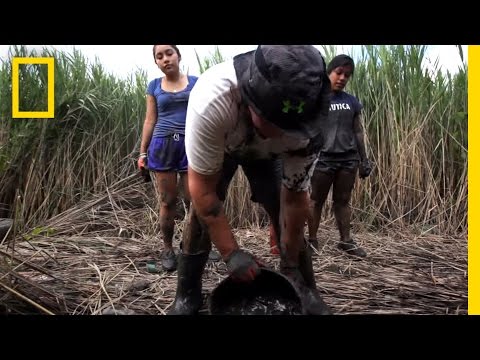
this Marsh if you were here 150 years
ago it was like a patchwork of all
different kinds of micro environments
and you had sedges and a few bushes and
some Phragmites and some spartina and
just really a dozen different major
species and in the last hundred years
it’s become essentially a monoculture
over 90% of the surface is covered by
one plant a species called Phragmites
Australis which is simply common read
for some reason this northern european
subspecies that came in to Connecticut
about 200 years ago has just taken off
up and down the east coast from Maine to
Florida
Phragmites can hold like the waste and
stuff but too much of it it’s not needed
especially where like you have other
native plants that are trying to go and
smell to sigh carbo the central issue
with this invasive is that it disrupts
the balance that is at the heart of the
existing food chain and can often lead
to a tremendous loss in biodiversity
what got me involved in the marsh was
working with these kids it’s going out
every which way but what came out of
that has been a 10-year ecological study
of the marsh that is really unique in
terms of how much real data it’s
produced and we’ve had some discoveries
about the extent to which the marsh has
become a monoculture agriculturally and
the extent to which we’ve really seen a
loss in diversity in the fish species as
a result there’s been a big controversy
in the last year-plus
in Piermont about whether to try to
remediate this invasive plant and if so
how
the cost-effective solution is to spray
with a chemical a lot of people are
opposed so what this summer is trying to
look at non-chemical ways to help to
manage the fragmentation so the idea
that we’re working on is if you roll
black plastic out over this thing we
think we can get the sub surface hot
enough to actually kill the frag roots
by heat it all just did
there shoots angry for angry frag Mike
not a fight the sample still intact
one two here we go the way we started
with our experiment was we collected
rising samples from different plots that
we had brought them back to the lab to
boil them at different temperatures and
they stood there for 24 hours just to
determine how we can customize them
which is a route to kill off frag jargon
I think this was like provolone we
planted them again today to figure out
how do they grow a little spider get
away but most of them are pretty dead by
now so a doubt there girl this plant is
not a monster this plants not an evil
thing it’s a very productive plant it
provides some important ecosystem
services
it is sequestering carbon it is holding
the marsh together it is keeping up with
sea level rise it is providing a home to
muskrats but you have to at the same
time have a perspective on what’s been
lost
this is not something you’re going to
fix in a year or ten it’s all up and
down the coast it is going to reinvade a
number of times and unless you create
the human infrastructure required for
that kind of long-term management then
you really haven’t done much
you
Please follow and like us: